What is Messier known for?
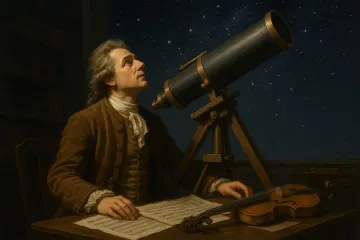
Charles Messier remains one of the most recognized names in popular amateur astronomy, yet his fame rests on a list created almost accidentally while pursuing a completely different celestial quarry. He was a French astronomer who lived from 1730 to 1781, making his mark during the Age of Enlightenment. Messier earned his living as a celestial draughtsman and astronomer for the French Navy, primarily focused on supporting naval operations and charting the skies. His true passion, however, was the hunt for comets.
# Comet Hunter
Messier gained renown during his active career primarily as a dedicated comet seeker. He was famously known as the "Comet Hunter" because of his relentless pursuit of these fleeting visitors to the inner solar system. This intense focus was driven by the substantial monetary reward offered by the French government for the discovery of a new comet. This financial incentive explains much of his dedicated observational effort. Messier successfully discovered 13 comets during his lifetime.
His commitment to this quest meant spending countless hours scrutinizing the night sky night after night. It was during these long vigils, working with his assistant Pierre Méchain, that the unintended creation began.
# Fixed Targets
The irony of Messier’s enduring legacy is significant: the man obsessed with tracking objects in motion—comets—is primarily remembered for cataloging objects that are, to the naked eye, perfectly fixed in the firmament. As he diligently swept his telescope across the heavens searching for comets, he repeatedly encountered faint, fuzzy patches of light that did not move from night to night. These were not comets, and they caused frustrating delays in his actual work.
Messier needed a way to record these persistent blurs so he wouldn't waste time investigating them again, mistaking them for a new discovery. He began compiling a working list of these non-cometary objects. These were the deep-sky objects that professional astronomers knew about, but which often baffled and delayed comet hunters. To put this frustration into perspective, imagine spending years searching for rare birds only to be constantly distracted by beautifully colored but stationary garden flowers; Messier cataloged the flowers so he could get back to his birds.
# Catalog Foundation
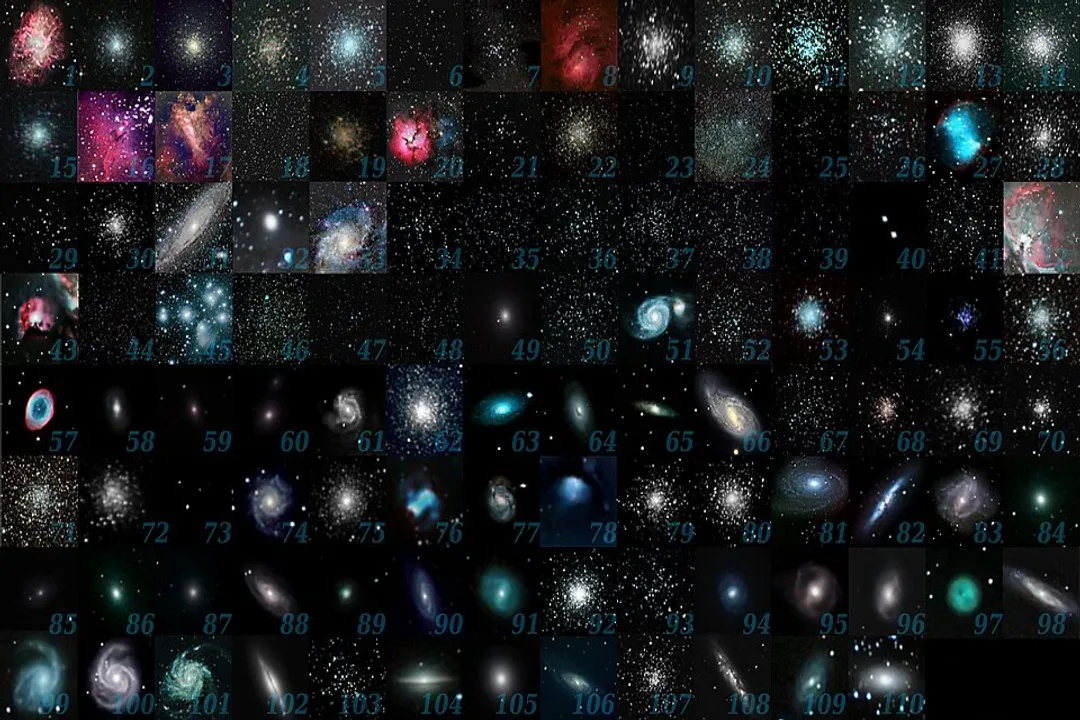
The initial list, which became known as the Messier Catalog, started relatively small. Messier first published a list containing 45 objects in 1771, which included objects he discovered himself and those previously known to other astronomers. The catalog was intended as a practical tool for others pursuing the same goal.
Over time, the list expanded, largely due to the efforts of his collaborator, Pierre Méchain. Méchain found several objects that were subsequently added to the list. By the time the catalog was finalized and published posthumously, it contained a total of 110 entries. The number 110 is the generally accepted final count of the Messier objects. While Messier initiated the work, Méchain is credited with discovering many of the later entries, sometimes without Messier realizing it immediately. The first object, M1 (the Crab Nebula), was actually discovered by Messier in 1758 while observing the return of Halley's Comet.
# Object Types
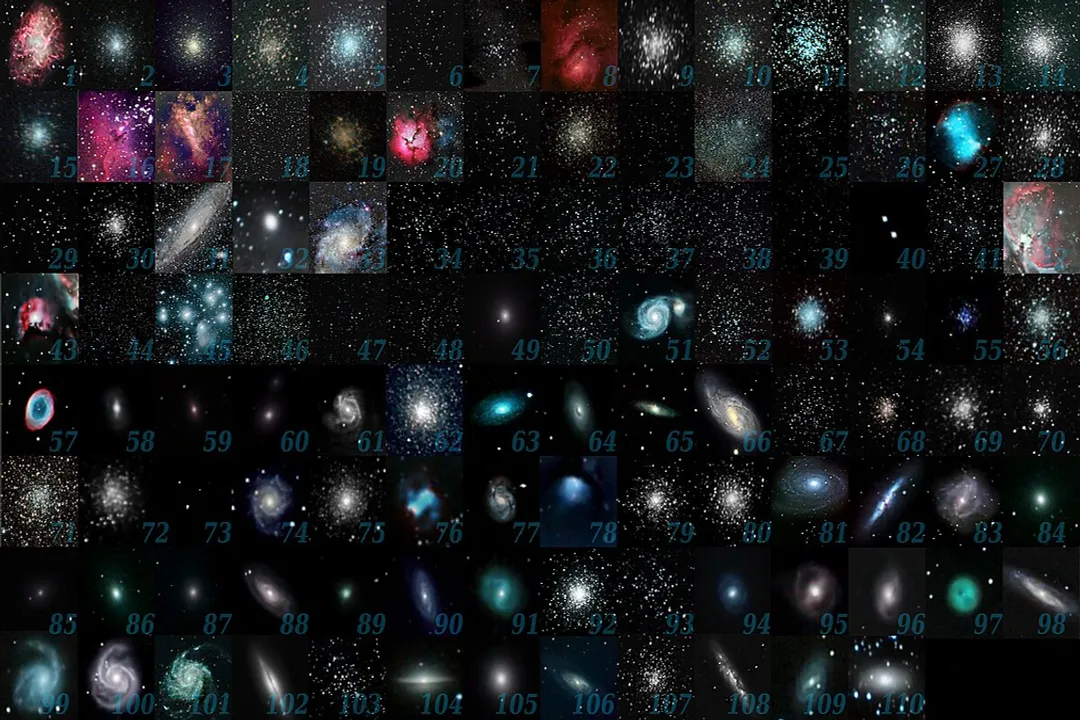
The objects contained within the Messier Catalog represent the brightest and most easily observable deep-sky targets available to sky-watchers. They are not simply random smudges; they fall into three main categories: star clusters, nebulae, and galaxies. The catalog covers objects in both the Northern and Southern hemispheres, though the majority are located in the Northern sky, reflecting Messier's primary observation location.
# Star Clusters
These objects are groups of stars gravitationally bound together. They can be further divided into two main types:
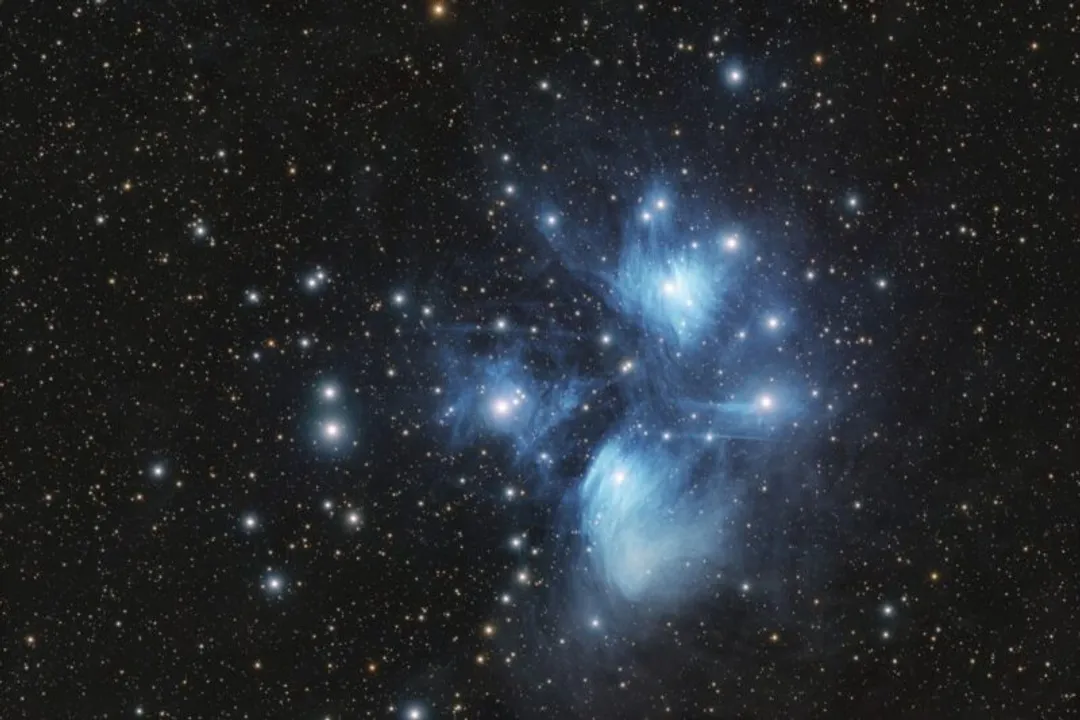
- Open Clusters: Loosely associated groups of stars, usually found within the plane of the Milky Way galaxy, which tend to be younger stars.
- Globular Clusters: Densely packed, spherical collections of hundreds of thousands of older stars, orbiting the center of a galaxy.
# Nebulae
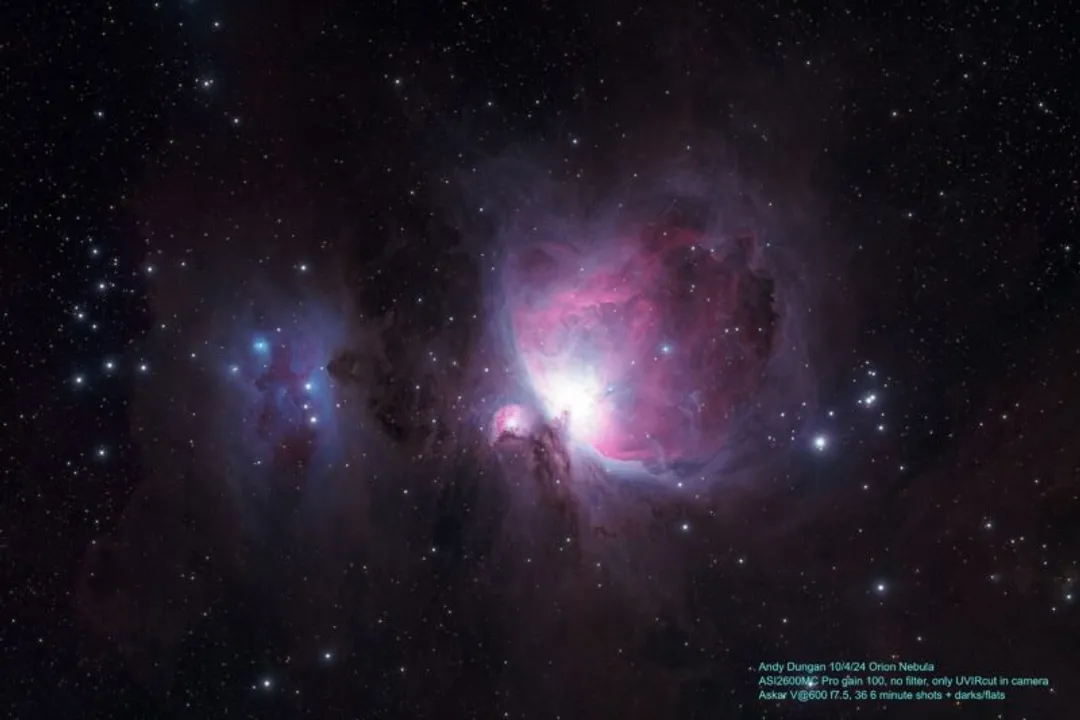
Nebulae, which translates roughly to "cloud," are vast interstellar clouds of gas and dust. Messier cataloged several notable examples, many of which are remnants of stellar death or regions of active star formation. For example, M42, the Orion Nebula, is one of the brightest star-forming regions visible from Earth.
# Galaxies
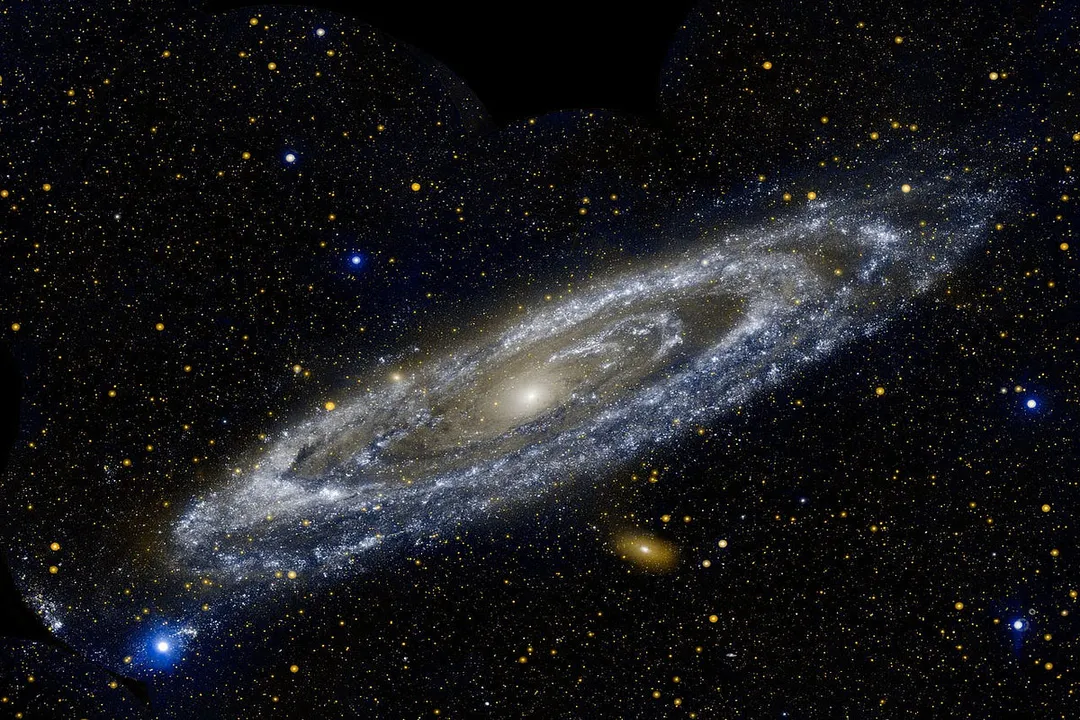
These are massive systems containing billions of stars, gas, and dust, held together by gravity. The most famous Messier object, M31, is the Andromeda Galaxy, which is the closest major galaxy to our own Milky Way. Cataloging these spiral and elliptical structures was quite an achievement in the 18th century, as the technology of the time made distinguishing them from nebulae difficult.
| Object Designation | Common Name | Type | Location Note |
|---|---|---|---|
| M1 | Crab Nebula | Supernova Remnant/Nebula | In Taurus |
| M31 | Andromeda Galaxy | Galaxy | Farthest object visible to the naked eye (under dark skies) |
| M42 | Orion Nebula | Emission Nebula | In Orion, a star-forming region |
| M13 | Great Globular Cluster in Hercules | Globular Cluster | In Hercules |
# Catalog Value
The enduring significance of the Messier Catalog lies not in its scientific complexity—it is merely a positional reference list—but in its accessibility and history. For modern sky-gazers, it serves as the de facto introductory list for deep-sky observation. Because these 110 objects are generally the brightest and largest of their kind, they are reliably visible using common amateur equipment, such as 4-inch telescopes or even high-powered binoculars under good conditions.
The list essentially maps out the "greatest hits" of the visible universe that are reachable from Earth. A systematic attempt to observe and log all 110 Messier objects is known within the amateur astronomy community as "Messier Marathon," a badge of dedication for many observers. This activity requires planning, as the visibility of all 110 objects depends heavily on the time of year and the observer's latitude. For an observer in the mid-northern latitudes, the best window to attempt a full sweep is during the spring months, as the core of our own Milky Way (rich in many Messier objects) is optimally positioned then. While the catalog includes objects extending down to declination -40 degrees (like 47 Tucanae, M106, M107, M108, M109, and M93), an observer needs a darker, clearer horizon than they might typically experience in densely populated northern areas to see the southern entries well.
# Enduring Popularity
What makes the catalog so popular even when modern professional astronomy uses far more extensive surveys, such as the Sloan Digital Sky Survey or the surveys done by the Hubble Space Telescope? It comes down to the tangible connection to history. When an amateur astronomer locates M87, the massive elliptical galaxy in Virgo, they are observing the very same light path that Messier or Méchain frustratingly tried to ignore in the 1700s. This provides a palpable link to the early days of deep-sky investigation.
The scientific community also appreciates the catalog, as it provides a baseline for tracking changes over time. While Messier was cataloging objects he thought were nebulous or unclear, we now know many are distant galaxies, allowing astronomers to use the catalog as a historical snapshot to study galactic evolution or the proper motion of objects within our own galaxy.
The legacy of Charles Messier is thus secured not by the comets he found, which were exciting but ephemeral, but by the static guide he compiled out of professional annoyance. His methodical bookkeeping transformed a potential distraction into a timeless instruction manual for looking up and appreciating the structure of the local universe. The objects themselves are often grand, distant islands of stars or clouds of cosmic dust, and they serve as excellent targets for honing skills in locating faint objects, a necessary step before tackling fainter, less organized celestial features.
Related Questions
#Citations
Charles Messier - NASA Science
The Messier Objects - Rosliston Astronomy Group
Charles Messier | Comet Discoverer, Deep-Sky Objects & Cataloguer
10 Famous Discoveries of Astronomer Charles Messier
What are Messier objects and how to observe them?
Charles Messier Facts For Kids | AstroSafe Search - DIY.ORG
Messier object - Wikipedia
Messier Catalog | Research Starters - EBSCO
Messier objects are fuzzy patches in the night sky - EarthSky