What is William Herschel known for today?
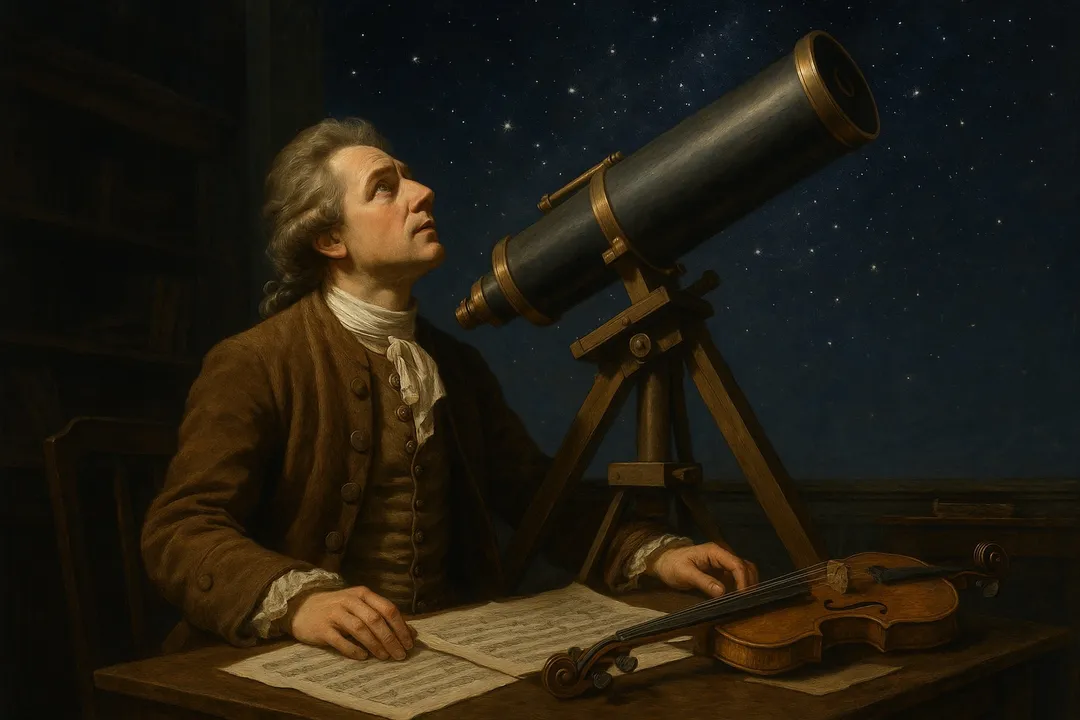
William Herschel is known today as one of history’s most transformative figures in astronomy, a man whose patient, systematic work fundamentally redrew humanity's map of the cosmos. However, the scope of his modern reputation often overshadows the unlikely path he took to reach the stars. Before he became the celebrated Royal Astronomer, he was an accomplished professional musician and composer. This duality—the artist turned scientist—is a key part of his enduring story. He didn't just stumble upon Uranus; he meticulously built the tools that allowed him to see what no one else could, transforming observational astronomy from sporadic sighting into a rigorous, almost industrial cataloging effort. His legacy is cemented not just by a single planet, but by establishing the very architecture of the universe as we began to understand it in the late eighteenth century.
# Musical Beginnings
The early career of John Frederick William Herschel, born in Hanover, Germany, in 1738, was spent firmly rooted in the world of music. He trained as an oboist and violinist, moving to England in 1757 to pursue this path. For years, his primary profession involved performing, teaching, and composing. He wasn't merely a hobbyist; Herschel was an active composer, creating a large body of work including symphonies, concertos, and solo pieces. Records indicate he had written over two dozen symphonies and numerous other works by the time his focus began to shift. His move to Bath and later to the fashionable town of Bath saw him rise in musical prominence, serving as an organist and music teacher. Even after astronomy began to take precedence, he continued to compose, with his sister, Caroline, sometimes assisting in copying his scores. This background in music provides a crucial, often overlooked context for his later scientific achievements. It suggests a mind attuned to structure, pattern recognition, and the painstaking process of creation—skills that would prove invaluable when designing lenses and mapping the heavens. The transition from meticulous note-writing to precise lens-grinding is not as vast as one might initially suppose; both require extreme attention to detail and an appreciation for complex, harmonious systems.
# Telescope Crafting
What truly set Herschel apart from his contemporaries was his refusal to rely solely on the instruments available to him. While he held an official post as the King's Astronomer, the financial support for cutting-edge equipment was often lacking or insufficient for his ambitions. This necessity became the mother of his greatest experimental innovation: he became a master telescope builder. Working alongside his brother Dietrich and later with his sister Caroline, Herschel ground his own mirrors, often spending hundreds of hours on a single piece of metal. This hands-on approach meant he was not just an observer, but an engineer intimately familiar with the limitations and potential of his tools.
His telescopes were revolutionary in design, often employing the "front-view" or Herschelian design, which eliminated the secondary mirror used in traditional Newtonian reflectors, thereby reducing light loss and distortion. By 1785, he had constructed the famous 40-foot telescope at Slough, which featured a massive 48-inch primary mirror. This instrument was, for a time, the largest telescope in the world. To put this observational power into perspective for the modern reader, while early Newtonian reflectors might have had apertures in the range of 3 to 6 inches, Herschel’s flagship instrument boasted an aperture nearly ten times larger. This leap in light-gathering power was not incremental; it was a step change that allowed him to observe fainter objects than anyone before him, unlocking entirely new sections of the sky.
An interesting comparison point is that while many professional astronomers of the era relied on existing instruments from established makers, Herschel's ability to self-fund and self-build the world’s leading optical technology gave him a unique, almost unparalleled, observational advantage in the late 18th century. This personal mastery over hardware is a hallmark of his scientific career.
# Planetary Discovery
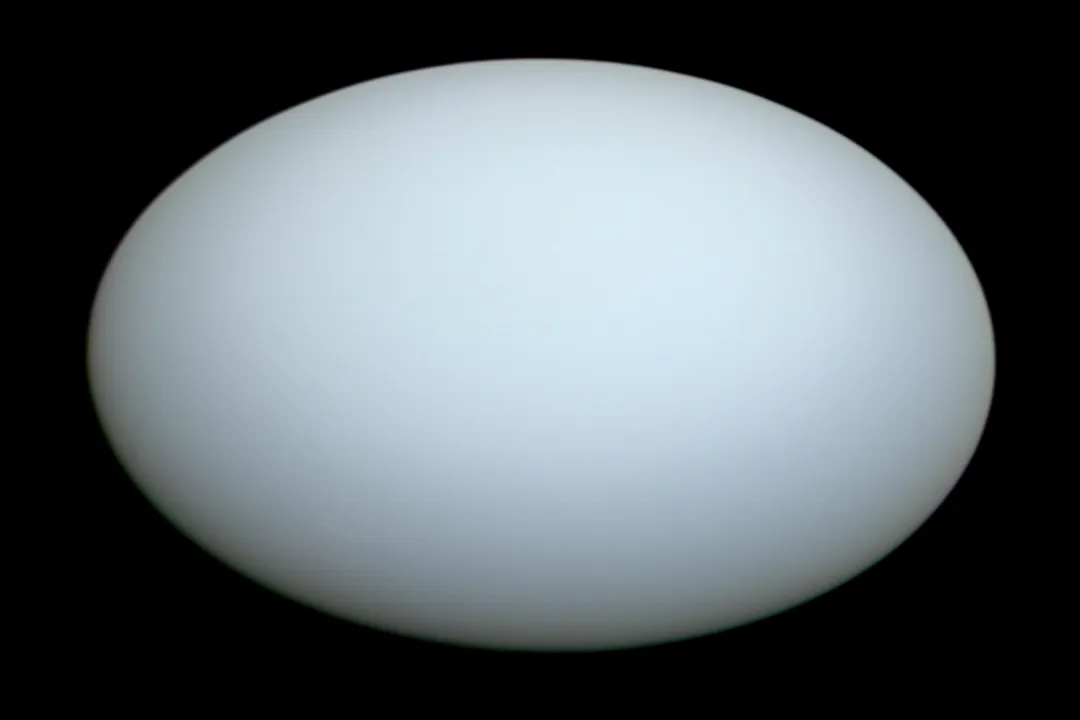
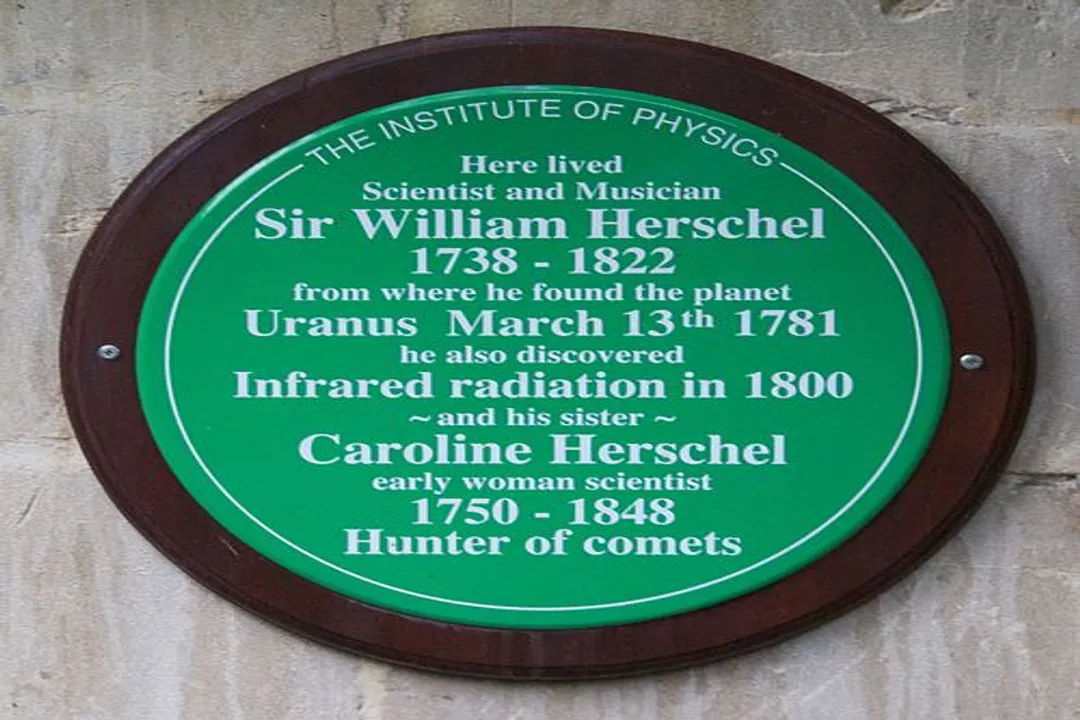
The discovery that catapulted William Herschel into immediate, lasting fame was that of the planet Uranus. On the night of March 13, 1781, while conducting a systematic survey of the heavens from his home in Bath, he observed an object that did not match any known star. Initially, he thought he had found a comet, but after tracking its movement, it became clear that this was something far more significant: a new planet orbiting beyond Saturn, the furthest known world from the Sun.
This discovery was epoch-making. Before Uranus, the solar system was considered complete with the six known planets known since antiquity. Herschel’s find dramatically expanded the known boundaries of the solar system. The Royal Society recognized its importance, and he was awarded the Copley Medal in 1781. The subsequent royal appointment as The King's Astronomer provided him with a steady income and the means to continue his monumental observational projects, though he would continue building his own powerful instruments regardless of his official title. The recognition also brought him into contact with leading scientific minds, solidifying his standing in the scientific community. While many remember him only for Uranus, for Herschel himself, this was merely the launching point for his grand cosmological studies.
# Mapping the Heavens
Herschel’s most profound contributions, the ones that truly define his expertise today in cosmology, involved his systematic, exhaustive mapping of the night sky. He was not content with simply finding new objects; he aimed to quantify the structure of the universe itself. This effort required methodical observation over decades, often using his giant 40-foot reflector.
# Double Stars
One of his primary tools for understanding stellar distribution was the observation of double stars—pairs of stars appearing close together in the sky. Early in his career, he began cataloging these, initially assuming they were merely chance alignments along the line of sight. However, through rigorous observation, often aided by his sister Caroline who meticulously tracked planetary nebulae and comets, he began to notice that some pairs were gravitationally bound, orbiting a common center of mass. His discovery in 1783 that Mizar in the Big Dipper was a binary system confirmed the existence of binary stars, proving that physical, physical interactions occurred across interstellar distances. This shattered the previous assumption that stars were fixed, isolated entities, suggesting instead a universe filled with dynamic, interacting physical systems.
# Milky Way Structure
The systematic star-gazing led to his most significant contribution to structure: charting the Milky Way Galaxy. Using a technique called "star gauging," which involved counting stars in small, equal patches across the sky—a method that required immense discipline and uniformity of observation—Herschel attempted to deduce the shape of our stellar home.
His initial conclusion, based on the density of visible stars, was that the Milky Way was a flat, somewhat irregular disc, and that the Sun was situated near its center. While later 20th-century astronomy would refine this map significantly (showing the Sun is not central), Herschel’s work was the first serious, data-driven attempt to determine the three-dimensional structure of our stellar neighborhood. He recognized that fewer stars appeared in directions where nebulae were dense, suggesting that these nebulae were likely systems of stars beyond the boundaries of the Milky Way disc itself. This inference correctly identified nebulae as external "island universes," laying the groundwork for understanding galaxies as separate entities.
| Herschel's Observation Technique | Primary Goal | Outcome/Legacy |
|---|---|---|
| Star Gauging | Determining the shape of the Milky Way | First structural map; identified Sun as central |
| Double Star Tracking | Checking stellar distances and motions | Confirmed existence of binary star systems |
| Infrared Spectrum Scanning | Analyzing heat from sunlight | Discovery of invisible radiation |

# Invisible Light
Beyond visible light and charting stars, Herschel is also known for extending the very definition of the electromagnetic spectrum. In 1800, while experimenting with sunlight passed through a prism to measure the temperature of the different colors, he noticed that the thermometer continued to register a rise in temperature beyond the red end of the visible spectrum, in a region where no light was visible.
He correctly deduced that this heat must be caused by an invisible form of radiation, which he named infrared radiation. This discovery was a profound expansion of sensory perception through technology. Herschel demonstrated that the universe emits energy outside the narrow band that human eyes can perceive, opening up an entirely new avenue of astrophysical study that is foundational to modern science. His exploration of this invisible realm underscores his experimental rigor—he didn't just look; he measured and tested every observable property.
# Scientific Reputation Today
Today, William Herschel’s primary fame rests securely on three pillars: the discovery of Uranus, the mapping of the Milky Way, and the discovery of infrared radiation. His sheer output is staggering; he discovered over 2,600 deep-sky objects, including nebulae and star clusters, documented in his catalog, which represents a massive undertaking in the history of observational astronomy.
While the music remains a historical footnote for most, his scientific achievements are central to introductory astronomy courses worldwide. He fundamentally changed the public perception of the cosmos from a small, static collection of nearby objects to a vast, potentially infinite structure teeming with dynamic stellar systems. He established observational astronomy as a field demanding long-term, systematic dedication, rather than just occasional serendipity.
It is important to note that while he achieved fame and patronage, his early career highlights a common struggle for specialized artists and scientists: securing stable funding for ambitious, technically demanding projects. His time as a successful musician provided the initial income and discipline required to fund and manage the complex, high-precision work of building his massive mirrors before royal patronage secured his position. This self-reliance is a key aspect of his inspirational story—a testament to persistence in the face of technical and financial hurdles.
Herschel’s work with his sister, Caroline Herschel, is also frequently cited today. Caroline became an accomplished astronomer in her own right, discovering several comets and contributing significantly to the cataloging of nebulae and star clusters, often working as his indispensable assistant. Their collaboration symbolizes a dedicated, family-based approach to early modern science, working often in isolation at Slough but producing results that rivaled the large institutional observatories of the time.
Ultimately, William Herschel is remembered as the man who took the universe and began the process of measuring it in three dimensions, using self-made instruments to push back the darkness of the unknown wherever he looked, whether through a lens or a prism.
Related Questions
#Citations
William Herschel - Wikipedia
William Herschel | Biography, Education, Telescopes, & Facts
William and Caroline Herschel - National Space Centre
From Music to the Stars: The Inspiring Journey of William Herschel
William Herschel Is Famous for Science. What About His Music?
This Month in Physics History | American Physical Society
William Herschel was a man who quite literally expanded humanity's ...
John Frederick William Herschel Facts For Kids | AstroSafe Search
TIL William Herschel, famous astronomer, was a composer! Here his ...