What is the process of element formation in stars?
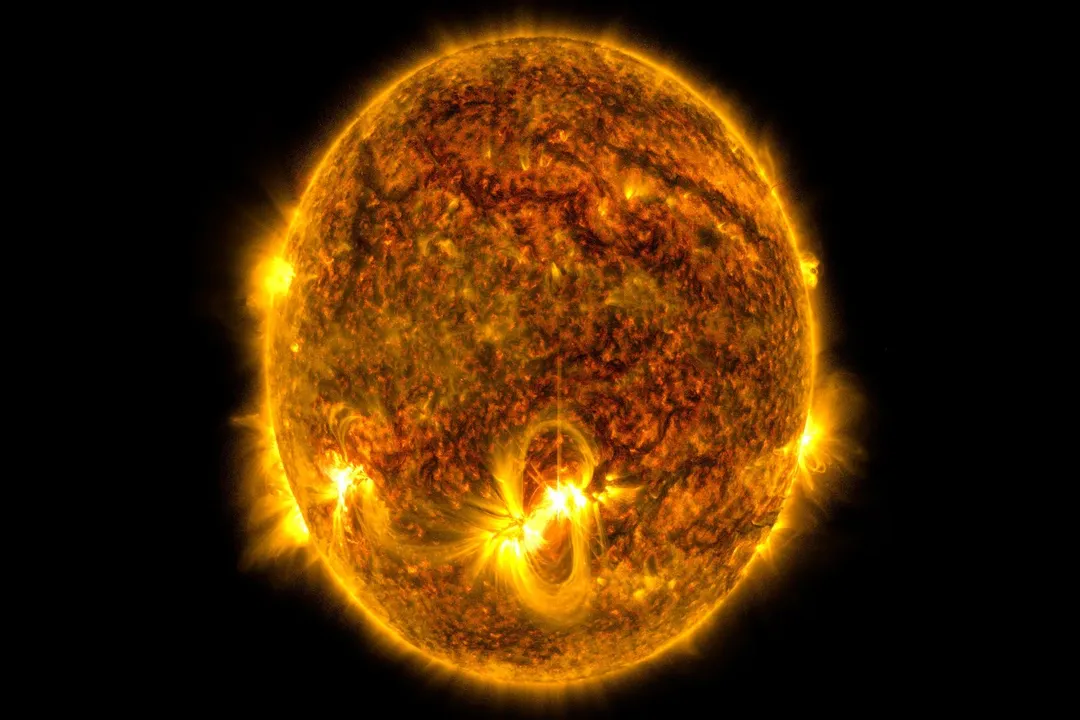
The entire universe, as we know it, owes its physical building blocks to the life and demise of stars. While we often look up and see pinpricks of light, we are witnessing cosmic furnaces where matter is constantly being recycled and transformed. Nearly everything composing the Earth, the water we drink, the air we breathe, and indeed, ourselves, was forged in temperatures and pressures unimaginable in any terrestrial laboratory. The process responsible for filling out the Periodic Table beyond the simplest ingredients is called stellar nucleosynthesis.
# Primordial Stuff
To understand the origin story of the elements, we must begin not in a star, but in the universe's first moments, about 14 billion years ago. In the immediate aftermath of the Big Bang, the cosmos was a searing hot plasma of fundamental particles. As the universe rapidly expanded and cooled, quarks bonded to form protons and neutrons. Within the first three minutes, these merged to create the initial, lightest elements: overwhelmingly hydrogen (), which makes up about 75% of the universe's mass, and helium (), making up most of the remainder. Trace amounts of lithium () and beryllium () also formed during this primordial era, a process sometimes called Big Bang nucleosynthesis. For a long time, these were the only elements available, awaiting the formation of the first stars to build anything heavier.
# Stellar Birth
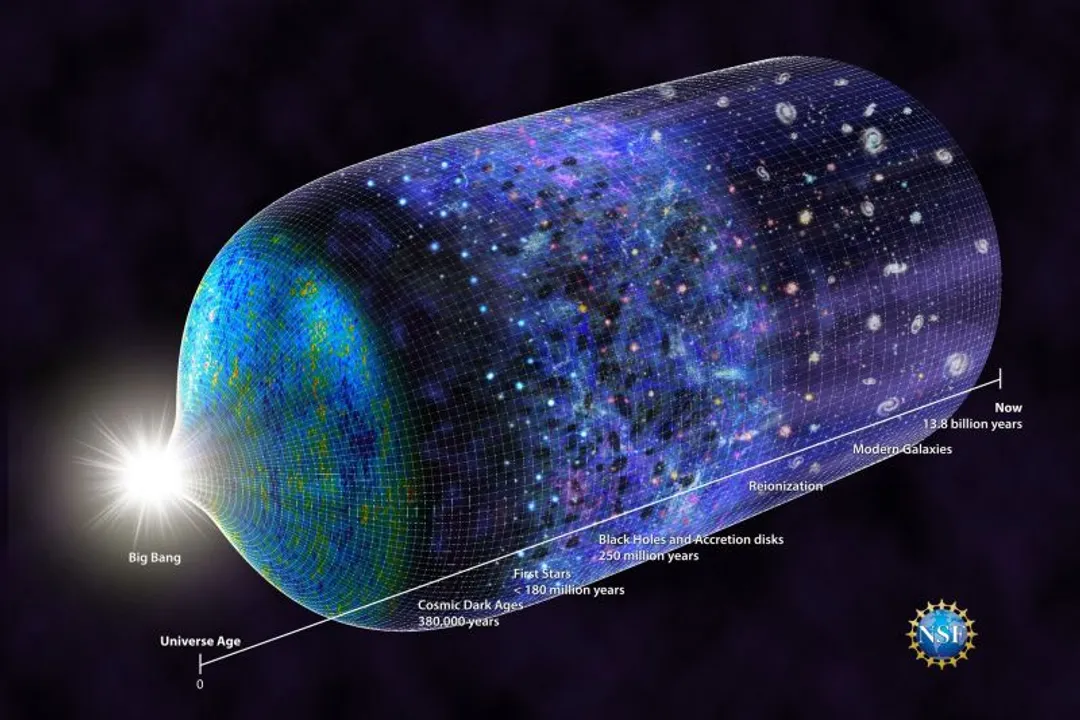
About a few hundred million years after the Big Bang, gravity began its long work, pulling together the vast, cool clouds of primordial hydrogen and helium gas. These enormous accumulations are known as molecular clouds, which can stretch for hundreds of light-years and contain millions of times the mass of our Sun. Within these cold environments, small, denser pockets of gas collapse under their own increasing gravitational force. As a clump grows, the gravitational pressure intensifies, causing the material to heat up dramatically, forming a protostar—a star in its infancy. This aggregation of baby stars within molecular clouds is often called a stellar nursery.

# Hydrogen Burning
The protostar stage ends when the core pressure and temperature finally become intense enough—reaching millions of degrees—to ignite nuclear fusion. This ignition halts the star's gravitational collapse, as the outward pressure from the energy released balances the inward crush of gravity. For most of a star’s existence, this phase involves fusing hydrogen nuclei into helium nuclei. This is the main sequence stage, the longest period of the star’s life. Our own Sun is currently in this phase. The net result of this cycle, the proton-proton chain reaction, requires six hydrogen atoms to yield one helium atom, with two hydrogen atoms remaining over, meaning four atoms result in one atom, with the missing mass converted into radiant energy, following Einstein's famous relationship, .
# Helium Capture
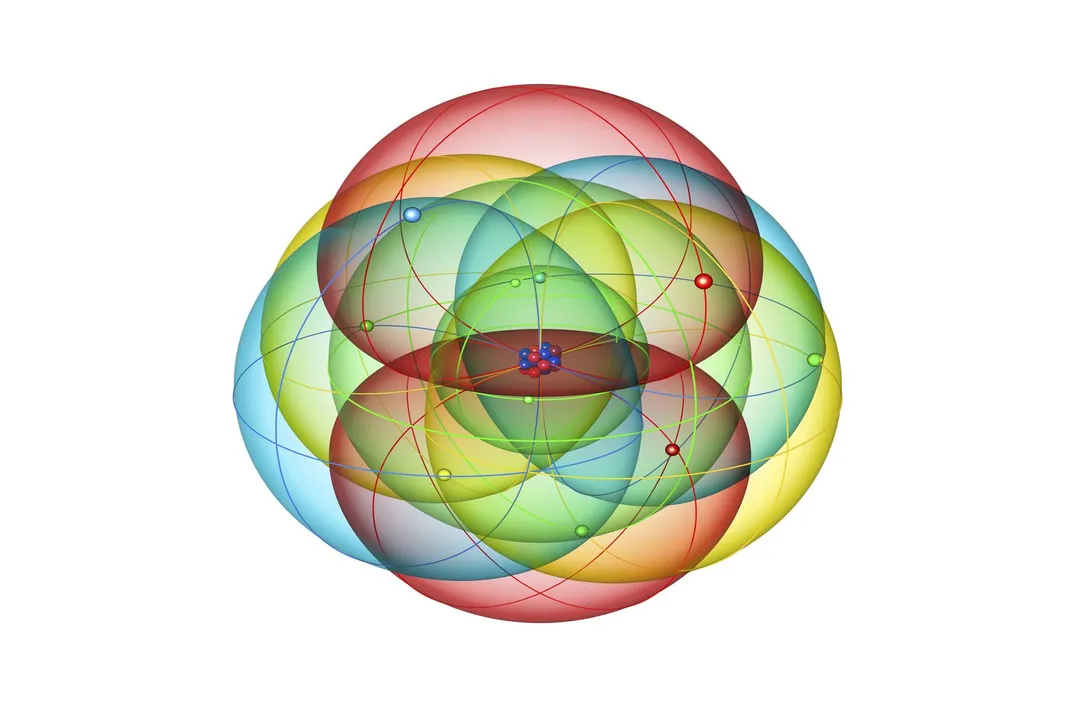
Once the hydrogen fuel in the star's core is depleted, the core contracts, raising the temperature further, which permits the next stage of nucleosynthesis to begin: burning helium. In stars like the Sun, this next phase builds up elements through a process often called helium capture, where a helium nucleus (, or an alpha particle) fuses with a heavier nucleus. This process generally favors the creation of elements with an even number of protons.
The sequence unfolds step-by-step:
- Three helium nuclei fuse to create Carbon (), a reaction known as the triple-alpha process.
- Carbon plus helium yields Oxygen ().
- Oxygen plus helium yields Neon ().
- This continues sequentially, building up elements like Magnesium (), Silicon (), Sulfur (), and so on.
The time spent in these subsequent burning stages is significantly shorter than the initial hydrogen-burning phase. For example, in a massive star, the fusion converting silicon into iron takes only a matter of days.
# Iron Barrier
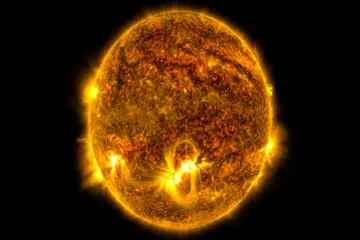
This chain of fusion, progressing from lighter to heavier elements, eventually terminates when the core material becomes Iron (). Iron has the most tightly bound nucleus in the periodic table; fusing iron nuclei together actually consumes energy rather than releasing it. When the star's core fills with iron ash, the energy generation stops abruptly, meaning the outward pressure that counteracted gravity vanishes in a short time.
This fundamental physical limit—the inability to gain energy by fusing iron—is the key turning point in stellar life, directly dictating whether a star ends its life gently or violently. The different fusion products form in layers based on the temperature gradient; in a massive star’s final moments, its interior resembles an onion, with lighter element fusion occurring in the outer shells and the iron core at the center.
# Massive Deaths
The fate of a star is almost entirely determined by its initial mass.
For sun-like, low-mass stars, when the core runs out of fuel, the outer layers drift away, creating an expanding shell of gas called a planetary nebula. What remains is the Earth-sized, intensely hot stellar cinder known as a white dwarf, which simply cools over eons without further nuclear activity.
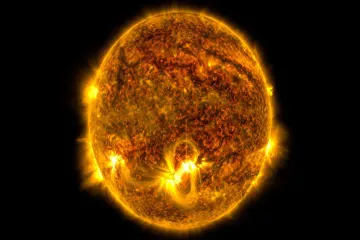
High-mass stars, however, face a far more dramatic conclusion. Once the iron core forms, the star collapses inward under its own immense weight. The collapse stops only when the density is so extreme that the nuclei resist further compression (neutron degeneracy pressure in the case of the densest remnants). This rebound generates a powerful outward shock wave, resulting in a spectacular explosion known as a supernova. These cataclysmic events are responsible for ejecting all the elements synthesized throughout the star’s life—from carbon up to iron—into the surrounding interstellar space. The remnant core survives as either a neutron star or, if the original mass was great enough, a black hole.
# Explosive Forging
Elements heavier than iron cannot be forged through standard fusion processes because they require an energy input instead of providing one. These "super-heavy" elements are created during the violent nuclear processes associated with stellar death.
Two primary mechanisms, both requiring an immense supply of free neutrons, are responsible for building elements beyond iron:
- The s-process (slow neutron capture): This process occurs over a slower timescale, perhaps requiring hundreds of thousands of years for a single neutron capture event. The s-process can account for the production of heavier isotopes up to elements like Bismuth ().
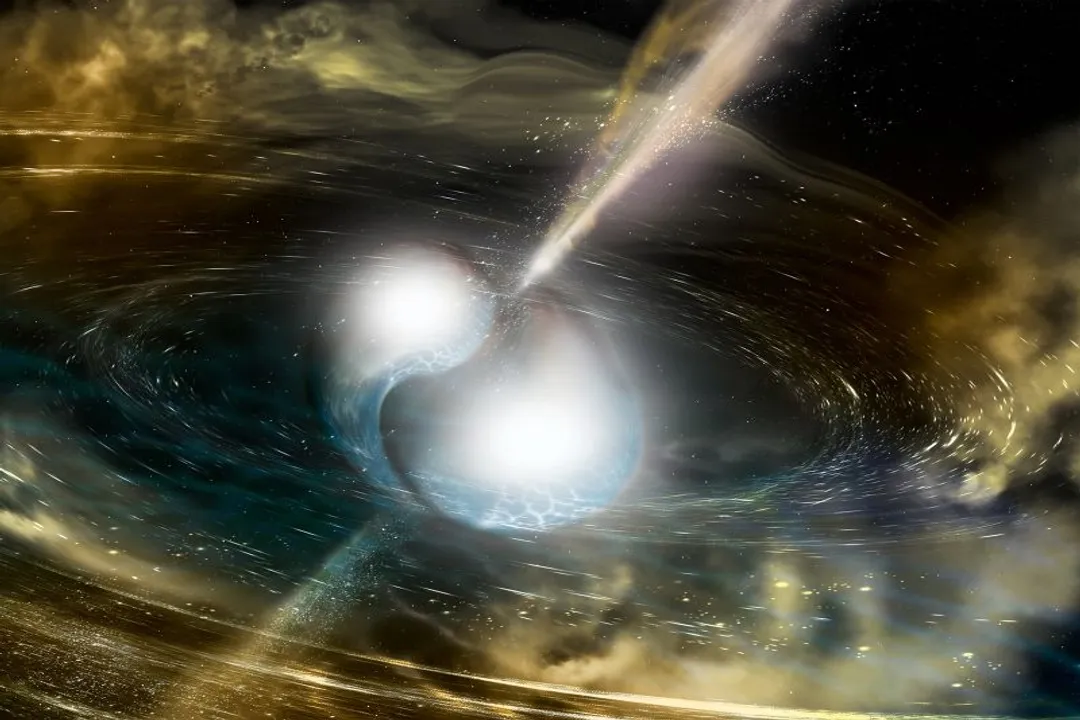
- The r-process (rapid neutron capture): This requires an extraordinarily high flux of neutrons, occurring in milliseconds. The extreme conditions found within a core-collapse supernova explosion or, crucially, during the merger of two neutron stars, provide the necessary environment for the r-process to synthesize the heaviest naturally occurring elements. The 2017 detection of gravitational waves from a neutron star collision provided direct observational evidence, showing signatures of recently synthesized gold and platinum.
It is fascinating to consider that the formation of elements like gold and uranium happens in environments so transient and energetic that scientists cannot directly witness the moment of their creation; they can only deduce the process from the resulting cosmic debris. In fact, the timescales here are incredibly compressed: while a star may spend billions of years making lighter elements, the final creation of the heaviest elements occurs in fractions of a second during an explosion.
Consider the elemental composition of our own bodies. Carl Sagan famously stated, "We are made of star-stuff". This isn't mere poetry; it reflects reality. Elements like carbon, oxygen, and nitrogen, essential for life, were synthesized in older stars that have long since died and dispersed their contents. It is a telling metric of cosmic cycling that the atoms in your left hand likely originated from a different stellar explosion than the atoms in your right hand, given that the creation of the material making up our solar system involved the deaths of hundreds of millions of previous stars.
# Tracing Evidence
The theories of how these elements are forged are rigorously tested by observing the cosmos itself. Astronomers employ spectral analysis, passing the light from distant stars through prisms or diffraction gratings to separate it into a spectrum. The dark or bright lines appearing in this spectrum act like atomic fingerprints, instantly revealing which elements are present in the star's atmosphere and in what quantities. This technique has been remarkably successful, even allowing scientists to detect elements that are radioactive and short-lived, such as Technetium (), in the spectra of certain red giant stars, confirming that nucleosynthesis is an ongoing process.
Furthermore, studying the chemical composition of very old stars—those formed early in the galaxy's history—helps map out the history of elemental enrichment, showing how the Milky Way’s chemical makeup has changed as successive generations of stars lived and died.
# Cosmic Legacy
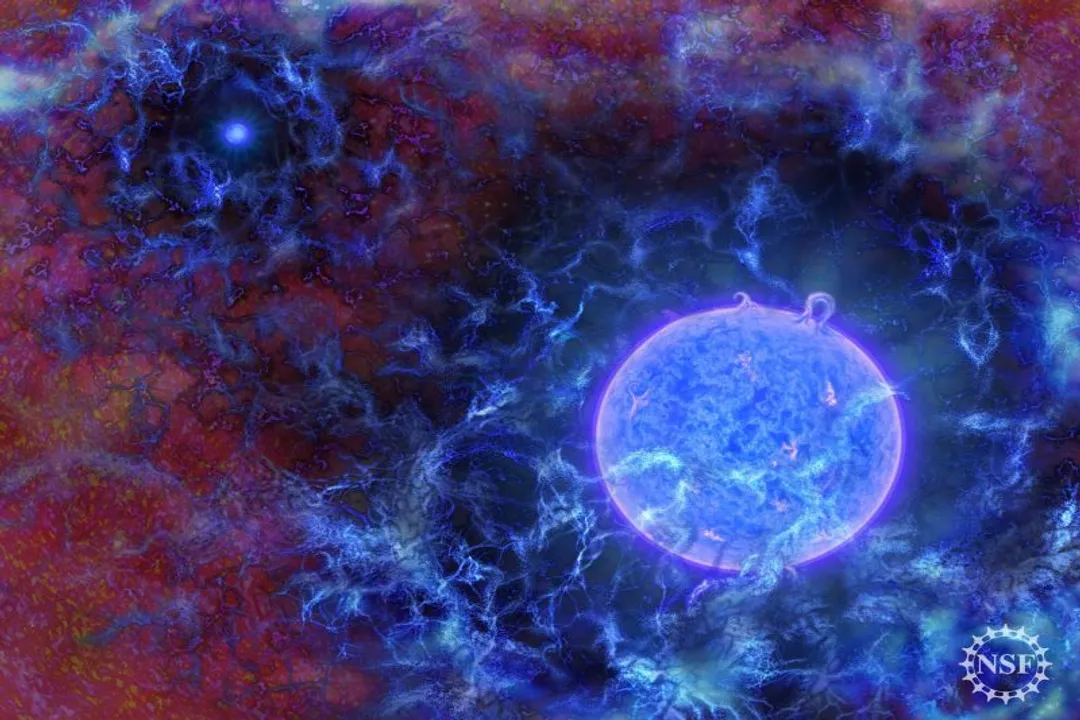
The continuous cycle of stellar birth, life, and violent death ensures that the universe is not chemically static. Every supernova and planetary nebula disperses newly synthesized nuclei, enriching the surrounding interstellar medium. This enriched material becomes the raw substance for subsequent stellar generations. Newer stars, like our Sun, are therefore born with a richer mix of elements—what astronomers sometimes call "metals"—than the very first stars.
While stellar nucleosynthesis in stars and during supernovae is responsible for creating nearly all the natural elements up to uranium, the very heaviest, highly unstable elements on the Periodic Table—those beyond element 103 (lawrencium) for instance—have not been found naturally on Earth and were synthesized artificially in laboratories using particle accelerators. Yet, the vast majority of the elemental diversity that underpins our world is a direct result of the extreme physics occurring inside stars, confirming that we are indeed products of stellar evolution.
Related Questions
#Citations
Star Basics - NASA Science
Stellar Nucleosynthesis: How Stars Make All of the Elements
The Elements: Forged in Stars | PBS LearningMedia
The stars within us | NSF - U.S. National Science Foundation
How elements are formed - Science Learning Hub
Stellar Evolution - Chandra X-ray Observatory
Nucleosynthesis | Research Starters - EBSCO
DOE Explains...Nucleosynthesis - Department of Energy
Elements Formed In Stars - Consensus Academic Search Engine