What process formed Earth's layers?
The Earth is not a uniform ball of rock; it is structured like a giant onion, with distinct layers stacked concentrically, each with unique chemical compositions and physical states. Understanding how this architecture came to be requires looking back nearly $4.5$ billion years to the violent infancy of our planet, a time when the entire world was molten and subject to immense gravitational forces. [5][10] The formation of these layers is a classic example of planetary differentiation, a physical sorting process driven by density.
The story starts with the chaotic environment of the early solar system. Dust and gas coalesced, forming planetesimals, which then collided and merged in a process called accretion. [5] As Earth grew larger, the energy released from these constant, high-velocity impacts, combined with the decay of radioactive isotopes, generated tremendous internal heat. [10] This heat was so intense that the early Earth was largely, or perhaps entirely, molten, existing as a massive ball of liquid rock, or magma. [2][10]
# Initial Melting
The transition from a solid accretionary body to a liquid, differentiated planet was crucial. The initial heat budget came primarily from two sources: the kinetic energy of infalling material and the heat generated by the decay of short-lived radioactive elements present in the early solar nebula. [2] This melting phase effectively reset the planet's internal structure, allowing materials to move freely under the influence of gravity. [4] If the Earth had remained a solid mass, this internal layering would never have occurred to the extent we observe today.
The physical consequence of this melting was the establishment of a hydrostatic equilibrium, meaning the material was free to move according to density differences. [4] Think about what happens when you mix oil and water; they don't stay mixed because one component is inherently heavier and settles below the other. The early Earth experienced an analogous, planet-sized version of this phenomenon. [2]
# Sorting Material
The mechanism that organized the planet into the core, mantle, and crust is known as differentiation or gravitational sorting. [2][4] In a liquid state, every element and compound within the Earth behaved according to its mass and chemical affinity. The fundamental principle at play is simple: denser materials sink, and lighter materials float. [4]
The heaviest materials, primarily iron (Fe) and nickel (Ni), began a slow, inexorable descent toward the center of the planet. [2][5] This sinking process created the Earth's core. This separation was massive, involving the movement of an incredible volume of material over geological timescales. Simultaneously, the lighter, silicate-rich minerals—compounds containing silicon and oxygen, along with magnesium, aluminum, and calcium—were pushed upward, forming the precursor to the mantle and, eventually, the crust. [1][4]
It is interesting to consider that without this massive sorting event, the Earth might have a composition much more like a meteorite, which generally represents the original, undifferentiated mixture of solar system materials. [8] Meteorites, especially iron meteorites, provide vital clues to the composition of Earth's inaccessible interior, as they are essentially remnants of planetesimals that either failed to differentiate or represent the heavy, iron-rich fraction that sank to form cores in larger bodies. [8] The differentiation process essentially stripped the heavy elements away from the lighter components that would go on to form the crustal rocks we walk on. [8]
The speed of this process is a point of active geological investigation. Some models suggest that the core formed relatively quickly, perhaps within the first 10 to 20 million years of Earth’s existence, while other denser, refractory elements may have sunk more slowly. [5]

# Layers Form
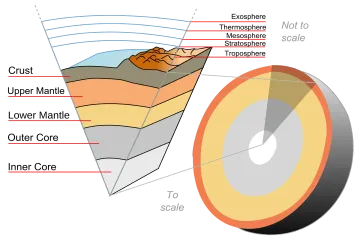
The result of this gravitational sorting is the distinct, layered structure we recognize today, typically divided into three primary compositional layers: the crust, the mantle, and the core. [1][6]
# The Core
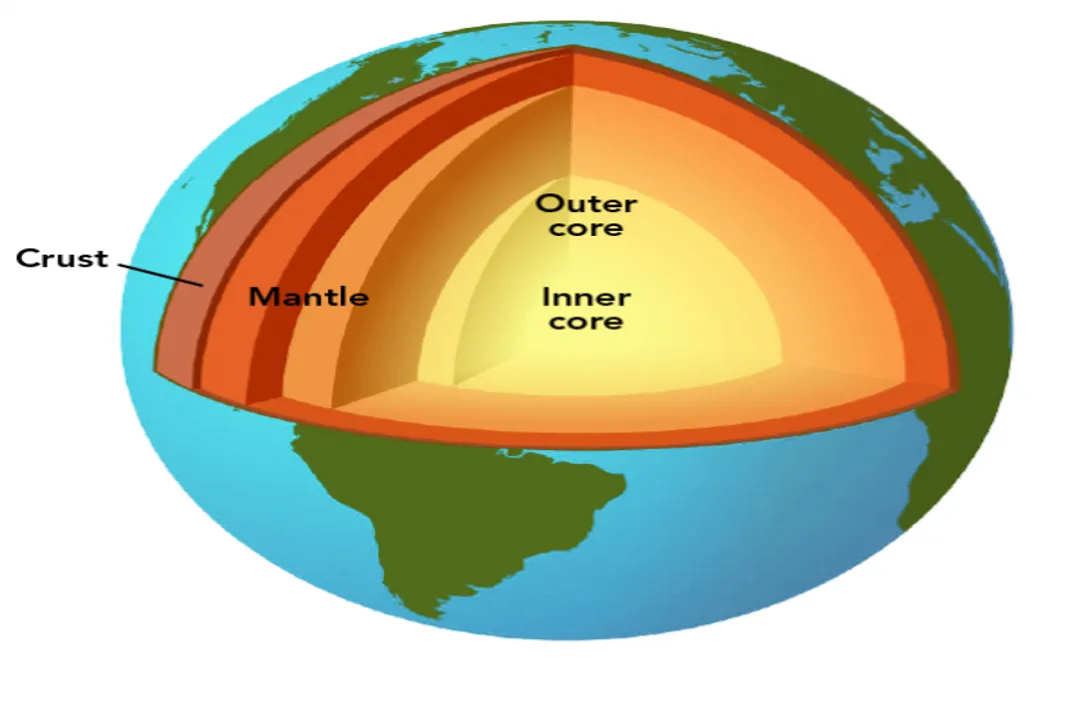
The innermost layer is the core, which is predominantly an iron-nickel alloy. [1] The core itself is subdivided into two parts based on its physical state: the inner core and the outer core. [1][6] The outer core is liquid, primarily because the temperatures there are so high that the iron-nickel mixture remains molten, even under immense pressure. [1] Conversely, the inner core, despite being hotter, is solid due to the staggering pressure exerted by all the overlying layers, forcing the metal atoms into a dense, crystalline structure. [1][6] It is the convection currents within the liquid outer core that are thought to generate the Earth’s protective magnetic field. [10]
# The Mantle
Above the core sits the mantle, the thickest layer, extending down to a depth of about $2,900$ kilometers. [1] Compositionally, the mantle is thought to be rich in silicate minerals, particularly those rich in iron and magnesium, making it denser than the crust but less dense than the core. [6]
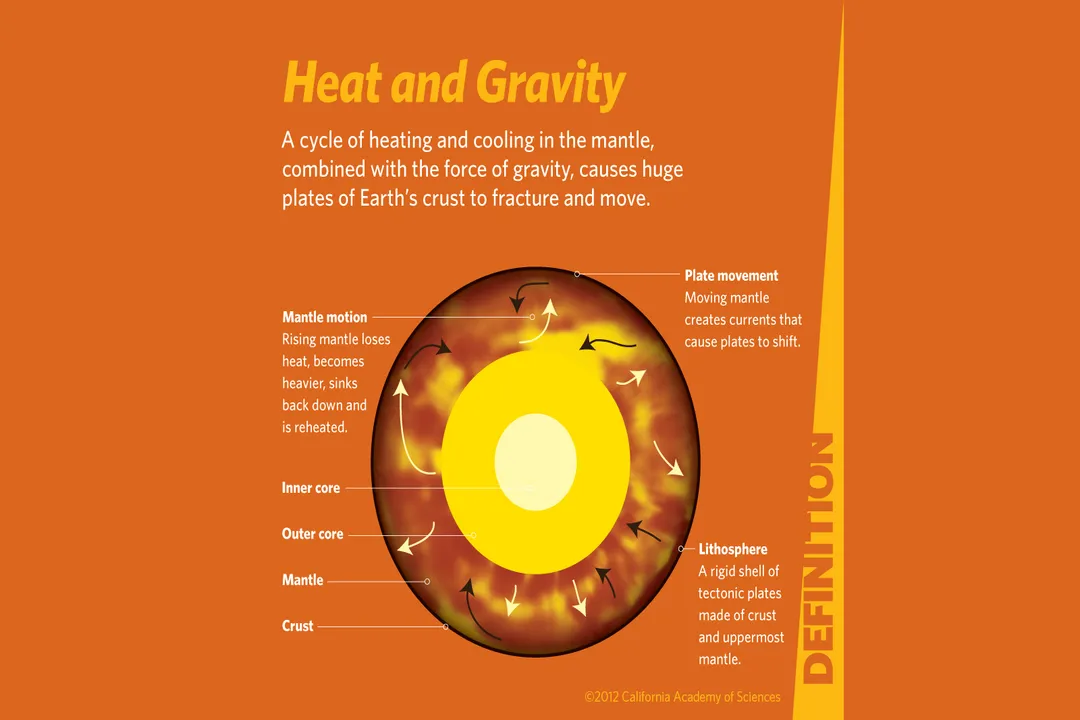
Geophysically, the mantle is often described in three zones. The lowermost section, the lower mantle, is solid and extremely hot, exhibiting very slow convection over eons. Above this is the asthenosphere, a layer within the upper mantle that is less rigid than the rock above or below it; it behaves plastically, meaning it can flow slowly over long time periods, which is critical for driving plate tectonics. [9] Finally, the uppermost part of the mantle, which is rigid and cool, is chemically bound to the crust, forming what is known as the lithosphere. [9]
# The Crust
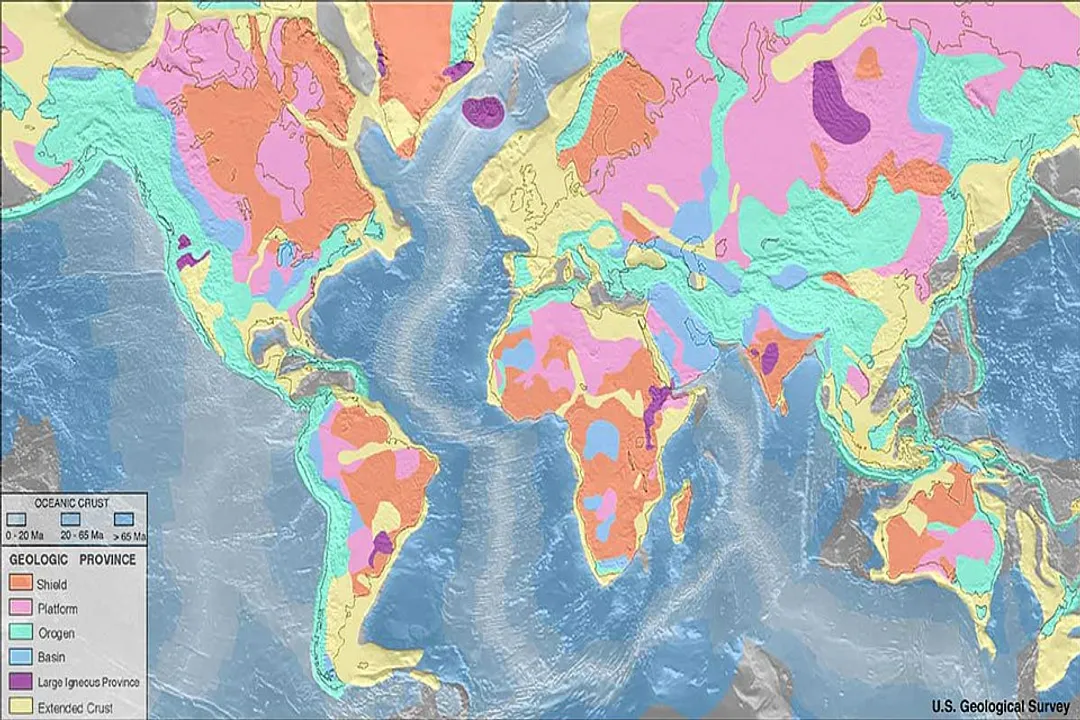
The outermost layer is the crust, which is thin and brittle compared to the mantle beneath it. [3] This is the only layer that is directly accessible and observable, and it is chemically distinct from the rest of the planet because it represents the last, lightest material to "float" to the top during differentiation. [4]
The crust is not uniform; it comes in two primary types: [3]
- Oceanic Crust: This is relatively thin (around $5$ to $10$ kilometers thick) and is generally composed of denser, darker, mafic rocks like basalt. [3]
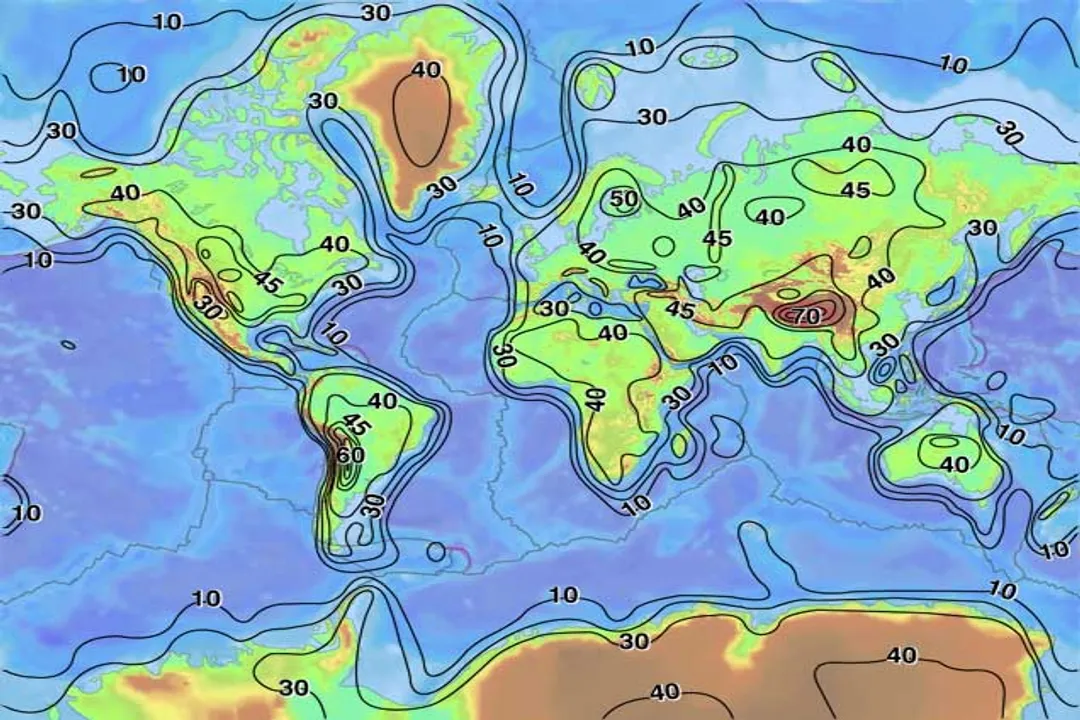
- Continental Crust: This is much thicker, averaging about $35$ to $40$ kilometers, but can exceed $70$ kilometers beneath mountain ranges. [3] It is generally composed of lighter, felsic rocks such as granite. [3]
This chemical difference between oceanic and continental crust is a direct consequence of the extended cooling and differentiation history of the planet, where lighter silicates chemically separated further to produce these distinctive rock types. [3]
# Reading the Interior
Since direct sampling of the mantle and core is impossible with current technology, the knowledge of these deep structures comes from indirect measurements, primarily the way seismic waves travel through the Earth. [7] This field, seismology, is the primary tool scientists use to map the interior structure. [7]
When an earthquake occurs, it sends vibrations—seismic waves—rippling through the planet. [7] These waves travel at different speeds depending on the density, temperature, and physical state (solid or liquid) of the material they pass through. [7] For instance, S-waves (shear waves) cannot pass through liquid material, which is how we definitively know the outer core is liquid. [7] The bending or refraction of P-waves (pressure waves) as they pass through the core-mantle boundary allowed scientists to map the core's size and confirm its liquid nature. [7]
If we were to create a conceptual model of the Earth's interior based purely on these seismic velocity changes, we could map boundaries between layers, much like using an ultrasound. The sharp velocity contrasts at the core-mantle boundary and the crust-mantle boundary (the Mohorovičić discontinuity, or Moho) clearly delineate the major compositional and physical divisions established during that early molten phase. [7]
# Compositional Contrast
A key element in understanding the formation is comparing the composition of the layers. The process was not just about moving heavy things down; it involved chemical partitioning. For example, elements that prefer to bond with iron (siderophiles) sank with the iron to form the core, while those that prefer to bond with silicon and oxygen (lithophiles) rose to form the mantle and crust. [8] This chemical fractionation explains the relative scarcity of certain elements like gold and platinum in the crust compared to their expected abundance based on solar system abundances—they are largely locked away in the core. [8]
Here is a simple comparison illustrating the major compositional differences derived from the differentiation process:
| Layer | Primary Composition | Physical State (Average) | Key Feature |
|---|---|---|---|
| Inner Core | Iron-Nickel Alloy | Solid | Extreme pressure solidifies material |
| Outer Core | Iron-Nickel Alloy | Liquid | Generates the magnetic field |
| Mantle | Magnesium-Iron Silicates | Solid/Plastic | Undergoes slow convection |
| Crust | Silicates (Granite/Basalt) | Solid | Chemically distinct, lightest material |
| [1][3][6] |
When we examine the overall composition, the mantle and core dominate the Earth's mass. The crust, which seems so substantial to us, represents less than $1$ percent of the planet's total volume. [1] This dramatic imbalance emphasizes that the vast majority of Earth's mass settled according to density gradients established in the liquid phase. [4]
# Ongoing Modification
While the primary layering was set billions of years ago by differentiation, the planet is not static. The modern geological activity we observe is a direct consequence of the thermal engine operating within the mantle, driven by residual heat and ongoing radioactive decay. [9]
The slow creep of the plastic asthenosphere drags and moves the rigid lithospheric plates on the surface—the mechanism we call plate tectonics. [9] This movement constantly recycles crustal material, either by creating new crust at mid-ocean ridges or by destroying old crust in subduction zones, where the denser oceanic lithosphere sinks back toward the mantle. [9] This recycling ensures that the chemical distinction between the deep interior and the surface crust is continuously maintained, though the surface is constantly being reworked.
One critical aspect of the ongoing system, which evolved from the initial heating phase, is how heat escapes. The cooling of the Earth is extremely slow. Imagine the entire planet as a giant battery that is very slowly discharging its internal heat. The differentiation process concentrated the heavy, heat-producing metals into the core, but the mantle still contains enough radioactive material to sustain slow convection. If the mantle were much thicker or the core much cooler, the convection might cease, stopping plate tectonics, but the current balance, established during that chaotic early heating, keeps the surface dynamic. [2][9]
Furthermore, we can infer a deeper level of compositional sorting within the mantle itself that goes beyond the simple rigid/plastic distinction. While the sources focus on the main compositional layers, one might hypothesize that during the initial differentiation, certain elements may have preferentially partitioned between the very deep lower mantle and the upper mantle, creating a subtle chemical stratification that persists even within the silicate layers, distinct from the major density differences that separate it from the metallic core. [7] This finer-scale chemical boundary, if it exists, would influence the viscosity and melting points of the deep rock, subtly impacting mantle plumes rising from the core-mantle boundary today. [10] This idea suggests that the initial sorting was not perfectly homogenous across the entire silicate fraction; the lowest parts of the silicate layer were exposed to the core environment longer, perhaps incorporating elements slightly differently than the upper layers that cooled more quickly near the surface. [5] This lingering chemical memory influences everything from volcanism to the movement of tectonic plates today.
The process of differentiation fundamentally defines Earth’s habitability. If the iron had not sunk, there would be no substantial liquid outer core, and thus no planetary magnetic field to shield the surface from harmful solar radiation, making complex life as we know it impossible. [10] The very existence of the crust as a relatively light, chemically distinct layer floating atop the denser mantle allowed for the formation of stable continents and, eventually, oceans. [3][4] The initial fiery separation laid the groundwork for every subsequent geological and biological event on the planet. The Earth's layers are not just stacked; they are the preserved record of the planet's first, most violent act of self-organization.
#Videos
An Overview of Earth's Layers - YouTube
Related Questions
#Citations
From Core to Crust: Defining Earth's Layers | Exploring Earthquakes
The Earth's Layers Lesson #1 | Volcano World
Earth's crust - Wikipedia
Why does the Earth have Layers? - Let's Talk Science
How did the layers of the earth form? - Quora
Earth's Formation and its Interior Structure
How do scientists actually know what material the Earth's core is ...
Meteorites key to the story of Earth's layers | ANU College of Science ...
Plate tectonics - Earth's Layers, Crust, Mantle | Britannica
An Overview of Earth's Layers - YouTube