What is the intensely colored, stable pigment formed when ferric salt is reduced and reacts with potassium ferricyanide?
Answer
Prussian blue
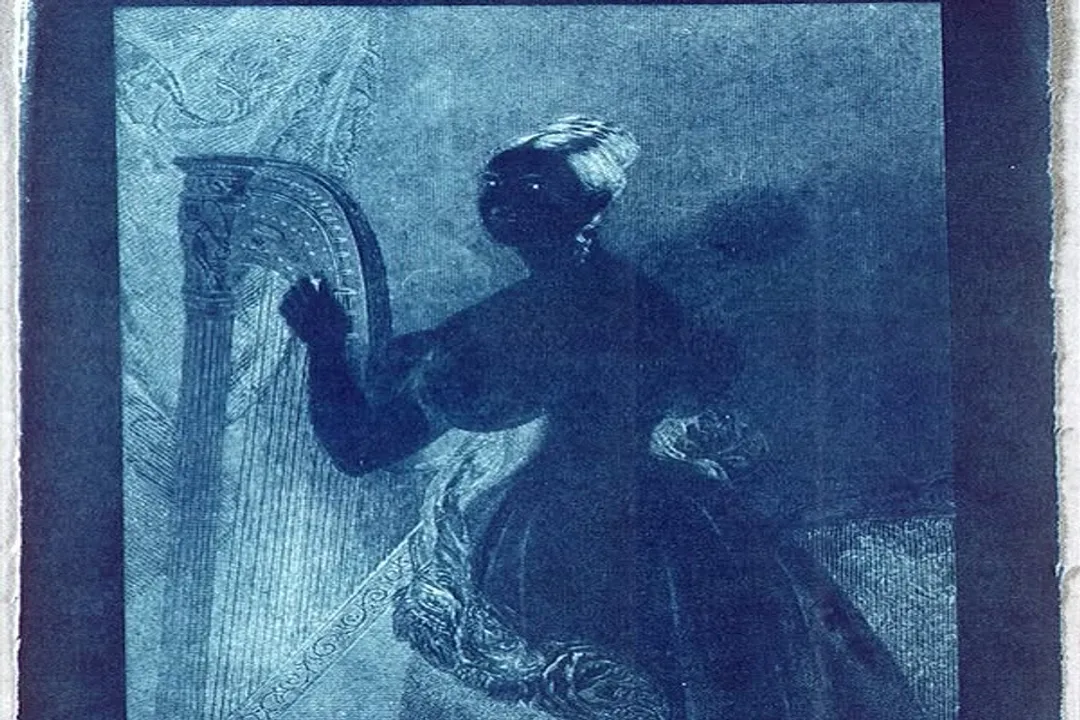
The chemical reduction catalyzed by UV light leads to the formation of Prussian blue, which is the stable, intensely colored pigment characteristic of the final cyanotype print.
Related Questions
What is the signature visual characteristic of the cyanotype process invented by Herschel?In what year was Sir John Herschel's cyanotype process invented?What chemical agent did Herschel discover was crucial for *fixing* silver-based images, stopping further light sensitivity?Which term, related to photography, was coined by Sir John Herschel?What two chemical solutions are required to coat a substrate for the cyanotype process?Who was the first contemporary to extensively document subjects using Herschel's cyanotype process, starting around 1843 or 1844?What specific subject matter did Anna Atkins use the cyanotype to illustrate in her publication?What is the intensely colored, stable pigment formed when ferric salt is reduced and reacts with potassium ferricyanide?What was John Herschel's primary scientific career that influenced his approach to optics and light sensitivity in chemistry?What post-exposure step is crucial for removing unreacted chemicals in the cyanotype process?