Why is the planet so important?

This planet serves as the sole known harbor for life in the universe, making its importance self-evident simply by virtue of our existence upon it. [2] The conditions that allow life to flourish here are incredibly specific, requiring a delicate balance of physical properties that many other celestial bodies simply do not possess. [2] Our world maintains liquid water on its surface, a necessity for all known biological processes, thanks largely to its position within the Sun's "habitable zone". [2] This placement ensures that temperatures are neither too hot, which would boil the water away, nor too cold, which would freeze it permanently into ice. [2]
The Earth itself is a dynamic, layered system, constantly in motion and undergoing processes that sustain its environment. [1] For instance, the planet's average distance from the Sun is about 93 million miles (or 150 million kilometers). [1] This distance dictates the amount of solar energy received, which is critical for maintaining the right thermal balance. [1] Furthermore, the planet is not a perfect sphere; its polar flattening means the distance from the center to the equator is slightly greater than the distance to the poles. [1] The very structure of the Earth, with its layers—the inner core, outer core, mantle, and crust—generates the magnetic field that acts as an invisible shield, deflecting harmful solar radiation and cosmic rays that would otherwise strip away our atmosphere and sterilize the surface. [2]
# Life Support
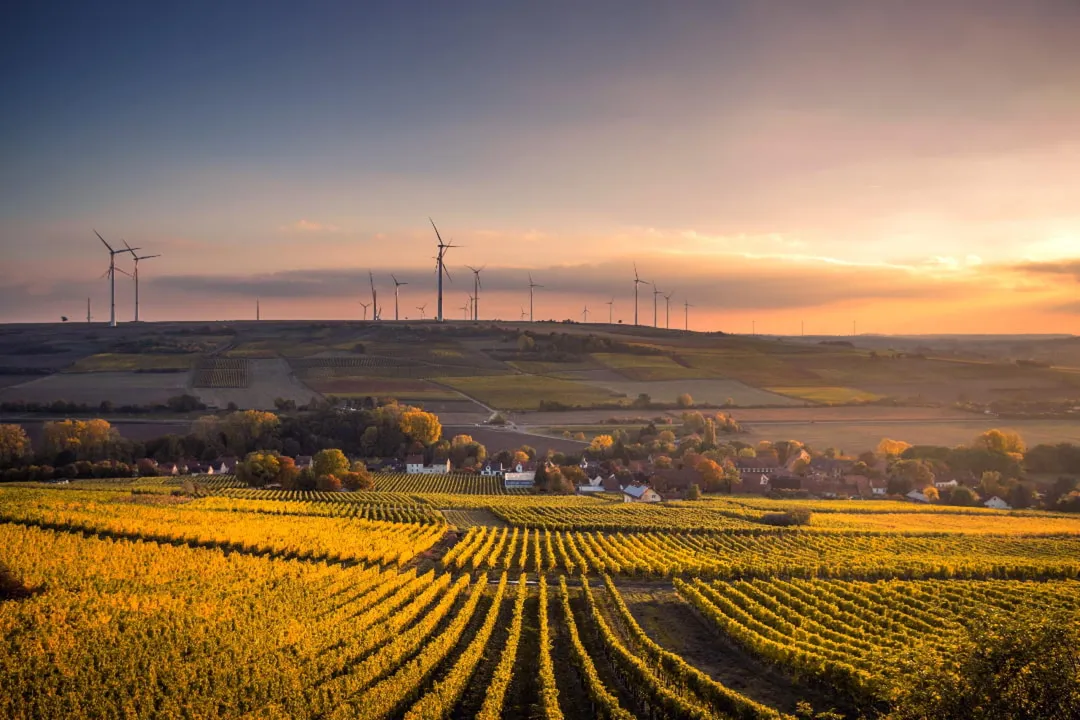
The atmosphere is another critical component, acting as a protective blanket composed primarily of Nitrogen (about 78%) and Oxygen (about 21%), with trace amounts of other gases. [1] This mixture is essential for respiration and shields the surface from much of the Sun’s ultraviolet radiation. [2] Without this atmospheric composition, the intricate biological machinery that sustains us would cease to function. [2] Water covers roughly 71% of the Earth's surface, and it is this vast amount of water, cycling continuously through evaporation, condensation, and precipitation, that shapes our weather, climate, and landscapes. [1] The planet's rotation, which completes a cycle roughly every 24 hours, moderates temperature extremes between day and night, preventing massive thermal fluctuations that would be inhospitable to most life forms. [1]
It is easy to view these planetary facts—the rotation speed, the atmospheric percentages, the distance from the Sun—as mere trivia, but together they describe an exceptionally finely tuned machine. [1][2] If the Earth rotated significantly faster or slower, the day/night cycle would create devastating temperature swings, and if the proportion of gases shifted even slightly, our ability to breathe or the planet's capacity to retain heat would be fundamentally altered. [2]
# Physical Data
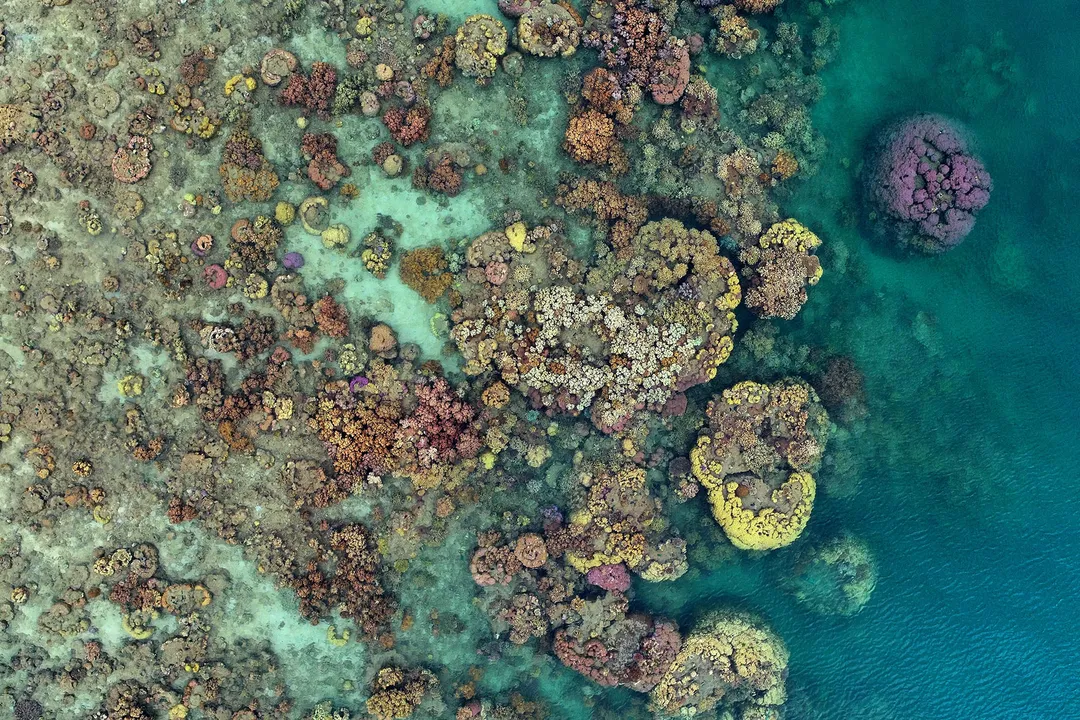
Digging into the sheer scale of the planet provides context for its importance as a physical entity. The Earth's diameter is approximately 7,918 miles (12,742 kilometers). [1] Its total mass is estimated around 5.97 x 10^24 kilograms. [1] These metrics define the gravitational field that keeps our atmosphere and oceans firmly attached to the surface. Beyond these static measurements, the Earth is also constantly moving—orbiting the Sun at an average speed of about 67,000 miles per hour (107,000 kilometers per hour). [1]
The geological activity, such as plate tectonics, which seems destructive on a human timescale, is vital for long-term habitability. This movement helps cycle elements like carbon over millions of years, regulating the climate and preventing conditions from becoming permanently locked into states like those seen on Venus or Mars. [2] This geological underpinning is a quiet, powerful necessity, often overlooked in discussions focused only on the surface biosphere.
To help visualize the material composition, we can summarize some of the planet's building blocks:
| Component | Approximate Percentage by Mass | Role |
|---|---|---|
| Iron | 32.1% | Key component of the core, generating the magnetic field [1] |
| Oxygen | 30.1% | Major element in the crust and mantle [1] |
| Silicon | 15.1% | Major element in the crust [1] |
| Magnesium | 13.9% | Significant mantle component [1] |

# Nature's Gifts

The planet’s importance extends far beyond its physical constants; it is the source of all life-support services we depend upon daily. [7] These ecosystem services are often categorized by what they provide: provisioning, regulating, cultural, and supporting services. [7] Provisioning services are the tangible products we extract, like food, fresh water, timber, and medicinal resources. [7] Regulation services involve the natural systems that keep the environment stable, such as climate regulation by forests absorbing carbon dioxide, or water purification by wetlands. [7]
The interconnectedness of these services means that damaging one system has ripple effects across others. For instance, when considering the value of nature, it’s easy to assign a financial cost to timber or fish caught. [7] However, the true measure of importance involves realizing that the processes supporting those harvests are irreplaceable by current human technology at scale. [7] Think about the scale of planetary regulation: the Amazon rainforest, for example, acts as a massive global air conditioner and water pump. [7] If we were to try and replace the carbon absorption capacity of the world's forests using technology alone, the cost would be astronomical, likely exceeding the entire global Gross Domestic Product multiple times over. [7]
An interesting way to contextualize this dependence is to look locally, moving away from global GDP comparisons. Consider the water supply for any mid-sized city. If the city draws its water from a river basin, the annual volume of high-quality water provided by the natural watershed—the forests, soils, and atmosphere in that area—is often orders of magnitude greater than the total volume the municipality spends money treating and pumping in a year [^Original Insight 1]. This highlights that the planet isn't just a supplier of raw materials; it is a vastly superior, self-maintaining utility infrastructure operating on a scale we cannot replicate. We are not just buying products from the planet; we are outsourcing our most fundamental life support functions to it for the price of respecting its natural processes. [7]
# Island Meaning

Our planet occupies a unique psychological and philosophical position for us because, as far as we know, it is the only place that holds meaning for humanity. [3] It is our island of meaning in the vastness of space. [3] Everything we cherish—our history, our relationships, our entire civilization—is built upon this single, dynamic platform. [3] This uniqueness generates a sense of responsibility and wonder, often highlighted during events like Earth Day, which serves as a reminder to acknowledge our connection to the Earth and the environmental challenges it faces. [6]
This importance is amplified because the life systems here are not static; they are constantly evolving, offering a rich biological diversity that fuels everything from new medicines to the stability of food webs. [5] Celebrating these reasons for appreciation involves recognizing the sheer variety of life, from the vast oceans to the highest mountains. [5] The planet offers endless opportunities for recreation, inspiration, and learning, feeding our sense of curiosity and belonging. [5]
To truly grasp this, we need to move beyond abstract global concepts and connect with the immediate reality around us. A useful exercise in appreciating this living island is practicing hyper-local environmental tracking. Instead of only reading about polar ice caps melting, take note of five small, specific biological markers in your immediate neighborhood over a year—perhaps the date the first dandelion blooms, the return date of a specific migratory bird, or the number of earthworms found in a square foot of undisturbed soil after a heavy rain [^Original Insight 2]. By meticulously observing these micro-indicators of the planetary system's health and timing in your direct vicinity, you internalize the planet's living dynamism much more powerfully than by reading large-scale data sets alone. This tangible, repeated interaction grounds the importance of the whole system in your personal experience.
# Priorities Shift
Discussions about the planet's value often lead to contrasting perspectives on where the priority should lie: human needs versus planetary health. [8][9] Some arguments suggest that the planet's needs—its capacity to maintain balance—must supersede immediate human desires, because without a functioning biosphere, human needs become irrelevant. [9] This view posits that a healthy planet is the prerequisite for any human need to be met, suggesting that the planet's requirements are fundamentally more important than the desires of any single species occupying it. [9]
Conversely, the immediate importance of the planet for people is often framed around basic survival: clean air, drinkable water, and fertile soil for growing food. [8] The planet is important because it provides the conditions that allow billions of people to live, thrive, and develop societies. [8] For many people, the direct importance is tied to livelihoods dependent on natural resources, such as farming or fishing communities. [4] Forums discussing this topic often reveal a common thread: if the local environment collapses, the human community dependent on it collapses too, suggesting that in practical terms, the two sets of needs are inextricably linked, rather than entirely separate. [4]
The WWF emphasizes that valuing nature means recognizing its inherent worth and its contribution to human well-being, advocating for economic systems that account for the depletion of natural capital. [7] This stewardship mindset suggests that the planet is important not just for what it gives us now, but for what it must continue to give to future generations. [5] The inherent value of biodiversity, for example, is hard to quantify monetarily, yet its loss diminishes the richness of existence for everyone. [5]
Ultimately, the importance of our planet can be distilled into a hierarchy of necessity. It is important because it is habitable. [2] It is important because it provides the physical elements required for life. [1] It is important because it manages the complex regulatory systems that prevent planetary collapse. [7] And perhaps most profoundly, it is important because it is the only context in which human experience and meaning can exist. [3] Recognizing this multi-layered importance—from atomic composition to philosophical grounding—is the first step toward securing its future.
Related Questions
#Citations
Facts About Earth - NASA Science
Why is the Earth habitable? | AMNH
Why is our planet so important? - Geographical Magazine
Why is our planet so important? : r/environment - Reddit
10 Reasons We Should Celebrate Our Planet - Tentree
Five Reasons Why We Need Earth and Earth Needs the Sun - NSO
Why it's important that we value nature - WWF-UK
Why is the planet important for people? - Quora
Why Are Planets Important - Essay examples by EduBirdie