Can we live without planets?
The very foundation of our search for life beyond Earth rests on the idea of a planet—a world orbiting a star, possessing oceans of liquid water, and offering a relatively stable environment. However, recent scientific contemplation pushes against this hard-and-fast requirement, suggesting that the universe might harbor life even in the profound emptiness between stars, completely independent of a planetary body or even a sun. This shift in perspective forces us to ask: Does life really need planets to take hold and persist?
# Habitability Spectrum
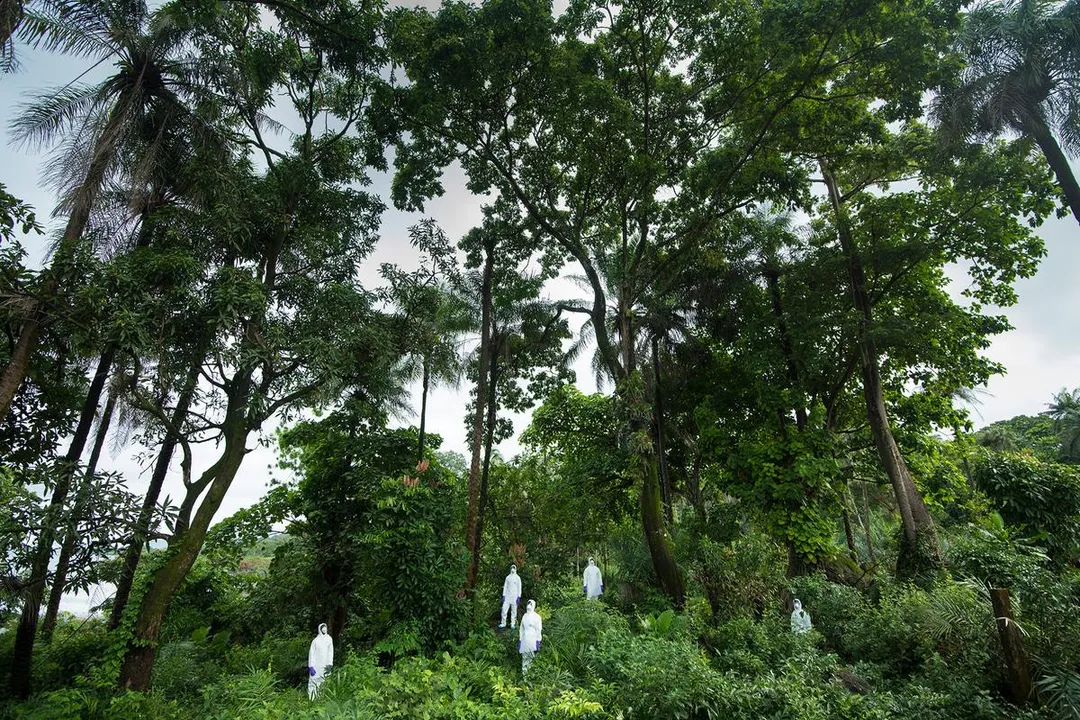
The conventional understanding of planetary habitability, often summarized by the concept of the habitable zone, centers on the presence of liquid water on a world's surface. [4][9] This zone, sometimes called the Goldilocks zone, describes the orbital range where temperatures are neither too hot for water to boil away nor too cold for it to freeze solid. [4] When astronomers survey the trillions of exoplanets estimated to populate the galaxy, they are largely hunting for Earth-like analogs within these specific zones. [3] Planetary bodies provide the mass necessary to retain an atmosphere, crucial for regulating temperature and shielding surface life from harmful radiation. [9] They also offer geology—plate tectonics, volcanism, and magnetic fields—which cycles essential nutrients and protects the atmosphere over cosmic timescales. [9]
Planets, therefore, are considered the best, most stable cradles for complex life as we currently understand it. [4] The Earth itself is a testament to this stability, benefiting from the gravitational influence of other solar system members, such as Jupiter, which has historically helped clear out dangerous impactors. [6] Removing the other planets in our solar system would certainly introduce long-term orbital instability for Earth, potentially leading to erratic climate shifts over millions of years, although immediate survival wouldn't cease. [6] This highlights that even for life on a planet, the planetary neighborhood matters immensely for longevity.
# Worlds Without Stars
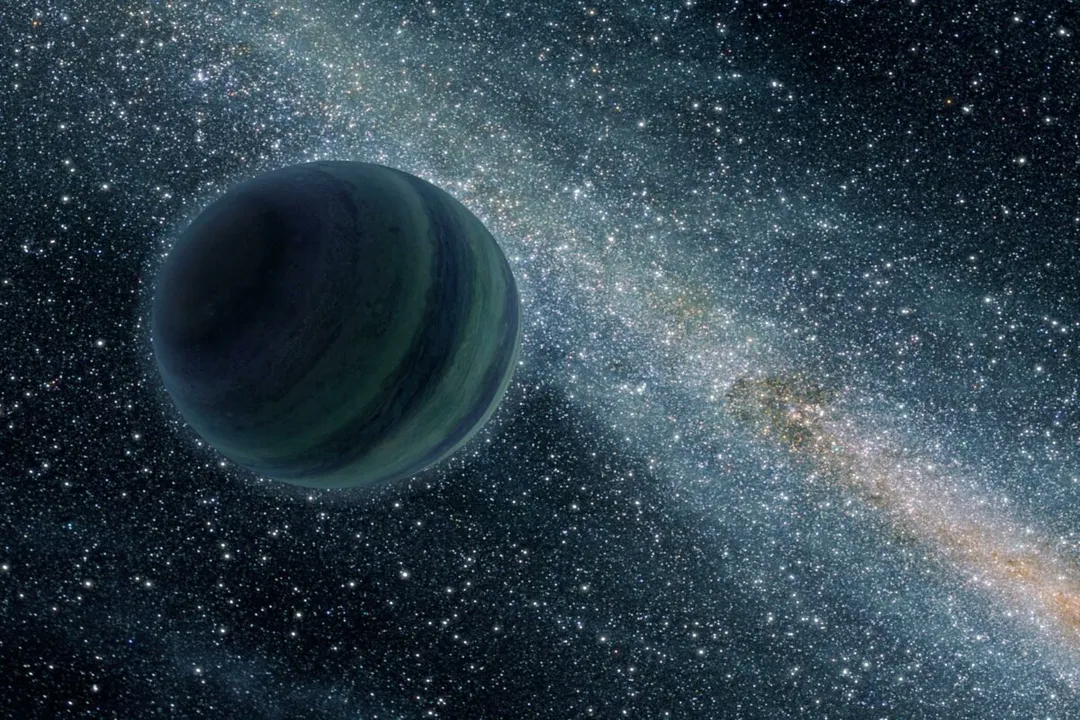
Yet, the universe is far larger and more varied than the neat orbits within a star's influence. Scientists are increasingly considering environments previously deemed too hostile or too barren for any biological activity. [2] One radical possibility is life existing on rogue planets—worlds ejected from their parent systems, drifting through interstellar space. [5][7] Lacking the warmth of a sun, these dark wanderers would otherwise be frozen solid. [5]
The survival mechanism proposed for life on such bodies relies not on external stellar radiation but on internal heat generation. [5] Radioactive decay within the planet's core and mantle can maintain enough geothermal energy to keep a subsurface ocean liquid, much like the scenario hypothesized for icy moons like Europa or Enceladus, but applied to a planet unbound to a star. [5] If an environment like this can sustain liquid water, even beneath a thick ice shell, it meets a primary criterion for habitability. [4][7]
This scenario moves the goalposts significantly. Instead of looking for surface water dependent on stellar flux, we must look for interior heat sources capable of sustaining liquid water pockets deep beneath the surface. [5] It brings up a fascinating contrast between the conditions supporting Earth life and the possibilities for life elsewhere.
| Life Requirement | Standard Planetary Life (Surface) | Theoretical Rogue Planet Life (Subsurface) |
|---|---|---|
| Energy Source | Stellar radiation (Sun) [4] | Geothermal/Radiogenic heat [5] |
| Liquid Solvent | Surface oceans/seas [9] | Subsurface oceans or pockets [5] |
| Stability | Atmospheric regulation, orbital mechanics [6][9] | Thermal insulation provided by thick ice/rock mantle [5] |
| Radiation Shield | Atmosphere and magnetic field [9] | Thick overburden of rock/ice [2] |
When considering the energy requirements, it's worth noting that while geothermal heating might keep water liquid, the energy flux is incredibly low compared to stellar input. Sustaining a complex, multi-cellular ecosystem with high metabolic needs, like the flora and fauna we are familiar with, would demand an unlikely level of sustained internal heat or a very different, energy-efficient biochemistry. [2] The life forms most likely to thrive in these cold, dark environments would probably be extremophile microbes, similar to those found deep within Earth's crust or vents, relying on chemosynthesis rather than photosynthesis. [2]
# Life Without Planets
The concept can be taken even further. Scientists have suggested that life, in its most primitive form, might not even require a planetary body at all, finding a foothold directly in interstellar space. [2][7] This is perhaps the most radical departure from traditional astrobiology.
The reasoning hinges on the hardiness of certain terrestrial organisms known as extremophiles. [2] These microbes can survive incredible levels of radiation, desiccation, and extreme temperatures. [2] If these hardy organisms were somehow dispersed through space, perhaps embedded within dust grains or small rocky fragments, they might survive the transit between stars. [2]
This is distinct from life on a planet, even a rogue one. This suggests that the actual origin or temporary residence of life might be much more diffuse than previously imagined. [7] Molecular clouds—vast, cold regions where new stars and planets eventually form—are not entirely sterile. If dormant, radiation-resistant spores of life can be incorporated into the very building blocks of new solar systems, then life might simply hitchhike across the galaxy, only developing into a thriving state once it encounters a suitable, albeit non-planetary, niche like a gas giant's atmospheric layer, or eventually, a planet. [2] This implies a cosmic distribution model where life seeding is ongoing, independent of the long-term stability planets afford.
# Human Survival Constraints
While the general concept of life might survive without planets, the question of human survival shifts the focus entirely. Our biology is exquisitely tuned to the specific conditions of an Earth-like world. [8] We require readily accessible liquid water, moderate temperatures, a breathable oxygen-nitrogen atmosphere, and protection from lethal radiation. [9]
The prospect of establishing a permanent human presence elsewhere, even on other suitable planets, is fraught with immense obstacles. [8] The sheer distances between stars mean that even if we found a perfect, habitable exoplanet, reaching it with current or near-future technology is a multi-millennial proposition. [8] Furthermore, while we might dream of settling on worlds without stars, the energy demands for sustaining a human habitat—requiring light, warmth, complex agriculture, and atmospheric recycling—are astronomical compared to what might be needed for a simple, self-sustaining bacterial colony in a subsurface ocean. [8]
If we consider a "no planets" scenario for humanity, it implies either: a) we remain confined to Earth, or b) we develop technology to live in entirely artificial, self-contained habitats that are fundamentally different from planetary surfaces. The latter suggests living in massive, self-sustaining starships or enormous orbiting stations, effectively creating artificial planets that orbit stars or drift in space. [8] These would still need to replicate the physics and chemistry provided by a natural planet—gravity, shielding, and resource cycling—but they would be entirely engineered constructs, not worlds formed by accretion. [8]
# Engineering Our Next Step
The difference between life persisting and us persisting boils down to complexity versus sheer biological tenacity. Microbial life is an expert in slow, low-energy survival, [2] perfectly suited for the harsh, low-energy realities of interstellar space or deep planetary interiors. [5] Human civilization, however, requires high energy throughput to maintain its structure, technology, and population density. [8]
This leads to an interesting thought experiment regarding migration. If a rogue planet is drifting, the energy budget to warm a pocket large enough for a human base might exceed the available geothermal energy for millennia. A natural planet offers this energy passively through geological processes or stellar proximity; an artificial habitat requires a constant, massive energy input, likely from fusion or advanced solar collection, which is technically far more demanding than simply finding a world that already works. [8] Therefore, while the cosmos might be littered with tiny, dark, sub-surface microbial oases, the warm, bright, resource-rich environments needed for our civilization are almost certainly going to be found, if at all, on actual planets orbiting stars. [3][4] The galaxy is teeming with planetary options, which is why they remain the primary focus of our search for companionship. [3]
In summary, the universe is proving far more inventive in its ability to sustain life than previously assumed. Life can exist without planets, likely as hardy, simple organisms thriving in dark, geothermally heated pockets or even drifting through the interstellar medium. [2][7] But for us—for human civilization that requires stability, warmth, and immense energy—planets remain the indispensable foundation. The cosmos may be full of possibilities, but the one we can practically inhabit, or even reach within a meaningful timeframe, seems destined to be a world with a name and an orbit. [8]
Related Questions
#Citations
Could life exist on planets we think are 'uninhabitable'? : r/space
Life Could Exist in Space Even Without Planets, Scientists Say
Among Trillions of Planets, Are We 'Home Alone?' - NASA Science
Does life exist outside of the solar system? | Center for Astrophysics
Is life possible on rogue planets and moons? | The Planetary Society
Can Earth survive without other planets in our solar system? - Quora
Does Life Really Need Planets? Maybe Not - Universe Today
We will never be able to live on another planet. Here's why - Aeon
Planetary habitability - Wikipedia