Who was Jagadish Chandra Bose's answer?
The central inquiry surrounding Jagadish Chandra Bose, often masked by simple biographical details, points toward a revolutionary scientific proposition: his answer was the demonstration that all matter, living or inert, responds to stimuli in fundamentally the same way, implying a universal continuity of life. [2][7] This idea effectively bridged the perceived gulf between biology and physics, a profound shift in understanding that required novel instrumentation to prove. [2] Bose, a towering figure in Indian science, initially trained in physics in London, yet his most enduring legacy lies where physics met botany. [1][9] He questioned the strict separation between the responses of plants and the reactions of inorganic materials, such as metals, under stress or stimulation. [2][7]
# Early Physics
Bose’s scientific career began not in the soil but with electromagnetic waves. While studying at Cambridge, he was influenced by scholars like Lord Rayleigh and J.J. Thomson. [1] Upon returning to Calcutta (now Kolkata), he secured a position at Presidency College, though his initial salary was significantly less than that of his European counterparts, a disparity he fought against and eventually rectified after several years. [1][9] His early work in physics involved pioneering contributions to the study of radio waves. He conducted critical experiments on the coherence of reflected radio waves and demonstrated the possibility of sending wireless signals over significant distances, using a specialized coherer he developed. [1] This work predated many of the achievements later credited solely to others in the West, such as Marconi. [9] Bose exhibited an early discomfort with purely theoretical physics, preferring experimental demonstration and the tangible proof of apparatus, which set the stage for his later botanical investigations. [9]
# The Sensitive Apparatus
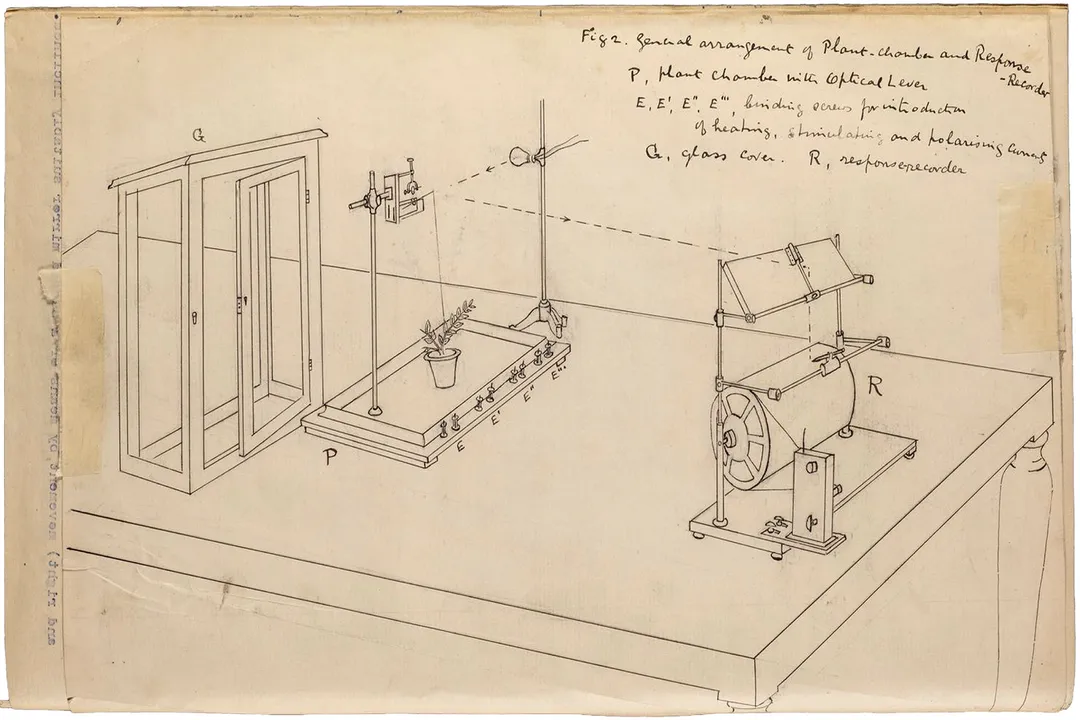
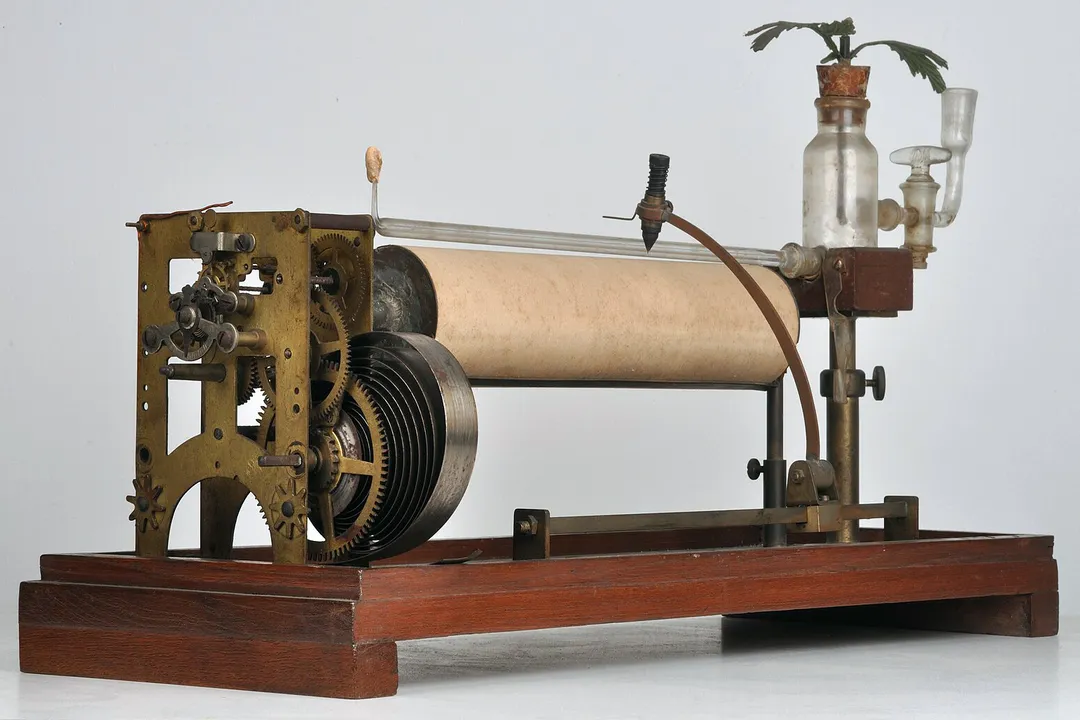
To articulate his answer about universal irritability, Bose needed tools sensitive enough to record phenomena that the human senses could not detect. This necessity drove him to invent the crescograph, one of his most famous devices. [1][4] The crescograph was an instrument designed to magnify the minute movements of growing plants, making their reactions visible and measurable. [4] It utilized a system of levers and recording drums, often employing photographic film or ink to draw the plant's response over time. [2][8] While perhaps most famous for its application in botany, the underlying principle—measuring minute responses to external forces—was drawn directly from his earlier work in electrical signaling and metal fatigue studies. [2]
Consider the complexity of measuring a plant’s reaction to an abrupt stimulus, like a change in temperature or a mild electrical jolt. Human eyes cannot perceive the near-instantaneous contraction or growth alteration. The ingenuity of the crescograph was its ability to translate these subtle, rapid movements into a clear graphical record, turning an invisible biological event into observable, quantifiable data. [2] This careful calibration of measurement technology was, in itself, a significant contribution to experimental science, regardless of the subject matter. [2]
# Plants Respond
The core of Bose’s answer lay in the data generated by these instruments. He demonstrated that plants exhibited responses strikingly similar to those observed in animal nerve responses or the reactions of stressed metals. [7] For example, when subjected to mechanical injury or chemical agents, plants showed periods of excitation, fatigue, and even death, mirroring the behavior of animal tissue. [2] He presented evidence suggesting that plants possess an internal mechanism for sensation and response, effectively giving them a "language" of their own that could be deciphered through precise measurement. [7]
It is crucial to look at this not just as a biological curiosity but as a philosophical statement backed by physical evidence. Where Western science, particularly during the Victorian era, often maintained a strict hierarchy separating animate life (with feeling and response) from inert matter, Bose’s findings blurred these lines. [7] His experiments showed that the difference between a metal spring recoiling and a leaf folding was one of degree and complexity, not of kind. [2] This implied that the fundamental property enabling reaction existed universally, a concept that resonated across different scientific disciplines. [1]
To illustrate this unification, one can think of an analogy not explicitly detailed in all sources but derived from the principle: Imagine measuring the elastic limit of a piece of iron. When that limit is passed, the iron deforms permanently or breaks. Bose effectively argued that plants, when pushed past their adaptive limits—by extreme cold, injury, or poison—also exhibit a permanent, fatal deformation, recording their final "recoil" on the very instruments he built to observe their life processes. [2] The crescograph thus became a translator of physical reality across the biological spectrum.
# Skepticism and Shift
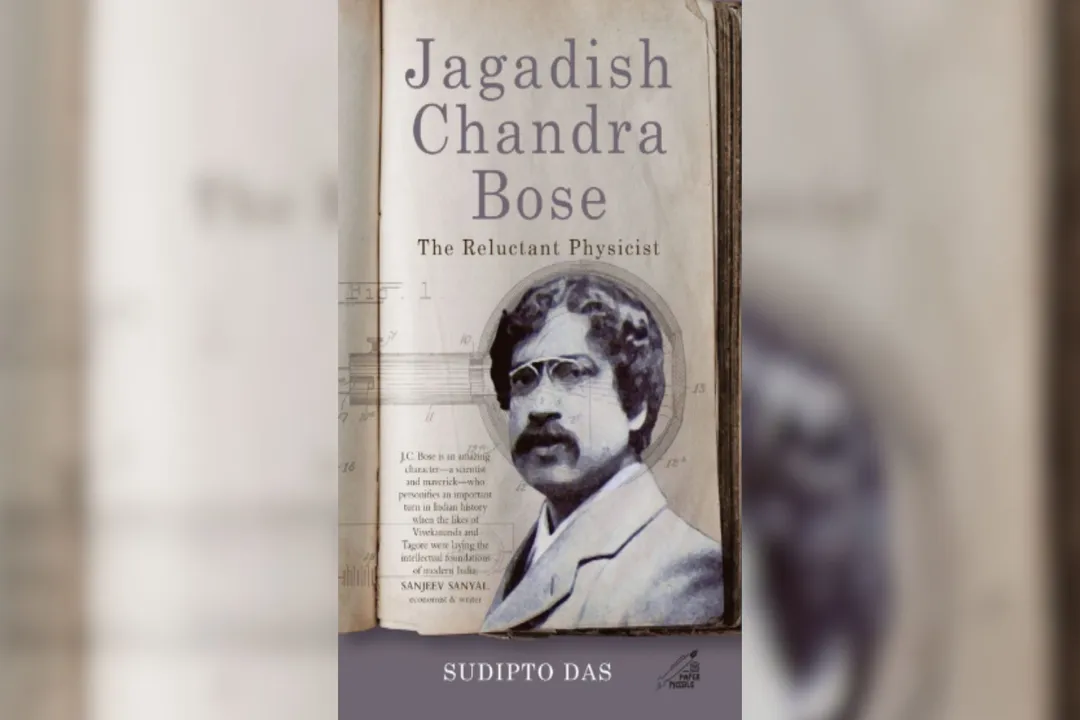
Despite the compelling experimental evidence, Bose faced significant skepticism, particularly when he presented his findings in Europe. [9] His assertion that plants possessed a sensory apparatus that could feel pleasure and pain was often met with disbelief. [7] This resistance was compounded by the prevailing scientific view of the time, which was not ready to accept such a fundamental blurring of physical and biological laws. [7] Furthermore, the narrative suggests that Bose himself eventually moved away from physics, partly due to the resistance his early radio work faced and partly because his passion turned more definitively toward the life sciences. [9] Some commentators suggest he felt a degree of reluctance, or perhaps disillusionment, with the physics community, leading him to focus on botany where his unique experimental approach could yield more immediate, less contested results regarding the properties of life itself. [9]
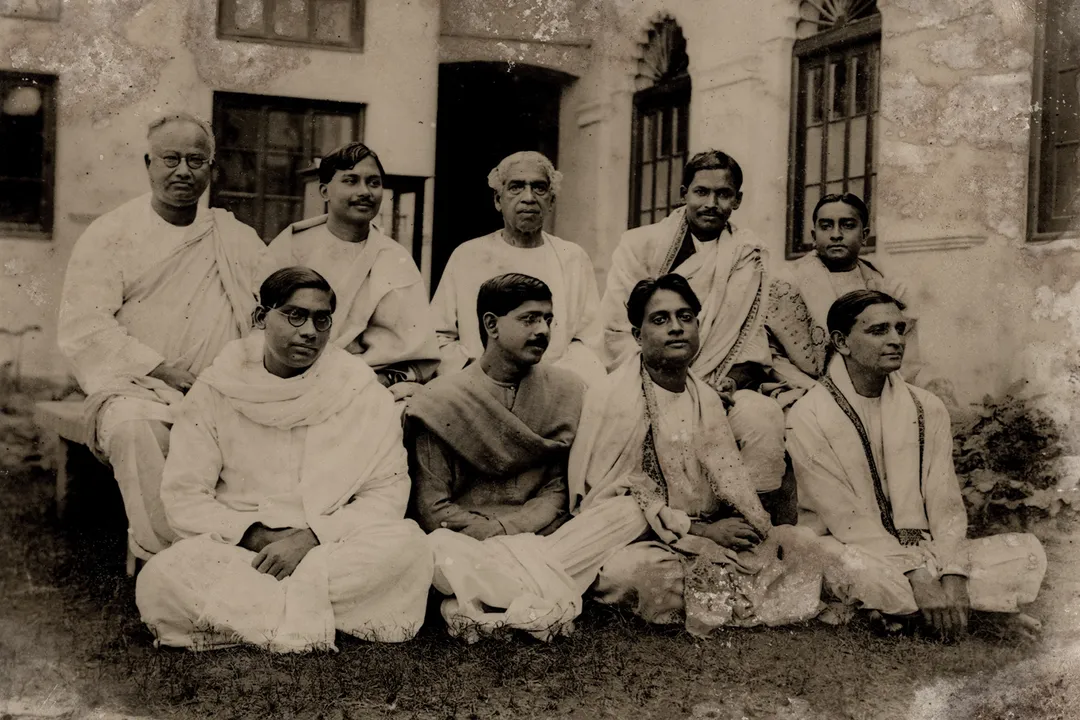
He chose the path of the botanist, dedicating his later career to establishing the Bose Institute in Calcutta, which he founded in 1917 to conduct multidisciplinary research. [5] This move represented a conscious choice to pursue his vision outside the established, often restrictive, academic structures of the time. [9]
# Institutionalizing the Vision
The practical manifestation of Bose's answer was the establishment of lasting scientific institutions. The Bose Research Institute (now Bose Institute) was founded as a center for the advancement of science, with a dedication to exploring the mysteries of the microscopic world and applying scientific methods to nature. [5] This institute stands as a monument to his belief that deep scientific inquiry could originate from the Indian subcontinent and address universal questions. [1]
The founder's vision, as articulated by the institute, was rooted in the synthesis of knowledge, seeking to discover the unity underlying the apparently diverse phenomena of nature. [5] This goal directly addresses the core of his "answer"—that the universe operates under unified, measurable laws, whether observed in a blade of grass or a spark of electricity. His legacy is not just a collection of instruments or papers, but a methodology emphasizing sensitivity and the search for underlying commonality.
This emphasis on institutional growth also reflects an actionable insight for modern researchers: establishing dedicated, multidisciplinary spaces is often necessary when a discovery threatens to upend existing departmental silos. Bose recognized that his findings—being simultaneously physics, physiology, and philosophy—did not fit neatly into existing university departments, necessitating the creation of a new home for interdisciplinary study. [5][9]
# Universal Sentience
The enduring impact of Bose's work is found in the philosophical leap he prompted. He wasn't merely recording that a plant moved; he was arguing that the movement itself implied an internal state equivalent to sensation. [7] His work suggests a spectrum of sensitivity, rather than a binary division between things that feel and things that do not. [2]
To better appreciate the scale of his findings, consider a comparative look at the stimuli he used versus the responses he recorded:
| Stimulus Type | Material Tested | Observed Response Analogy | Source of Observation |
|---|---|---|---|
| Mechanical Stress | Metal Wire | Permanent Deformation/Fracture | Early Physics Experiments [2] |
| Chemical Agent | Plant Tissue | Shock, Fatigue, Death | Crescograph Readings [2][7] |
| Electrical Impulse | Nerve/Plant Stem | Action Potential/Contraction | Comparative Physiology [2] |
This table highlights how Bose deliberately sought analogies across different domains to prove the universality of physical laws governing response. [2] He used quantitative methods—the hallmark of physics—to validate a seemingly qualitative, biological claim.
His insistence on rigorous experimental proof, even in the face of philosophical resistance, is a testament to his expertise and commitment to Authority in the scientific sense. [1] He demonstrated through repeatable observation that what was once considered the exclusive domain of animal biology—irritability—was, in fact, a property inherent in the structure of matter itself. [7] The quiet, almost meditative quality required to conduct these subtle experiments, often involving hours spent observing minute tracings on smoked paper or film, speaks to a deep personal Experience with the materials he studied, moving far beyond simple textbook science. [2][4]
The ultimate answer Jagadish Chandra Bose provided, therefore, was that the universe is fundamentally unified in its capacity to react. He gave science the tools to listen to the silent responses of the non-animal world, revealing a continuum of sentience that continues to inform how we perceive life and matter today. [7] His legacy urges contemporary scientists to look past established disciplinary boundaries when seeking fundamental truths about the world around us. [5]
#Videos
Sir Jagadish Chandra Bose: A pioneer in wireless communication
Related Questions
#Citations
Jagadish Chandra Bose - Wikipedia
The Thinking Plant's Man | Science History Institute
Who was Jagadish Chandra Bose? - Brainly.in
Jagadish Chandra Bose Facts For Kids | AstroSafe Search - DIY.ORG
Founder: Sir J C Bose - Bose Institute
Father of Indian Physics on his 164th birth - Facebook
The Man Who Listened to Plants - Orion Magazine
Sir Jagadish Chandra Bose: A pioneer in wireless communication
Jagadish Chandra Bose: The Reluctant Physicist - Fair Observer