What is Jagadish Chandra Bose famous for?
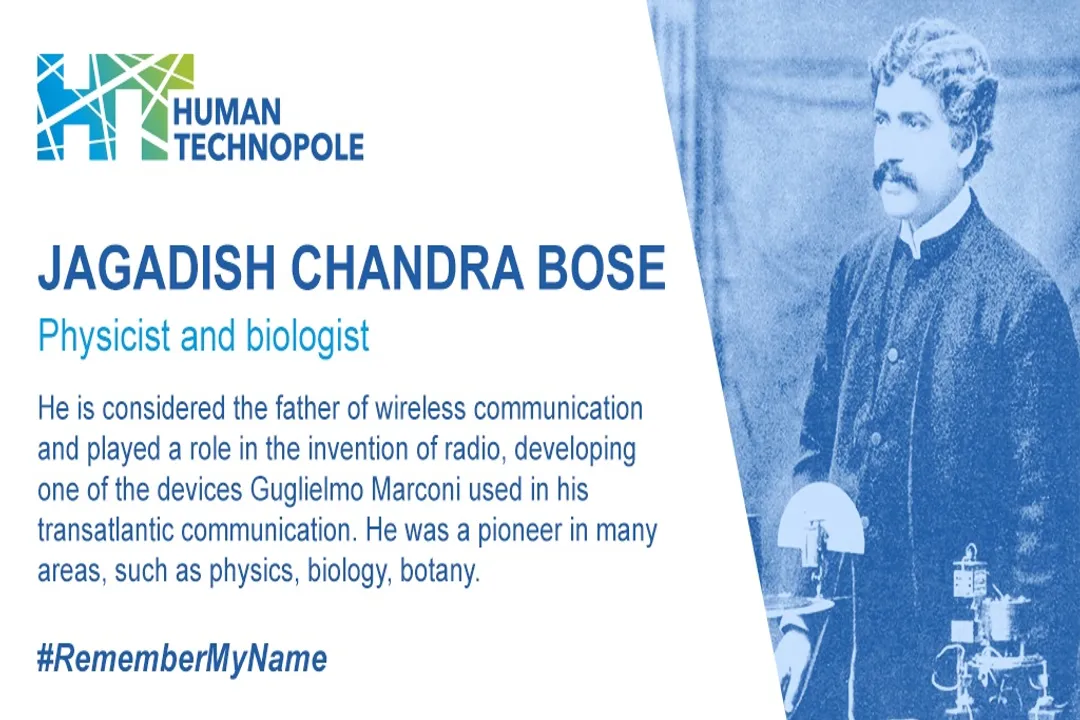
The name Jagadish Chandra Bose resonates across several disciplines, often placing him in dual roles as a pioneering physicist and a visionary biologist, a rare combination in the history of science. Born in Mymensingh, Bengal, in 1858, Bose’s fame stems from groundbreaking work in radio wave detection, the development of sensitive recording instruments, and, perhaps most surprisingly to the modern public, his revolutionary demonstration that plants possess a form of life and sensitivity comparable to animals. He was far more than just an academic; he was an impassioned nationalist who sought to establish indigenous scientific institutions capable of competing on the world stage.
# Early Education
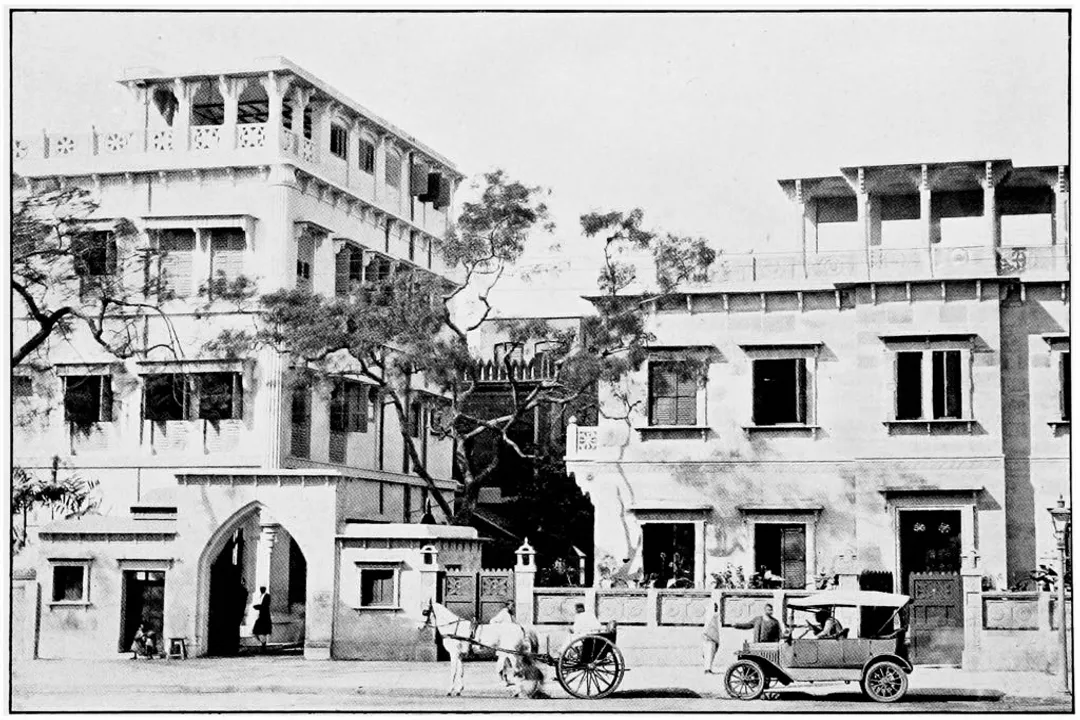
Bose’s formative years were deeply influenced by his early exposure to both traditional Bengali life and modern Western education, a dichotomy that shaped his scientific approach. He attended Calcutta’s Hare School and Presidency College, where he was taught by notable figures, including an introduction to science that sparked his lifelong curiosity. His thirst for advanced knowledge led him to England in 1885 to study at the University of Cambridge, specifically Christ's College, where he pursued natural sciences. While at Cambridge, he earned his B.A. in 1887 and later an Sc.D. in 1896. It was during this period that he was introduced to physics, particularly the electromagnetic theory being developed by James Clerk Maxwell and the experimental work of Heinrich Hertz on radio waves. This foundational knowledge would become the bedrock of his later inventive career.
# Radio Discoveries
One of the most significant, yet often overlooked, facets of Bose’s fame lies in his early contributions to what would become wireless communication. While Marconi is frequently credited with the invention of the radio, Bose was experimenting with radio waves several years prior. In 1895, while still a lecturer at Presidency College in Calcutta, Bose publicly demonstrated the use of electromagnetic waves to transmit signals over a distance. His demonstration involved igniting gunpowder and ringing a distant bell using waves generated by a spark-gap transmitter. This occurred approximately two years before Marconi’s famous transmission in 1896.
Bose’s technical innovation was not just in transmission but in reception. He developed a highly sensitive coherer, a device used to detect radio waves, improving upon existing models. He also experimented extensively with the properties of these waves, including reflection, refraction, and polarization, suggesting they could be used for wireless telegraphy.
A key point often discussed in assessing his contribution is the decision not to pursue commercial patents for his wireless technology, choosing instead to keep his scientific findings open for the benefit of mankind. This contrasts sharply with the commercial race that characterized wireless development in the early 20th century. Bose prioritized pure scientific exploration over proprietorship, an ethical stance that positioned him as a true academic rather than an industrial inventor.
To put his early wireless work into context against contemporary developments, consider this comparison:
| Event | Year | Location/Inventor | Significance |
|---|---|---|---|
| Hertz demonstrates electromagnetic waves | 1887–1888 | Germany (Heinrich Hertz) | Confirmed Maxwell's theory experimentally |
| Bose’s early lab demonstrations | 1894–1895 | Calcutta (J.C. Bose) | First public demonstration of wireless signaling over distance |
| Marconi’s first official patent application | 1896 | United Kingdom (Guglielmo Marconi) | Began commercial pursuit of radio telegraphy |
| Bose publishes Response in the Living and Non-living | 1902 | India/UK | Detailed recording of plant responses |
| Bose’s demonstration of microwave transmission | 1901 | London | Showed transmission over a significant distance using higher frequencies |
This timeline shows Bose was operating at the cutting edge almost simultaneously with European pioneers, though his focus quickly shifted towards biological applications.
# Plant Physiology
Perhaps the area for which Bose is most widely remembered today is his pioneering work in plant physiology—the idea that plants are indeed living entities capable of feeling pain, emotion, and reacting to stimuli. At the time, the scientific consensus largely viewed plants as passive organisms, lacking the complex responses seen in animals. Bose fundamentally challenged this notion through meticulous experimentation.
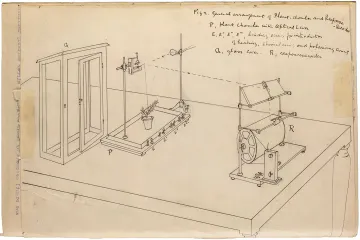
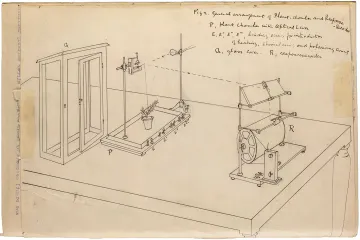
He famously developed extremely precise instruments to measure the minute electrical responses in plant tissues. The most notable of these inventions was the Crescograph. This instrument, often adapted for different measurements, allowed scientists to magnify the growth rate of a plant hundreds or even thousands of times, capturing changes too subtle or slow for the naked eye to observe. Using the crescograph and related instruments like the radio-wave detector, Bose could demonstrate that plants reacted to physical injury, changes in temperature, chemicals, and even sound waves by generating measurable electrical impulses, similar to those in animal nerves.
His book, The Nervous Mechanism of Plants (1906), and later Response in the Living and Non-living (1902) compiled this evidence, suggesting a fundamental unity between the responses of living and non-living matter. The concept that a plant could experience a heightened state of excitement or even "death" when subjected to harmful stimuli was revolutionary and, frankly, quite jarring to the established biological paradigms of the early 20th century. He was effectively establishing the field of plant neurobiology long before the term existed.
This work required incredible precision, which is where his physics background proved essential. While others saw simple biological processes, Bose, armed with instruments designed to detect faint radio signals, could measure the faint electrical signals within the plant cells, translating subtle biological phenomena into measurable physics data.
# Scientific Instruments
Bose’s fame is inextricably linked to the ingenuity of his custom-built scientific apparatus. He was not content with the commercially available equipment of the day; he often designed and built his own instruments to measure phenomena that were previously considered immeasurable. His instruments were characterized by their sensitivity and their ability to record data over time, bridging the gap between physics and physiology.
Key instruments associated with him include:
- The Coherer: As mentioned, an improved detector for electromagnetic waves.
- The Crescograph: Used for magnifying growth rate.
- Galvanometers and Recorders: Highly sensitive instruments that could measure the minute electrical activity—the action currents—generated by plants in response to stimuli.
The methodology itself was part of his unique genius. By adapting technology originally designed for studying radio physics to investigate biological systems, he created a new way of seeing the living world. This cross-disciplinary application is a hallmark of truly original scientific thinking. A fascinating observation, derived from comparing his early physics papers and later biology work, is the consistent pursuit of sensitivity. Whether detecting a distant radio spark or a minute change in a leaf’s potential, the goal was always to measure the faint signal hidden in the noise.
# Nationalist Legacy
Jagadish Chandra Bose was deeply committed to India’s intellectual and scientific independence. He viewed the pursuit of science not merely as a personal endeavor but as a crucial element in national resurgence. After spending years working in relative obscurity in India while his early wireless work was sometimes overshadowed or misunderstood in the West, he channeled his energy into creating lasting scientific infrastructure.
A significant part of his fame rests on his role as an educator and institution builder. He famously refused lucrative positions abroad, often choosing lower pay to remain in India and contribute to local education. He understood that for India to progress, it needed its own centers of advanced research.
His commitment culminated in the establishment of two major institutions:
- The Bose Institute (Calcutta): Founded in 1917, this facility began as a research center focused on physical and biological sciences. It was intended as a place for fundamental scientific inquiry, continuing the interdisciplinary work he championed.
- The Bengal Engineering and Science University (now known as JIS University): While the connection is often drawn through his overall vision, the modern Jagadish Chandra Bose University of Science and Technology (JCB UST) explicitly cites him as its inspiration, continuing his goal of promoting technical and scientific education in the region.
His influence extended to mentoring the next generation, notably his most famous student, Satyendra Nath Bose, who went on to develop Bose-Einstein statistics, further cementing the legacy of Indian scientific prowess in physics.
# Literary Contributions
Beyond the laboratory, Bose held fame as a respected literary figure in the Bengali language. He wrote essays, short stories, and novels, often using his scientific understanding to explore philosophical and humanistic themes. His literary output sometimes paralleled his scientific investigations, exploring concepts like the hidden life of nature and the emotional depth of non-human entities. This dual output—hard science and evocative literature—adds a layer of polymathic depth to his reputation that few scientists possess.
# Enduring Fame
The scope of Jagadish Chandra Bose’s fame is complex because it spans the turn of the 20th century across two separate scientific revolutions: the dawn of the electronic age (radio) and the redefinition of biological life (plant sensitivity). While many recall him for the latter, his early electrical work establishes him as a genuine contender in the history of wireless communication. His decision to return to India and establish indigenous research centers ensures his place not just as a scientist, but as a nation builder. He provided evidence that scientific excellence was not geographically bound, a powerful message delivered through empirical proof and the construction of world-class research facilities. His legacy is one defined by sensitivity—sensitivity to electromagnetic waves, sensitivity to plant life, and sensitivity to the educational needs of his homeland.
Related Questions
#Citations
Jagadish Chandra Bose - Wikipedia
Jagadish Chandra Bose | Inventor, Early Life, Education, Research ...
Jagadish Chandra Bose - Human Technopole
Jagadish Chandra Bose | Research Starters - EBSCO
Jagadis Chandra Bose (1858-1937) | Christs College Cambridge
Jagadish Chandra Bose Facts For Kids | AstroSafe Search - DIY.ORG
Jagadish Chandra Bose - Biography, Facts and Pictures
Jagadish Chandra Bose: The Man Who Almost Invented the Radio
Our Inspiration - JC Bose University