Did Edwin Hubble meet Albert Einstein?
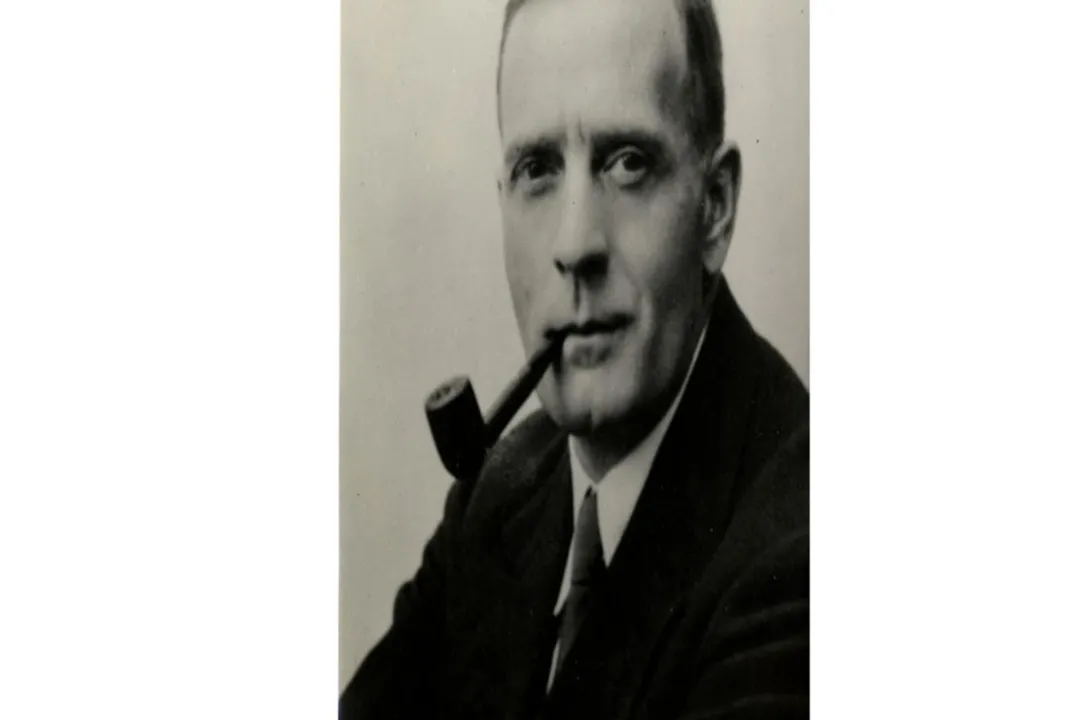
The intersecting paths of Albert Einstein and Edwin Hubble represent one of the most fascinating, though perhaps fleeting, encounters in the history of modern science. Both men fundamentally redefined humanity’s understanding of the universe, one through thought experiments and mathematical elegance, the other through meticulous observation through the world’s largest telescopes. The question of whether these two titans ever crossed paths is not merely a matter of biographical trivia; it speaks to the relationship between pure theory and empirical discovery at the dawn of the cosmic age. And yes, evidence suggests they certainly did meet, sharing space during a period when the very foundations of cosmology were being redrawn. [1][2]
# Direct Encounters

The documented interactions between Einstein and Hubble appear to center around the renowned Mount Wilson Observatory near Pasadena, California, home to powerful telescopes that were instrumental in Hubble’s work on galactic distances and the expansion of the universe. [3][4] Einstein, whose General Theory of Relativity provided the mathematical scaffolding for understanding gravity on a cosmic scale, was deeply interested in the observable universe, even if his initial theories favored a static cosmos. [9][10]
It is noted that Einstein, along with his wife Elsa, visited Mount Wilson on several occasions, particularly in the early 1930s. [2] Hubble, already famous for demonstrating that "spiral nebulae" were, in fact, independent galaxies far outside the Milky Way, would have been the central figure at the facility during these high-profile visits. [4][5] One specific instance frequently cited involves a moment where Einstein and Hubble shared an interaction described as awe-inspiring, taking place around the year 1931 or shortly thereafter. [1] While the exact words exchanged in a private conversation are rarely preserved with perfect fidelity, the context of these visits places the theorist—the architect of space and time—in the presence of the observer who proved the universe was stretching apart, an observation that initially caused Einstein considerable intellectual discomfort. [9][10]
The environment at Mount Wilson, supported significantly by organizations like Carnegie Science, provided the rare crucible where giants of theory and observation could meet face-to-face. [6] Given Hubble’s status as the premier observational astronomer of the time and Einstein’s magnetic celebrity, it would have been surprising had they not met during these visits. These meetings served as tangible proof that the theoretical work being performed in Europe was being tested and interpreted in the physical reality captured by the world's best instruments in California. [7]
# Scientific Collision
To fully appreciate the weight of any interaction between Einstein and Hubble, one must understand the cosmic disagreement brewing between their respective fields of study during that time. Einstein’s General Relativity equations naturally described a dynamic universe—one that should either be expanding or contracting. [9] However, believing the cosmos to be eternal and unchanging—the prevailing view before Hubble—Einstein introduced an arbitrary term, the cosmological constant (), into his field equations to force a static solution. [9][10] This is often retrospectively referred to as his "biggest blunder". [10]
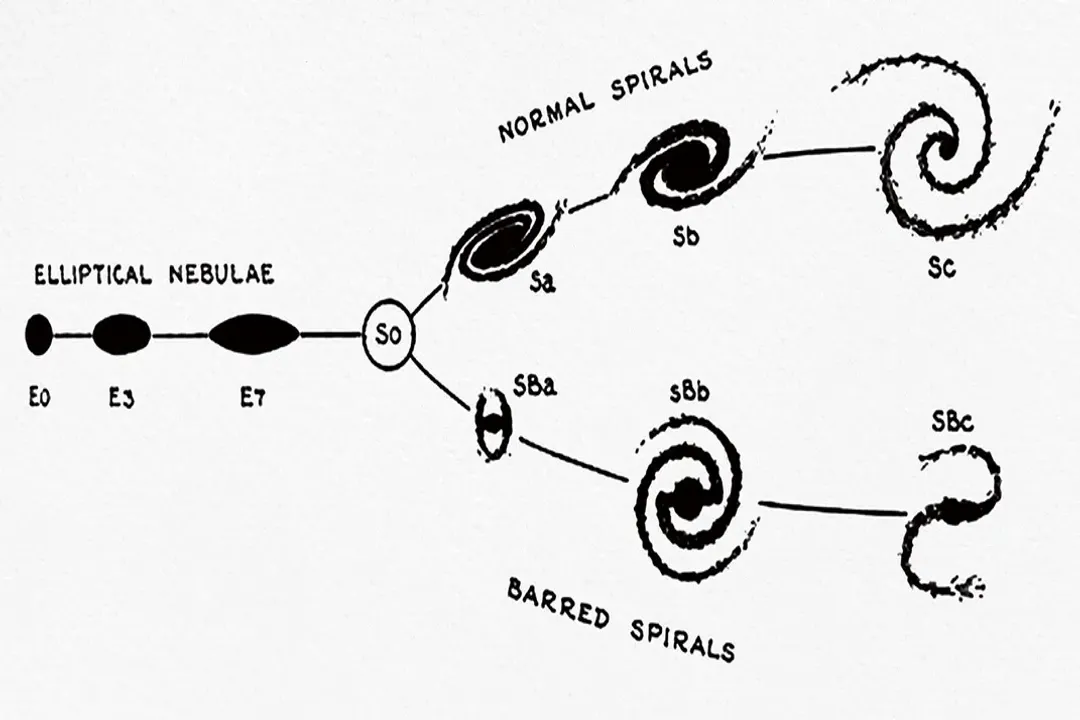
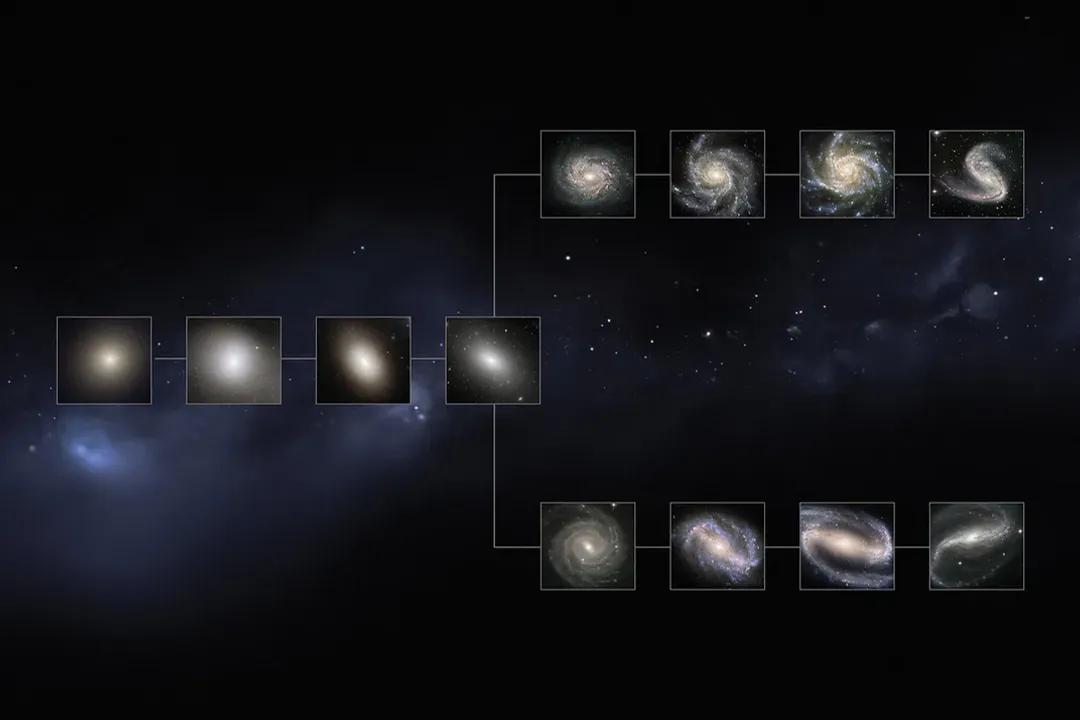
Edwin Hubble’s work, using the 100-inch Hooker Telescope at Mount Wilson, provided the empirical evidence that defied that static assumption. [4] By measuring the redshift of light from distant galaxies—indicating they were moving away from us—and plotting this recession velocity against their measured distance, Hubble established a linear relationship: the farther away a galaxy is, the faster it recedes. [3] This relationship, now known as Hubble’s Law, was the observational proof of an expanding universe. [3]
When Einstein visited, Hubble was solidifying this revolutionary conclusion. An insightful way to view this convergence is to contrast the mental discipline required for each man's success. Einstein excelled at the a priori—building reality from fundamental principles, even when those principles felt counterintuitive to common sense, as demonstrated by the concept of curved spacetime. [9] Hubble, conversely, operated on the a posteriori—demanding verifiable, measurable data from the distant reaches of space, regardless of whether it fit established theories. [4] The meeting, therefore, was less a casual chat and more a symbolic confrontation between the finest mathematical model of gravity and the empirical data showing that model, as modified by Einstein, was fundamentally incomplete concerning cosmic dynamics. [7]
# Institutional Grounding
The logistics of these meetings were largely facilitated by the infrastructure of astronomy at the time. Carnegie Science played a central role in fostering the research environment where Hubble worked, heavily supporting the Mount Wilson Observatory. [6] This institutional backing meant that when world-renowned figures like Einstein made trips to California, the observatory naturally became a key destination for scientific pilgrimage. [2]
If we consider a timeline, Einstein’s visits often occurred after his theories had gained prominence but before Hubble's full expansion model was universally accepted by the scientific community, though the evidence was becoming overwhelming. [1][9] The fact that Einstein traveled specifically to see the observations underscores the high regard he held for Hubble's tangible results, even if they contradicted his own assumptions about the universe's basic nature. [2][7] It suggests a scientist willing to confront contradictory evidence directly, rather than simply dismissing it. When Einstein later read about Hubble’s findings, he reportedly remarked that the discovery of the expanding universe was the greatest discovery of their time. [1]
Thinking about the sheer logistical feat adds context to their interaction. To see the universe as Hubble did, one needed access to the 100-inch Hooker Telescope—a machine so complex that operating it required specialized skill and dedication, contrasting sharply with the solitary contemplation Einstein often needed for his breakthroughs. [3] This difference in professional setting—the dark, quiet dome housing the enormous instrument versus the theoretical physicist’s study—made any in-person meeting an exchange between two entirely different operational modes of scientific genius. [4]
# Implications of Discovery
The significance of the Hubble-Einstein interaction lies not just in the handshake but in the resulting shift in human thought. Once Hubble’s redshift data became undeniable—showing that the universe was not static but evolving [3]—Einstein had to confront the reality that his initial mathematical framework was more accurate in its dynamic depiction than he had allowed himself to believe when he inserted the cosmological constant to enforce stasis. [9][10]
Hubble’s discovery cemented a new cosmological picture: one where space itself is stretching, carrying galaxies along for the ride. [4] This directly paved the way for modern models like the Big Bang, which describe the universe originating from an extremely dense, hot state, a concept that flows naturally from extrapolating Hubble’s observations backward in time. [9]
It is fascinating to consider the timeline of acknowledgement. While Hubble published his seminal findings on expansion in the late 1920s and early 1930s, [3] the scientific community’s full embrace of a dynamic universe took time, partly because Einstein’s static model was so deeply entrenched. When Einstein visited and engaged with the observational evidence provided by Hubble, it served as an authoritative endorsement from the world's leading theoretical physicist that the expansion was real, forcing a paradigm shift that redirected physics for the rest of the century and into the next. [1][7] The meeting helped bridge the gap between the elegant mathematics residing on paper and the physical reality being captured by glass and steel light-years away.
Related Questions
#Citations
Astronomer Edwin Hubble once shared an awe-inspiring moment ...
TIL that Einstein and his wife once visited the enormous Mount ...
Edwin Hubble - Wikipedia
Who Is the Man Who Discovered the Universe? | Smithsonian Voices
Carnegie Science and Caltech: A History of Collaboration
A Significant Meeting - Discover Magazine
Case Files: Edwin Hubble | The Franklin Institute
Einstein and Lemaître: two friends, two cosmologies… - Inters.org
Einstein and his so-called biggest blunder - Physics Stack Exchange