What did Edwin Hubble realize?
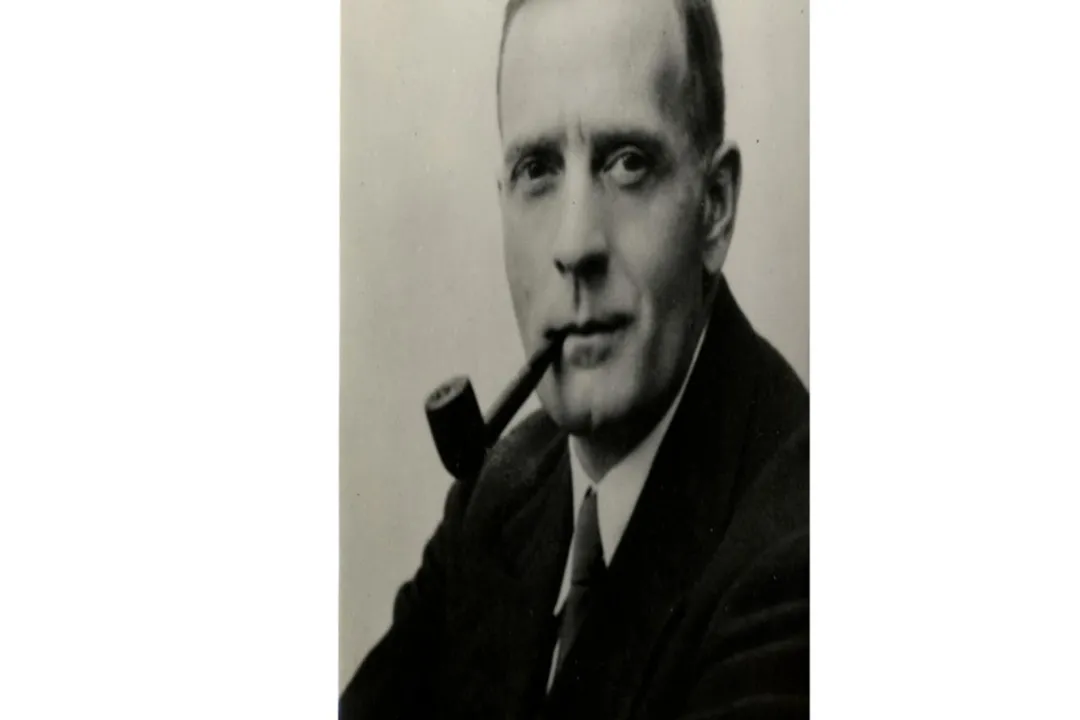
Edwin Hubble realized that the universe was far vaster and more dynamic than anyone had previously conceived, shattering the long-held belief that the Milky Way galaxy comprised the entirety of existence. [1][3] His work, often marked by painstaking observation and the application of new, powerful instruments, fundamentally reshaped cosmology, moving it from a philosophical pursuit to a quantitative science. [4][6] The realization wasn't a single "aha" moment, but a series of groundbreaking confirmations built upon the work of predecessors and the capabilities of the new technology available at Mount Wilson Observatory. [3][5]
# Galactic Distances
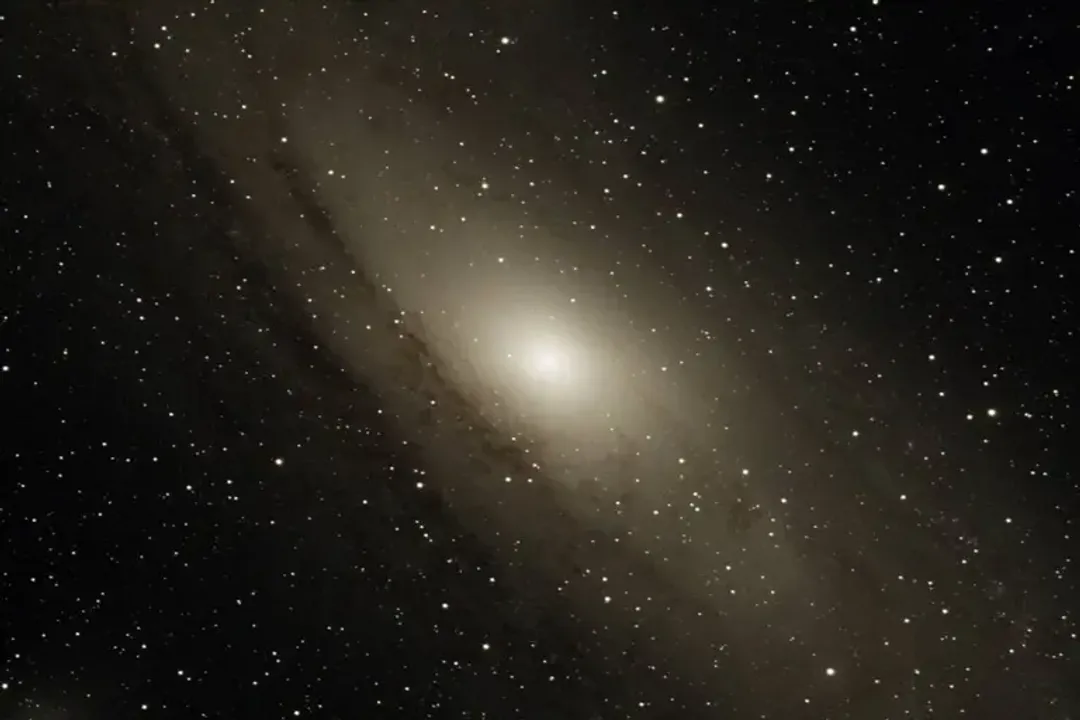
Before Hubble's major contributions, the nature of faint, fuzzy patches of light in the night sky, known as "spiral nebulae," was a subject of intense scientific debate, famously framed by the Great Debate of 1920. [3] Were these objects relatively small, nearby collections of stars within our own Milky Way, or were they entirely separate "island universes" vast distances away? Hubble set out to answer this question definitively. [1][5]
The key to resolving this lay in measuring their distances. Hubble possessed the necessary tools: the massive 100-inch Hooker Telescope at Mount Wilson, which provided unprecedented light-gathering power. [1][3][5] This instrument allowed him to resolve individual stars within these nebulae for the first time. [5]
# Finding Yardsticks
Hubble’s breakthrough hinged on identifying a specific type of variable star within these nebulae: Cepheid variables. [1][3] These stars pulsate, meaning their brightness changes in a predictable cycle. Crucially, Henrietta Swan Leavitt had previously established the period-luminosity relationship for Cepheids—the longer the period of a Cephew's pulsation, the intrinsically brighter the star is. [1][3] By observing how fast a Cepheid in a nebula brightened and dimmed, astronomers could calculate its true intrinsic brightness. Comparing this known true brightness to how dim the star appeared from Earth allowed for a precise calculation of its distance. [1]
When Hubble applied this method to the Andromeda Nebula (M31), the result was staggering. [1][3][5] The calculated distance placed Andromeda far outside the established boundaries of the Milky Way. [1] It was not a cloud of gas within our galaxy; it was a massive, independent system of stars—a galaxy in its own right. [3][5] This realization instantly expanded the known scale of the cosmos by an order of magnitude and confirmed the existence of countless other galaxies dotting the universe. [1][5] The very definition of the universe had to be rewritten; our Milky Way was just one among millions, perhaps billions. [5]
# Measuring Movement
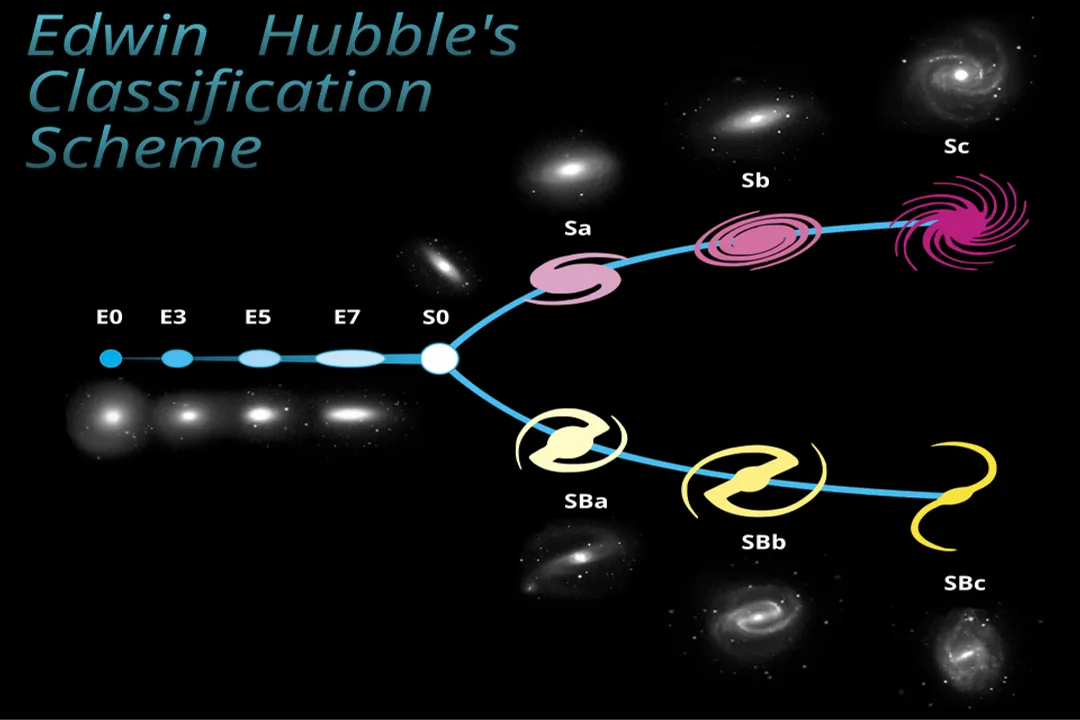
Once the distances to these external systems were established, Hubble needed a way to characterize how they were behaving. This required measuring their light for shifts in wavelength, a technique known as redshift. [4][6] The concept was already being explored by others, notably Vesto Slipher, whose early measurements of spiral nebulae indicated that most of them were moving away from Earth. [4][6]
Hubble began compiling a systematic catalog of galaxy distances and velocities. [4] He worked closely with Milton Humason, who was an observer at Mount Wilson and possessed the skill to obtain the necessary spectra from these incredibly faint, distant objects. [2][6] Slipher's earlier redshift data was instrumental, providing the recessional velocities needed for the correlation. [6]
The data points gathered were powerful, showing the distance to a galaxy and its corresponding velocity moving away from us. [9] It became clear that the farther away a galaxy was, the faster it appeared to be receding. [2][5][6]
# The Law of Expansion
The core realization Hubble announced was the empirical relationship between a galaxy’s distance and its velocity: a direct proportionality. [6][9] Mathematically, this relationship is expressed as , where is the recessional velocity, is the distance, and is Hubble's constant. [2][6][9] This constant represents the current rate of expansion of the universe. [9]
It is important to note that while Hubble is credited with formulating this law, the data compilation and interpretation involved significant contributions from others. [4] Slipher provided the foundational velocity measurements, and the theoretical underpinnings for an expanding universe had been discussed by scientists like Georges Lemaître. [2][4][6] Hubble's genius lay in synthesizing these disparate pieces—Leavitt’s distance scale, Slipher’s velocities, and the power of the 100-inch telescope—into a single, testable physical law that described the behavior of the entire cosmos. [4][9]
The concept of recession, however, often leads to a slight misunderstanding that can be clarified by thinking of the space itself stretching, rather than objects flying through space away from a central point. [2] Imagine dots on the surface of a balloon being inflated; every dot sees every other dot moving away from it, and the farther away a dot is, the faster its apparent separation velocity will be due to the stretching of the surface between them. [2] This means the expansion is uniform and not centered on the Milky Way. [2] The observed recession is a consequence of the universal expansion of space-time itself. [2]
One interesting aspect of this realization is how it validated a predictive, theoretical framework before it was universally accepted by observation. Lemaître, a priest and physicist, had theoretically predicted this expansion based on Einstein's General Relativity years earlier, yet Hubble’s observational proof cemented the idea in the scientific community. [4] When we look at the data today, this initial linear relationship observed by Hubble—plotting velocity against distance—is one of the most fundamental correlations in all of science, connecting the observable motions of distant objects to the overall structure and evolution of reality. [9]
| Parameter | Symbol | Discovery Context | Significance |
|---|---|---|---|
| Distance Indicator | Cepheid Variables | Used to measure distance to M31 [1] | Established external galaxies were extragalactic. |
| Velocity Measurement | Redshift | Early work by Slipher, later compiled by Hubble/Humason [6] | Showed galaxies were overwhelmingly moving away. |
| Expansion Rate | Hubble Constant | Calculated from [9] | Quantifies the current rate of cosmic expansion. |
# Cosmic Age
The realization that the universe was expanding had profound implications for its age and history. [5] If the universe is currently expanding, then logically, in the past, it must have been smaller, denser, and hotter. [5] Running this expansion backward in time leads to a point where all matter and energy were concentrated into an infinitesimally small state—the origin point of the universe. [5][9]
Hubble's initial measurements, combined with the reciprocal of the calculated constant (), offered the first estimates for the age of the universe. [9] While the early values derived from the original constant were significantly shorter than the current accepted age of the universe (closer to 1.5 billion years in some early interpretations), [5] the concept was revolutionary: the universe had a beginning and an age that could be estimated through astronomical observation. [5][9] This shifted the paradigm away from a static, eternally existing cosmos to one with a dynamic history. [5] This observation formed a cornerstone for what would later be termed the Big Bang theory. [9]
The very act of defining the expansion rate also forces scientists today to refine the constant continually, as different measurement techniques yield slightly different values for . [9] This ongoing effort to precisely pin down the expansion rate highlights how Hubble's initial, seemingly simple linear relationship opened up an entire field of precise cosmological measurement that continues to challenge and refine our understanding of cosmic evolution. [9]

# Scientific Context and Credit
The nature of scientific discovery means that realizations rarely spring from a vacuum. Hubble’s work stands as a testament to the importance of building upon prior measurements and collaborations. [6] While Hubble is rightly celebrated for the synthesis and the clear articulation of the expanding universe law, the groundwork was laid by others whose data he incorporated. [4] Vesto Slipher’s extensive collection of redshift data provided the necessary velocity component, [6] and the foundational physics for interpreting redshifts as recession was already being explored. [4]
One aspect worth noting is how the required tools dictated the pace of discovery. The sheer observational difficulty of measuring the distances to faint nebulae meant that these cosmic breakthroughs were directly tied to the development of powerful technology, specifically the 100-inch telescope. [3][5] Had this instrument not been available, the definitive proof of the extragalactic nature of spiral nebulae might have been delayed significantly, leaving the fundamental structure of the universe ambiguous for longer. [3] This dependence suggests that in certain eras of discovery, the development of engineering capacity is as important as theoretical insight for making the next grand realization.
The impact of Hubble's findings cannot be overstated; they fundamentally changed our address in the cosmos and our understanding of its timeline. The legacy continues today with instruments like the Hubble Space Telescope, a testament to the astronomer whose observations first revealed the true, dynamic scale of reality beyond our solar neighborhood. [5] His realization was not just about seeing farther, but about understanding that the fabric connecting everything was actively stretching, setting the stage for all modern cosmology. [2][9]
Related Questions
#Citations
Edwin Hubble - Wikipedia
Carnegie Science celebrates Edwin Hubble's discovery of the ...
Who is the Man That Discovered the Universe?
Case Files: Edwin Hubble | The Franklin Institute
How Astronomers Discovered the Universe Is Expanding - History.com
This Month in Physics History | American Physical Society
A Science Odyssey: People and Discoveries: Edwin Hubble - PBS
100 years ago this week, Edwin Hubble announced his ... - Reddit
Hubble Confirms the Expanding Universe | Research Starters