What's it called when the Earth shifts?
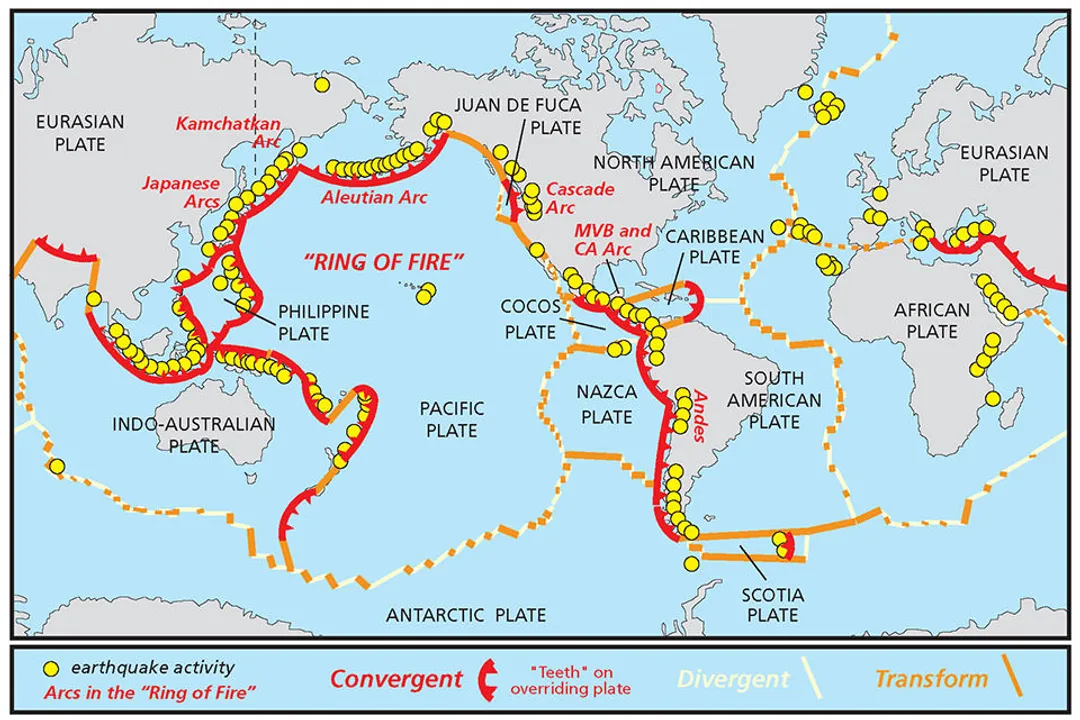
The concept of the Earth "shifting" is fascinating because it encompasses several distinct geophysical phenomena, each with its own name and set of causes. It’s not one single event or term; rather, what you observe—whether it’s a change in the length of our day, a slight wobble in our orientation, or the massive movement of continents—determines the correct terminology.
# Daily Rhythm
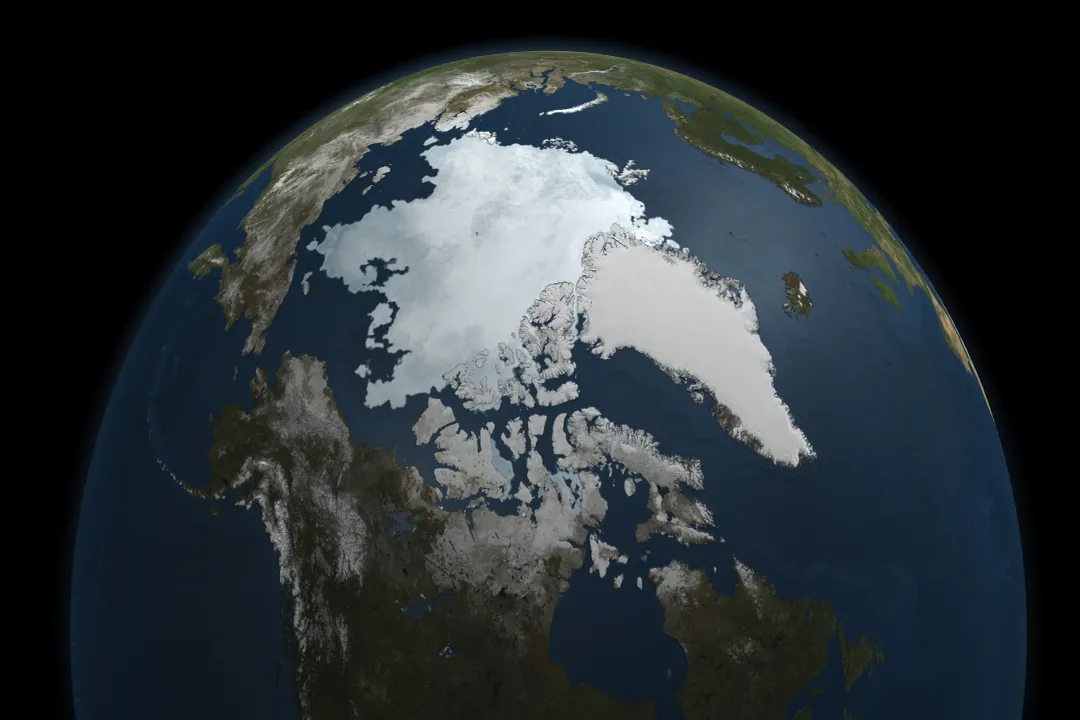
The most fundamental shift involves the Earth’s rotation, which dictates the length of a day. The Earth spins on its axis, completing one full rotation approximately every 24 hours. [2] However, this rate is not perfectly constant. Changes in the planet’s spin, meaning the speed at which it rotates, are frequently measured and attributed to various internal and external forces. [1]
When scientists discuss the length of the day getting slightly longer or shorter by milliseconds, they are referring to changes in the rate of Earth's rotation. This speed variation can be influenced by the planet's interior dynamics, such as core movements, or by surface phenomena. [1]
# Climate Influence
A significant area of modern research focuses on how a changing climate impacts this rotation. Studies funded by NASA have provided clear explanations for these subtle changes in spin. For instance, the melting of glaciers and ice sheets, alongside the redistribution of water mass across the globe, directly affects the planet’s rotational speed due to the conservation of angular momentum. [1] Think of an ice skater pulling their arms in to spin faster; as mass shifts closer to the Earth’s axis, the rotation speeds up, and as it moves outward, the rotation slows down. [1]
The oceans play a crucial role here as well. Changes in ocean currents and the density of water masses, which are themselves affected by climate shifts, redistribute mass around the globe, adding another layer of complexity to the rotational dynamics. [1] These shifts are measured in fractions of a second but are critical for maintaining highly accurate timekeeping systems used by global positioning and communication networks. While a millisecond change in day length might seem negligible, it can accumulate over time, requiring scientists to occasionally adjust atomic clocks to keep them synchronized with the Earth’s actual rotation—a process sometimes involving adding or removing a leap second. [1]
# Axial Wobble
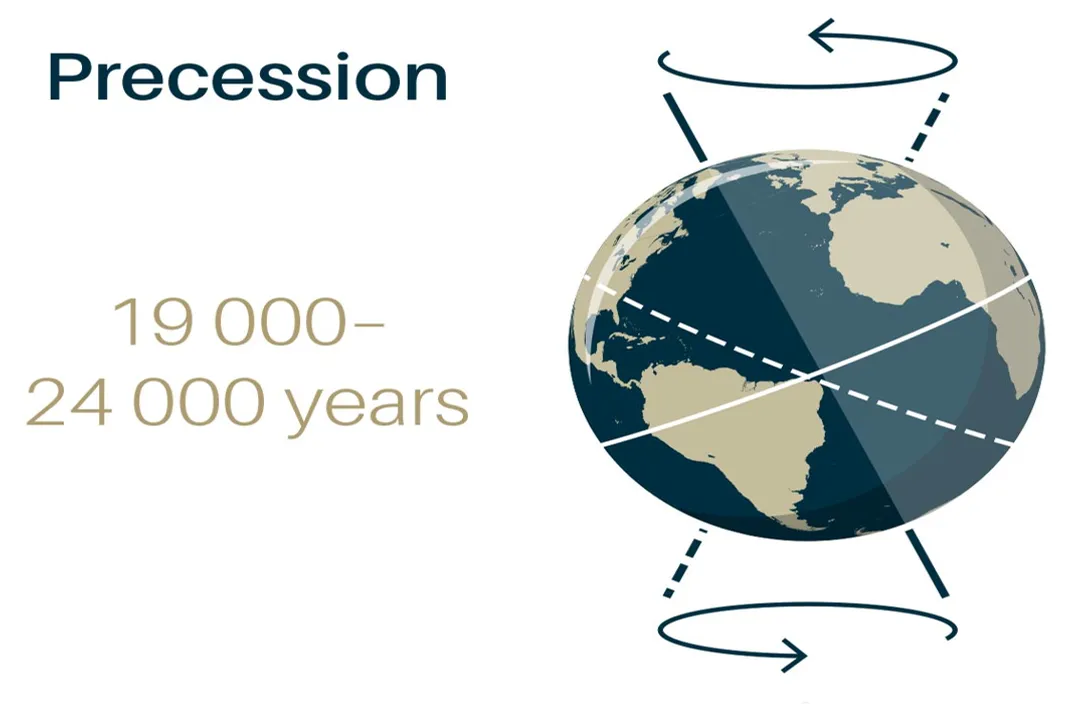
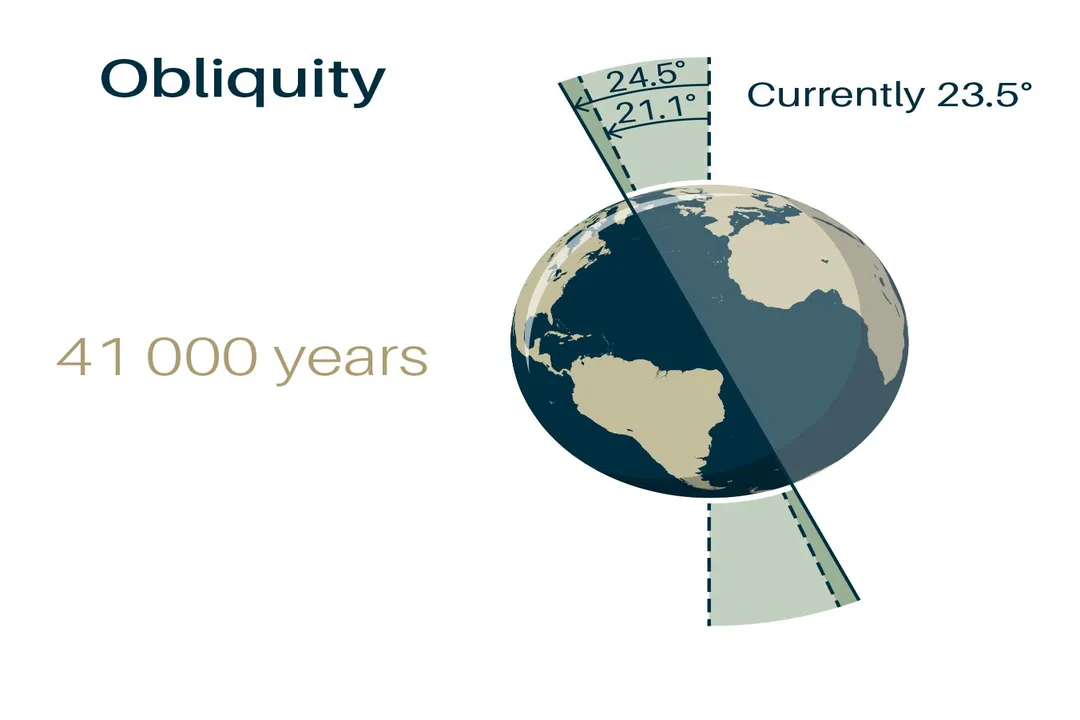
Another way the Earth "shifts" relates not to how fast it spins, but to the orientation of its spin axis. The Earth’s axis of rotation is tilted relative to its orbital plane by about 23.5 degrees. [3] While this tilt remains largely fixed in space relative to the distant stars—a concept known as axial parallelism—the axis itself undergoes long, slow movements. [5]
When the axis moves or "wobbles," the phenomenon is generally described through concepts like precession and nutation. Precession is a very slow, conical wobble of the Earth’s axis, taking about 26,000 years to complete one cycle. [2] This movement is caused by the gravitational pull of the Moon and the Sun acting upon the equatorial bulge of the Earth. [2]
Nutation, which is a smaller, shorter-term nodding or vibration superimposed on the long-term precession, also describes a shift in the axis orientation. [2] These movements alter the position of the celestial poles over time. [2]
# Modern Causes of Wobble
Contemporary research shows that modern mass redistribution also impacts this axis orientation. The movement of mass on or near the surface—such as the post-glacial rebound in areas once buried under ice sheets, or the aforementioned melting ice caps and water storage changes—causes a shift in the planet’s center of mass and rotational axes. [1] This is distinct from the rotation speed change; here, the direction of the spin axis relative to the planet’s body is changing, a phenomenon sometimes referred to as polar motion. [1]
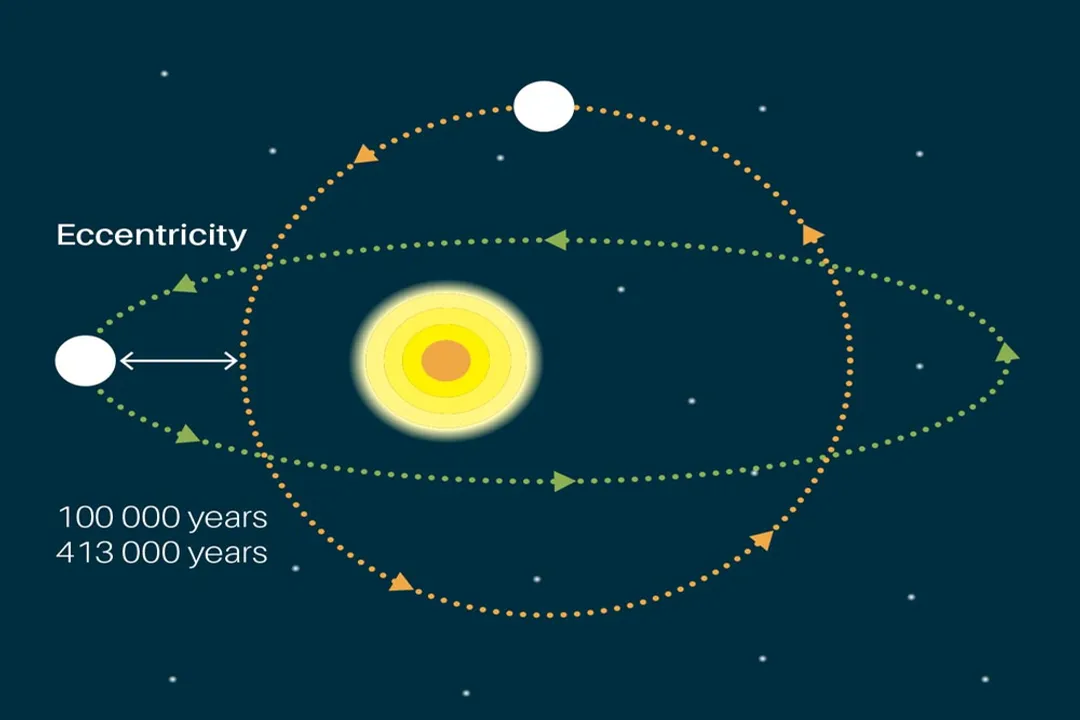
It is important to distinguish this from the Earth’s overall movement around the Sun, which governs the seasons. [7][3] The seasons themselves are a direct result of the axial tilt. [3][7] The Earth’s orbit around the Sun, which takes approximately 365.25 days, combined with that fixed tilt, means that different hemispheres receive more direct sunlight at different times of the year. [3][7]
# Crustal Movement
When people think of the Earth shifting in a dramatic, immediate way—the kind that causes ground shaking and land deformation—they are referring to tectonic shifts. This term describes the movement of the Earth’s rigid outer layer, the lithosphere, which is broken into large pieces called tectonic plates. [4]
These plates are constantly, albeit very slowly, moving atop the semi-fluid asthenosphere beneath them. [4] The speed of this movement is often compared to how fast your fingernails grow, typically moving only a few centimeters per year. [4] A massive and rapid shift of these plates relative to one another is what we experience as an earthquake. [4]
Tectonic shifts are driven by forces within the Earth, primarily convection currents in the mantle that cause plates to pull apart (diverge), collide (converge), or slide past each other (transform). [4] These boundaries are where most geological activity occurs. [4]
| Shift Type | Common Terminology | Primary Mechanism | Timescale |
|---|---|---|---|
| Rotation Speed Change | Change in Length of Day | Mass redistribution (ice melt, ocean currents) | Milliseconds to years |
| Axial Orientation Change | Polar Motion, Precession, Nutation | Gravitational tugs, large-scale mass redistribution | Decades to millennia |
| Crustal Displacement | Tectonic Shift, Earthquake | Mantle convection, plate boundary stress release | Continuous (cm/year) to instantaneous (shaking) |
The data gathered from precise geodetic measurements—the science of measuring and understanding the Earth's geometric shape, orientation in space, and gravity field—allows scientists to track these minute movements with extraordinary accuracy. [4] For example, measuring the exact position of a GPS receiver today versus five years ago can reveal the cumulative effect of plate motion in that location. [4]
# Beyond the Surface
While rotation and plate tectonics deal with the planet's spin and crust, the concept of Earth shifting also relates to broader, long-term climate changes that manifest as mass redistribution. Changes in climate can trigger shifts in geological processes. [7]
The BGS notes that climate change can influence Earth’s structure and processes through mechanisms that extend beyond the immediate melting of surface ice. For instance, changes in precipitation patterns, the amount of water stored in underground aquifers, or even atmospheric pressure systems can exert stress on the crust, influencing fault stability. [7] This is a subtle but important connection: a shift in weather patterns, driven by climate change, can contribute to the stresses that eventually lead to a measurable tectonic shift or tremor, even though the ultimate cause is atmospheric and oceanic mass reorganization. [7]
When considering the Earth's frame of reference, it is important to recall that the Earth’s axis is fixed relative to distant space, not relative to the solar system's plane. [5] This means that while the orientation of the spin axis relative to the crust may wobble (polar motion), the direction it points in the cosmos remains largely stable over human timescales. [5] The large, slow swing of the axis over 26,000 years (precession) is what causes the North Star to change over millennia, but the axis itself is fundamentally "locked" in its cosmic orientation. [5]
One fascinating application of tracking these shifts involves high-precision timing. For those working in satellite navigation or deep space communication, the knowledge that the Earth’s rotation speed is changing by fractions of a millisecond is not academic; it is an engineering necessity. If the terrestrial reference frame—the foundation upon which all global positioning calculations are built—is allowed to drift without correction, the predicted locations for satellites, even over a few hours, would begin to show errors amounting to several meters. This means the data gathered from monitoring ice melt (Source 1) directly feeds into the algorithms that allow your smartphone’s map app to know precisely where you are standing. [1]
Furthermore, while the Coriolis effect is often discussed in relation to large-scale weather patterns like hurricanes, the effect itself is a direct manifestation of the Earth’s rotation. [6] It causes moving objects, like air or water currents, to deflect—to the right in the Northern Hemisphere and to the left in the Southern Hemisphere. [6] Any change in the Earth's rotation speed or axis orientation inherently modifies the strength and behavior of the Coriolis effect, subtly changing the path of ocean currents and jet streams globally, which then feeds back into the climate system that caused the initial shift. [6][1] This creates a complex, interlocking feedback loop: climate shifts cause a change in spin, which alters the Coriolis effect, which impacts ocean currents, further influencing climate and spin.
The terminology, therefore, depends entirely on the process being described. If the crust moves, it’s tectonics. If the speed changes, it’s a change in the rate of rotation. If the orientation wobbles, it’s polar motion or precession. The Earth is a dynamic body, and its movements, from the deepest core to the highest atmosphere, are constantly recorded in these measurable, named shifts.
#Videos
The Earth Is Wobbling: The Precession of the Equinoxes - YouTube
Related Questions
#Citations
NASA-Funded Studies Explain How Climate Is Changing Earth's ...
Earth's rotation - Wikipedia
Earth's spin, tilt and orbit - Understanding Global Change
What is Tectonic Shift? | NGS Facts | NGS INFO - About Us
The Earth Is Wobbling: The Precession of the Equinoxes - YouTube
The Coriolis Effect: Earth's Rotation and Its Effect on Weather
The Seasons, the Equinox, and the Solstices
What causes the Earth's climate to change? - British Geological Survey
Why is Earth's axis fixed relative to space : r/Astronomy - Reddit