What are small pieces of rock called?
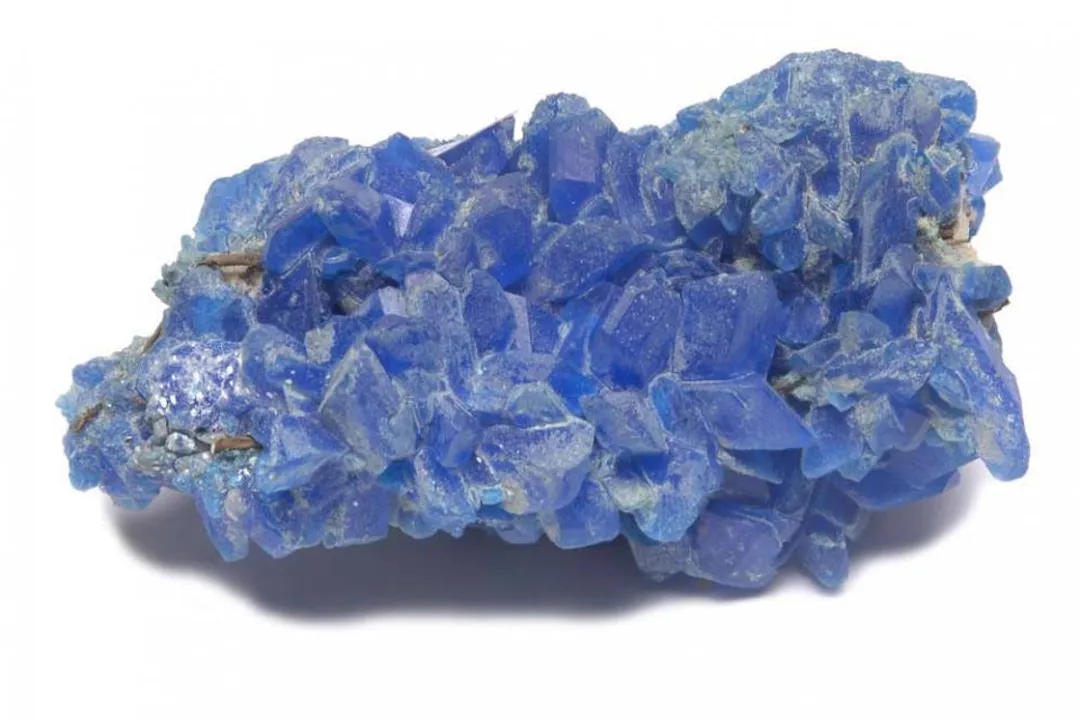
The term used to describe a small piece of rock depends heavily on its specific size, origin, and the context in which it is being discussed. It is rarely just one word; rather, it exists within a continuous scale of geological classification, ranging from something barely visible to the naked eye to fragments easily carried in one hand. [3] Understanding this nomenclature requires looking at both empirical measurement and the rock's history.
# Size Spectrum
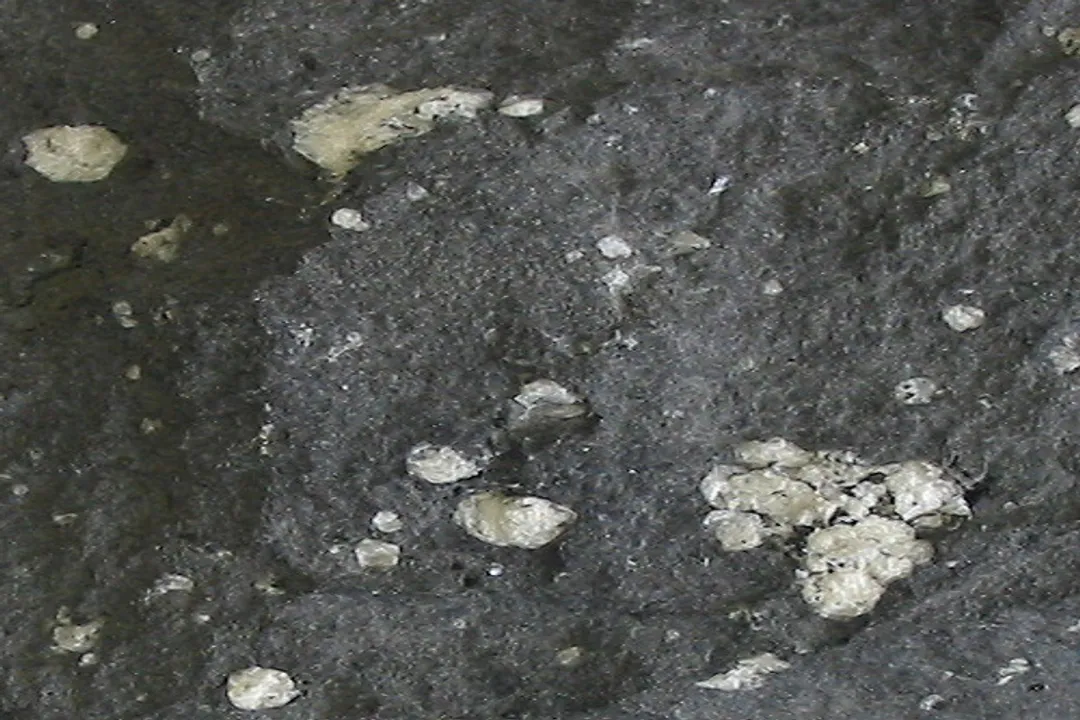
Geologists and engineers employ precise terminology to categorize broken rock material based primarily on diameter. This system helps classify the material found in glacial till, river deposits, or construction aggregates. [8] When a large rock breaks down through processes like weathering or erosion, it enters this size spectrum. [1]
One common reference for classifying fragments, often used in engineering or field geology, establishes clear size distinctions. A piece larger than a boulder might still be classified as a stone or a large rock in common parlance, but scientifically, things get granular quickly. [8]
A boulder is significantly large, generally defined as having a diameter exceeding 256 millimeters (about 10 inches). [8] Once fragments fall below this size, they enter the realm of smaller materials.
# Pebbles and Gravel
Moving down the scale, we encounter pebbles. These are distinct, rounded rock fragments that typically range in size from about 4 millimeters up to 64 millimeters in diameter. [8] The rounding is important; highly angular fragments might be called shatter or sharp-edged debris until they have undergone sufficient tumbling by water or wind to become smooth. [3]
The term gravel is often used as a collective category encompassing pebbles and smaller materials. Gravel is technically loose aggregation of rock fragments where the majority of the fragments are larger than sand size. [7] In construction or soil science, gravel often refers to material retained on a specific sieve size, usually larger than 2 millimeters. [1]
This leads to an interesting differentiation: while a pebble is a specific size class, gravel describes a mixture or general state of being composed of many such particles. [8] Consider a beach—it may be covered in pebbles, but the overall deposit is a gravel beach, assuming sand content is low.
# Smaller Particles
When the material gets significantly smaller than pebbles, the classification shifts toward sedimentary components.
- Sand: These particles are generally visible to the naked eye but are much smaller than pebbles, typically ranging from 0.0625 millimeters (or 1/16 mm) up to 2 millimeters in diameter. [1][7] Sand grains are often individual mineral grains, though they can be tiny rock fragments (clasts) themselves. [3]
- Silt: Smaller than sand, silt particles are usually too fine to be individually distinguished without magnification, measuring between 0.004 and 0.0625 millimeters. [1] Silt often feels smooth or floury when rubbed between the fingers. [3]
- Clay: This represents the finest end of the spectrum, with particles less than 0.004 millimeters. [1] Clay particles are extremely fine mineral fragments, sometimes having a platy structure, which gives the resulting soil or rock unique stickiness when wet. [3][5]
In essence, the collection of these fine, broken pieces—sand, silt, and clay—is broadly termed sediment. [7]
| Fragment Name | Approximate Size Range (Diameter) | Common Context |
|---|---|---|
| Boulder | > 256 mm | Large, immovable fragment |
| Cobble | 64 mm to 256 mm | Softball to basketball size |
| Pebble | 4 mm to 64 mm | Pea to marble size |
| Gravel | General term for fragments > sand size | Road base, river deposits |
| Sand | 0.0625 mm to 2 mm | Feelable grains |
| Silt | 0.004 mm to 0.0625 mm | Floury feel |
| Clay | < 0.004 mm | Sticky when wet, microscopic |
| [1][3][7][8] |
# Composition and Rock Type
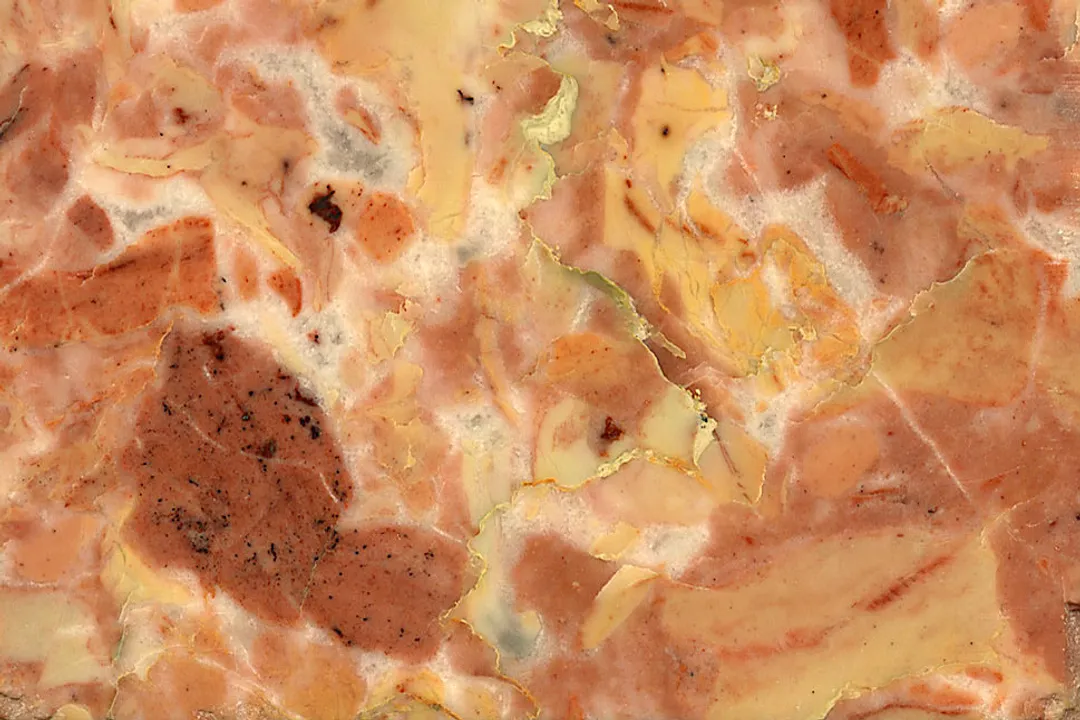
The names listed above—pebble, sand, silt—describe shape and size, not what the material is made of. A pebble could be an igneous rock fragment, a piece of metamorphic material, or a chunk of sedimentary rock. [2][6] This distinction is crucial for geological study.
# Sedimentary Context
When we talk about small pieces of rock, we are often talking about the building blocks of sedimentary rocks. [7] Sedimentary rocks form from pieces of older rocks that have been weathered, eroded, transported, deposited, and finally cemented together over time. [1][7]
If a small piece of rock (a clast) is cemented with sand, silt, and clay-sized material, the resulting rock is classified based on the dominant size of those cemented pieces.
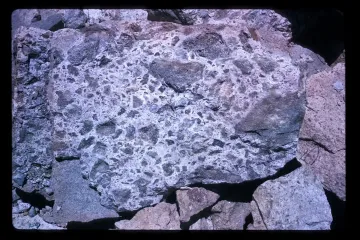
- Conglomerate: A rock composed of cemented, rounded pebbles and larger fragments. [1] The rounding suggests significant transport by water before lithification.
- Breccia: Similar to conglomerate, but the cementing fragments are angular, suggesting they broke off more recently and haven't traveled far. [1]
A granular material composed almost entirely of sand-sized grains cemented together forms sandstone. [7] If the primary component is silt or clay, you get siltstone or shale (if laminated). [1]
It is interesting to note that even when a small piece of rock is weathered down completely, its original identity might persist as the primary component of a sedimentary grain. For instance, quartz sand grains are often highly durable remnants of ancient igneous or metamorphic rocks that have survived extensive erosion. [6] The small piece, therefore, tells two stories: one of its original formation and one of its subsequent breakdown and reassembly. [2]
# Stone Versus Rock Terminology
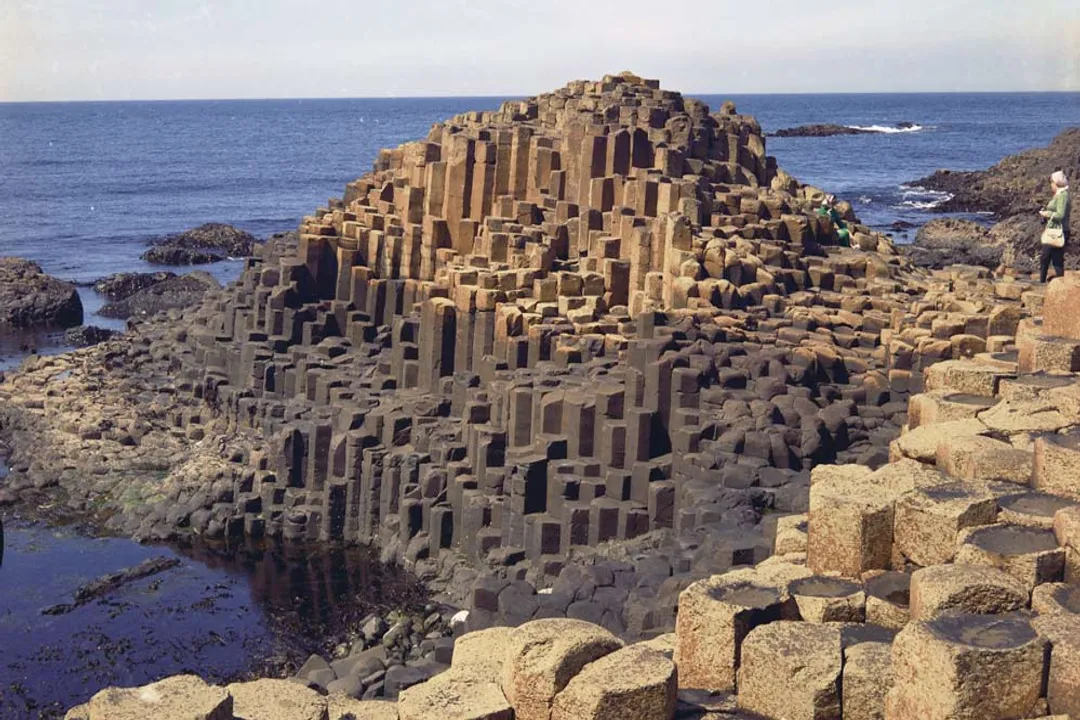
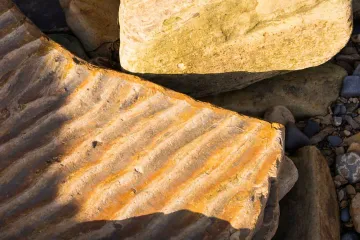
The common language often confuses stone, rock, and other fragments. In everyday conversation, these terms are often interchangeable, but in geology, precision is favored. [8]
Fundamentally, a rock is a naturally occurring solid mass or aggregate of minerals or mineraloid matter. [6] A stone is often used synonymously with rock, especially a piece large enough to be moved by one person, or a piece that has been shaped or cut for building purposes. [8] A pebble is just a specific, small size of rock. [8]
Consider a quarry. The large mass being mined is rock. When it's blasted into manageable chunks, they might be called stones or riprap for construction, depending on their intended use. [8] When those stones weather down in a stream, they become pebbles. A simple way to conceptualize this hierarchy, moving from large natural mass to small transported piece, is:
Mass of Material Rock Stone (a piece of rock) Pebble/Gravel (a sized fragment) Sand/Silt (mineral/rock grains). [8]
# Contextual Naming and Field Observations
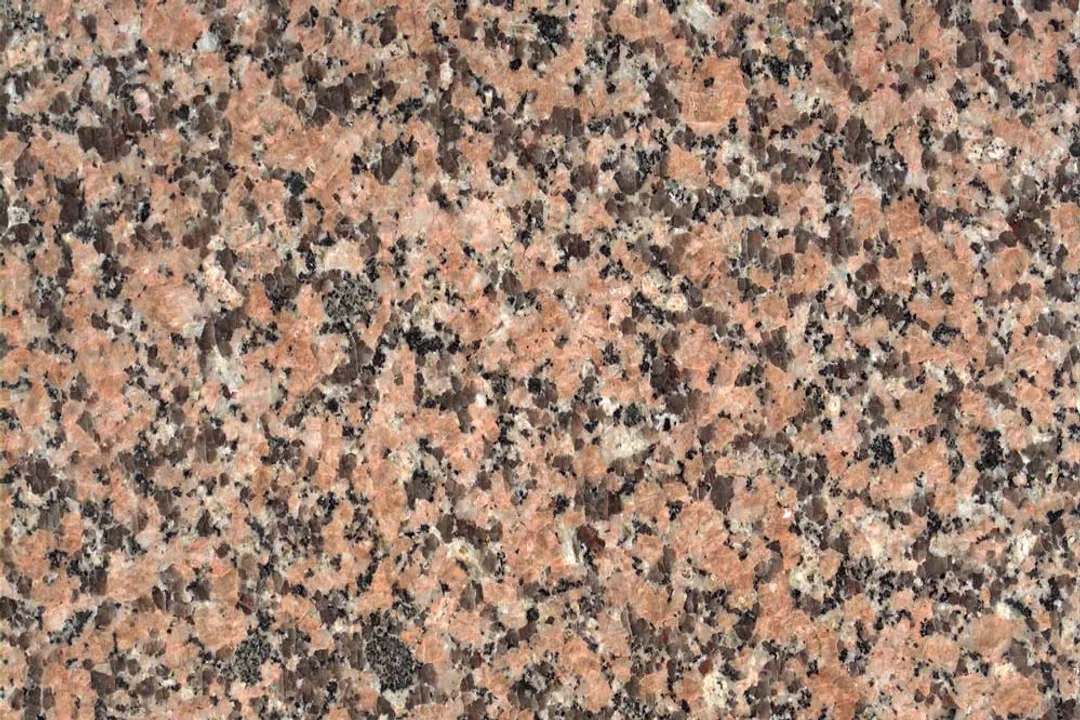
The most appropriate term often arises from where you find the small rock piece. This is where personal geological experience—or Expertise in observation—comes into play.
If you are examining beach sand, the particles are sand. If you are looking at the rubble at the base of a cliff face, the angular debris is technically talus or scree, even if the pieces fall into the pebble size range. [1] The term describes the depositional environment as much as the size. [3]
When assessing gravel deposits, geologists often look at the clast shape to infer transport history. A highly angular piece, perhaps one inch across, is a small angular rock fragment, but if it's been tumbled for miles in a river, it becomes a smooth pebble. [8]
# Original Insight: Geologist vs. Engineer Categorization
For the general reader, the size chart suffices. However, a subtle difference exists between how a field geologist and a civil engineer might describe the same material—a difference that highlights varying priorities. [8] The geologist prioritizes classification by provenance (origin/rock type) and shape (angularity/rounding) to reconstruct Earth’s history. [2][6] Conversely, the civil engineer is often more concerned with gradation (the distribution of particle sizes) and strength for structural support. [1] For an engineer, a mix of 10mm to 30mm material is simply "Class 5 aggregate," which must meet specific density requirements, whereas a geologist might label that same material as "sub-angular quartzite pebbles and weathered gneiss cobbles." This divergence shows how the purpose of identifying small rock pieces dictates the correct vocabulary. [3]
# Identifying Fine Sediment
When pieces are small enough to be categorized as sand, silt, or clay, simple physical tests can help distinguish them, which is a fundamental skill taught in introductory geology lessons. [1][9] This moves beyond simple naming into practical identification.
# The Feel Test
The definitive way to distinguish the smallest fragments is by feel, which relates directly to their size classification:
- Sand: Grains are gritty and discrete; you can easily feel individual particles rubbing against each other. [3][9]
- Silt: When you rub it between your thumb and forefinger, it feels smooth, almost like talcum powder or flour, and does not stick together when slightly moist. [3][9]
- Clay: This material feels sticky and cohesive when wet, often molding easily into a ball. When dry, it can be extremely hard and fine. [5]
# Original Analysis: Durability and Economic Value
The durability of the small rock piece directly impacts its economic value and use, providing another layer of categorization beyond pure size. Quartz and feldspar grains (common in sand) are hard minerals that resist further breakdown, making quartz-rich sand valuable for glassmaking or high-quality concrete. [5][6] Conversely, if a "sand" sample is dominated by weak minerals like gypsum or soft shale fragments, it might be deemed unsuitable for construction because it will crush under pressure—it is low-grade fines. [2] Thus, a small piece of rock’s chemical and mineralogical identity often supersedes its physical size in determining its worth outside of purely academic classification. [5]
Whether you are examining the gravel on a streambed, the sand dunes in a desert, or the fine soil supporting a building foundation, the correct term for that small piece of rock—be it a pebble, a grain of sand, or a particle of clay—is entirely dependent on its diameter relative to a standardized scale. [1][8]
Related Questions
#Citations
Sedimentary Rocks Lesson #13 - Volcano World
Types of Rocks - West Allegheny School District
Glossary - Rocks and Minerals - Science Trek
List of rock types - Wikipedia
A Glossary of Rock and Mineral Terminology
Rocks and minerals - British Geological Survey
Sedimentary Rocks - National Geographic Education
What's the difference between stones, rocks, pebbles, boulders, etc.?
small pieces of rocks are called gravels or pebbles Or something else