What is an astronomy class like in college?

Stepping into an introductory college astronomy class often feels like shedding the everyday constraints of the ground beneath your feet. For many students, particularly those outside the physical sciences, this course represents the first real opportunity to grapple with subjects on a truly cosmic scale, from the formation of our own solar system to the echoes of the Big Bang. The initial impression is usually one of awe, as professors trade the familiar physics of a falling ball for the mechanics of orbital dynamics and stellar evolution.
# Course Structure
The setup of an introductory astronomy course can vary significantly depending on the institution, though most undergraduate surveys aim to provide a broad foundation. At many community colleges, for instance, the introductory offerings are specifically designed for non-science majors, balancing conceptual understanding with engaging demonstrations. A typical structure involves a significant lecture component coupled with either a separate lab section or required observation sessions.
The lecture component is where the bulk of the theoretical material is presented. Students often find that the required readings and lectures are heavily conceptual, focusing on what we know and how we know it, rather than demanding complex mathematical derivations. However, even conceptual courses require students to master a specific vocabulary—terms like parallax, redshift, Hertzsprung-Russell diagram, and standard candle become as familiar as any specialized jargon in a humanities course.
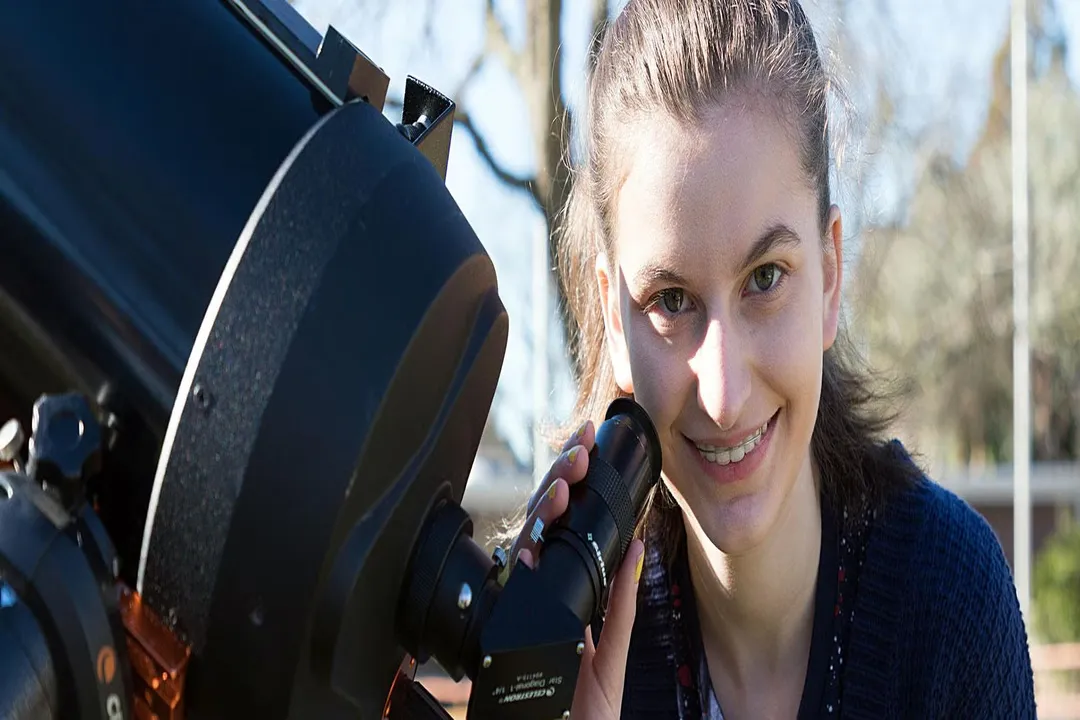
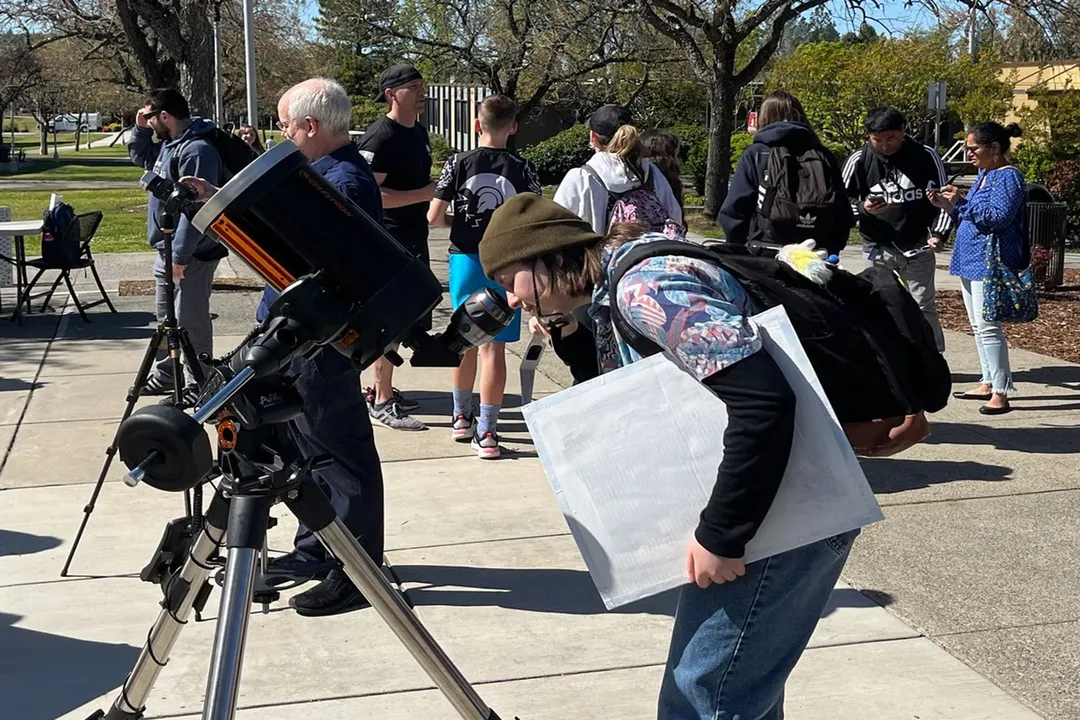
The laboratory or observation component adds a practical dimension often missing from standard classroom lectures. In some settings, the lab might involve using simple telescopes or specialized software to study celestial objects, perhaps mapping constellations or measuring the movement of planets. Other programs might mandate scheduled trips to an observatory, allowing students to look through larger instruments. Even if direct viewing isn't possible due to weather or scheduling, these sessions are crucial for learning to interpret astronomical data, such as analyzing light curves or processing digital images of nebulae. A student might discover that while the lecture hall explains how light travels across space, the lab shows how to actually capture and measure that ancient light.
# Syllabus Scope

The content covered in a standard introductory sequence generally moves outward from Earth, though the depth varies. You can expect an early focus on the history of astronomy and the mechanics of the celestial sphere, which is fundamental to understanding how observers on a moving planet map the sky. This section often involves understanding coordinates, timekeeping, and the basic concepts of motion within our own solar system.
As the course progresses, the focus shifts to the stars. Students typically delve into stellar life cycles—how stars are born from collapsing clouds of gas and dust, what fusion means for their long existence, and their dramatic ends as white dwarfs, neutron stars, or black holes. Understanding concepts like luminosity and temperature measurement becomes key here.
The curriculum then scales up to galaxies and cosmology. This part of the course often involves the largest and most mind-bending concepts: the structure of the Milky Way, the existence of billions of other galaxies, the evidence for an expanding universe, and the theory of the Big Bang. For many, this section is the most captivating, as it addresses humanity’s biggest questions about origins and fate.
# Perceived Ease
A persistent discussion surrounding introductory astronomy revolves around its reputation for being an "easy A" among general education science requirements. This perception often stems from a comparison with calculus-based physics or introductory chemistry courses. Astronomy surveys, especially those designed for non-science majors, frequently emphasize descriptive knowledge and conceptual understanding over rigorous mathematical problem-solving. If a course avoids requiring calculus, students who struggle with higher-level mathematics might find the workload more manageable compared to physics equivalents.
However, characterizing it as universally "easy" misses the mark, as the difficulty is highly instructor-dependent and topic-dependent. While you might avoid complex differential equations, the sheer scale of the subject presents a different kind of intellectual challenge. Memorizing the names, distances, and compositions of countless celestial objects requires a different kind of dedication than mastering a set of physical laws. Furthermore, understanding modern cosmological models, which rely on concepts like spacetime curvature or quantum mechanics at an accessible level, demands significant abstract thought.
Here is a common breakdown of how assessment might be weighted in a non-science major focused introductory course, contrasting conceptual recall with practical application:
| Assessment Category | Typical Weight Range | Focus Area |
|---|---|---|
| Exams (Midterm/Final) | 50% – 65% | Terminology, historical context, conceptual models |
| Quizzes/Homework | 15% – 25% | Basic calculations (e.g., inverse square law for brightness), reading checks |
| Lab/Observation Reports | 15% – 25% | Data interpretation, observational technique proficiency |
This split shows that while rote memorization or conceptual recall might dominate exams, a significant portion of the grade often rests on one's ability to apply the foundational concepts in a simulated or actual observational setting.
# Moving Toward a Major
It is important to distinguish the introductory survey course from a full astronomy major curriculum. An introductory class like Astronomy 101 is an exploration designed to spark interest, whereas a full major is an intensive preparation for research or specialized graduate work.
A student choosing the major path will quickly see the mathematical rigor increase dramatically. While the intro class might teach that gravity dictates orbits, the major sequence will require calculating those orbits using Newtonian mechanics, often necessitating advanced calculus and physics prerequisites. The introductory course serves as a general education requirement, giving a broad survey, whereas the major delves into specialized topics like instrumentation, astrophysics, observational techniques, and quantum mechanics as applied to stellar atmospheres. Those interested in astrophysics or instrumentation will eventually need a solid grounding in calculus and differential equations, subjects rarely required for the general survey course.
For those considering a specialization, the intro course acts as a crucial filter—it lets you confirm that you genuinely enjoy the subject matter before committing to the heavier mathematical lifting required for upper-division work.

# Study Strategies for Success
Navigating an astronomy class successfully involves adapting study habits to handle astronomical scales and concepts that often lack tangible, everyday parallels. You cannot hold a neutron star in your hand, so the learning relies heavily on analogy and model building.
First, master the vocabulary early. Because astronomical terms are specialized and appear frequently, not knowing a term like light-year or Doppler shift immediately hinders comprehension of the following lecture. Keep a running glossary, perhaps organized by scale (Solar System terms, Stellar terms, Galactic terms).
Second, treat the lab seriously as an application zone. If you only review the lecture notes, you might struggle with lab assignments that require you to manipulate data or use star charts. The lab is where the abstract idea of the inverse-square law becomes a concrete problem about candlepower and distance. If your course has an optional observing session, attend it; seeing Jupiter's moons or the rings of Saturn, even briefly, solidifies concepts that two-dimensional diagrams cannot convey.
Here is an actionable tip for tackling the vastness of space: Develop a relative distance hierarchy. Instead of just memorizing that the Andromeda Galaxy is about $2.5$ million light-years away, try to contextualize it against other scales you do know. For instance, if Earth to the Sun is 1 Astronomical Unit (AU), consider how many AUs fit between our Sun and the nearest star (Proxima Centauri, about 4.25 light-years away). Realizing that the nearest star is over 265,000 times farther than the Earth is from the Sun can be a more memorable anchor point than the raw number of miles or light-years. This contextual framing helps prevent the numbers from simply blurring into an overwhelming sequence of zeros.
Finally, for those feeling intimidated by the perceived scientific difficulty, remember that many professors value clear articulation of complex ideas. If you are not pursuing the major, focus your energies on understanding why astronomers believe what they do—the evidence behind the theory. A clear explanation of the evidence for cosmic expansion, for example, is often more valuable in a general education setting than perfectly balancing an equation describing it. This focus on the process of science, rather than just the results, is one of the greatest takeaways from introductory astronomy.
#Videos
Why Study Astronomy? | College Majors - YouTube
Related Questions
#Citations
For those that have taken an intro to astronomy class how ... - Reddit
Astronomy at Contra Costa College
Why is astronomy considered an easy class in college? - Quora
Astronomy | American River College
Astronomy at College of San Mateo - Course Descriptions
What You Need to Know About Becoming an Astronomy Major
Astronomy Noncredit Certificate Classes | Sierra College
Why Study Astronomy? | College Majors - YouTube