Which class of stars have the highest temperature?
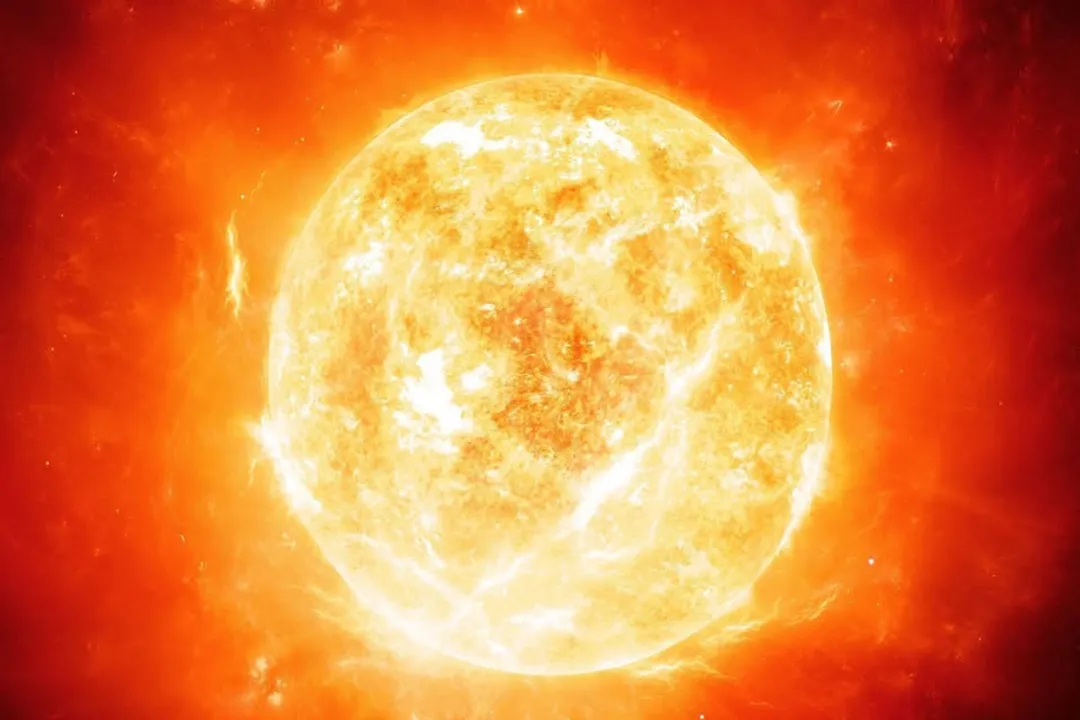
When we look up at the night sky, the twinkling points of light appear generally white, but a closer inspection, especially with good optics or under dark skies, reveals a distinct range of colors—from deep reds to brilliant, piercing blues. This visual difference isn't just an aesthetic curiosity; it is a direct indicator of a star's surface temperature. The stars possessing the absolute highest temperatures are those glowing with a distinct blue hue. [4][5][8]
To systematically categorize these fiery celestial bodies based on temperature, astronomers rely on the stellar classification system, which assigns letters to stars based on the patterns of light absorbed in their spectra. [1] This system serves as a reliable proxy for temperature, with the classes arranged from hottest to coolest. [2][3]
# Spectral Sequence
The standard method for organizing stellar temperatures is the Harvard spectral classification system, which uses the letters O, B, A, F, G, K, and M. [1][2] This sequence arranges stars based on their surface temperature, meaning that the first class listed, the O-type stars, represents the extreme upper limit of stellar heat we commonly observe. [3] It is crucial to remember that this ordering is strictly based on decreasing temperature: O stars are the hottest, followed by B, A, F, G, K, and finally, the coolest stars, the M-type stars. [3]
The classes are further subdivided using a numerical digit from 0 to 9, where a lower number denotes a hotter star within that primary class. For instance, an O0 star is hotter than an O5 star, which in turn is hotter than an O9 star. [1] Our own Sun is classified as a G2 star, placing it firmly in the middle of this thermal scale. [3]
If we consider what drives this fundamental classification, it’s instructive to think about how heating an object changes its emitted radiation. If you heat up a piece of iron, it glows dull red first, then orange, then yellow-white, and eventually, if it could withstand the heat, it would become brilliant blue-white. Stars follow a very similar physical principle related to their peak emission wavelength, often described by Wien's displacement law, though the intense radiation from stars is far more complex than a simple glowing metal bar. [3] The star's surface temperature dictates where in the electromagnetic spectrum the star radiates the most energy, which we perceive as color. [8]
# Hottest Class
The undisputed champions of stellar temperature belong to the O-class stars. [3] These are the most massive, most luminous, and hottest stars known. [1]
The surface temperatures for these giants are staggering. O-type stars generally possess surface temperatures that exceed 30,000 Kelvin (K), and some of the hottest examples can push that figure toward 50,000 K or even higher. [3][6] To put this extreme heat into perspective, the Sun’s surface temperature is only about 5,780 K. [3] This means the hottest O-stars are nearly nine times hotter than our solar neighborhood star.
Visually, these stars appear brilliant blue or blue-white. [4][5] This intense blue color is the signature of their incredibly high energy output. [8]
However, this stellar brilliance comes at a cost. Because they are burning through their nuclear fuel at an astonishing rate due to their extreme mass and temperature, O-type stars have very short lifespans, often lasting only a few million years compared to the Sun's projected 10-billion-year lifespan. [1] This brevity explains why, despite being the hottest, they are also incredibly rare. If you were to observe thousands of stars, you would find many G-type and K-type stars for every single O-type star you encounter. [1]

# Temperature Comparison
Understanding the highest temperature requires placing the O-class in context with the rest of the sequence. The entire spectrum shows a continuous thermal gradient, moving from the scorching blue giants down to the dim, cool red dwarfs.
| Spectral Class | Approximate Surface Temperature Range (Kelvin) | Dominant Color | Example |
|---|---|---|---|
| O | > 30,000 K | Blue | Zeta Puppis |
| B | 10,000 K – 30,000 K | Blue-White | Rigel |
| A | 7,500 K – 10,000 K | White | Sirius |
| F | 6,000 K – 7,500 K | Yellow-White | Polaris |
| G | 5,200 K – 6,000 K | Yellow | The Sun |
| K | 3,700 K – 5,200 K | Orange | Arcturus |
| M | 2,400 K – 3,700 K | Red | Proxima Centauri |
The B-class stars, just below the O-types, still maintain very high temperatures, ranging between 10,000 K and 30,000 K, presenting a blue-white appearance. [3] As you progress toward the middle of the sequence, you hit the A-type stars (white) and then the F-type stars (yellow-white), before arriving at our stable G-class Sun. [1][3]
An interesting characteristic often overlooked is that while we discuss color, the specific absorption lines in the spectrum are what definitively place the star into its class, indicating the presence of specific ionized elements whose behavior is governed entirely by that surface temperature. [2] For example, O-stars show strong ionized helium lines, something that simply cannot exist on the surface of a cooler star like our Sun. [2]
# Temperature Limits
When considering the absolute upper limit, astronomers have looked to the very hottest and rarest stars known, often cataloged as O3 stars. [6] While the general cut-off for O-types is placed around 30,000 K, the most massive and hottest main-sequence stars can approach the limits of what we currently define as stellar stability, perhaps nearing 50,000 K. [6] Conversely, the lower boundary for typical classification stops around the M-class, where surface temperatures drop to approximately 2,400 K. [3]
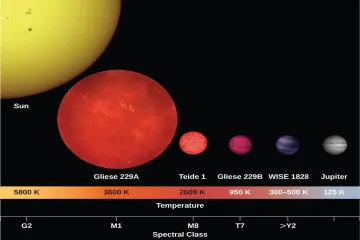
However, there are theoretical and observed objects that fall outside the standard sequence. Red dwarfs (M-type stars) are the most common stars in the galaxy and occupy the cool end, but even cooler objects exist, such as L, T, and Y brown dwarfs, which are sometimes called "failed stars." While they generate very little light and heat compared to true stars, their coolest observed temperatures can fall below 1,000 K. [6] These objects blur the line between a true star and a giant planet, demonstrating that the coolest end of the celestial temperature scale is less strictly defined than the extremely hot, nuclear-burning O-class stars. [6]
Thinking about the practicalities of observing these temperature extremes brings up a good point for any amateur astronomer: while a hot, blue star like Rigel is incredibly bright, its high luminosity means it can easily overpower the visual apparatus of a standard telescope, making the subtle color distinction harder to capture than on a cooler, dimmer giant like Betelgeuse, whose deep orange-red is evident even in light-polluted skies. [4] The sheer intensity of the O-stars often washes out the very color difference we are trying to observe.
# Implication of Heat
The temperature of a star is not merely a metric for bragging rights; it governs almost every other observable property of the star, including its size, luminosity, and lifespan. [1] A star's temperature is a direct indicator of the rate at which it is fusing hydrogen in its core. The hotter the surface, the greater the internal pressure and the faster the consumption of fuel. [2]
This relationship means that while the O-class stars represent the pinnacle of stellar temperature, they are paradoxically the most fleeting. A massive, hot O-star might live for only a few million years before exploding as a supernova. [1] A small, cool K or M-type star, burning its fuel slowly, can exist for hundreds of billions or even trillions of years. [3] The Universe is not old enough for the very coolest M-dwarfs to have exhausted their fuel yet. Therefore, if you are interested in a star that will be shining reliably for eons—a true long-term cosmic beacon—you are looking for a cool star, not the hottest one.
Ultimately, while the title of "hottest star" belongs definitively to the high-mass, short-lived O-class stars radiating in the blue part of the spectrum, the study of these temperature classes—OBAFGKM—gives us the entire life history and physical makeup of the stars that populate our galaxy. [1][2]
Related Questions
#Citations
Stellar classification - Wikipedia
Stellar Classification | The Schools' Observatory
Spectral Type Characteristics
Some stars are red and some are blue, so which star has a ... - Quora
Which color of stars has the highest temperature? | CK-12 Foundation
What is the upper and lower limit of temperatures found on stars?
Stars are classified based on their surface temperature, ranging from
The Colors of the Stars From Hottest to Coldest - Science Notes
Star Spectral Classification