What is the star that looks like it's flashing?
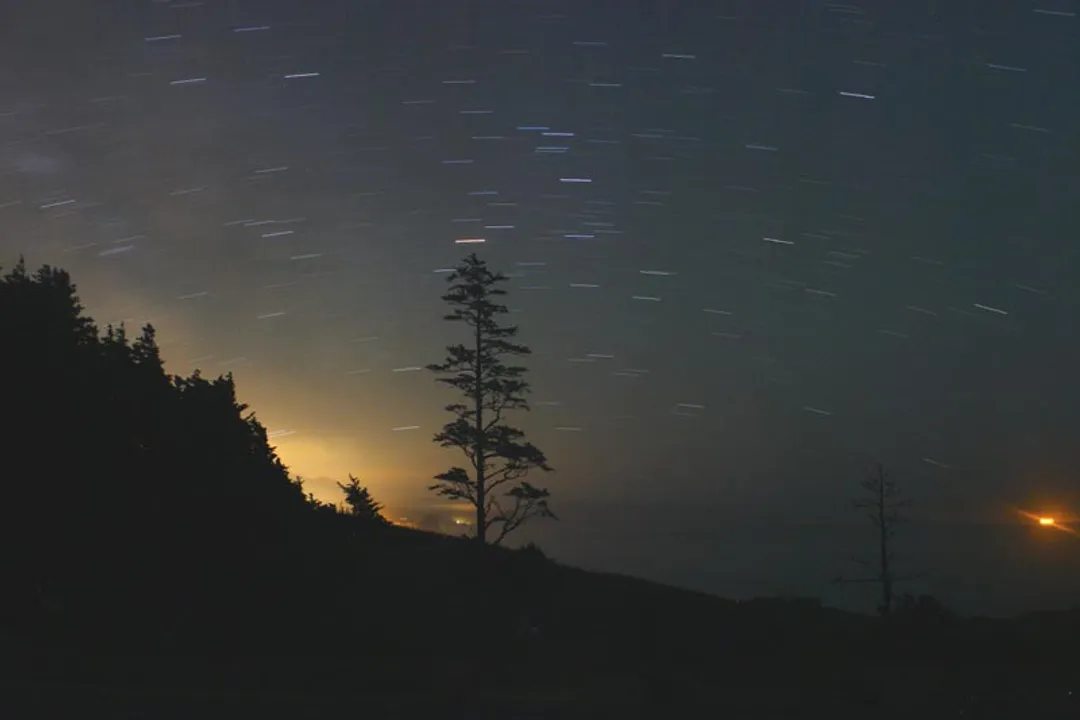
That captivating star you see seemingly blinking rapidly with splashes of color isn't usually a celestial event happening light-years away; more often than not, it’s an interaction happening right here in our own atmosphere. [9] When people look up and notice a star that appears to be flashing, twinkling intensely, or cycling through vibrant shades of red, blue, and white, their initial thought is often that the star itself is physically changing its output instantly. [2][3] While genuine, astronomically significant "blinking stars" do exist, the overwhelming majority of these terrestrial observations are visual tricks caused by the turbulence of the air between your eye and the distant light source. [1][9]
# Atmospheric Illusion
The phenomenon that causes stars to twinkle is known scientifically as astronomical scintillation. [9] This is not inherent to the star but is a direct consequence of Earth’s atmosphere acting like a constantly shifting lens. [4] Stars are incredibly distant point sources of light. As that narrow beam travels across space and finally enters our atmosphere, it encounters countless pockets of air with varying temperatures and densities. [9]
Each pocket of air has a slightly different refractive index, meaning it bends the light passing through it by a minuscule, varying amount. [9] Think of looking at the bottom of a swimming pool on a sunny day; the light is distorted and wavy. The atmosphere does the same thing to starlight, but because the air is moving rapidly—driven by wind, temperature gradients, and convection currents—the star’s apparent position and brightness seem to flicker incredibly quickly. [9] For an object miles away, even slight air movement causes significant apparent shifting. [1]
# Light Separation
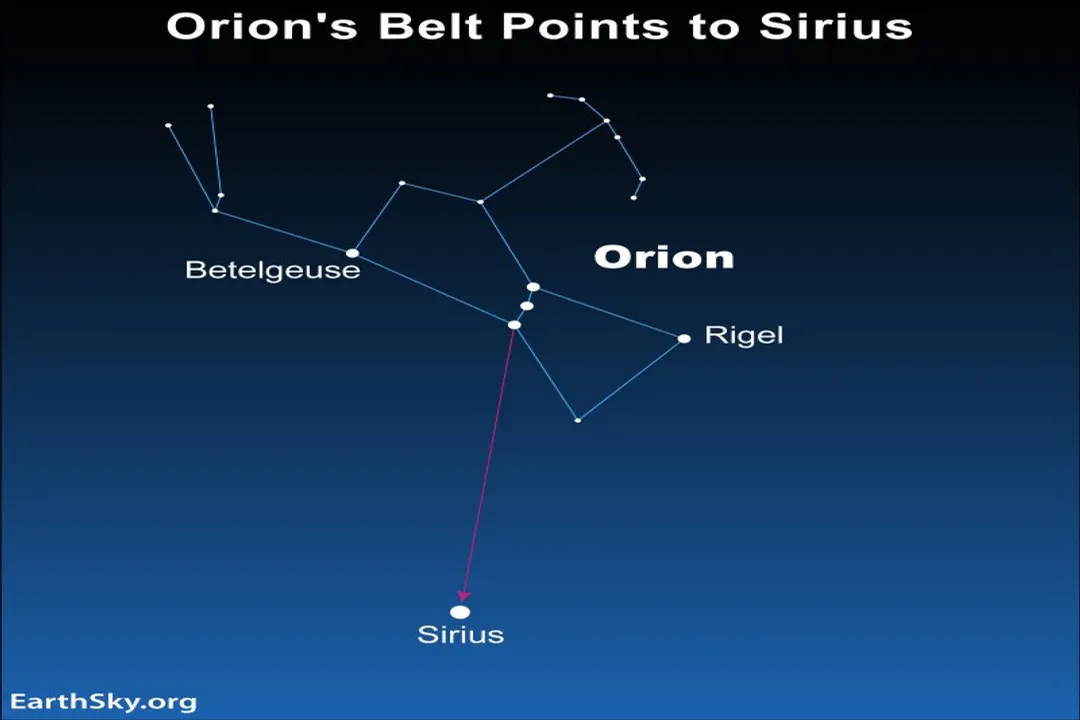
The most dramatic aspect of this "flashing" is often the appearance of distinct colors, like a rapid-fire, multi-colored strobe light. [2] This is where the atmosphere plays its most elaborate trick: dispersion. [9]
White light, which is what nearly all stars emit, is actually composed of a spectrum of colors. When light passes through a prism, the atmosphere acts as a makeshift prism, bending the different colors (wavelengths) by slightly different amounts. [9] Blue light bends slightly more than red light. [9] When the air turbulence is intense—which happens most often when a star is low on the horizon—the atmospheric layer is thick enough and turbulent enough to separate these colors momentarily. [9]
If the air is perfectly still, the star appears steady. If the air is mildly turbulent, the star twinkles uniformly in brightness. But when the air is very turbulent, the light path varies enough that the stream of blue light might be briefly displaced from the stream of red light, causing the observer to momentarily see the star flash red, then blue, then white again, all within a fraction of a second. [1][2][9] The rapid succession of these individual color shifts creates the perception of a star "flashing" in multiple colors simultaneously. [2]
# Common Bright Stars
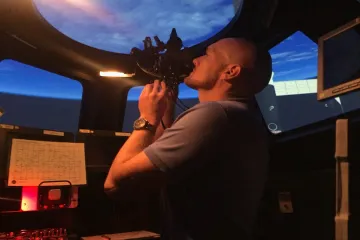
The intensity of scintillation is directly related to how much atmosphere the light has to pass through. [4] This is why the stars most frequently reported as flashing, blinking, or displaying vibrant colors are almost always those that are low in the sky, even if they are intrinsically very bright. [4][10]
Several stars are notorious for this effect, particularly during certain times of the year when they transit low across the horizon from most inhabited latitudes. [4][10]
- Sirius (The Dog Star): Often the brightest star in the night sky, Sirius is frequently mentioned in reports of intense, multi-colored flashing, especially in winter months when it is relatively low. [4]
- Capella: Another frequently cited culprit, known for its yellowish light that can break down into sharp colors when near the horizon. [4]
- Arcturus: Similar to Capella, its low angle can cause significant atmospheric distortion. [4]
When you observe one of these bright stars near the horizon, you are looking through a column of air that is thicker and more disturbed than the air overhead. [10] If you wait until that same star climbs higher in the sky—say, 60 degrees above the horizon—you will notice the flashing and color separation virtually disappear, even though the star itself hasn't moved. [4] This shift in perceived behavior based solely on altitude provides powerful evidence that the cause is terrestrial, not stellar. It is interesting to consider that for an observer near the equator, where the celestial pole is very low, many bright stars might always appear to be closer to the horizon and thus exhibit more noticeable twinkling than they would for an observer at higher latitudes where those same stars pass almost directly overhead. [1]
# True Stellar Changes
While atmospheric effects explain the vast majority of casual sightings, it is important to acknowledge that some stars genuinely change their brightness over observable timescales. [8] These are the true "blinking stars," though their changes are far slower than the rapid flickering seen due to the atmosphere. [8]
Astronomers study what they call variable stars. [8] These celestial objects experience genuine physical changes that cause their luminosity to vary over periods ranging from milliseconds to years. [8] Some of these variations come from pulsating stars, while others involve binary systems where one star eclipses the other from our line of sight. [8]
Recently, astronomers have been amazed by the discovery of genuinely unexpected behavior in some stars, what some sources refer to as "blinking stars" that exhibit totally unexpected, rapid dimming events. [8] These events are likely caused by orbiting exoplanets or stellar phenomena like large starspots rotating into view, but they are astrophysical events—actual changes in the star's energy output or light obstruction—not visual artifacts of our atmosphere. [8] These real astronomical fluctuations occur on timescales measurable in minutes, hours, or days, not the split-second color shifts seen by the naked eye near the horizon.

# Observer Tips
Distinguishing between the atmospheric illusion and a genuine astronomical event comes down to a few key observations and a simple checklist. The goal is to isolate the variable.
The primary test for scintillation is altitude:
- Wait and Watch: If the star is flashing colors intensely, observe it for about five minutes. If it is atmospheric, the star will slowly drift higher in the sky, and you will notice the flashing diminish until it settles into a steady point of light. [4]
- Check Position: If a bright object appears to be flashing wildly, immediately check its position relative to the horizon. Is it low, perhaps only 10 or 20 degrees up? If so, the atmosphere is almost certainly the cause. [10] If the object is directly overhead (near the zenith), it is far less likely to be showing intense color flashes, as the light path is shortest there.
- Check for Planets: If the object is not twinkling at all, even when low, it is almost certainly a planet like Venus, Mars, Jupiter, or Saturn. [4] Planets appear as tiny disks, not true points of light, which causes their light to be far less affected by atmospheric turbulence, resulting in a steady, non-twinkling appearance. [4]
To compare the mechanisms, consider the speeds involved. An atmospheric scintillation event is incredibly fast, occurring as the light passes through the turbulent layer within milliseconds. [9] A true variable star, even a rapidly pulsating one, has changes measured over seconds or longer, which the naked eye perceives as a noticeable, rhythmic dimming and brightening rather than a chaotic flash. [8] For instance, if you see a star blink out and then return to full brightness in the time it takes you to blink once, that is atmospheric shimmer; if you see it slowly fade over thirty seconds and then slowly return over the next minute, you might be looking at a genuine astrophysical variable, though those are rare and typically require magnification to appreciate the slow change. [7]
Ultimately, the star that looks like it's flashing is usually just a very bright, distant sun that has to pass through a very thick, messy chunk of our planet's air before its light reaches you. [9] It’s a testament to the power of the atmosphere that it can turn a steady point of light into a dazzling, multi-hued beacon right before our eyes. [1]
#Videos
A Strange Blinking Star Is Troubling The Astronomers - YouTube
Related Questions
#Citations
Flickering multicolored star, what is it? : r/askastronomy - Reddit
What is this rapidly twinkling red, blue, and white star I saw?
There is a star in the sky that keeps flashing. What is it and ... - Quora
Flashing star in autumn? Here are 3 candidates - EarthSky
A Strange Blinking Star Is Troubling The Astronomers - YouTube
What is the bright twinkling star in east sky? - Facebook
Who else has seen this flashing star - Getting Started With Observing
Scientists amazed by blinking star's 'totally unexpected' behavior
Why Stars Twinkle, Change Colors: Portland, Oregon, Washington ...