What is considered a regular pentagon?
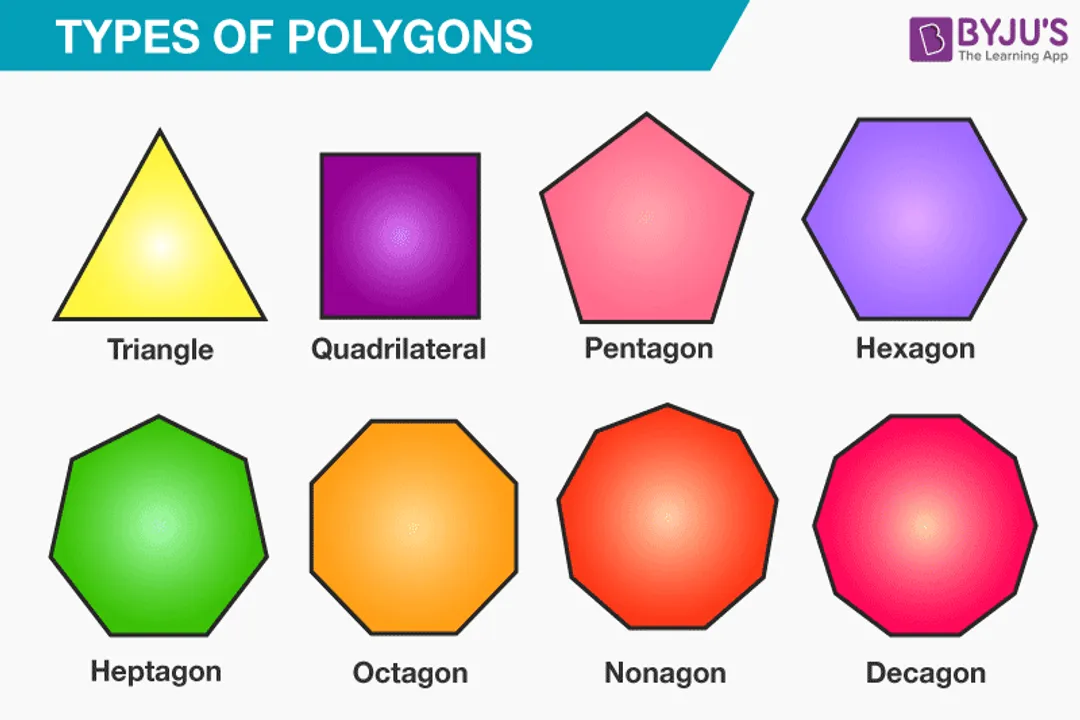
The shape that immediately springs to mind when hearing the word "pentagon" is often the imposing structure housing the US Department of Defense, but in the realm of geometry, this five-sided figure is much more than a famous building or a baseball home plate. [4][7] Fundamentally, any pentagon is defined simply as a polygon possessing exactly five sides and five internal angles. [1][4][7] The name itself gives a clear hint, derived from the Greek words pente for "five" and gonia for "angle". [1][4] Like all polygons, a pentagon exists on a flat plane, an enclosed two-dimensional shape built from straight line segments. [3][4]
While any five-sided shape fits this basic description, the term regular pentagon introduces a standard of perfect balance and uniformity that makes it a cornerstone in the study of regular polygons.
# Defining Regularity

What separates a pedestrian, everyday pentagon from one considered regular? The answer lies in strict adherence to equality across all its defining features. [4][7] A pentagon qualifies as regular if, and only if, all five of its sides are equal in length (making it equilateral), and all five of its interior angles are equal in measure (making it equiangular). [1][3][4][7] This dual requirement of equal sides and equal angles is what bestows the regular pentagon its unique symmetry and geometric perfection. [1] If even one side varies in length or one angle differs from the rest, the shape immediately steps down into the category of an irregular pentagon. [1][4] Irregular versions often appear elongated or flattened because they lack that intrinsic, even distribution of length and degree measure. [3][4]
For a regular pentagon with side length denoted by or , we know a few non-negotiable facts derived from its regularity. First, the sum of all its interior angles is fixed at . [1][4][7] Since there are five equal angles, dividing the total by five tells us that each interior angle must measure exactly . [1][4][7] Correspondingly, each exterior angle—the angle formed by one side and the extension of an adjacent side—must measure . [1][7]
# Perimeter and Area Calculations
Calculating the perimeter of any pentagon is straightforward: it is the sum of the lengths of its five sides. [4][7] For an irregular pentagon, this means adding up five potentially different lengths. [7] However, this task becomes elegantly simple for the regular case. If represents the length of one side, the perimeter, , is simply five times that length: [1][4][7]
When moving to the area, the complexity increases slightly, but for the regular pentagon, we have precise formulas based on the side length (), the apothem (), or the circumradius (). [1][2][3][7] The apothem (also known as the inradius, ) is the line segment drawn from the center of the polygon perpendicular to the midpoint of any side. [1][4][7]
The most general and perhaps most intuitive formula for the area () of any regular polygon connects it to the perimeter and the apothem:
Substituting the regular pentagon's perimeter formula () yields:
If we only know the side length , we must rely on trigonometric relationships to bring in the apothem (). The relationship derived from splitting the pentagon into five isosceles triangles results in the area formula dependent only on the side length:
Several sources present this relationship using slightly different trigonometric equivalents or constants, such as , [2][3] or using the radical form, which relates directly to the golden ratio in more complex ways:
It is interesting to note that while the sum of the interior angles () is derived from the general rule for all simple polygons, the area formula relies on or —angles intrinsically tied to dividing the around the center into five equal sections, and then bisecting the central angles to form the right triangles used in the apothem calculation. This shows the tight integration between the polygon's rotational symmetry () and its area measurement. [7]

# The Golden Connection
One of the most fascinating aspects of the regular pentagon is its intimate relationship with the Golden Ratio, often symbolized by the Greek letter (phi). [2][3] The Golden Ratio is an irrational number approximately equal to $1.618$, mathematically defined as . [2]
This number emerges when comparing the length of a diagonal () to the length of a side () of the regular pentagon. A diagonal connects two non-consecutive vertices. [4][7] In a regular pentagon, every diagonal is the same length, and the ratio of this diagonal length to any side length is precisely :
This means the diagonal is always about 1.618 times longer than the side. [2][3] This relationship is so fundamental that the diagonal length can be written as:
Interestingly, if you construct a pentagram (a five-pointed star) by drawing all five diagonals within the regular pentagon, the side of the resulting inner pentagon is related to the side of the outer pentagon by as well, confirming the geometric consistency of this ratio throughout the figure. [3]
# Symmetry and Construction
The regular pentagon exhibits considerable symmetry, which is key to its mathematical elegance. [3][7] It possesses five lines of reflectional symmetry, meaning you can fold it along any of these five specific lines and the two halves will match perfectly. [1][3][7] Furthermore, it has rotational symmetry of order 5. [3][7] This means that if you rotate the pentagon around its center by , , , or (which are multiples of ), it will land perfectly on its original position. [3][7] The full symmetry group describing all these operations is the dihedral group . [3]
When it comes to actually drawing one, the regular pentagon holds a special place in the history of geometry because it is constructible using only an unmarked straightedge and a compass. [3] This is not true for all regular polygons; the constructibility relies on the prime factors of the number of sides. Since $5$ is a Fermat prime (), the regular pentagon is achievable through classical Euclidean methods, just like the triangle () and the square (). [3] Euclid himself detailed a method for inscribing it in a circle around 300 BC. [3] Modern geometry offers elegant alternatives, such as Richmond’s method or constructions involving Carlyle circles, which provide different sequences of steps to arrive at the exact same dimensions. [3] Even without drawing tools, a regular pentagon can be physically created by tying a simple overhand knot in a strip of paper and then flattening the knot carefully—a surprising demonstration of its inherent geometric constraints. [3]

# Beyond the Regular Form
To fully appreciate the regular pentagon, it helps to contrast it with other categories of five-sided shapes. [1][3][4]
# Convexity and Concavity
All pentagons are classified based on the direction their vertices point. [1][3][4] A convex pentagon is one where every single vertex points outward, meaning that no interior angle exceeds . [3][4][7] The regular pentagon is always convex. [1] Conversely, a concave pentagon is defined by having at least one vertex that points inward, creating an indentation or "bowl-like" structure. [3][4][7] In this case, at least one interior angle must be greater than . [3][7]
# Equilateral vs. Cyclic Status
A shape with five equal sides is called an equilateral pentagon. [1][4] A regular pentagon must be equilateral, but an equilateral pentagon is not necessarily regular because its angles could still vary. [1][4]
A cyclic pentagon is one where all five vertices lie perfectly on the circumference of a single circle. [1][3] Since a regular pentagon maintains a fixed distance (the circumradius, ) from its center to every vertex, it is always a cyclic pentagon. [1][3] Furthermore, mathematicians have studied "Robbins pentagons"—cyclic pentagons that manage to have both rational side lengths and rational area, though proving properties about their diagonals remains a challenge. [3]
# Tiling Limitations
A final interesting contrast involves tiling the plane. While a square () or an equilateral triangle () can fit perfectly around a point (e.g., four squares make ), the regular pentagon cannot form a uniform tiling by itself. [3] If you try to place regular pentagons edge-to-edge around a vertex, you find that equals , which is not a whole number. [3] This inability to tile perfectly is a direct consequence of its internal angle, a feature dictated by the prime number 5, which is mathematically distinct from polygons with an even number of sides or those with angles that divide evenly. [3]
If we consider the ratio of the circumradius () to the apothem () for a regular pentagon of side , we find that is slightly larger than . [2][3] For example, the apothem . [3] The circumradius . [3] This ratio, which is greater than 1, is what forces the vertices to point slightly outward from the circle defined by the apothem, preventing the shape from becoming too "round," a necessary condition for it to fit three times around a point without overlap, which is impossible. [3] The fact that the pentagon is constructible because 5 is a Fermat prime () speaks to a deeper algebraic solvability in classical geometry compared to, say, a regular heptagon (), which is not constructible because 7 is not a Fermat prime. This gap between constructibility and non-constructibility based on the prime factors involved is a subtle yet powerful illustration of the limits of ancient Greek geometric techniques. [3]
When examining real-world occurrences, the pentagonal structure often appears where five-fold symmetry is a functional necessity, such as in the radial symmetry of many echinoderms like sea stars, or in the crystalline structure of certain quasicrystals that defy traditional periodic arrangements. [3] Even in nature, the constraints imposed by the number five—dictating the internal angle—ensure that while the shape is present, its replication must adhere to the same tiling impossibilities seen in geometry class, resulting in forms that might look locally pentagonal but rarely form a globally perfect planar tessellation. [3]
Related Questions
#Citations
Pentagon - Wikipedia
Regular Pentagon -- from Wolfram MathWorld
All About Pentagons - Definition, Examples, Formulas | DreamBox
Regular and Irregular Pentagon - BYJU'S
Pentagon Formulas - xGeometry
Pentagon - Math.net
Pentagon in Maths | Shape, Parts, Types, Examples - GeeksforGeeks