How does bias influence experimental outcomes?
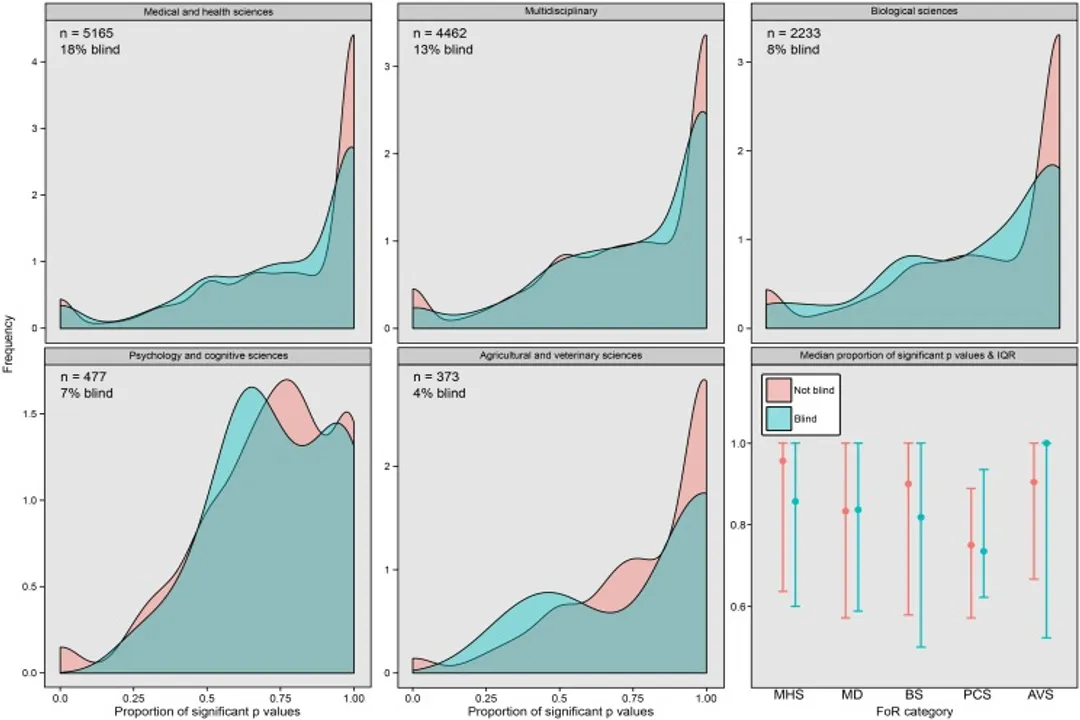
The influence of bias on experimental outcomes is a fundamental challenge in research, consistently threatening the validity of any conclusion drawn from data. Bias, fundamentally, introduces systematic error into a study, meaning the results are consistently skewed in a particular direction rather than being subject to the normal, random fluctuations expected in any measurement. [2][5] This distortion means that what the experiment reports as a finding may not reflect the true state of affairs in the real world, undermining the authority and trustworthiness of the resulting knowledge. [1][8] Understanding how these subtle or overt errors creep into the process is critical for any scientist, product manager, or analyst running a test.
# Systemic Error
Bias in the context of an experiment refers to any systematic deviation of the results or inferences from the truth. [2] It is distinct from random error, which involves unpredictable fluctuations in measurement that tend to cancel each other out over many trials. Bias, however, piles up in the same direction repeatedly, creating a predictable, but incorrect, pattern in the final results. [8] This can happen at every stage of the research lifecycle, from how the initial question is framed to how the final numbers are interpreted. [1]
Research has shown that these systematic errors are not always the result of deliberate manipulation; often, they arise from deeply ingrained cognitive shortcuts or unintentional procedural flaws that researchers themselves may not recognize. [5] Because the goal of an experiment is to establish causality or correlation based on evidence, any systematic leaning essentially poisons the well of evidence before the final analysis even begins. [1]
# Experimenter Impact
One of the most well-documented sources of bias stems directly from the people running the study: the experimenters themselves. This is often termed experimenter bias or observer bias. [4][9] Even when researchers strive for objectivity, their expectations about the outcome can unconsciously influence the study's progression. [3]
This influence manifests in several ways. In observational studies or subjective data recording, a researcher might subconsciously interpret ambiguous observations in a way that favors their hypothesis. [9] For example, if a researcher believes a new teaching method should improve scores, they might grade borderline essays slightly more generously when the student used the new method compared to the control group. [3] In fields like psychology, historical examples, such as those studied by Philip Zimbardo, illustrate how the very structure of an experiment, when coupled with researcher influence, can lead to dramatically skewed behavioral outcomes. [9]
In modern digital experimentation, this translates to subtle interpretations during quality assurance or even in how data collection scripts are written. It’s easy to see how this might look in a traditional setting, but think about it this way: in the context of a software A/B test, experimenter bias might creep in not just by interpreting success rates, but by how the experimenters interact with the feature being tested—perhaps providing more guided instruction to the control group users before launching the test, inadvertently coaching them on a task the test group handles unaided.

# Selection Flaws
The composition of the group being studied is paramount; if the sample is flawed, the experiment's findings cannot be generalized, regardless of how well the intervention itself is managed. [8] This is selection bias, which occurs when the process used to select participants for the experimental or control group results in groups that differ systematically from each other before the intervention even starts. [1]
Imagine testing a new fitness application. If the recruitment process preferentially attracts people who are already highly motivated to exercise, the app's success metrics will look artificially high because the selection introduced a pre-existing advantage, not the app itself. [6] Selection bias can occur through:
- Inadequate Randomization: Where the procedure designed to create equal groups fails due to technical error or poor oversight.
- Self-Selection: When participants volunteer for one group over another based on perceived benefit, creating pre-existing differences in attitude or behavior. [8]
- Attrition Bias: When participants drop out of the study at different rates between groups, again leading to groups that diverge over time. [1]
When the data itself is inherently biased due to poor sampling—meaning the subset doesn't accurately represent the population of interest—the resulting experimental outcome only describes that specific, unrepresentative subset. [6]
# Interpretation Pitfalls
Bias isn't limited to the execution phase; it heavily influences how results are perceived after they are generated. A significant example here is outcome bias, which involves making a judgment about the quality of a decision or process based on the final result rather than the quality of the process itself at the time it was made. [7]
In experimentation, this is dangerous. If an experiment yields a statistically significant, positive result, researchers might retrospectively minimize any procedural flaws that occurred, seeing them as inconsequential because the "answer" was correct. [7] Conversely, if the result is negative, researchers might over-scrutinize every minor flaw in the process, searching for a reason to discard the data, even if the process was sound.
This is closely related to the broader concept of confirmation bias. [5] People naturally seek, interpret, favor, and recall information in a way that confirms or supports their prior beliefs or values. [8] When interpreting data, a researcher hoping to prove a product change works will give more weight and scrutiny to data points supporting that change, while dismissing contradictory points as "noise" or "outliers."
To counter this cognitive trap in digital testing environments, a useful step is establishing an unbiased success metric protocol before the test begins. This means pre-committing to which deviations are acceptable to discard (e.g., identifying bot traffic or test environment errors) and defining the required statistical threshold before looking at the running data. If the required threshold is , you must accept that result, whether it supports your pet theory or not, otherwise you have succumbed to outcome bias. [7]

# Data Skewing Mechanisms
The integrity of the data stream itself can be compromised by various forms of measurement bias. This occurs when the instruments or methods used to gather data consistently misrepresent the true value. [8] This can be simple, such as a scale that is improperly calibrated to always read two pounds heavy, or complex, such as a survey question that uses leading language. [6]
When data inputs are skewed, every subsequent statistical operation—averaging, correlation, hypothesis testing—is performed on faulty premises, leading to an experimental outcome that is mathematically sound for the bad data but factually incorrect in reality. [6]
A more modern manifestation arises from the increasing reliance on automated analysis systems. I call this automation bias in the research context. When complex algorithms or machine learning models process data, researchers—even experienced ones—can develop an over-reliance on the output, treating the algorithmic result as inherently superior to human judgment. [2] This means that if the underlying data contains a subtle, systemic error (like selection bias in the initial user pool fed to the ML model), the sophisticated analysis will simply produce a highly precise, yet deeply flawed, conclusion without the usual human checks and balances catching the initial input error. The precision of the calculation masks the inaccuracy of the premise.
# Countermeasures and Control
Mitigating bias requires proactive measures integrated throughout the experimental design, not just remedial action during analysis. [1]
# Blinding Techniques
The primary defense against experimenter-induced bias, particularly expectancy effects, involves blinding. [3]
- Single-Blinding: Participants do not know which condition (treatment or control) they are receiving. This addresses response bias from the participant side.
- Double-Blinding: Neither the participants nor the researchers interacting directly with the participants know the group assignments. [9] This directly tackles the experimenter's ability to unintentionally influence the data collection or interpretation based on expectation. [3][4] While more common in clinical trials, applying the spirit of double-blinding—by having an independent party manage group assignment keys that are only revealed after the data collection phase is locked down—is essential for high-stakes behavioral experiments. [1]
# Process Rigor
To fight selection and outcome bias, procedural clarity is key. [7]
- Pre-registration: Publicly documenting the experimental design, hypotheses, and analysis plan before data collection starts prevents researchers from shifting goals or methods post-hoc to fit the observed data. [1]
- Standardized Protocols: Ensuring every step of data collection, from equipment calibration to interview scripts, is identical across all groups minimizes measurement bias and accidental procedural deviations that lead to selection divergence. [5]
- Diverse Review: Having analysts or peers review the study who were not involved in the data collection can provide a crucial external check against confirmation and outcome biases, as they lack the emotional or professional investment in a particular result. [8]
Ultimately, recognizing that bias is an inherent human tendency, rather than a moral failing, allows researchers to build systems designed to compensate for it. The influence of bias shapes experimental outcomes by systematically pushing them away from reality; vigilance across selection, execution, and interpretation is the only way to steer the findings back toward factual representation. [1][2]
Related Questions
#Citations
Evidence of Experimental Bias in the Life Sciences: Why We ... - NIH
What does bias mean in experimentation? - Statsig
Understanding Experimenter Bias: Definition, Types, and How to ...
Experimenter's bias | Research Starters - EBSCO
How bias affects scientific research | Science News Learning
How does bias in the data affect the experimental results? - Quora
[PDF] Understanding Outcome Bias - Michael A. Kuhn
Types of Bias in Research | Definition & Examples - Scribbr
Experimental Bias: Psychology Definition, History & Examples