Has anyone ever been hit by a meteorite and survived?

The concept of being struck by a piece of space rock, a meteorite, sounds like something pulled directly from an old science fiction serial, yet history records at least one documented instance where it happened to a person who then lived to tell the tale. For millennia, reports of stones falling from the sky have fueled myth and scientific inquiry, but concrete evidence of a direct, survivable human strike remained elusive until the mid-20th century, focusing attention squarely on a woman in Alabama named Ann Hodges.[1][3][4]
# Alabama Incident
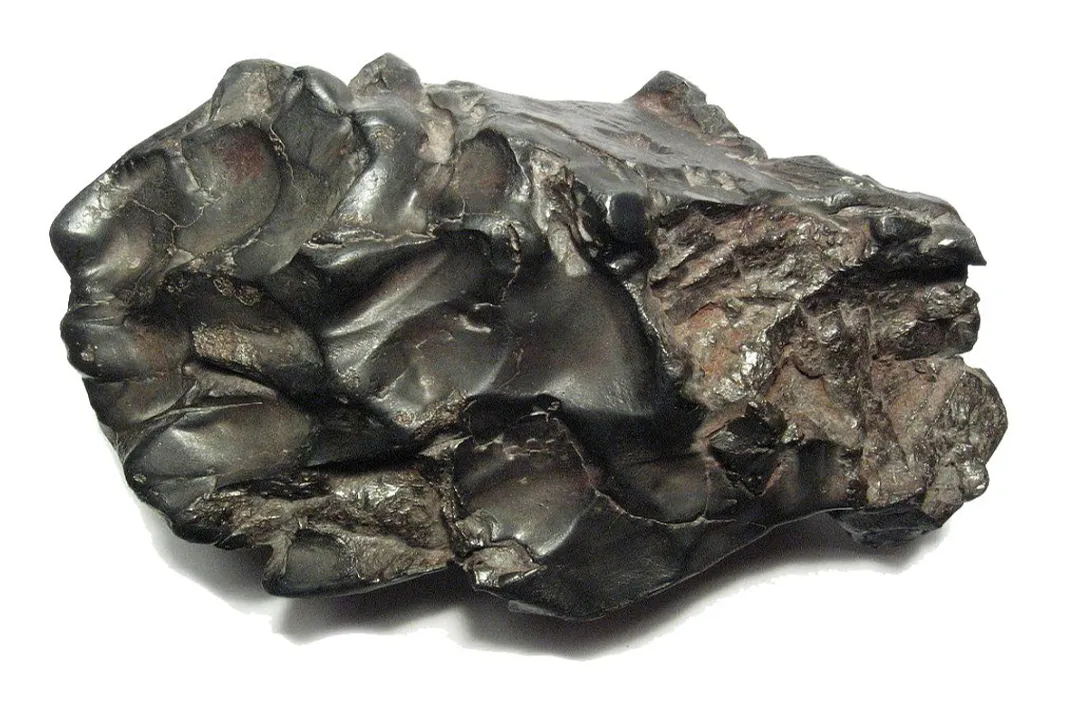
The moment that secured Ann Hodges's place in the annals of space and terrestrial history occurred on November 14, 1954, in Oak Grove, Alabama.[3][4] Ann was taking an afternoon nap on her living room sofa, having put a quilt over herself for warmth, when the catastrophic intersection of space and suburban life occurred.[1][6] The object, described as having punched through her roof shingles, ceiling plaster, and then finally striking her, entered the house with considerable force.[1][3] The rock slammed into her side, leaving a significant bruise, before bouncing off and lodging itself under her leg.[1][4] It was a direct hit that, by all accounts, should have been fatal, yet Ann Hodges became the only verified person on record to have been struck by a meteorite and survived the impact.[2][3][4]
# The Object Itself

The projectile that made contact with Ann Hodges was not some giant, house-destroying monolith; its size contributed significantly to her survival.[1] The space rock was described as being roughly the size of a grapefruit or a small cantaloupe, weighing around 8.5 pounds (about 3.9 kilograms) when found.[1][4] Analysis confirmed it to be a type of stony meteorite known as an achondrite.[3] The impact was forceful enough to leave a distinct impression on the object itself—it had a somewhat smooth, slightly melted surface from its fiery passage through the atmosphere, but the crucial aspect was its reduced velocity upon impact.[3] After the initial shock, the meteorite was reportedly taken by the local sheriff, and eventually, ownership and display became a point of contention.[1] Today, the relic of that strange afternoon rests within the collection of the Smithsonian National Museum of Natural History in Washington, D.C.[1][4]

# Physical Trauma

When the space rock hit, the force was substantial enough to leave a nasty mark, but not enough to penetrate vital organs.[1] Ann sustained a painful, grape-sized contusion on her hip and thigh where the meteorite made contact.[4] She was understandably shaken and in considerable pain, prompting her family to seek medical attention.[1] Her injuries required treatment, but they were relatively minor considering the source of the trauma—a visitor from the asteroid belt.[3] Had the object been traveling faster or been significantly larger, the narrative would certainly be different. The survival aspect hinges almost entirely on the atmospheric breakup and the subsequent deceleration of the fragment before it reached the roofline.
# Aftermath and Conflict
While Ann’s physical recovery was relatively swift, the true ordeal began after the initial shock wore off.[1] The incident immediately attracted media attention, turning the Hodges family home into a temporary local spectacle.[4] More frustrating for Ann, however, were the ensuing disputes over who actually owned the space rock.[1] The meteorite had struck Ann Hodges, who was on her own property, but the land and house belonged to her landlord, Eugene Ford.[1][4]
The drama unfolded between Ford, who claimed ownership as the property owner, and Ann, who argued that since the rock struck her person while she was inside her home, it should rightfully be hers.[1] The confusion highlights an interesting legal vacuum: when an unidentifiable natural object falls from space onto private property, especially when it involves bodily injury, the established laws regarding salvage, property rights, and personal injury do not offer clear, immediate guidance.[4] In the end, the Federal Aviation Administration eventually intervened, declaring that the rock belonged to Ann Hodges.[1] It is noteworthy that while the news focused on the spectacle, the ensuing legal wrangling over possession likely caused more sustained stress than the bruise itself—a classic example of an extraordinary event creating mundane, bureaucratic headaches. This legal battle serves as an interesting, if unfortunate, case study in how bureaucratic systems often lag behind the truly unexpected occurrences of nature.[1]

# Cosmic Rarity
The statistical probability of any single human being struck by a piece of space debris is astronomically low.[3] Earth is constantly bombarded by space material, but most of it burns up harmlessly in the atmosphere as meteors, or "shooting stars." [3] The material that survives and reaches the ground—meteorites—almost always lands in the oceans or in sparsely populated land areas.[3]
Consider the surface area of the Earth, which is vast—roughly 510 million square kilometers.[3] Now, factor in that the vast majority of that surface is water, and much of the land is uninhabited wilderness. The odds of a fragment that manages to survive the atmospheric plunge, maintain enough mass to be noticed, and then land precisely where a person is resting indoors defy simple estimation. The sheer improbability suggests that the energy transfer required for such a specific outcome—surviving the atmospheric drag and then striking a small, moving target indoors—is vastly rarer than the general, diffuse infall of cosmic dust that bombards the planet daily.[3] Ann Hodges’s experience isn't just a lucky near-miss; it is a statistical anomaly of cosmic proportions that required a specific confluence of atmospheric physics and personal presence.
# Other Claims
While Ann Hodges holds the official title for the documented survival case, the history of meteorite impacts includes other, sometimes tragic, claims, which often lack the same level of third-party verification that the Hodges event eventually received.[7] One of the most frequently cited historical instances involves an event in Sulaymaniyah, present-day Iraq, in 1888.[7] Reports from that era suggest a person may have been killed by a falling meteorite, an event that, if confirmed with modern standards, would mark the only known fatality caused by a space rock.[7] However, the documentation surrounding the 1888 incident is often less robust than the later 20th-century records, leading many scientists to treat it with caution compared to the well-documented 1954 Alabama strike.[7]
There are other anecdotal accounts throughout history, but they often involve impacts on structures or animals, or the claimant could not produce the actual space rock for scientific verification.[7] The scientific community demands high standards of proof: the object must be recovered, its chemical and mineralogical composition must be definitively linked to extraterrestrial origin, and the circumstances of the impact must be corroborated. Ann Hodges’s rock met these criteria, which is why her story endures, while many others fade into the realm of historical curiosity.
# Verification Standards
The reason we can state with confidence that Ann Hodges is the only confirmed survivor hit by a meteorite is due to these verification standards. Scientists need to examine the stone to confirm it is not terrestrial—for example, a piece of slag or a common rock heated to mimic atmospheric entry.[3] The analysis typically involves looking for specific mineralogical characteristics that only form in the extreme conditions of space or during atmospheric ablation.[3] When Ann's rock was examined, its composition matched those of other documented meteorites, providing the necessary scientific authority to her unique claim.[3] This process of verification separates confirmed events, like the one in Alabama, from intriguing but unsubstantiated historical reports, like the one from the late 19th century.[7]
# Human Resilience
Ann Hodges lived for many years after the impact, long enough to see her strange claim become a piece of trivia referenced in newspapers and eventually, as space travel became more common, a fascinating footnote in human interaction with the cosmos.[1] The fact that a heavy object, slowed but not stopped by the atmosphere, could strike a person and result only in a bruise speaks volumes about the protective qualities of the human body, even when facing something completely outside of everyday experience.[1] While the media portrayed her as a victim of cosmic misfortune, her survival speaks to the resilience required to shrug off an event that quite literally fell from the heavens. The incident remains a powerful, concrete example of the dangers—and survivability—of extraterrestrial encounters on a terrestrial scale.[2][6]
#Videos
A TRUE STORY: The Only Person Ever Hit by a Meteorite - YouTube
Related Questions
#Citations
For the Only Person Ever Hit by a Meteorite, the Real Trouble Began ...
Ann Hodges, the only human being in recorded history to be hit by a ...
The Woman Who Was Hit by a Space Rock and Lived
The Story of Ann Hodges, the Only Person Known ... - Business Insider
The Only Person Ever Hit by a Meteorite… (She Was Sleeping!)
Woman struck by meteorite in Sylacauga Alabama in 1954 - Facebook
The Only Person To Ever Be Killed By A Falling Meteorite Was ...
Has anyone been hit by a meteorite? It turns out yes-and ... - Instagram