What mechanisms drive cellular differentiation?

The process by which a simple, unspecialized cell develops into a distinct, specialized cell type—like turning a progenitor into a functioning neuron or a muscle fiber—is known as cellular differentiation. [1][2][4] This transformation is not merely a change in shape; it represents a profound reorganization of the cell’s identity, fundamentally altering its structure, function, and role within the larger organism. [1] At its heart, differentiation is a precisely orchestrated series of events driven almost entirely by differential gene expression, meaning that while most cells in an organism share the same DNA blueprint, they choose to read and act upon only specific subsets of that genetic information. [6][7]
# Cell Specialization
The observable outcome of differentiation is a cell equipped for a specific job. A muscle cell, for instance, expresses high levels of contractile proteins like actin and myosin, structuring itself to generate force. [1] Conversely, a liver cell dedicates its machinery to metabolic functions, producing enzymes required for detoxification and nutrient processing. [1] These physical and functional distinctions arise because the unique set of messenger RNA (mRNA) molecules present in each cell dictates which proteins are synthesized. [6] A cell destined to become a red blood cell will activate the genes necessary for hemoglobin production while actively silencing genes related to neurotransmitter synthesis. [2]
# Gene Regulation Central
The mechanism that governs which genes are active is the precise control of gene expression. [6] This control happens primarily at the level of transcription, the initial step where the DNA code is copied into an RNA molecule. [7] If a gene's transcription is blocked, the resulting protein cannot be made, effectively silencing that characteristic. If transcription is strongly activated, the corresponding protein is produced in abundance, defining the cell's phenotype. [7]
This regulation is not random; it follows a hierarchical cascade, moving from external signals interpreted by the cell surface down to direct interaction with the DNA within the nucleus. [2] The final result is a cell whose gene expression profile is stable and self-perpetuating, ensuring that a skin cell continues to make skin cell proteins, generation after generation. [7]
# External Cues
Cellular differentiation rarely occurs in isolation; it is heavily influenced by the cell's environment. [5] Signals received from neighboring cells or the surrounding extracellular matrix are often the initial triggers that initiate the differentiation program. [2] These external factors can include growth factors, hormones, cytokines, or direct physical interactions with other cells. [2][5]
When a signaling molecule, often called a ligand, binds to a specific receptor protein embedded in the cell membrane, it initiates a chain reaction inside the cell known as a signal transduction pathway. [5] This pathway translates the external "message" (e.g., "become bone tissue") into an internal instruction that can directly affect gene activity. [2] The presence or absence, and concentration, of these external signaling molecules dictate the path a stem cell or progenitor cell will take. [5]
# Internal Machinery
The signals relayed through the membrane receptors ultimately converge on the machinery that interacts directly with the cell's genome: transcription factors (TFs). [7] These are specialized proteins that bind to specific DNA sequences near the target genes—often in regions called enhancers or promoters—to either promote or repress the binding of RNA polymerase, the enzyme responsible for transcription. [6][7]
Different cell types require different combinations of TFs to be active. For example, the presence of one set of TFs might drive differentiation toward a neuronal fate, while the simultaneous absence of those TFs and the presence of another set pushes the cell toward becoming a muscle cell. [2] It is helpful to view these TFs not as simple on/off switches, but as an orchestra conductor, selecting precisely which instrumental sections—the gene sets—will play and how loudly. If the conductor (the combination of active TFs) calls for the strings (metabolic genes) and woodwinds (structural genes) but silences the brass (defense genes), the resulting music—the cell's function—is unique to that performance. [6] This fine-tuning allows for a spectrum of intermediate cell states rather than just binary choices. [5]

# Epigenetic Control
While transcription factors dictate immediate changes in gene activity, the stability of a differentiated state often requires more permanent alterations, managed by epigenetic mechanisms. [2][7] Epigenetics refers to heritable changes in gene expression that occur without altering the underlying DNA sequence itself. [7] These modifications act as molecular bookmarks that determine whether the chromatin—the complex of DNA and proteins (histones) that packages the genome—is accessible for transcription. [7]
Two primary epigenetic mechanisms are crucial in locking in cell fate:
- DNA Methylation: In this process, methyl groups are added directly to the DNA bases, typically cytosine residues in specific contexts. [7] Heavily methylated regions are generally associated with condensed, silent chromatin, effectively turning off genes permanently. Genes critical to other cell lineages are often silenced this way during differentiation. [2]
- Histone Modification: DNA wraps around histone proteins. Chemical modifications to the tails of these histones—such as acetylation or methylation—can cause the chromatin to either loosen, making the DNA accessible, or tighten, making it inaccessible. [2][7] A cell that has committed to a specific lineage will maintain an "open" epigenetic state for its necessary functional genes and a "closed" state for all others. [7]
It is fascinating to consider that maintaining a highly specialized state requires continuous, active molecular management. A terminally differentiated cell expends energy to keep its inappropriate lineage genes silenced, often through maintaining high levels of DNA methylation at those sites. This suggests that the stability of a differentiated state isn't a passive resting point, but an energetically maintained equilibrium against the cell's inherent potential to revert or switch paths. If this maintenance fails, the cell can sometimes drift, which is a critical factor in understanding disease progression. [7]
# Commitment Paths
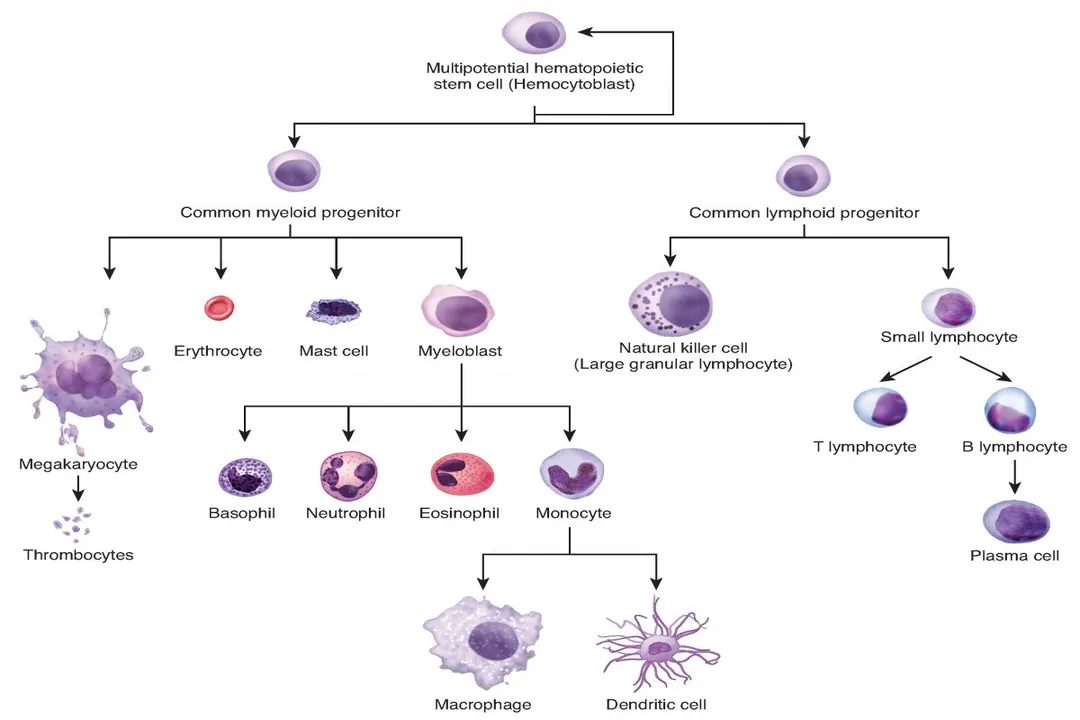
Differentiation is rarely a single, instantaneous leap; it often proceeds through a series of increasingly restricted steps. [1] This progression involves lineage commitment, where a cell progressively narrows the range of possible cell types it can still become. [1]
For example, a hematopoietic stem cell can eventually become any type of blood cell. Early signals might commit it to the myeloid lineage, blocking the lymphoid pathway forever. [1] Subsequent signals then further restrict the myeloid cell until it becomes a specific type of white blood cell or a red blood cell. [1][4] This stepwise restriction ensures that large populations of necessary specialized cells are generated reliably during development and throughout adult life for tissue renewal. [1][2] This gradual commitment acts as a quality control system; errors or ambiguous signals earlier in the process can be corrected by later, more stringent regulatory checks before terminal differentiation is achieved. [4]

# Development and Disease
The mechanisms driving cellular differentiation are the bedrock of embryonic development, allowing a single fertilized egg to construct an entire, complex organism with billions of precisely positioned and functional cells. [1][4] They are also essential for tissue homeostasis in adults, allowing stem cells in tissues like the bone marrow or gut lining to replenish lost or damaged cells. [2]
When these control systems fail, the consequences can be severe. A major implication of understanding these mechanisms lies in pathology, particularly cancer. [7] Cancer often involves a failure of differentiation, where cells become undifferentiated or dedifferentiated, reverting to a more primitive state that prioritizes uncontrolled proliferation over specialized function. [7] The molecular machinery that normally ensures precise gene silencing and pathway activation is corrupted, allowing growth signals to dominate and epigenetic locks to fail. [7] Investigating how differentiation signals are corrupted in cancer cells offers targets for therapeutic intervention, aiming to force those aberrant cells back into a controlled, functional state, or at least arrest their uncontrolled division. [7] Likewise, the use of induced pluripotent stem cells (iPSCs), where adult cells are chemically reprogrammed back to a stem-like state, relies entirely on reversing these complex differentiation drivers, highlighting the power and plasticity inherent in controlling these core genetic regulatory networks. [4]
Related Questions
#Citations
Cellular differentiation - Wikipedia
Editorial: Mechanisms of cellular differentiation, organ development ...
Cellular Differentiation - an overview | ScienceDirect Topics
Mechanisms of Cellular Differentiation, Organ Development, and ...
Cellular Differentiation | Anatomy and Physiology I - Lumen Learning
Gene Expression Regulates Cell Differentiation - Nature
MOLECULAR MECHANISMS THAT GOVERN STEM CELL ...
Mechanisms of cellular differentiation | Cell Biology Class Notes
Uncovering underlying physical principles and driving forces of cell ...