What mechanisms underlie consciousness?
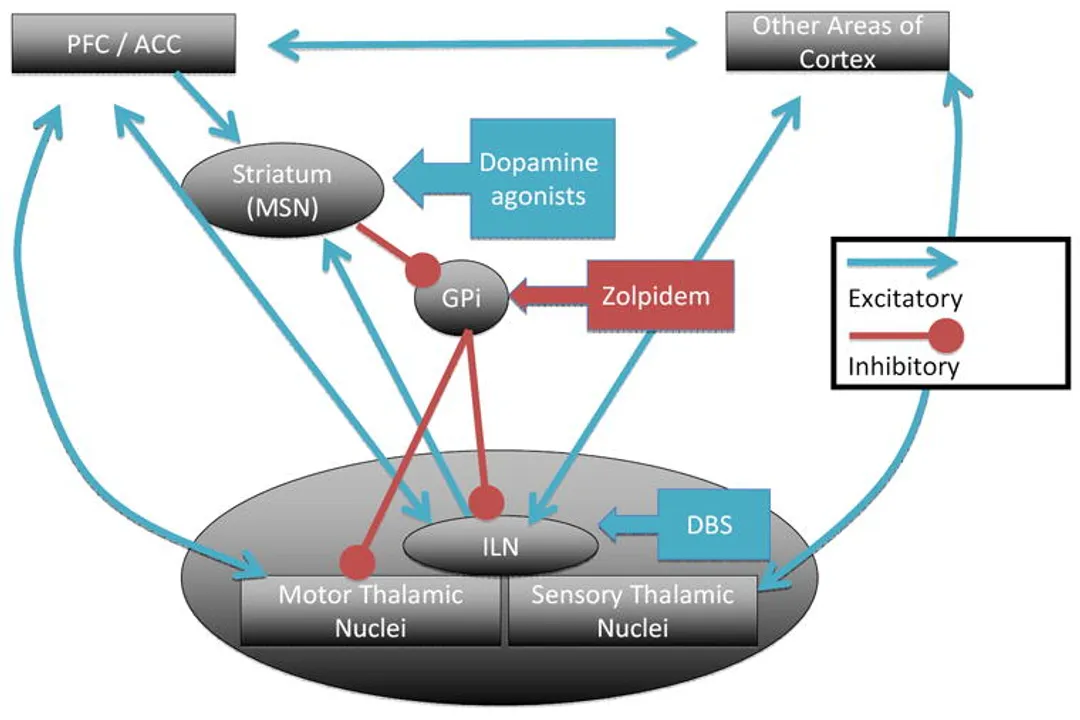
The search for the physical basis of subjective experience, often termed the neural correlates of consciousness (NCC), is one of the most profound endeavors in modern science. [1][7] These correlates are not the subjective experience itself, but rather the minimal neuronal mechanisms that are jointly sufficient for any specific conscious percept. [1] In essence, researchers are trying to isolate the specific patterns of brain activity that must be present when you see the color red, hear a C-sharp, or feel pain, and absent when the exact same sensory information is processed non-consciously. [7]
The inherent difficulty lies in the fact that the brain is always active. A stimulus that enters awareness triggers a cascade of neural events—from sensory processing to motor preparation—making it challenging to disentangle which part of that cascade is the necessary accompaniment to the conscious moment versus which parts are merely consequences or background noise. [1]
# Finding Signatures

Scientific methods designed to hunt for the NCC rely heavily on creating stark contrasts in perception while keeping the physical stimulus as constant as possible. [1] This "subtraction method" is key to isolating the relevant neural events. [7]
# Experimental Paradigms
Two primary experimental strategies dominate this field: binocular rivalry and perceptual masking. [1]
In binocular rivalry, two different images are presented simultaneously, one to each eye—for example, a house to the left eye and a face to the right eye. The subject cannot perceive both at once; instead, the conscious perception spontaneously alternates between seeing the house and seeing the face. [1] Because the physical input to the visual system remains unchanged, any corresponding change in brain activity can be strongly linked to the moment the perception shifts from house to face, or vice-versa, providing a direct measure of an NCC for that specific experience. [7]
Perceptual masking involves presenting a briefly flashed stimulus (the target) followed immediately by a mask that intentionally prevents the target from reaching awareness. [1] By comparing brain activity when the target is seen (unmasked) against activity when the same target is presented but completely missed (masked), researchers attempt to pinpoint the neural activity tied directly to conscious reportability. [1]
One way researchers have tried to refine these measures is by focusing not just on where the activity is, but how it propagates. If an input is processed only subliminally, the resulting activity tends to be confined to early sensory areas—a feedforward sweep of activation that quickly fades. [6] However, when the input becomes conscious, this initial activity is sustained and amplified by recurrent, or feedback, processing within the cortex. [6] This recurrence is thought to be a critical mechanism, turning a fleeting trace into a stable, reportable experience. [6] It is interesting to note how clean this distinction is supposed to be: a feedforward wave is unconscious, while a sustained wave involving feedback loops is conscious. In practice, however, filtering out all background noise that resembles weak feedback activity during a non-conscious trial presents a significant methodological hurdle, suggesting that the boundary between "subliminal" and "conscious" processing might be more of a continuum than a clean on/off switch in real-world scenarios. [1]
# Neural Dynamics
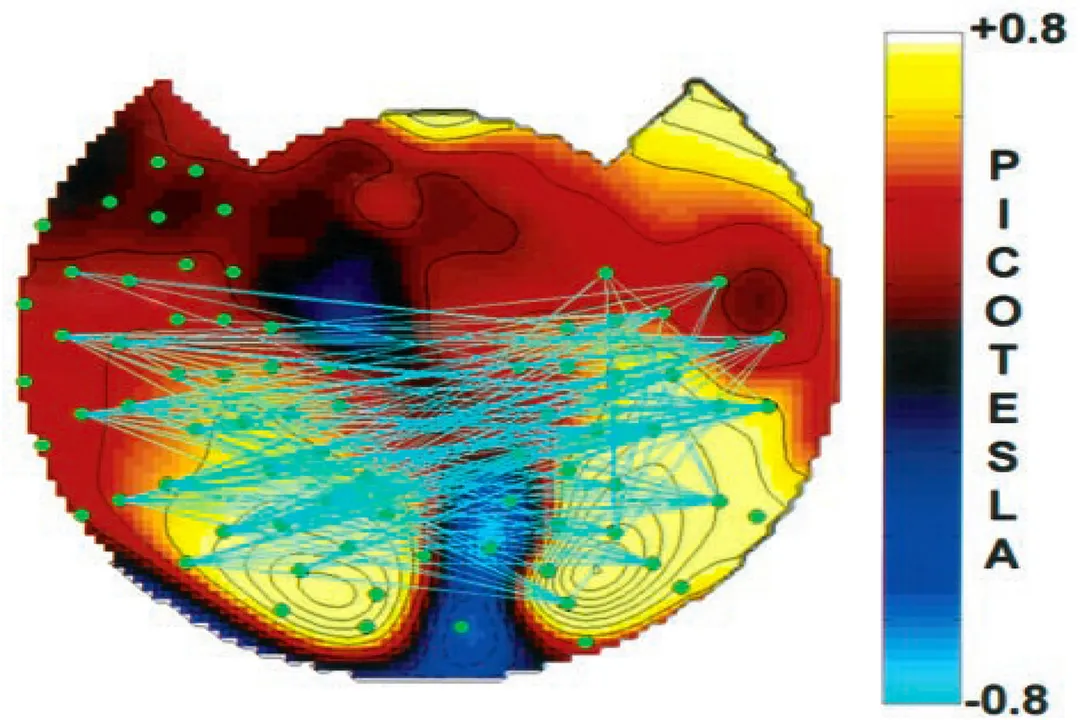
Once the experimental contrasts are set up, the focus shifts to measuring the electrical and metabolic correlates of the conscious experience itself. [7] This has highlighted patterns involving specific frequency bands and brain network engagement.
# Oscillations and Synchronization
Conscious perception seems strongly tied to the synchronization of neural firing across different brain regions, particularly in specific frequency ranges. [6] When subjects become consciously aware of a stimulus, there is often a marked increase in gamma-band (30–70 Hz) power in the areas processing that sensory information. [6] This high-frequency synchronization is hypothesized to be the mechanism that binds disparate features (like the color, shape, and motion of an object) into one unified conscious percept. [6]
Conversely, some studies link the absence of consciousness—such as during deep sleep or under anesthesia—to an increase in alpha-band (8–12 Hz) power, particularly in posterior cortical regions. [6] This suggests that a shift toward slower, more localized oscillations might inhibit the necessary global communication required for awareness. [6]
# Global Accessibility
A recurring theme in the search for NCC is the idea that consciousness requires information to be made widely available across the brain, not just processed locally in a specialized module. [6]
The Global Neuronal Workspace Theory (GNWT) posits that consciousness occurs when sensory information gains access to a widely distributed network of brain areas, effectively becoming "broadcast" throughout the system. [6] Before this broadcast, processing happens locally and non-consciously; once broadcast, the information is available to diverse cognitive functions like memory, planning, and verbal reporting—all hallmarks of conscious awareness. [6] This global availability stands in contrast to unconscious processing, which remains modular and localized. [6] Thinking about this process, one might conceptualize attention as a filtering mechanism that determines what information is strong enough to enter this global arena. If attention acts as the gatekeeper, then the mechanism underlying the feeling of consciousness might only kick in once the attended information has passed that initial filter and achieved this widespread, sustained activation state described by GNWT. [6]
# Competing Explanations
While the GNWT provides a compelling picture of global sharing, other theories offer fundamentally different perspectives on what consciousness is at a physical level.
# Integrated Information
The Integrated Information Theory (IIT) takes a more fundamental approach, proposing that consciousness is equivalent to the amount of integrated information () present in a physical system. [4] For a system to be conscious, it must possess a high degree of both differentiation (having many distinct possible states) and integration (where the parts influence the whole in a way that cannot be broken down into independent components). [4]
IIT suggests that consciousness is an intrinsic property of certain systems, and a high value mathematically describes the system's capacity to constrain its own states. [4] Unlike GNWT, which focuses on the function of broadcasting information, IIT focuses on the structure of the causal relationships within the physical substrate. [4] A system could theoretically have high without necessarily involving the specific large-scale cortical networks favored by GNWT, though in biological brains, the two concepts might overlap significantly. [4] The critical difference is that IIT suggests consciousness is identical to , whereas GNWT views consciousness as the result of information achieving a certain functional state. [6][4]
# Re-entry and Complexity
Other models, like the Recurrent Processing Theory (RPT), align somewhat with the structural aspects of the NCC search by emphasizing the importance of feedback loops within the cortex, as noted earlier. [6] The interplay between feedforward and feedback activity seems central to distinguishing conscious from non-conscious states. [6]
When comparing these primary mechanisms, we see a tension: GNWT is primarily functionalist (what the system does—broadcast), while IIT is structural/informational (what the system is—a highly integrated whole). [4][6] For the average reader trying to picture the mechanism, GNWT offers a more visualizable concept of information flowing through a central network, whereas IIT requires abstracting to the mathematical relationships between interacting neurons.
# State Dependence
The mechanisms underlying consciousness are profoundly affected by changes in the brain’s overall state, providing further clues about what is necessary for experience.
# Sleep and Anesthesia
In states like non-REM sleep or under general anesthesia, the capacity for conscious report is lost, despite significant ongoing brain activity. [5] Studies monitoring brain activity during these states often reveal a collapse in the long-range communication thought to be necessary for consciousness. [5]
For instance, research has shown that general anesthetics can selectively disrupt the long-range connectivity between distant brain regions without necessarily halting local processing entirely. [5] This supports the view that consciousness depends on a network effect—the ability of different specialized areas to talk to each other globally—rather than just the activity within any single area. [5] If the mechanism were simply high gamma firing in the visual cortex, for example, we might expect awareness during anesthesia, but instead, the ability for that signal to reach and influence the prefrontal and parietal areas seems to be the component that fails. [5]
# Clinical Assessment
The concept of NCC is not purely academic; it has direct implications for clinical neurology, especially in assessing patients with disorders of consciousness (DOC), such as those in a vegetative or minimally conscious state. [3]
Traditional bedside assessments rely on behavioral responses, which can be misleading if the patient is conscious but unable to move or speak. [3] Modern research often turns to identifying biomarkers that correlate with subjective awareness, even in the absence of motor output. One approach involves applying transcranial magnetic stimulation (TMS) combined with EEG to measure the brain’s capacity for complex, integrated responses, often quantified using the Perturbational Complexity Index (PCI). [5][4] A high PCI value suggests a complex, integrated response pattern, similar to what is seen in the conscious awake brain, while a low PCI suggests a fragmented, "stuck" state seen in deep sleep or severe brain injury. [5] This index attempts to measure the structural potential for consciousness, linking closely to the systems-level requirements described by theories like IIT and the global accessibility required by GNWT. [4][5]
# Summary of Mechanisms
To synthesize the findings, the mechanisms underlying consciousness appear to require several interlocking properties, moving from simple input processing to complex network integration:
| Feature | Correlate/Theory | Role in Consciousness |
|---|---|---|
| Sustained Activity | Recurrent Processing (RPT) | Necessary to transform fleeting sensory traces into stable perceptions. [6] |
| Integration | High (IIT) | The system's intrinsic capacity to combine diverse information causally. [4] |
| Global Availability | GNWT Broadcast | Information must be shared across a wide, distributed network for reportability. [6] |
| Synchronization | Gamma Band Activity | Likely binds features of a single percept together into a unified whole. [6] |
Understanding these mechanisms forces us to appreciate that consciousness isn't localized to one spot—it is an emergent property arising from the highly specific way information moves and connects across large neural populations. [1]
For example, if we consider the difference between a subliminal flash (feedforward only) and a conscious perception (recurrent/broadcast), we can see that the mechanism isn't just electrical activity, but information flow architecture. It is the structure of the flow that matters. If the flow loops back on itself, sustaining the signal and allowing it to "talk" to the prefrontal cortex, awareness seems to emerge. If the flow is one-way and dies out, the information remains inert to subjective experience. [6]
The journey to uncover these mechanisms continues to refine our understanding of the brain's most mysterious output. While we can correlate specific activities—like a burst of gamma synchronization or global prefrontal engagement—with the presence of experience, the step from correlation to causation remains the frontier. Pinpointing the minimal set that is sufficient requires an experimental precision that constantly pushes the limits of neuroimaging and cognitive control. [1]
Related Questions
#Citations
Neural correlates of consciousness - Wikipedia
Neurobiological Basis of Consciousness | Neurology - JAMA Network
Unpacking the complexities of consciousness: Theories and ...
Towards causal mechanisms of consciousness through focused ...
Biology of Consciousness - Frontiers
Cellular Mechanisms of Conscious Processing - Cell Press
The neural correlates of consciousness - EXPeditions
Distinct neural mechanisms underlying perceptual and attentional ...
Consciousness: Its Neurobiology and the Major Classes of Impairment