How do Doppler shifts reveal motion?
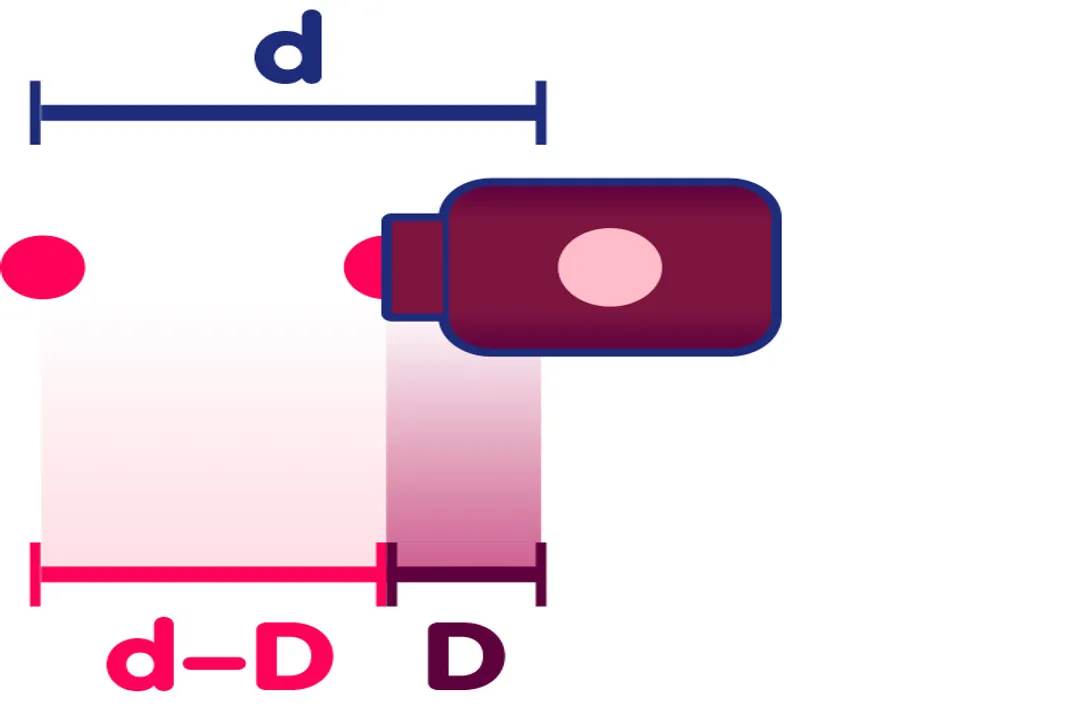
The shifting nature of waves provides a direct, measurable window into movement. When we observe anything that generates waves—be it sound, light, or water ripples—and that source is moving relative to us, the characteristics of those waves appear altered. This phenomenon, known as the Doppler effect, is not about the source changing how it emits the wave; rather, it’s about the change in our perception as that wave travels through the space between us and the source. [1][3] The key takeaway is that the Doppler shift quantifies relative motion—the speed at which two objects are approaching or separating. [3][8]
# Wave frequency change
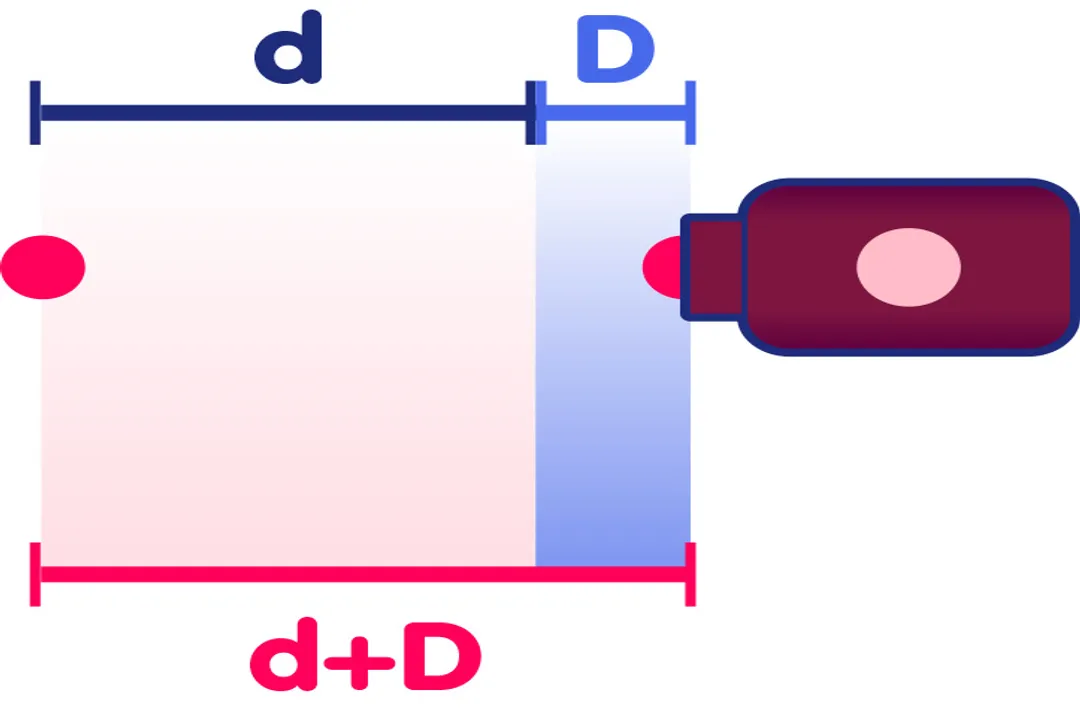
At its most fundamental, the Doppler effect concerns the change in the observed wave's frequency or wavelength due to relative motion between the source and the observer. [1][2] Imagine a boat creating waves on a lake. If the boat moves toward you, each successive wave crest has less distance to travel to reach you than the one before it, effectively "bunching up" the wavefronts. [5] This bunching means you experience more crests per second; the frequency has increased. [2] Conversely, if the boat moves away, the wavefronts are stretched out, leading to a lower observed frequency. [2] This change in frequency is directly proportional to the speed of the relative movement. [3]
For electromagnetic waves, like light, a shift toward a higher frequency is called a blueshift, indicating the source is moving closer. [1][8] A shift toward a lower frequency is a redshift, indicating the source is moving away. [1][8] This concept applies across the entire electromagnetic spectrum, from radio waves to gamma rays. [1]
# Sound pitch shift
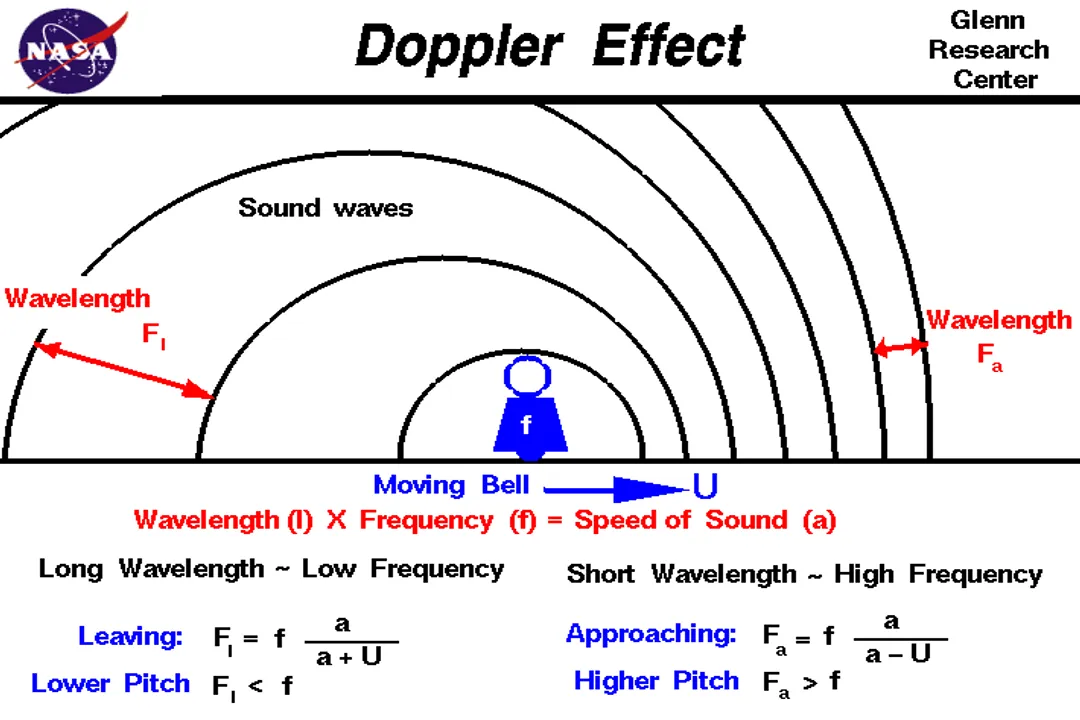
The most common, everyday experience of the Doppler effect involves sound waves, usually recognized as a change in pitch. [2][7] Think about an emergency vehicle passing by. As the siren approaches, the sound seems higher pitched than normal. [7] This is because the sound waves are compressed, leading to a higher perceived frequency. [2][5] The instant the vehicle passes, the pitch drops suddenly to a lower than normal tone. [7] This happens because the waves are now stretched out as the source moves away from the listener. [2][5]
It is interesting to note how different the required speeds are for the effect to become easily noticeable between sound and light. For sound, which travels relatively slowly (around 343 meters per second in dry air at room temperature), even a car traveling at highway speeds—say, 30 meters per second—will produce a very distinct, if brief, pitch change. [2][7] In contrast, for the Doppler shift in light to be easily detected by instruments, the light source usually needs to be moving at a significant fraction of the speed of light, which is approximately meters per second. [1][8] This massive disparity in wave speed explains why the audible siren effect is an everyday occurrence, while observing a measurable light shift in terrestrial objects requires specialized equipment or astronomical distances. [3]
# Light spectral shift
When dealing with light, the change in frequency translates directly into a change in color, provided the source emits light across the visible spectrum. [1] A shift toward the blue end of the spectrum (higher frequency, shorter wavelength) signals an approaching source. [8] A shift toward the red end (lower frequency, longer wavelength) signals a receding source. [1]
Astronomers rely heavily on this spectral shifting to understand the dynamics of the cosmos. [1][9] By analyzing the spectral lines—the unique "fingerprints" of elements present in a star or galaxy—they can precisely determine if that celestial body is moving toward or away from Earth, and how fast. [1] The magnitude of the redshift or blueshift gives the exact relative velocity. [9]
# Galactic recession speed
Perhaps the most profound revelation provided by the Doppler shift concerns the scale and fate of the universe. In the early 20th century, observations of distant galaxies showed that almost all of them exhibited a redshift. [1][9] This consistent redshift indicated that these galaxies were moving away from our own Milky Way. [1][9] The further away a galaxy was, the greater its redshift, meaning the faster it was receding. [9] This key empirical finding provided the foundational evidence supporting the theory of an expanding universe, a cornerstone of modern cosmology. [1][9] Without the Doppler effect applied to light, we would lack the primary tool for measuring the expansion rate, known as the Hubble Constant. [9]
The distinction here, when dealing with light from cosmological distances, is that we must account for special relativity. While the non-relativistic Doppler formula works well for lower speeds, the extreme velocities observed in distant objects mean that time dilation effects must be factored in to accurately calculate the speed component of the shift. [8]

# Flow measurement
The principle is not limited to astronomy; it is a practical tool in medicine and engineering, often applied using sound waves in a different medium, such as water or tissue. In medicine, the Doppler ultrasound technique measures the velocity of moving objects, most commonly blood flow within the body. [4]
This is achieved by sending out ultrasound waves and measuring the frequency shift of the waves that bounce back (reflect) off moving red blood cells. [4] If the blood is flowing toward the ultrasound probe, the reflected waves have a higher frequency (a positive Doppler shift); if it is flowing away, the frequency is lower (a negative shift). [4] This technique allows physicians to non-invasively assess arterial blockages, measure the speed of blood through valves, and diagnose conditions like deep vein thrombosis. [4] The ability to derive a precise speed from a measurable frequency change makes the Doppler effect an invaluable diagnostic measurement tool. [4]
# Velocity measurement principle
The power of the Doppler shift lies in its direct relationship to velocity. Whether measuring the approach of an asteroid using radio waves, the receding speed of a distant galaxy using visible light, or the flow of blood using ultrasound, the underlying calculation is fundamentally about how quickly the distance between the source and receiver is changing. [3][4] This measurement gives us the radial component of velocity—the speed directed exactly along the line connecting the two points. [3]
An interesting subtlety arises when considering this directional nature. If a star were orbiting another object in a perfect circle, at the top and bottom of its orbit, its velocity vector would be perpendicular to our line of sight. In this scenario, the Doppler shift would momentarily drop to zero because there is no component of motion toward or away from us, even though the star is moving very fast tangentially. [6][8] Therefore, the Doppler effect only reveals motion along the line of sight. To understand the full trajectory of an object, astronomers must combine Doppler measurements (radial velocity) with observations of apparent movement across the sky (proper motion) to calculate the total three-dimensional velocity vector. [1] This dependence on the line-of-sight component means that any object that appears stationary to us could actually be moving rapidly, provided its motion is perfectly transverse to our view. [3] This forces us to interpret Doppler data carefully, recognizing its inherent limitation to one dimension of motion, while simultaneously appreciating its absolute precision within that dimension. [9]
#Videos
Doppler Effect - How Motion Changes Sound Frequency - YouTube
Related Questions
#Citations
Doppler effect - Wikipedia
17.8: The Doppler Effect - Physics LibreTexts
What Does Doppler Shifting Reveal About Relative Motion?
Doppler shift | Radiology Reference Article | Radiopaedia.org
Doppler Effect - How Motion Changes Sound Frequency - YouTube
Explained: the Doppler effect | MIT News
The Doppler Effect and Sonic Booms - Graduate Program in Acoustics
Waves, motion and frequency: the Doppler effect - Einstein-Online
Doppler Effect