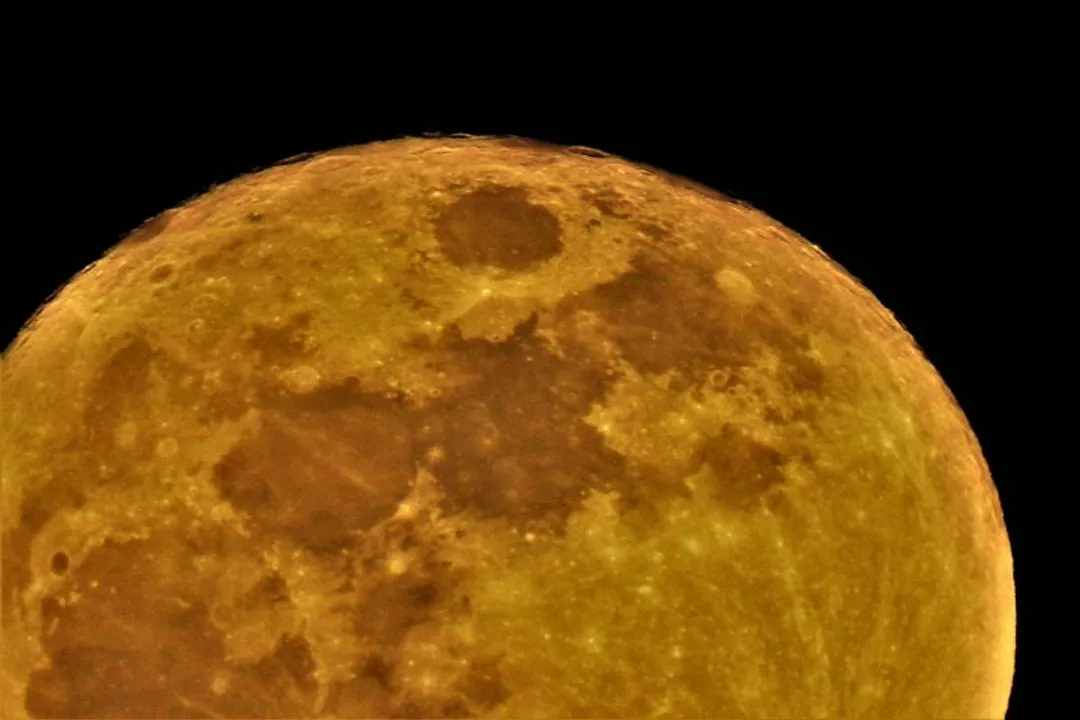
What causes the orange or golden hue observed when the full moon is low on the horizon?
Answer
Atmospheric scattering of shorter, blue wavelengths
When the Moon is rising or setting, observers look through a greater thickness of Earth's atmosphere, which scatters the shorter, blue wavelengths of light, allowing the longer, red/orange wavelengths to reach the eye.
Related Questions
When does the Harvest Moon typically occur based on its traditional definition?What celestial alignment defines a Supermoon event?What causes the orange or golden hue observed when the full moon is low on the horizon?What traditional name is given to the September full moon when the October full moon claims the Harvest Moon title, as happens in 2025?How much brighter might a Supermoon potentially appear compared to an average full moon?What is the primary reason the Harvest Moon provides extended periods of light after sunset?What effect causes a full moon low on the horizon to appear exaggeratedly large, regardless of whether it is a Supermoon?According to traditional agricultural wisdom, what type of planting is favored during the light phase of the moon (new to full)?What term describes the full moon occurring when it is farthest from Earth later in the year, in contrast to a Supermoon?What did the Cree name, Migrating Moon, for the October full moon signify?What is the traditional purpose ascribed to the full moon phase regarding lunar cycle practices?