What celestial condition must coincide with the full phase for the Buck Moon to potentially be considered a supermoon?
Answer
The Moon coinciding with perigee.
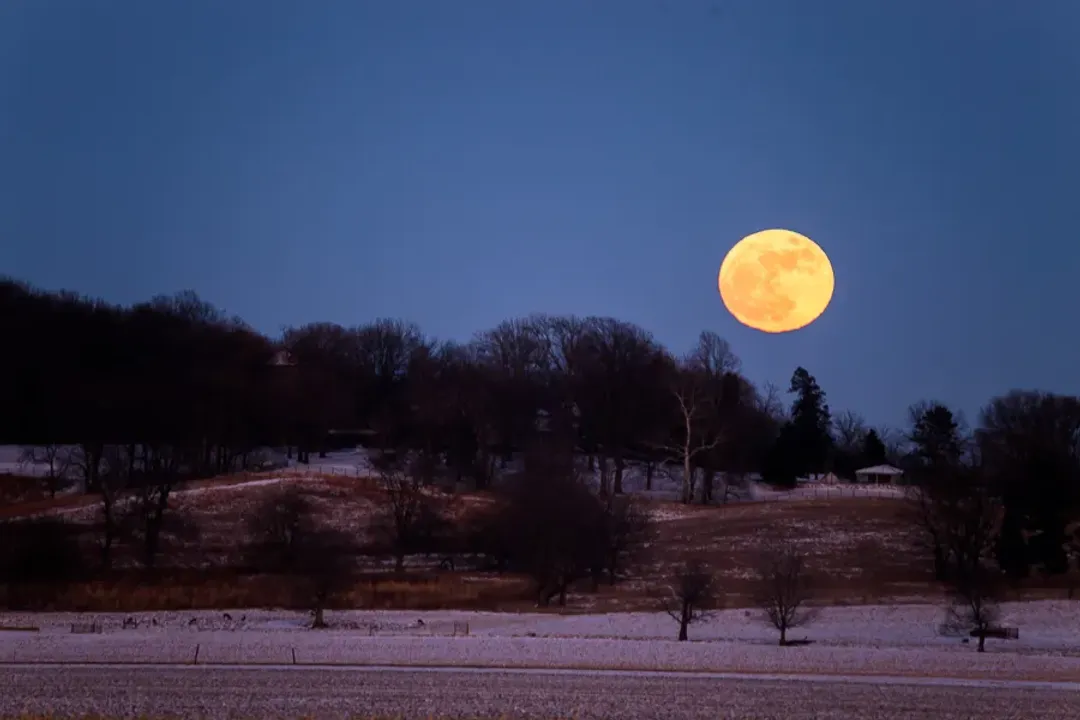
A supermoon occurs when the full phase aligns with perigee, which is the point in the Moon's elliptical orbit where it is closest to Earth, resulting in a visually larger and brighter appearance.
Related Questions
What primary biological event links the July full Moon to the name Buck Moon?How were traditional full Moon names generally applied by the communities that named them?What celestial condition must coincide with the full phase for the Buck Moon to potentially be considered a supermoon?What causes the low-hanging Buck Moon to often appear orange or reddish?What optical phenomenon makes the low-hanging Moon appear substantially larger than when it is high overhead?Which alternative name for the July full Moon reflects the season's frequent, intense thunderstorms?Why is the full Moon phase generally avoided by amateur astronomers seeking to study surface topography?The timing of the Buck Moon's namesake event is intrinsically linked to preparation for which subsequent seasonal challenge?The Tlingit term for the July full Moon, Salmon Moon, referenced the availability of what key resource?If an observer wishes to study craters and surface features with enhanced contrast, what lunar phase is recommended over the full Moon?