Is there anywhere on Earth the Moon is not visible?
The idea that our constant companion in the night sky might disappear entirely from view, even briefly, is a fascinating concept that requires us to look closely at the geometry of our planet and the Moon's path around it. While most people experience the Moon rising and setting daily, much like the Sun, the question of whether any location on Earth is completely exempt from seeing it touches upon the extreme latitudes—the poles. [1][3]
The simple answer depends entirely on the timescale you consider. If you mean permanently—is there a place where the Moon never rises above the horizon, ever—the answer is likely no, because the Moon’s orbital path relative to Earth is always changing. [1] However, if you mean for an extended, noticeable period, such as several days, then the celestial mechanics at the very top and bottom of our world suggest that yes, such absences can occur. [1][4]
# Polar Extremes
The key to understanding this phenomenon lies in the Earth’s axial tilt and the Moon's orbital inclination. [1] Unlike the Sun, whose path across the sky changes predictably with the seasons, the Moon’s path is more complex. The Moon orbits the Earth on a plane that is tilted relative to the Earth's equator, which is itself tilted relative to the Sun’s apparent path. [1]
At the geographic North and South Poles, observers are positioned right on the axis around which the entire celestial sphere appears to rotate. [1] When you stand at the pole, the horizon line is the same as the celestial equator in many ways, but the Moon’s path is an independent circle intersecting that plane. [1][2]
Because the Moon's orbit is inclined relative to the Earth’s equator—by about relative to the ecliptic, which is close to Earth's tilt—the Moon does not always follow the Sun’s general path. [1] This means that at the poles, the Moon can stay above the horizon for more than 24 hours, or conversely, remain below the horizon for more than 24 hours. [1] This period of continuous visibility or continuous absence is not fixed; it changes depending on where the Moon is in its own monthly cycle relative to the poles. [1][4]
If the Moon is positioned in its orbit such that its entire path remains above the local horizon for a duration, it will be visible continuously for that time. [4] Conversely, if the Moon's entire path for a set period keeps it below the local horizon, that location experiences a stretch where the Moon is truly unseen, even if it's only daytime—because it's geometrically below the horizon line. [1]
Consider this scenario: A location at a very high latitude, close to North or South, is the most likely candidate for extended absence. [3] For a particular segment of the lunar cycle, the Moon might simply not clear the horizon from that vantage point, leading to a period of non-visibility lasting days, not just hours. [1] Once the Earth rotates and the Moon progresses in its orbit, the geometry shifts, and the Moon will eventually reappear, rising once again. [1]
# Latitude Effect
For the vast majority of the world’s population living outside the polar circles, the Moon behaves much more predictably, rising and setting roughly once every $24$ hours and $50$ minutes. [6] This is because at mid-latitudes, the Moon's path always intersects the horizon, just as the Sun's path does. [6] The Moon will rise in the east and set in the west, though the exact rising and setting points shift across the horizon over the course of a month. [6]
The main reason someone in New York or London might think the Moon is "not visible" is not due to a fixed geographical limitation but rather to its phase and the time of day. [6][9] The Moon reflects sunlight, and its visibility depends on the angle between the Sun, Earth, and Moon. [6]
- New Moon: During the New Moon phase, the Moon is generally in the same part of the sky as the Sun, making it invisible because the sunlit side faces away from Earth. [6][9]
- Daytime Visibility: Many people associate the Moon only with the night sky, but it is frequently visible during the day. [6] During the quarter and gibbous phases, the Moon can be up during daylight hours, only becoming a more prominent feature after sunset. [6] If someone only looks up after astronomical twilight has fully ended, they might miss several hours of potential daytime lunar viewing.
This daily cycle of rising and setting means that for anyone situated away from the extremes of the poles, the Moon will eventually become visible, even if it is below the horizon for a few hours each day—the minimum being the time it takes for the Earth's rotation to bring it up above the local horizon line. [1]
# The Geometry of Viewpoint
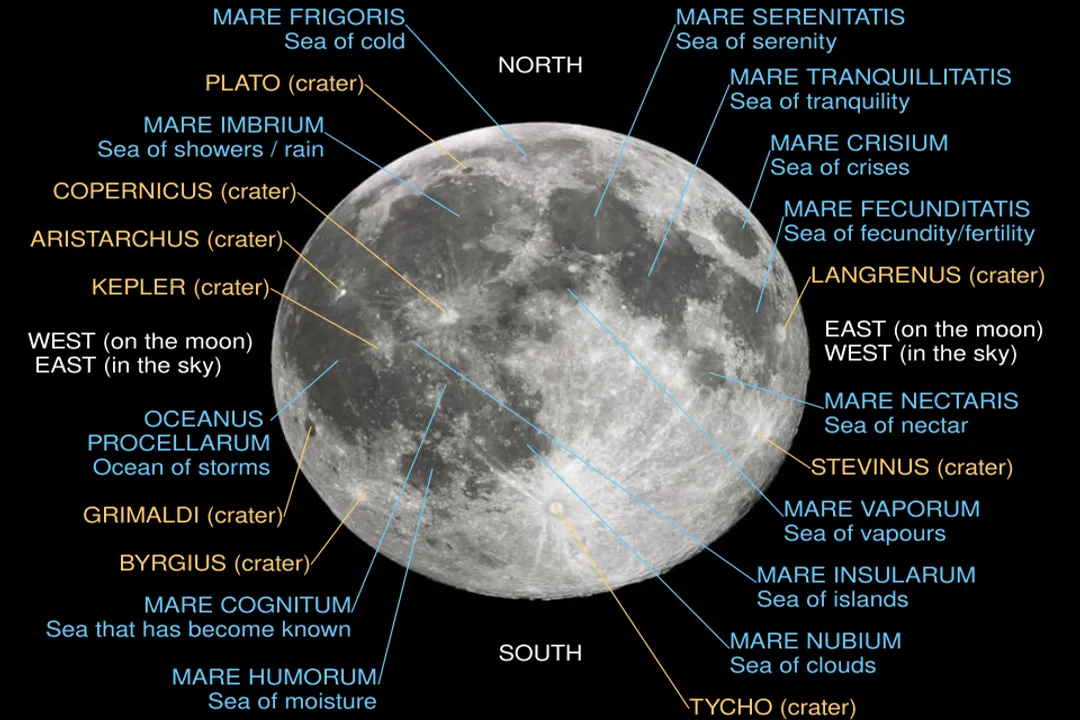
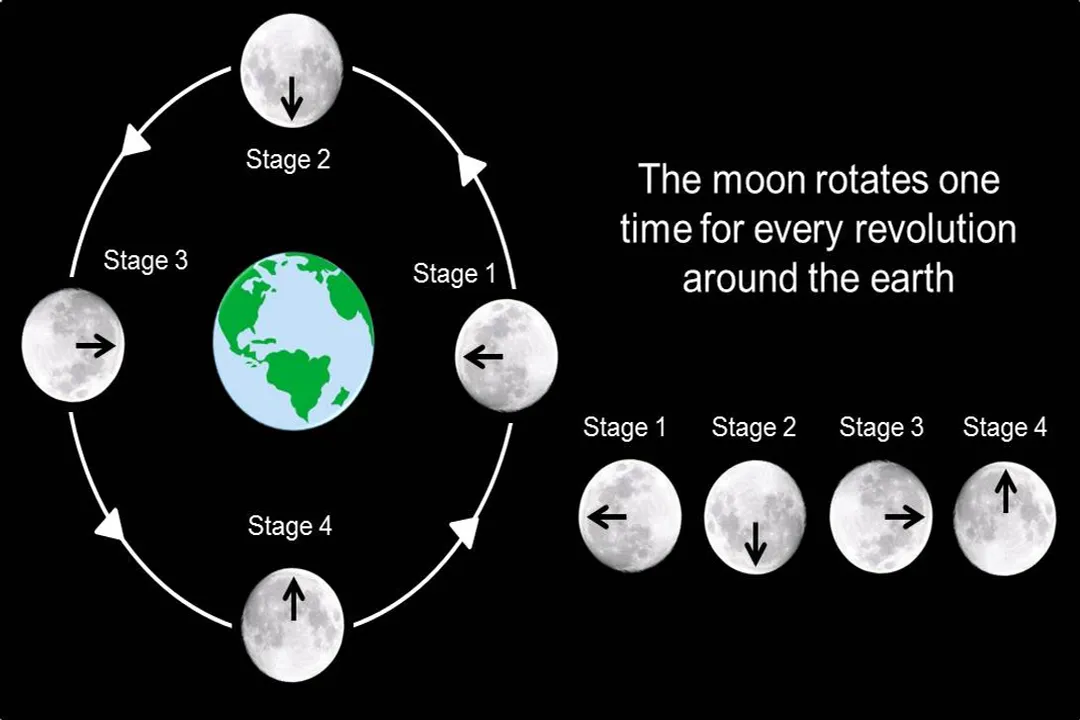
The ability to see the Moon is fundamentally about line-of-sight, which is also linked to the concept of the Moon's 'other side.' We only ever see one face of the Moon from Earth because of tidal locking. [8] The Moon’s rotation period matches its orbital period, meaning the same hemisphere perpetually faces our planet. [8]
While tidal locking explains why we can't see the far side from any point on Earth simultaneously, it doesn't dictate where the near side is visible from. [8] If you stand in Australia, you see the near side; if you stand in Canada, you see the near side. The visibility issue isn't about which side is facing you, but whether the entire sphere is above your local horizon. [1]
Interestingly, the Earth's curvature plays a subtle role in visibility, even at lower latitudes. If the Moon is very close to the horizon, especially if it is just rising or setting, the atmospheric conditions can distort its appearance, making it look squashed or shifting its color, but it is still technically visible. [6] The distortion itself is an atmospheric effect, not a failure of the Moon to appear. [6]
To put the polar situation into a clearer perspective regarding time, imagine the Sun. At the Arctic Circle during the summer solstice, the Sun never sets for a period. [4] The Moon, with its independent orbital plane, can briefly mimic this behavior, but because its orbit precesses over a period of about $18.6$ years (the period of the lunar nodal cycle), the duration of continuous visibility or absence at the poles varies over time. [1] This means that a spot that experiences a week of continuous lunar invisibility one year might only see a 30-hour absence five years later. [1]
# Visualizing the Celestial Poles
For a better grasp of why the poles are unique, consider an analogy using simple coordinates. If you imagine the sky as a giant dome:
- At the Equator: The Moon’s path crosses the dome almost vertically, moving straight up and then straight down, resulting in a very consistent rise/set pattern relative to the horizon. [6]
- At Mid-Latitudes (e.g., N): The Moon skims across the dome at an angle, spending a roughly equal amount of time above and below the horizon over the course of a lunar day. [6]
- At the Pole ( N): The observer is looking along the celestial axis. The Moon appears to circle horizontally around the horizon over the course of a month, much like the Sun does during the summer solstice. [4] If the Moon's orbital track is slightly "below" the horizontal plane defined by the observer's horizon for a period, it never rises during that time. [1]
This phenomenon highlights that the concept of "visibility" is location-dependent, tying visibility directly to latitude and time. [1] There is no single spot where the Moon is always invisible, but there are precise geographical points—the poles—where it can be temporarily invisible for periods longer than a day. [3]
To try and quantify this based on the geometry implied by high-latitude observations, an observer at exactly latitude (the pole) will only see the Moon if its declination (its celestial latitude) is greater than the tilt of the Moon's orbital plane relative to the Earth's equator at that specific time in its cycle. [1] If the Moon's declination dips too low (too far south when at the North Pole, or too far north when at the South Pole), it remains perpetually out of view for that cycle.
# Lunar Phases and Visibility Confusion
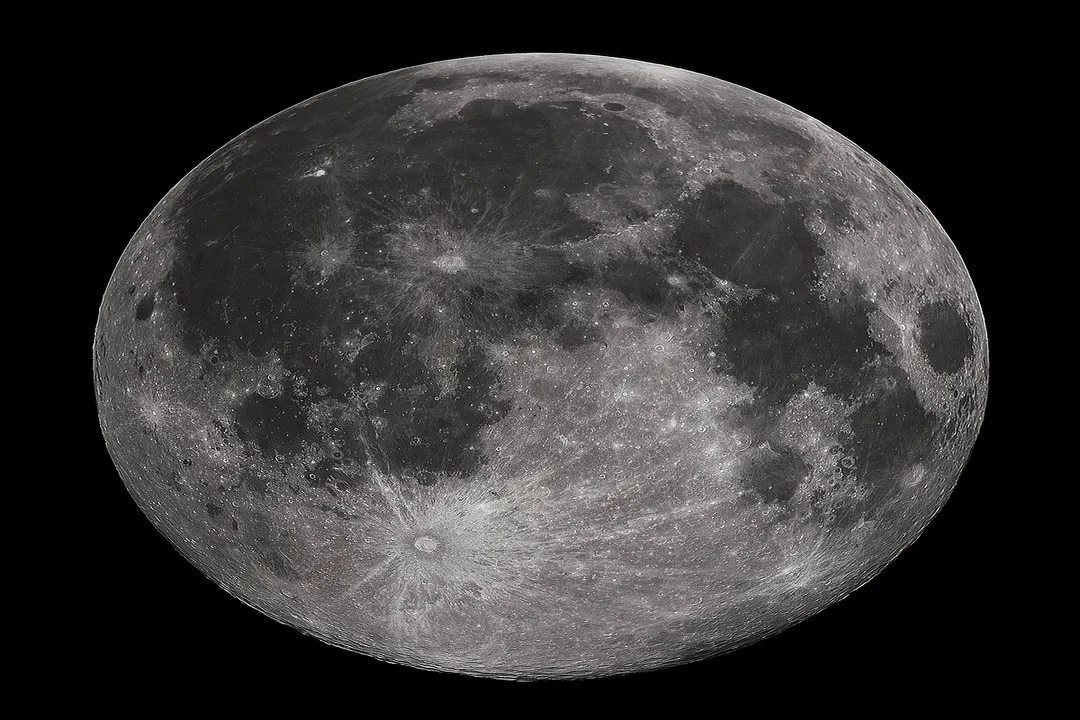
It is also important to differentiate the geographical absence discussed above from the common phenomenon of the Moon not being visible due to its phase. [6] Many people might ask, "Where can I not see the Moon?" and truly mean, "Where can I not see a full Moon?" or "Where can I not see the Moon at night?". [6][9]
The New Moon is the most globally non-visible phase, as the Moon is in conjunction with the Sun, making it effectively impossible to see unless an extremely rare total solar eclipse occurs, briefly revealing the dark silhouette against the bright solar corona. [9] Even then, the Moon itself is not illuminated for our view.
Furthermore, the Moon's illumination level dictates when it is an effective nighttime object. A Moon nearing the New Moon phase rises and sets very close to the Sun, meaning it will be in the sky mostly during the day, or just setting as the Sun sets. [6] If a person lives in a city with significant light pollution, they may consciously or unconsciously decide the Moon is "not visible" during these daytime hours, simply because they only look for it after dark. [6]
# A Practical Check for Mid-Latitudes
For general readers living in temperate zones, a simple rule of thumb demonstrates the consistent visibility pattern, which stands in stark contrast to the polar situation. If you were to track the Moon's rising time over a month, you would find that the time difference between one moonrise and the next is approximately 50 minutes later each day. [6] This predictable delay ensures that the Moon eventually clears the horizon for everyone except those at the poles during their specific "down time." This consistent 50-minute shift is a direct result of the Moon moving in its orbit while the Earth rotates, confirming that every location experiences a rise and set cycle unless the celestial geometry at the poles intervenes. [6]

# Conclusion on Absence
Ultimately, no spot on Earth is permanently devoid of the Moon's potential visibility over the long term due to the $18.6$-year cycle of the lunar nodes. [1] However, the Earth's poles offer the most extreme examples of geographical locations where, at certain times, the Moon is not visible for periods exceeding $24$ hours. [1][2] For the rest of the globe, the Moon is always visible eventually, provided one is patient enough to wait for the Earth's rotation to bring it above the horizon, regardless of the phase. [6] The Moon’s invisibility is usually a matter of timing—time of day, time of the month (phase), or, in the most extreme cases, time within the lunar nodal cycle at the high latitudes. [1][4]
Related Questions
#Citations
Is there any point on earth where the moon stays below ...
Is there a spot on the surface of earth that the moon can't ...
Is there anywhere on Earth that the moon is never visible ...
Is there ever a time that the Moon does not set or rise?
Moon
Breakdown: Why the moon isn't always visible
Where is the moon when it's not visible?
Why don't we ever see the far side of the moon?
Top Moon Questions