How do colloids differ from solutions?
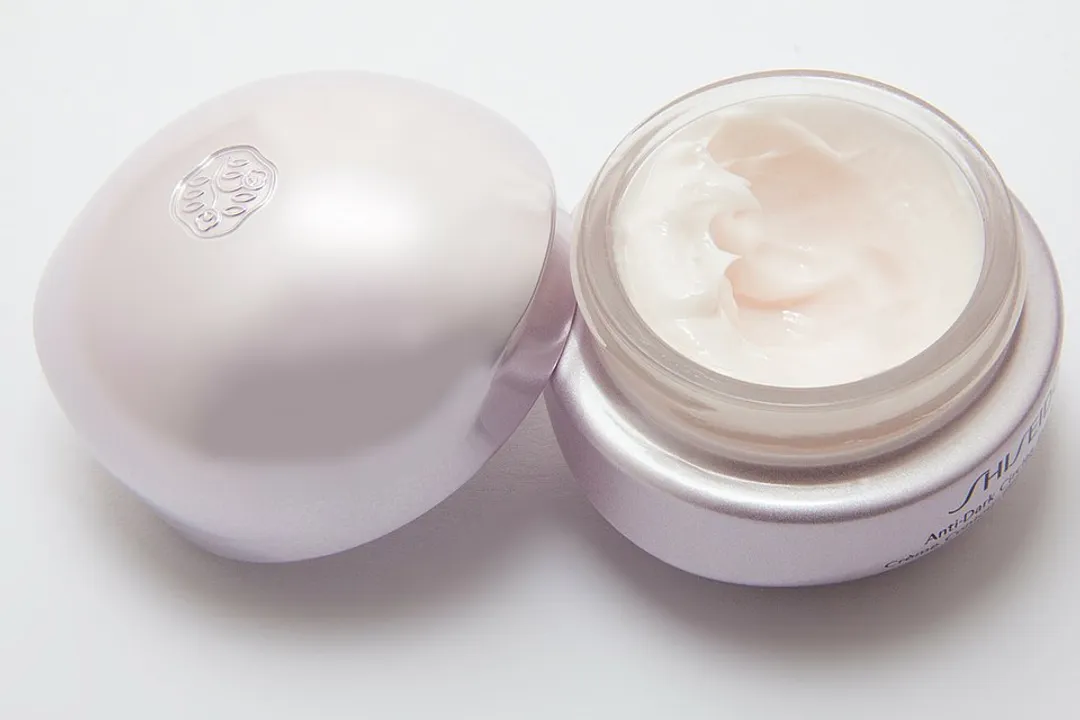
The distinction between a true solution and a colloid is fundamental in chemistry, resting primarily on the size of the dispersed particles and the resulting physical behaviors of the mixture. While both are types of mixtures where one substance is dispersed in another, their internal structure dictates how they interact with light, how they behave over time, and how easily they can be separated. Understanding this difference moves beyond simple observation; it informs everything from milk processing to drug delivery systems.
# Particle Size Spectrum
The most critical differentiator between a solution and a colloid is the diameter of the dispersed particles. This size difference is minuscule, often measured in nanometers (nm), yet it results in vastly different macroscopic properties.
In a true solution, the dispersed particles, which are usually individual molecules or ions, are extremely small, typically measuring less than in diameter. Because these particles are so fine, they are essentially invisible even under the most powerful optical microscopes. When salt dissolves in water, for example, the and ions are distributed uniformly throughout the water molecules, resulting in a particle size far below the threshold.
Colloids, on the other hand, sit in an intermediate range between true solutions and suspensions. The dispersed particles in a colloid range in size from approximately up to (or $1$ micrometer). While still too small to be resolved by a standard light microscope, these particles are significantly larger than those found in a solution. Think of the difference between sugar dissolved in tea (a solution) and milk dispersed in water (a colloid). If you could isolate a single particle of the dispersed phase in a colloid, it would still be a macroscopic entity compared to a single dissolved ion.
This size classification is so crucial that often a third category, suspensions, is included for context. Suspensions contain particles larger than , which are generally visible to the naked eye and will settle out over time due to gravity. While the focus here is on solutions versus colloids, recognizing where colloids fit on the continuum—larger than solutions but smaller than suspensions—helps solidify their nature.
To illustrate the scale, consider this: If a golf ball represented a colloidal particle (), a particle in a true solution would be akin to a grain of sand measured in the millionths of a meter, highlighting the vast scale separation. [1]
# Homogeneity Versus Heterogeneity
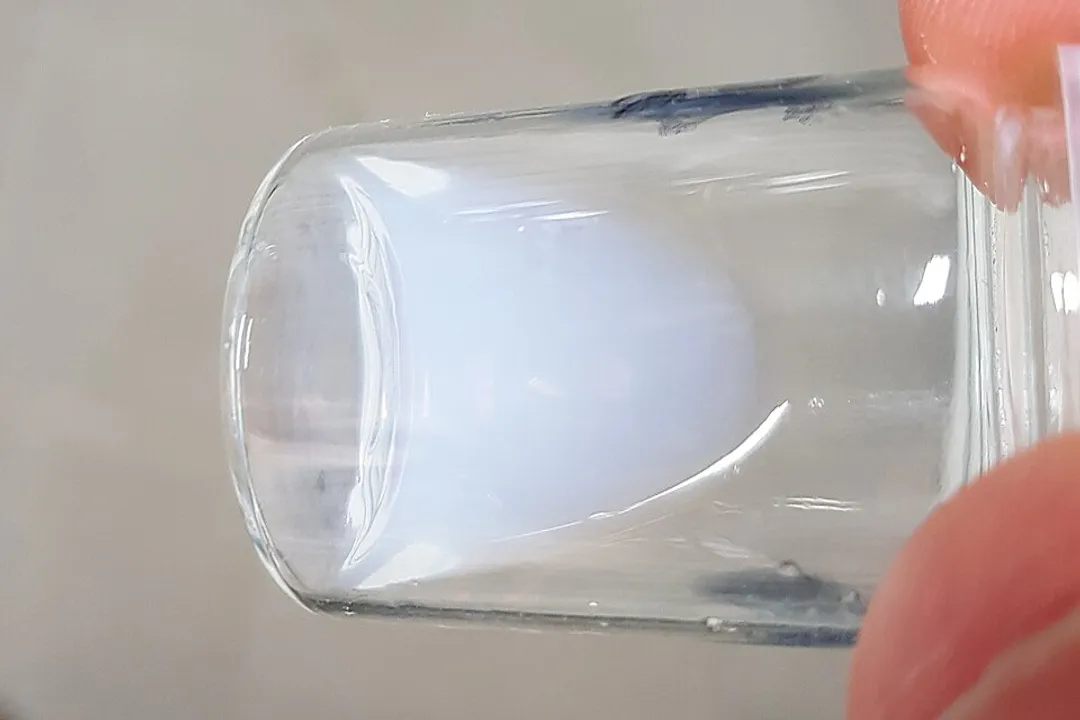
The apparent uniformity of a mixture is directly linked to the particle size, leading to a key distinction in perceived homogeneity.
A true solution is considered homogeneous. This means that the composition is identical throughout any sample taken from the mixture, at the molecular level. The dissolved solute is perfectly and uniformly dispersed among the solvent molecules. Because of this perfect mixing, a solution maintains the same physical properties, such as density and refractive index, everywhere within the container.
Colloids are technically heterogeneous mixtures. Although they often appear uniform or homogeneous to the naked eye—like clear gelatin or slightly cloudy fog—a closer microscopic examination reveals that the dispersed substance is not dissolved but rather suspended in distinct, larger particles. This lack of true molecular mixing means the composition is not perfectly uniform throughout, even if the visual effect suggests otherwise. For instance, the dispersed phase in fog (water droplets) is distinct from the continuous gas phase (air), making it heterogeneous, even though you cannot see the individual droplets without specialized conditions.

# Optical Behavior The Tyndall Test
Perhaps the most famous and practical way to visually distinguish a colloid from a solution is through the Tyndall effect. This effect is entirely dependent on the particle size discussed earlier.
When a beam of light passes through a true solution, the light beam is generally invisible because the dissolved particles (ions or small molecules) are too small to effectively scatter the light waves. The light simply passes through unimpeded, leaving no visible path.
Conversely, when a beam of light passes through a colloid, the larger suspended particles are precisely the right size to scatter the light in all directions. This scattering makes the path of the light beam clearly visible, a phenomenon known as the Tyndall effect. This is why sunbeams are visible in dusty rooms or through thin smoke—these are colloidal systems scattering light.
Practical Application Insight: One way to leverage this difference in a field setting, such as water quality testing, is to use a strong flashlight in a darkened room. If the light beam appears hazy or shows a distinct path when shone through the sample, you are likely dealing with a colloid or a suspension, not a pure solution. Conversely, if the light beam remains invisible, you can tentatively classify the mixture as a true solution, provided other tests confirm the absence of larger settling particles. [2]
# Separability and Stability Over Time
The difference in particle size also dictates how easily the dispersed material can be separated from the continuous medium.
In a true solution, the solute cannot be separated by simple physical means like filtration because the solute particles pass easily through standard filter paper pores along with the solvent. Separation usually requires processes that exploit differences in physical properties, such as evaporation, distillation, or osmosis. Furthermore, solutions are inherently stable; the solute will never settle out due to gravity over time.
Colloids exhibit different behavior. While the particles are generally too small to be separated by conventional gravity filtration, they will not settle out on their own under normal conditions because Brownian motion—the random movement of colloidal particles resulting from collisions with the molecules of the dispersion medium—counteracts the force of gravity. However, because they are larger than solution particles, colloids can be separated using specialized, finer techniques, such as ultracentrifugation or dialysis. In ultracentrifugation, the high rotational forces can overcome Brownian motion, causing the larger colloidal particles to sediment at the bottom.
The stability of a colloid, while superior to that of a suspension, is still less absolute than that of a solution. While gravity won't cause settling, chemical changes or the addition of an electrolyte (coagulation) can cause the colloidal particles to clump together and precipitate out, something impossible in a true solution.

# Comparison Summary
The various properties converge into a clear set of distinctions. Here is a structured comparison:
| Feature | True Solution | Colloid |
|---|---|---|
| Particle Size | Less than | Between and |
| Homogeneity | Homogeneous (Uniform at molecular level) | Heterogeneous (Appears uniform, but not microscopically) |
| Visibility | Particles invisible, mixture is clear | Particles usually invisible but may cause cloudiness |
| Tyndall Effect | Does not exhibit scattering of light | Scatters light, making the beam visible |
| Filtration | Cannot be separated by standard filtration | Cannot be separated by standard filtration |
| Settling | Stable, particles never settle by gravity | Stable against gravity (due to Brownian motion) |
| Separation Method | Evaporation, Distillation | Ultracentrifugation, Dialysis |
# Examples in Daily Life
Looking at real-world examples solidifies the theoretical differences.
True Solutions are easy to find when a solute completely dissolves into a solvent:
- Salt water or sugar water (solute: salt/sugar; solvent: water).
- Vinegar (acetic acid dissolved in water).
- Air (many gases dissolved in nitrogen/oxygen).
Colloids are far more common in biological systems and everyday substances than people often realize, often existing as gels, emulsions, or aerosols:
- Milk: An emulsion where tiny fat droplets are dispersed in water.
- Fog/Mist: An aerosol where liquid water droplets are dispersed in gas (air).
- Gelatin/Jelly: A gel where a liquid is dispersed throughout a solid network.
- Blood: Blood plasma contains various proteins and cell components suspended as colloids.
An Insight into Contextual Classification: While the size definition is objective, the perception of a mixture can sometimes be tricky. For instance, extremely dilute protein solutions might appear like true solutions under normal lighting conditions because the light scattering is minimal. However, if tested rigorously with a laser beam, they would reveal their colloidal nature. This demonstrates that classifying a mixture sometimes requires applying the Tyndall test specifically, as visual inspection alone can be misleading when particles hover near the boundary. [3]
# The Role of Brownian Motion
The stability of both systems against sedimentation, despite their size difference, requires a look at the physics of particle movement. While solutions rely on the particles being too small for gravity to affect them, colloids rely on active kinetic energy to keep them suspended.
Brownian motion is the random jiggling and dancing of colloidal particles caused by constant bombardment from the surrounding, much smaller solvent molecules. This molecular barrage provides enough kinetic energy to counteract the downward pull of gravity on the relatively larger colloidal particles. It is this perpetual, microscopic jostling that keeps the fat droplets in milk suspended for extended periods, preventing them from sinking to the bottom as cream, until processing or chemical changes occur. [4] In contrast, the ions in a true solution are so small that gravity has a negligible effect, and they remain dispersed primarily due to simple diffusion and the overwhelming presence of the solvent molecules.
By focusing on particle diameter, optical scattering ability, and separation techniques, the line between a truly dissolved substance in a solution and a suspended, yet stable, colloid becomes remarkably clear, defining two distinct classes of dispersion systems.
#Videos
11.73 | How do colloids differ from solutions with regard to ...
Related Questions
#Citations
11.73 | How do colloids differ from solutions with regard to ...
What are the differences between solution and colloid?
Understanding differences between solutions, emulsions ...
How do colloids differ from solutions with regard to dispers
3: Solutions and Colloids
What is the difference between solution and colloid?
Solutions, Suspensions & Colloids | Definitions & Differences
Colloid
How will you distinguish a Colloid from a Solution?