What season is the sky clearest?

The moment you step outside, away from the artificial glow of city lights, you are looking into a volume of space where the quality of what you see is anything but static. It changes not just from minute to minute due to local weather, but significantly with the turning of the Earth into a new season. For the dedicated amateur astronomer or the casual stargazer, the question of which season offers the clearest sky is essential, though the answer is seldom a simple one-word reply. Clarity, in this context, is a complex measure involving atmospheric stability, the amount of moisture in the air, and even our galaxy’s orientation relative to our viewing angle.
# Atmospheric Quality

The primary physical culprit that ruins a perfect night of observation is the atmosphere itself. When we talk about a clear sky, we are often talking about seeing and transparency. [2] Transparency refers to how much light is scattered or absorbed by haze, dust, or water vapor between you and the object. Seeing refers to the steadiness of the air, or how much the light from a star is distorted or made to "twinkle" by atmospheric turbulence. [1][2]
Cooler air fundamentally outperforms warmer air in both regards, which immediately suggests a bias toward the colder months. [4][5] Warm summer air contains significantly more moisture than cold winter air, and this moisture scatters light, leading to a hazier, less transparent view. [1] Furthermore, summer often involves rising heat and convection, causing atmospheric layers to churn, which creates the "shimmering" effect astronomers try to avoid. [1] Conversely, the cold, dry air of late autumn and winter stabilizes the atmosphere, making the starlight appear sharper and steadier—ideal for detailed viewing through a telescope. [1][2][4] One observer noted that frequent rainstorms common in late autumn can actually be beneficial because they scour the particulates from the air, further enhancing that crystalline view. [4]
# Seasonal Strengths Compared
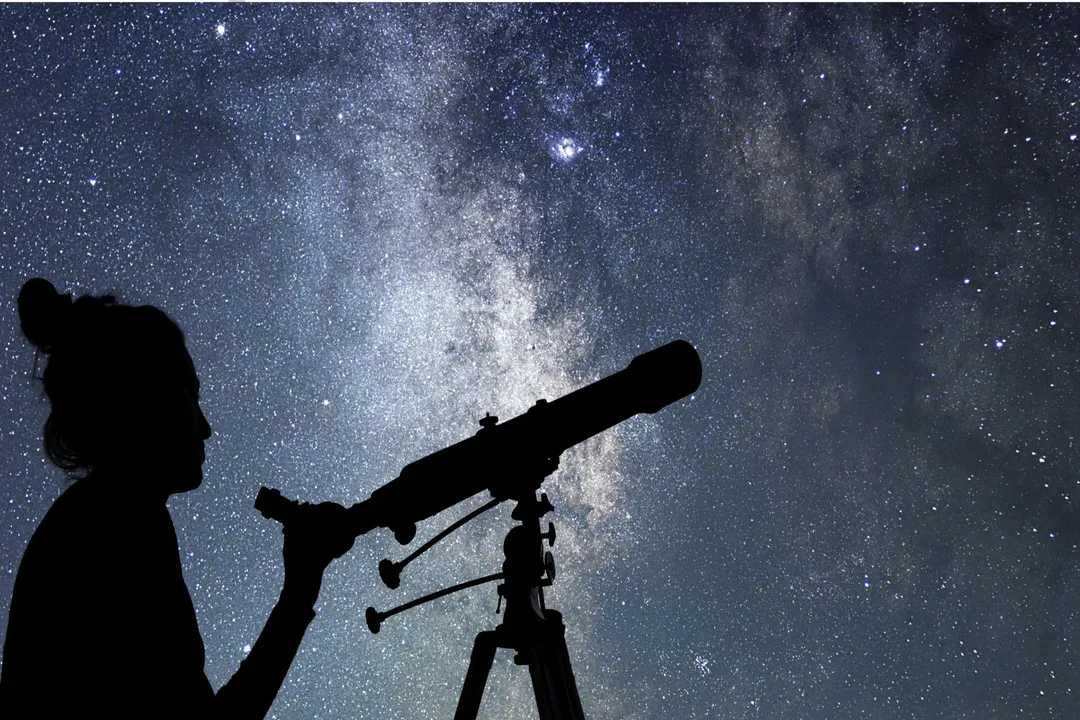
While winter offers superior transparency and seeing, it is crucial to compare this clarity against what is actually visible in the sky at that time. Different seasons place different celestial wonders high above the horizon, meaning the "best" time often depends on your goal. [2]
# Winter's Crisp Views
In the Northern Hemisphere, the winter months, generally December through February, are heavily favored for clarity. [2][5] Observers frequently note that the long, cold, dry nights provide superb viewing contrast. [2] This is the season for high-contrast views of bright stars and emission nebulae, such as the famous Orion Nebula. [2] The darker, longer nights are a distinct practical advantage, allowing for observation sessions that can begin shortly after sunset without having to wait until the late hours. [1][4]
There is an added, less obvious benefit related to our location within the Milky Way: at the December solstice, the Earth’s night side is oriented away from the dense, bright core of the Milky Way galaxy. [6] Instead, we face one of the outer spiral arms, which means there are technically fewer stars directly in that line of sight, but the views beyond our galaxy’s boundaries are often sharper because we are looking through less of our own galaxy’s dusty plane. [6]
# Summer's Galactic Majesty
Summer (June through August) presents a clear trade-off: comfort for contrast. [2] The warm nights are far more pleasant for long observation sessions, especially for families whose children might struggle with winter cold. [3] Critically, summer is when the Milky Way core—the spectacular, rich star fields, nebulae, and star clouds of the constellations Sagittarius and Scorpius—is at its highest and most visible in the Northern Hemisphere sky. [2][5] For wide-field astrophotography or simply viewing the richest part of our galaxy, summer reigns supreme in object richness. [2]
The downside is the air quality. Increased humidity, haze, and thermal turbulence severely reduce both transparency and seeing. [1][2] Furthermore, due to the long daylight hours, the period of astronomical twilight—when the sun is still far enough below the horizon to affect faint object viewing—lasts much longer. [4] In some regions, this means total darkness might not arrive until 11:00 PM local time, significantly cutting into potential observation time compared to winter nights. [3][4]
# The Middle Ground
Spring (March to May) and Autumn (September to November) offer a compromise. [2] Early autumn, specifically, is cited as a sweet spot: the nights are becoming long enough for decent darkness, but the air has not yet reached its absolute coldest, making conditions comfortable. [2] Autumn nights are often crisp, cool, and offer excellent transparency. [2] These seasons are excellent for observing transition constellations, like seeing Orion appear later in the fall, or viewing specific deep-sky objects like the galaxies in Pegasus and Andromeda. [2]
This creates a useful practical comparison for the casual observer who is not pursuing the absolute best seeing conditions:
| Season | Primary Clarity/Seeing Factor | Primary Object/Comfort Factor | Best For |
|---|---|---|---|
| Winter | Cold, dry air = excellent transparency and seeing [1][2] | Longest nights; coldest temperatures [1][3] | High-contrast nebulae, crisp planetary detail [2] |
| Summer | Warm, humid air = more distortion and haze [1][2] | Warmest nights; longer astronomical twilight [3][4] | Rich Milky Way core views, extended viewing time for children [2][3] |
| Autumn | Crisp, cool nights; often stable air [2] | Moderate temperatures; rapidly lengthening nights [1][2] | Good overall balance of seeing and comfort [2] |
| Spring | Generally steady air [2] | Moderate temperatures; lengthening nights | Deep-sky galaxies (Virgo Cluster) [2] |
# Timing Beyond the Calendar
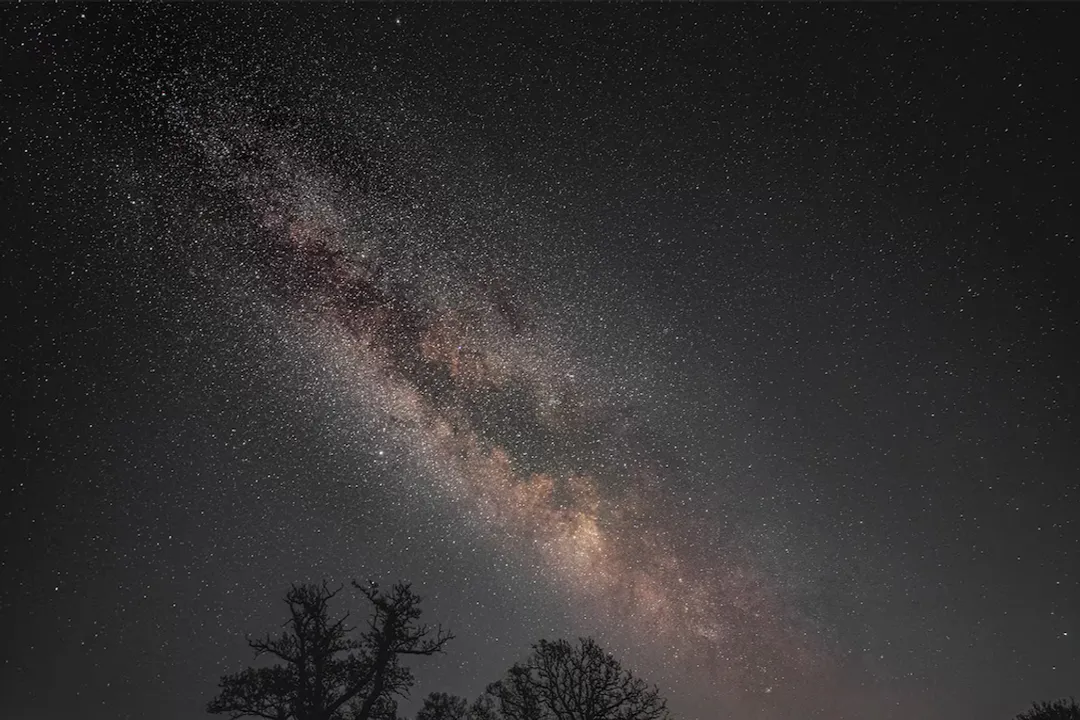
While season provides a broad framework, the absolute clearest skies are dictated by factors that transcend the typical three-month division. Experienced observers stress that local conditions and the Moon are paramount. [2][5]
# Lunar Dictation
Regardless of the season, the Moon is the single biggest destroyer of faint-object viewing. A bright moon washes out the fainter light from distant stars, galaxies, and nebulae, effectively reducing the sky's visibility to only its brightest inhabitants. [7] The absolute best time for viewing deep-sky objects is during the new moon phase, or the few nights surrounding it, when the Moon is either absent or a very thin crescent. [5][7] If your goal is to see the faint dust lanes of the Milky Way, a new moon window is more important than the calendar month. [5]
# The Elevation Advantage
A profound insight, often overlooked by those observing from sea level, is the effect of altitude. Telescopes are placed on mountains for a reason: the higher you ascend into the atmosphere, the less air there is overhead to cause interference. [2] Going up reduces both light scatter (improving transparency) and atmospheric turbulence (improving seeing), meaning stars twinkle less. [2] This principle is why major observatories dot remote, high deserts like the Atacama in Chile, which boasts some of the world's clearest air due to its dryness and elevation. [5] Even a moderate increase in elevation, such as observing from a high plateau or a substantial hill, can make a noticeable difference in how sharp the stars appear compared to a valley floor. [2]
# Darkness Duration
The concept of "full darkness" is precisely measured by what astronomers call twilight. For the dedicated viewer, true clarity only begins after astronomical twilight ends—when the Sun is a full 18 degrees below the horizon. [4] In mid-summer, this end time can push past 10:30 PM in mid-to-high latitudes, which is simply too late for many enthusiasts. [4] In contrast, the winter months provide this deep darkness much earlier, offering more usable hours between sunset and sunrise. [2][4]
If you are not aiming for deep-sky objects, but simply want to see the brightest planets like Venus or Mercury, you must actually look near sunrise or sunset, as these inner planets always hug the horizon near the Sun. [4] This shows the inherent dependency between viewing target and timing—the absolute clearest sky (deep winter midnight) is the worst time to see the "morning star". [4]
# Actionable Planning for Clarity
To maximize your chances of seeing the clearest sky, you must move beyond simply checking the weather forecast for "clear" and consider the atmospheric chemistry and the celestial clock.
To truly capture the best conditions, consider this tiered approach for your next observing session:
- Target the Season for Quality: Aim for late autumn (November) or winter (December–February) if your primary goal is sharp, steady views of individual stars, planets, and nebulae—this maximizes seeing and transparency. [1][2]
- Align with the Moon: Cross-reference your chosen season with a new moon calendar. If you want to see faint objects, even a winter night will be disappointing if the Moon is full. [7] A dark-sky site during a winter full moon is great for lunar observing, but useless for faint galaxies.
- Seek Altitude: If possible, plan your excursion to a location that offers a modest elevation gain away from immediate ground-level haze layers or local light domes. Even a few hundred meters can help stabilize the view. [2][5]
This synthesis suggests that late autumn, particularly November, often provides a near-perfect practical sweet spot for many observers in the Northern Hemisphere. [1] It combines the crisp air stability of winter with slightly less punishing cold than mid-winter, while the nights are already quite long, making it ideal for capturing events like the Leonid or Taurid meteor showers. [1] You are trading the absolute deep-sky richness of the summer Milky Way core for significantly improved visual quality and comfort during the shorter viewing windows available in the cooler months. [2] The "clearest" sky season is thus the one that best aligns the local climate's stability with the target objects you wish to see, under the blanket of a new moon. [7]
#Videos
Why night skies are better in winter than during summer - YouTube
Related Questions
#Citations
Which do you like better for observing, summer or winter skies and ...
When is the Best Time for Stargazing? - Philip Metzger
Which season offers the best night sky in terms of stargazing? - Quora
Why night skies are better in winter than during summer - YouTube
Why November Skies Are the Clearest for Stargazing - SunnySports
A practical guide to stargazing | National Geographic
Why night skies are clearer in winter than during summer - Dailymotion
Dark Sky Calendar - when is best to stargaze