What makes a star a supergiant?
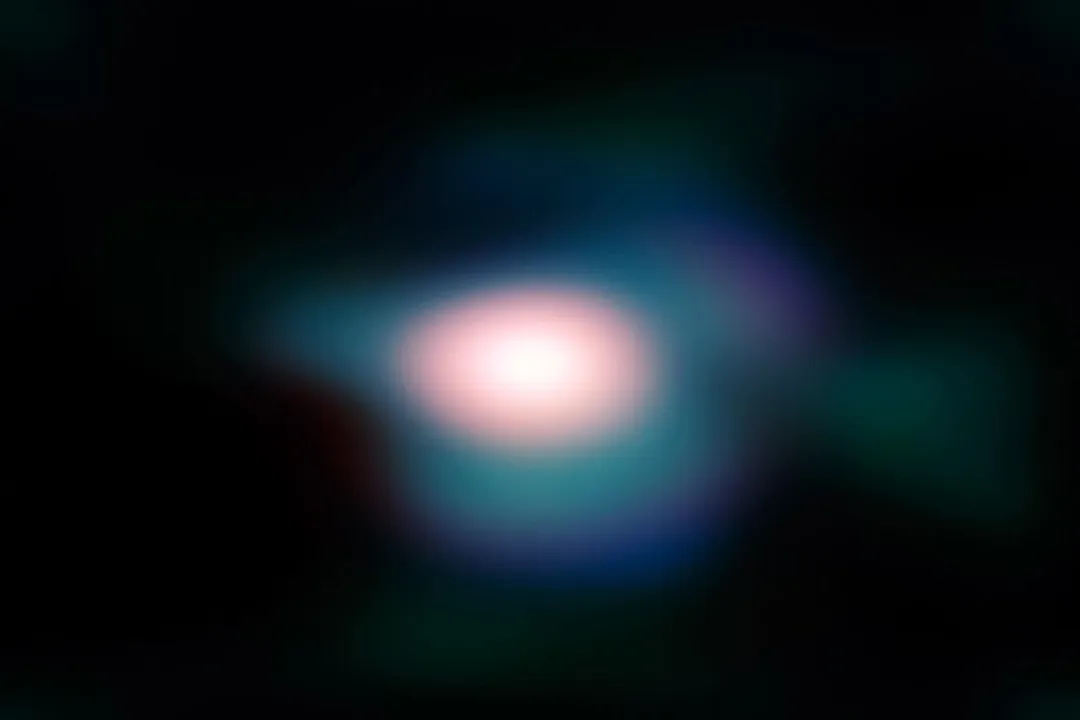
Stars attain the status of a supergiant not merely by being large, but by achieving a spectacular combination of enormous physical size and incredible intrinsic brightness, far exceeding that of ordinary giants or even the most luminous stars in their main-sequence phase. [2][7] To be classified as a supergiant, a star must have shed its main-sequence identity and ballooned to a scale where its radius can reach hundreds or even thousands of times that of our Sun. [1] This dramatic expansion is inextricably linked to the star's initial mass; only the most massive stars begin this extraordinary evolution, setting them apart in the cosmic population. [6]
# Mass Basis
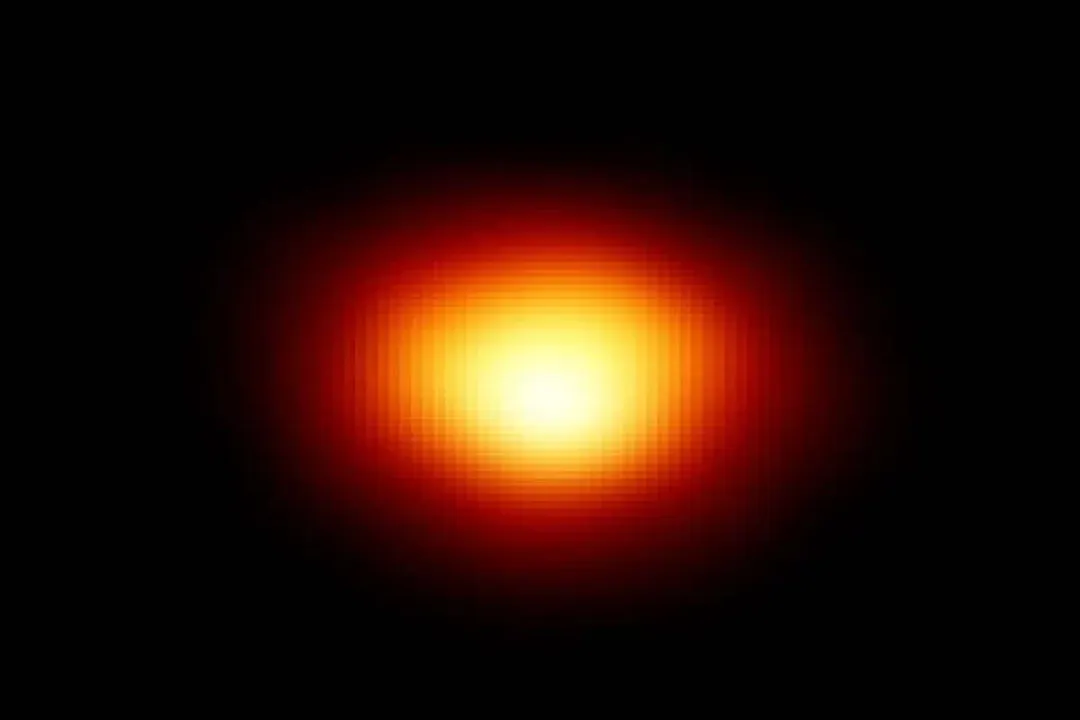
The fundamental determinant for achieving supergiant status is the star's initial mass. [6] Stars destined for this fate are typically born with masses exceeding about eight times the mass of the Sun (). [1][6] When these massive stellar engines exhaust the hydrogen fuel in their cores, the ensuing collapse and subsequent shell burning initiates a radical transformation. [6][10] This evolutionary jump distinguishes them immediately from less massive stars, like our Sun, which will eventually become a red giant, a much smaller phenomenon in comparison. [10] The sheer amount of mass dictates the internal pressures and temperatures, which in turn govern the available nuclear pathways that allow a star to swell to such extraordinary dimensions. [6]
# Size Scale
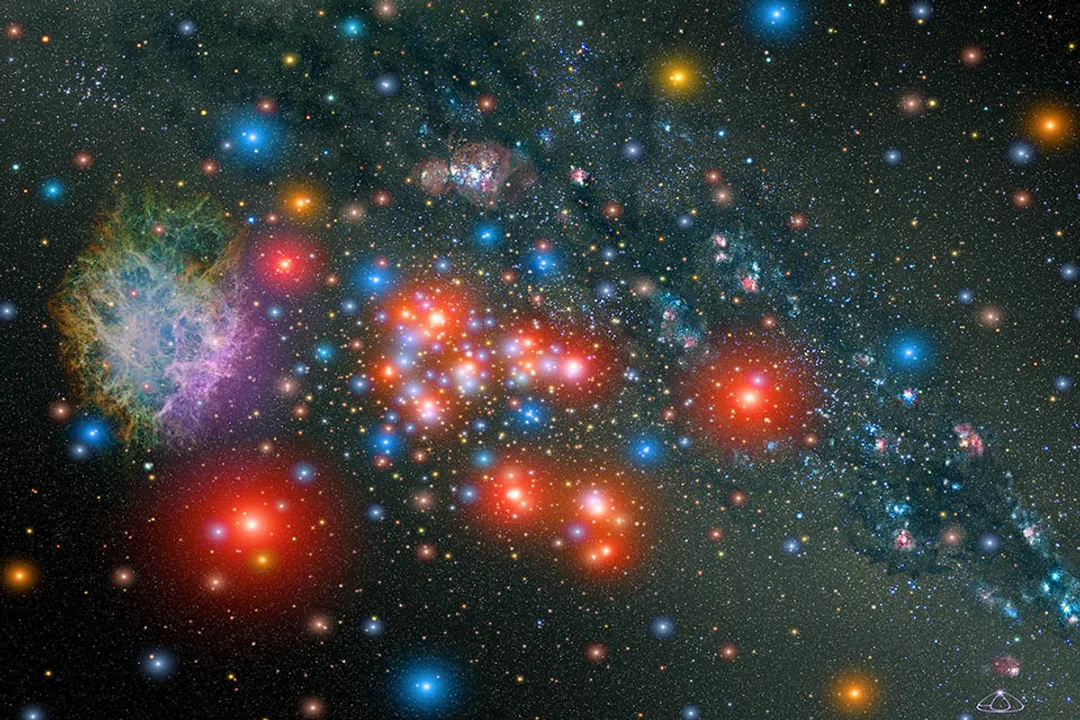
The sheer physical scale of a supergiant is what first captures the imagination of an observer, even across light-years. [1] While a standard red giant might puff up to perhaps a hundred times the Sun's radius, a supergiant can easily surpass this limit, often reaching radii hundreds or even over a thousand times the size of the Sun. [1] If a star like Betelgeuse, a well-known red supergiant, were placed at the center of our Solar System, its outer layers would extend past the orbit of Mars, possibly even reaching Jupiter. [1][7]
We can illustrate the dramatic difference in scale when comparing stellar classifications. Consider a star with 20 solar masses (). As a main-sequence star, it is tremendously hot and bright. Once it exhausts its core hydrogen and evolves, it enters the supergiant phase where its physical volume explodes. [1][4]
| Stellar Type | Typical Radius (Solar Radii, ) | Typical Luminosity (Solar Luminosities, ) |
|---|---|---|
| Main Sequence Star () | ||
| Supergiant (Post-Main Sequence) |
This comparison shows that the physical size can increase by over a hundredfold while the luminosity sees a significant, though less proportional, boost. [1] The reason for this disparity—huge size coupled with "only" moderate luminosity increase relative to the volume change—is that the surface layers of a supergiant are extremely diffuse and cool compared to a compact main-sequence star of similar mass. [4]
# Luminosity Class
Beyond physical size, the defining characteristic that astronomers use to classify these behemoths is their luminosity class. [2][7] Supergiants are assigned the Roman numeral class I in the Yerkes system, differentiating them from giants (Class III) and main-sequence stars (Class V). [2] These stars are brilliant, shining with the light of tens of thousands to millions of Suns. [1][2][7] This immense brightness comes from the rapid rate at which they burn through their nuclear fuel, a consequence of their high mass. [4] It’s this combination—being physically immense and intrinsically luminous—that seals the definition of a supergiant. A star can be very large but dim (like a low-mass red giant), or very hot and small but bright (like a white dwarf), but only the massive, expanded, and brilliant stars earn the 'I' classification. [2][7]
# Color Variation
Supergiants are not a monolithic group; they exhibit a striking range of surface temperatures, which translates directly into different visible colors. [1] This color difference signals vastly different stages in their post-main-sequence lives. [2]
# Blue Giants
The initial stage for most massive stars after leaving the main sequence involves them becoming blue supergiants. [2] These stars are incredibly hot, possessing surface temperatures that can reach up to 50,000 Kelvin (K). [2] They are luminous and massive, but they haven't yet expanded to their absolute largest physical dimensions. [2] Because they are still relatively young in their post-main-sequence life, they represent a very brief, energetic phase before they cool down dramatically. [2]
# Red Titans
The longer-lived, cooler phase of the supergiant stage is occupied by red supergiants. [1][8] These stars have expanded to their maximum radii after the exhaustion of core hydrogen and subsequent nuclear fusion stages. [8] Their surface temperatures plummet, often dropping to around 3,500 K. [8] It is within this temperature bracket that a star achieves the maximum possible surface area, leading to the largest known physical sizes in the universe. [1] Stars like Antares and Betelgeuse are famous examples of this cooler, highly inflated state. [8] The surface physics governing these cooler envelopes, rich in elements like carbon and oxygen created in earlier fusion cycles, is distinct from the searing surfaces of their blue counterparts. [8]
When observing the stellar population, one notes that the red supergiants tend to be more numerous than the blue supergiants. [2] This isn't because more stars become red; rather, it reflects the duration of each phase. The blue phase is a rapid evolutionary sprint, while the cooler, expanded red supergiant phase is relatively longer, allowing more of these massive stars to be caught in that cooler state at any given time. [2]
# Stellar Atmosphere
One of the most critical differences that defines the behavior of a supergiant, which is often overlooked when only considering size and luminosity, is the nature of its atmosphere and mass loss. [4] Due to their immense size and the high pressure generated by their extended outer layers, supergiants experience powerful stellar winds. [1]
These winds are far more vigorous than those emanating from smaller stars. Supergiants lose mass at an astonishing rate—sometimes equivalent to the entire mass of the Sun over just a few hundred thousand years. [1][4] This continuous shedding of outer material means that a star is effectively sculpting its own future environment by ejecting vast clouds of processed gas and dust into the interstellar medium. [4]
If you were tracking the atmospheric dynamics of one of these stars, you might notice something fascinating: the star is fighting a constant battle against gravitational collapse. Its outer envelope is tenuously held, allowing material to escape easily. [4] For an astrophysicist modeling these stars, accounting for this dramatic mass ejection is more important than precise measurements of the core—the outside is literally falling away faster than we can measure it accurately. [4] This process of ejecting material, rich in elements heavier than hydrogen and helium, is vital for enriching the galaxy, seeding the next generation of stars and planets with the building blocks for life. [4]
# Final Collapse
The supergiant phase is fundamentally a transient, brief prelude to a spectacular demise. [1] Because the defining characteristic of a supergiant is its high initial mass, its life is fast and furious. [6] Stars over about 8 solar masses burn through their fuel supplies rapidly, leading to an end far more dramatic than that of Sun-like stars. [1][6]
Once the core fusion processes cease—usually after the star has synthesized elements up to iron—the star cannot sustain itself against its own gravity. [2] The core collapses catastrophically, leading to a Type II supernova explosion. [1][2] The resulting remnant depends entirely on the star's remaining mass after this explosion:
- If the remaining core mass is between about $1.4$ and , the collapse halts, leaving behind an incredibly dense neutron star. [1]
- If the remnant core mass exceeds roughly , gravity overwhelms all known forces, and the collapse continues indefinitely, forming a black hole. [1][2]
The energy released in a supernova is momentarily so immense that the exploding star can outshine entire galaxies, a spectacular testament to the power contained within these massive stellar ancestors. [2] Understanding what makes a star a supergiant is therefore understanding the first, essential step on the path to forming the galaxy’s densest objects. [1]
To truly appreciate the rarity of these objects, consider their frequency. While our galaxy likely hosts millions of main-sequence stars for every single supergiant, finding one is like spotting a brief, brilliant flash in the cosmic timeline. [2] Their brief existence, enormous size, and violent end make them astrophysical milestones, defining the upper limits of stellar existence. [1] The transition from a compact, hydrogen-burning behemoth to an expanded, shell-burning giant is not a gentle progression; it is a massive physical reorganization driven by fundamental nuclear physics and the relentless force of gravity. [10]
Related Questions
#Citations
Supergiant - Wikipedia
Supergiant star | Massive, Luminous, Bright | Britannica
G. C. Sloan: Main Sequence Stars, Giants, and Supergiants
Supergiant Stars - CHARA Array
Supergiant Star - Universe Today
What determines the size of a star? Why do some stars become red ...
Supergiant Stars | Definition, Characteristics & Names - Lesson
Astrophysics of Red Supergiants - AAS Nova
Supergiant star | Verse and Dimensions Wikia - Fandom
Why do stars become red giants? - Astronomy Stack Exchange