What element marks the absolute end of energy-releasing fusion for stars significantly more massive than the Sun?
Answer
Iron
Massive stars cycle through fusing heavier and heavier elements, but silicon fusion results in an iron core. Fusing iron consumes energy rather than releasing it, eliminating the star's primary energy source.
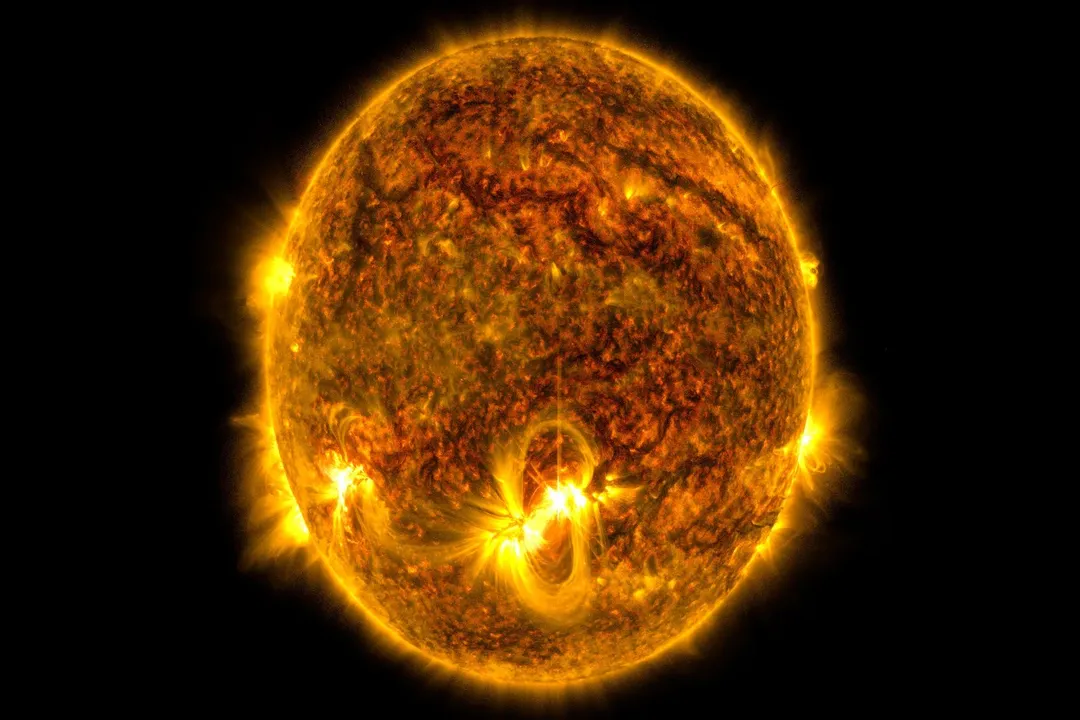
#Videos
What Happens When A Star Runs Out Of Hydrogen? - Physics Frontier
Related Questions
What primary nuclear reaction characterizes a star's stable main sequence phase?Following hydrogen depletion in the core, what immediately causes the inert helium core to begin contracting?What is the primary energy source that drives the massive expansion of the outer layers into the Red Giant phase?What causes a star transitioning from the main sequence to become a Red Giant?In stars below about 2.2 solar masses, what condition makes the onset of helium fusion an explosive "Helium Flash"?What is the final remnant left behind by a low or intermediate mass star, like the Sun, after the Red Giant phase concludes?What element marks the absolute end of energy-releasing fusion for stars significantly more massive than the Sun?Why does the formation of an iron core trigger an instantaneous, catastrophic collapse in a massive star?What mechanism successfully halts the core collapse to form a neutron star after a Type II Supernova?Under what condition does a collapsing stellar core inevitably form a black hole?How long did a star like our Sun spend on the main sequence compared to its subsequent Red Giant phase?