Why is the current stellar population overwhelmingly composed of low-mass stars?
Answer
Their main sequence phase is so long that they represent the majority still shining today
Low-mass stars have lifespans extending into the trillions of years, meaning they are still plodding along their main sequence schedule, while the main sequence phase for massive stars is so brief they represent a minuscule fraction of the observable population.
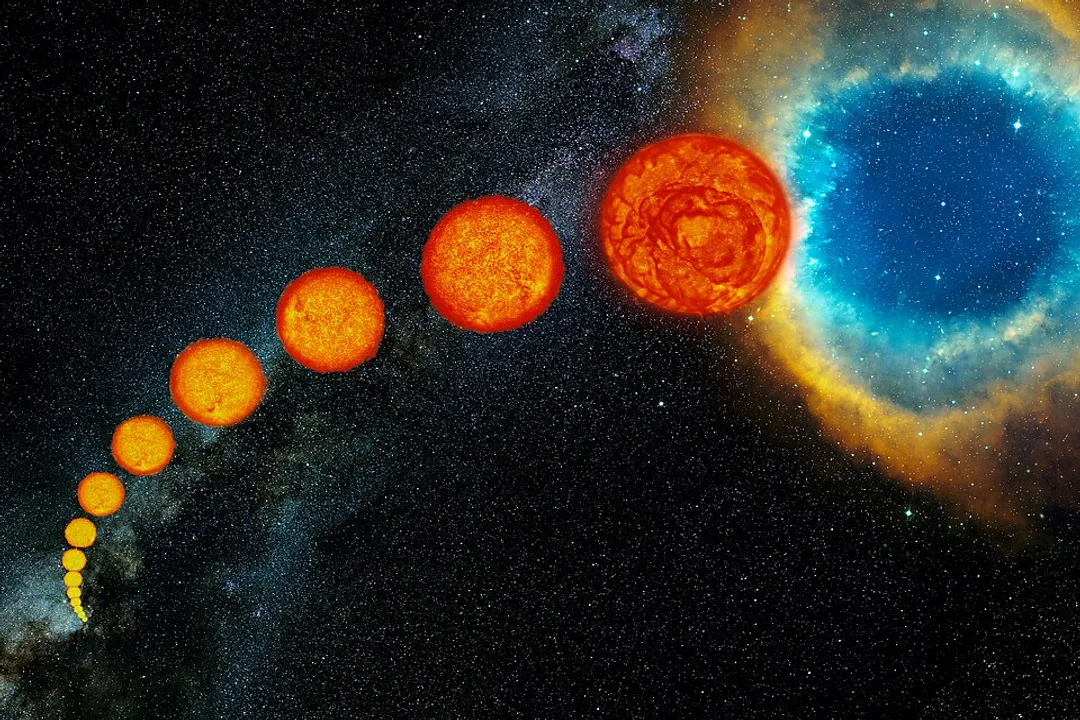
#Videos
How Does Mass Affect A Star's Longevity? - YouTube
Related Questions
What single property fundamentally drives the entire life story of a star?What internal balance defines a star's stable state called hydrostatic equilibrium?For main-sequence stars, what is the commonly accepted approximation for the Mass-Luminosity Relationship?How does the main sequence lifetime ($ au$) scale inversely with initial stellar mass (M), based on the given relationships?What is the estimated main sequence lifespan for a star like our Sun ($1 M_\odot$)?What stellar remnant is predicted for low-mass red dwarfs after they utilize nearly all their hydrogen fuel over immense timescales?In massive stars, what element builds up in the core, signaling the end of energy generation via fusion?What final object results if the remnant core mass following a supernova explosion exceeds the Tolman–Oppenheimer–Volkoff limit?What process immediately follows the exhaustion of the core's usable fuel in Sun-like stars, causing them to expand dramatically?Why is the current stellar population overwhelmingly composed of low-mass stars?