What is the typical total duration of the red giant phase for a star with the Sun's mass?
Answer
Around one billion years
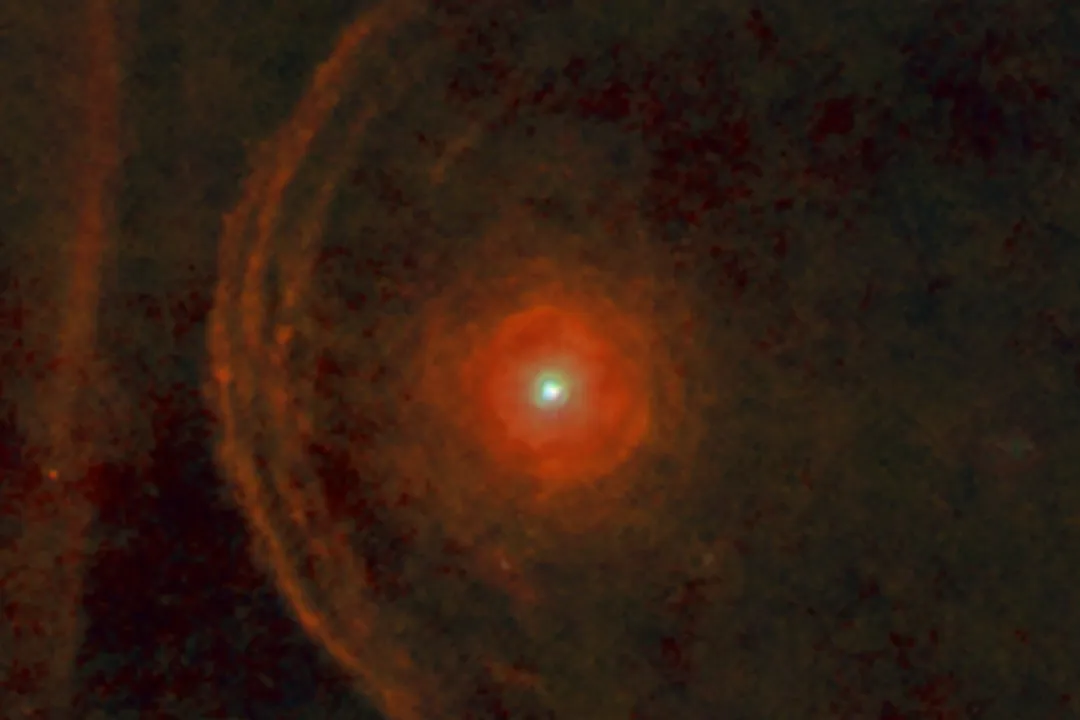
For a star the mass of the Sun, the red giant transition phase, which represents the star's dramatic middle-age crisis, typically lasts for about one billion years in total.
Related Questions
How long does a star like the Sun spend on the main sequence, fusing hydrogen into helium?What is the typical total duration of the red giant phase for a star with the Sun's mass?What event triggers the transition of a low or intermediate mass star into the red giant phase?What mass range typically characterizes stars that evolve into red giants?How does the evolution speed of the Horizontal Branch (HB) and Asymptotic Giant Branch (AGB) phases compare to the initial Red Giant Branch (RGB) ascent?In the analogy where the Sun's 11-billion-year life is compressed into 80 years, how long is the entire red giant evolution compressed into?What eventually happens to stars exceeding $8 M_ ext{odot}$ instead of becoming standard red giants?What is the approximate lifespan of the final shedding process during the AGB phase, which leads to a white dwarf?For how long can the new habitable zone around the Sun's future white dwarf remnant remain stable?According to the text, what do red dwarfs (stars below about $0.5 M_ ext{odot}$) represent in terms of stellar lifespan?How quickly do massive stars (over $8 M_ ext{odot}$) burn through their hydrogen and helium cores on the main sequence?