What is the typical duration of the Main Sequence phase for a star similar in mass to the Sun?
Answer
About ten billion years
Stars spend the vast majority of their lives on the Main Sequence fusing hydrogen, and for a star like the Sun, this period lasts approximately ten billion years.
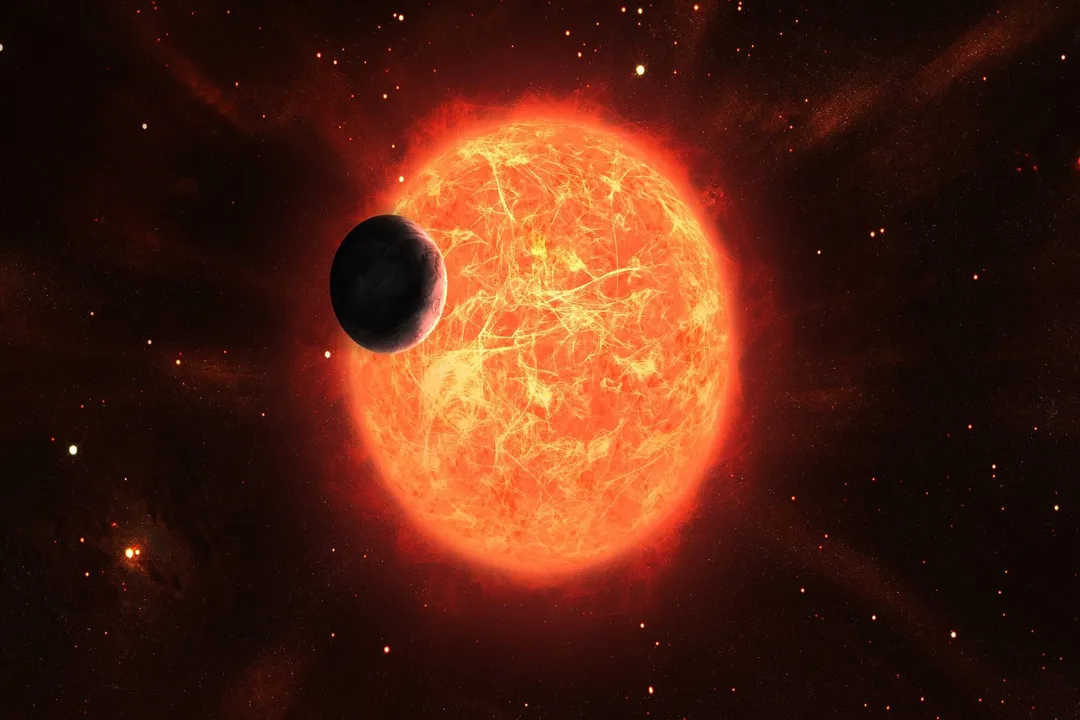
#Videos
Why Do Red Giants Expand? - YouTube
Related Questions
What is the typical duration of the Main Sequence phase for a star similar in mass to the Sun?What causes the core of a star to contract and heat up after hydrogen fusion ceases there?What is the required core temperature threshold for helium fusion to commence?What is the specific name for the process where a red giant fuses helium into heavier elements?What unstable intermediate isotope is formed in the first step of the triple-alpha process?What stable element is the primary result of the complete triple-alpha reaction sequence?In a star like the Sun transitioning to a red giant, what phenomenon leads to a runaway fusion event upon helium ignition?When carbon nuclei fuse with an alpha particle in sufficiently massive stars, what element is produced?What is the approximate temperature of the Sun's core currently sustaining hydrogen fusion?What causes the outer layers of a star to swell outward dramatically during the red giant phase?What elements constitute the core of a star like the Sun immediately after the helium burning phase is completed?