What does a star turn into when it runs out of hydrogen?
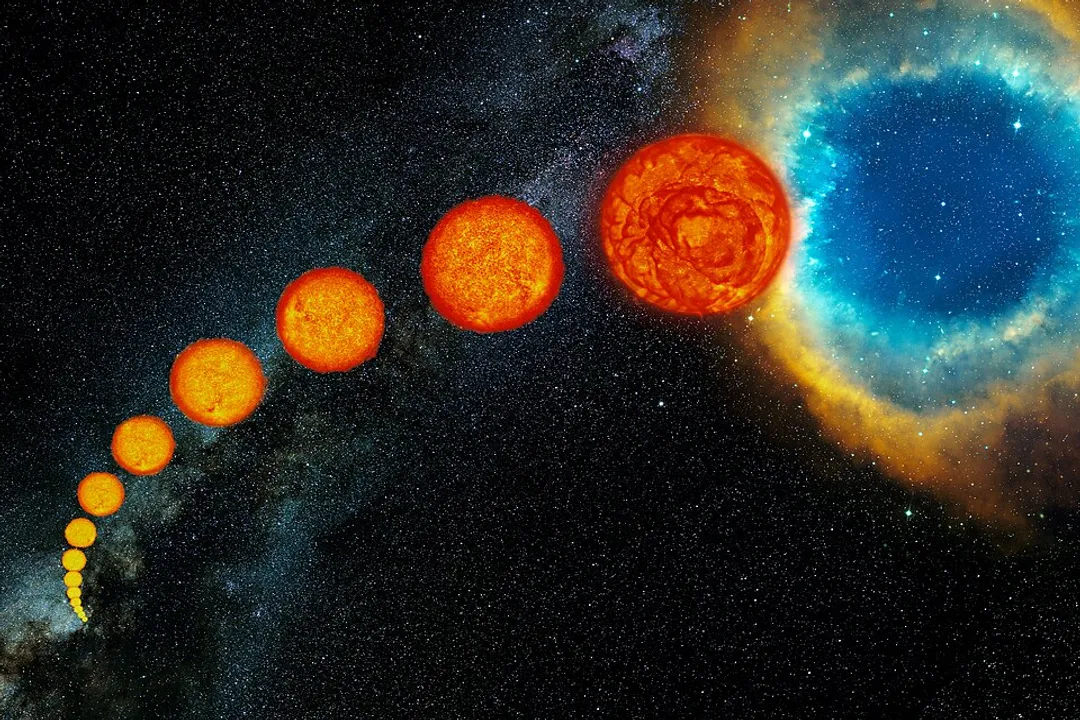
The moment a star exhausts the hydrogen fuel in its core marks the definitive end of its most stable, longest-lived phase. For billions of years, a star exists in a beautiful, tense equilibrium: the crushing force of its own gravity trying to pull everything inward is perfectly matched by the tremendous outward pressure generated by nuclear fusion in the core. [1][5][6] When the hydrogen supply in the very center runs dry, this balance is irrevocably broken, and the star’s next transformation begins based entirely on one critical factor: its initial mass. [5]
# Stellar Life Cycle
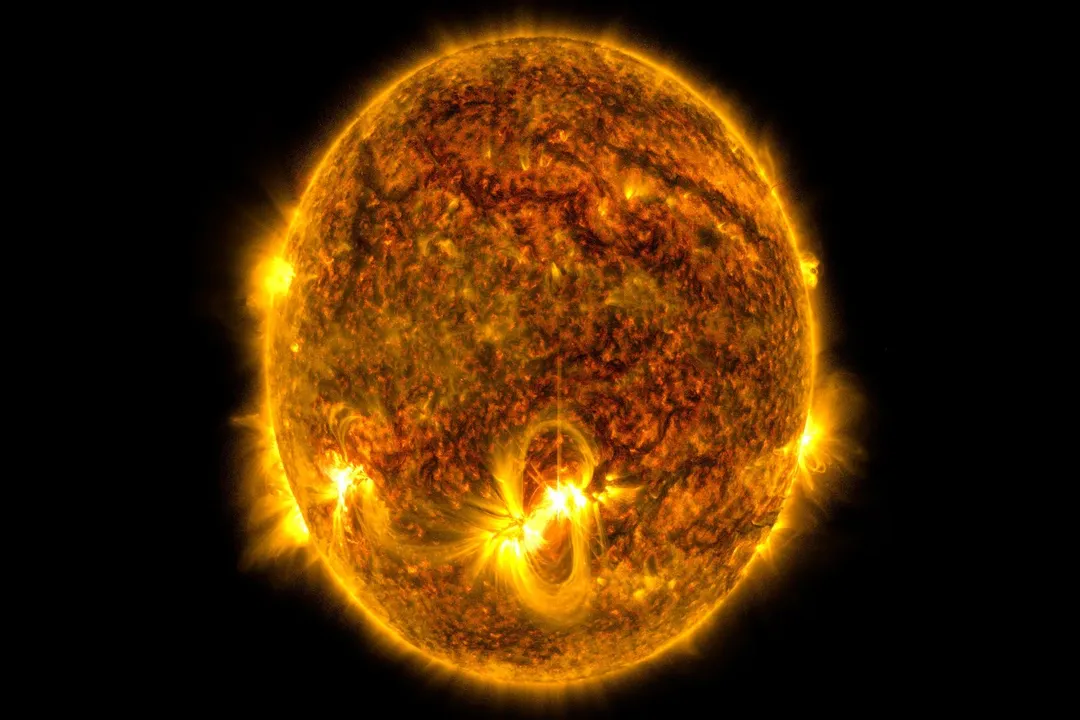
Every star, from the smallest red dwarf to the largest blue giant, spends the vast majority of its existence on what astronomers call the Main Sequence. [6] This is the hydrogen-burning phase, where atomic nuclei combine to form heavier ones, releasing the energy that makes the star shine. [1] Our own Sun is currently in this stage, and it will remain there, steadily converting hydrogen to helium, for roughly ten billion years in total. [6] Once the core's supply of hydrogen is consumed, however, the engine sputters, and the star must find a new power source or face collapse. [5]
# Fuel Depletion
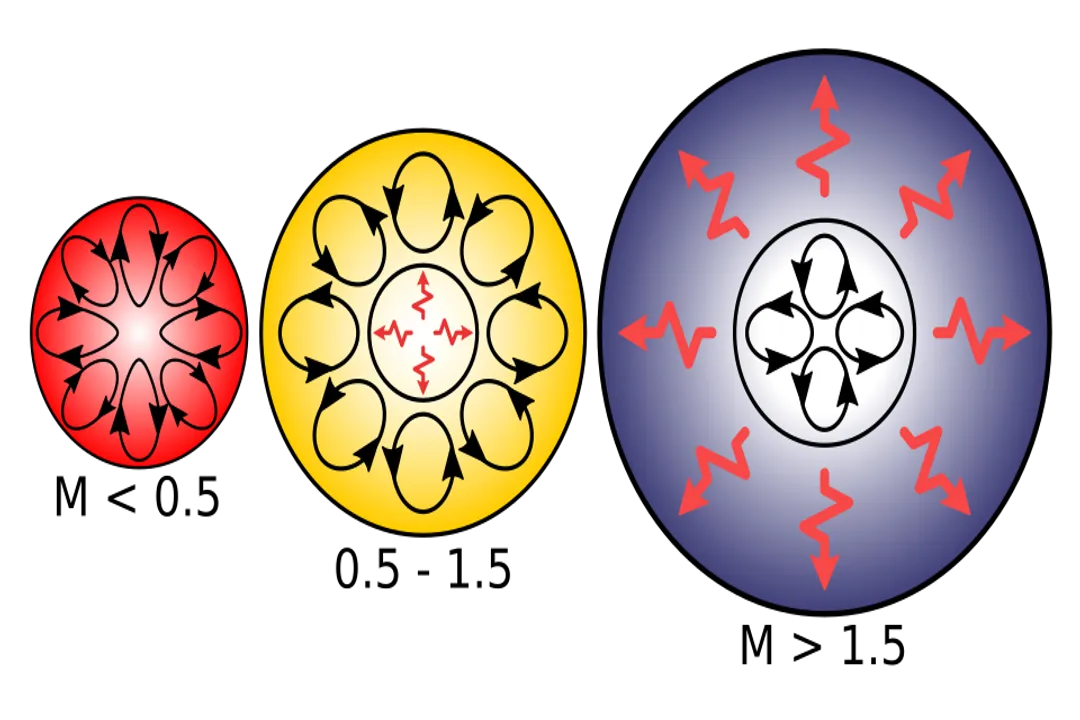
When the core runs out of hydrogen, fusion stops in the center, and the outward pressure provided by that reaction ceases. [5] Gravity, which never takes a break, immediately begins to win the struggle. The inert helium ash at the core starts to contract under its own weight. [1][6] This gravitational compression causes the core temperature to skyrocket. Ironically, this increase in temperature ignites a new phase of burning outside the now-contracted core. A shell of fresh hydrogen surrounding the helium core becomes hot enough to start fusing, generating an even greater outward pressure than before. [1][6]
The difference in fate hinges here. For stars similar in size to the Sun or smaller, this new energy surge forces the outer layers of the star to expand dramatically, often hundreds of times their original size, while the surface cools significantly. [1][6] This expansion and cooling turns the star into a Red Giant. [1] For stars that are significantly more massive—say, eight times the mass of the Sun or greater—the core contracts so violently and heats up so intensely that they bypass the gentler red giant phase and begin fusing heavier and heavier elements almost immediately. [1][6]
# Sun's Fate
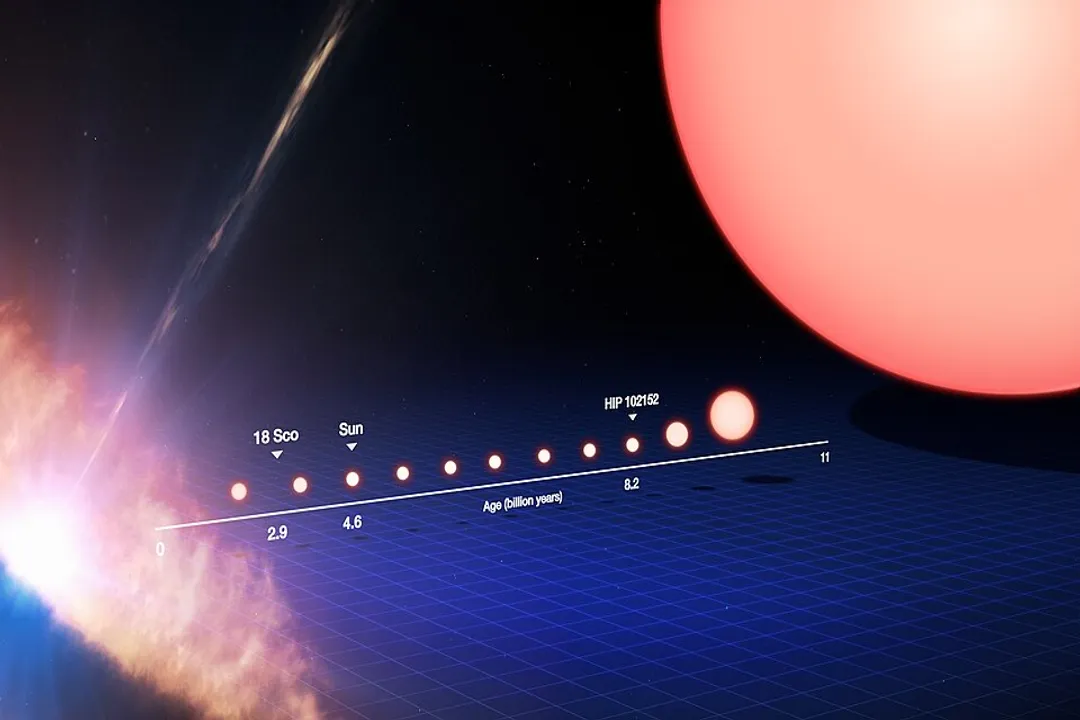
For a medium-sized star like our Sun, the Red Giant phase is the next stop after hydrogen depletion. [6] As the hydrogen shell burns, the core of helium continues to shrink and heat up. Eventually, this core reaches a critical temperature, estimated to be around 100 million Kelvin. [1] At this point, the helium itself ignites and begins fusing, primarily into carbon and oxygen. [1] This process provides a new, temporary period of stability for the star. [1]
It is fascinating to consider the speed of these transitions. While our Sun has spent about four and a half billion years on the Main Sequence, the subsequent phases—expanding into a giant and then fusing the core helium—will occur over a period that is relatively quick in cosmic terms, perhaps only a few hundred million years. [6] This means that once the hydrogen is gone, the star moves much faster toward its final state than it did during its youth.
Once the core has converted its helium into carbon and oxygen, it generally lacks the necessary mass and gravitational strength to achieve the temperatures required to fuse carbon further. [1] The star then becomes unstable. It begins to pulse, shedding its bloated outer layers of gas and dust into space. [1][6] This expanding shell of luminous gas is what we observe as a Planetary Nebula. [1][6] What remains behind is the incredibly dense, hot core, stripped bare of its outer material, known as a White Dwarf. [1][6] This stellar remnant is roughly the size of Earth but contains about half the mass of the original star. [1] Without any internal fusion generating heat, the white dwarf simply cools down over trillions of years, theoretically fading into a cold, dark Black Dwarf. [1]
# Massive Endings
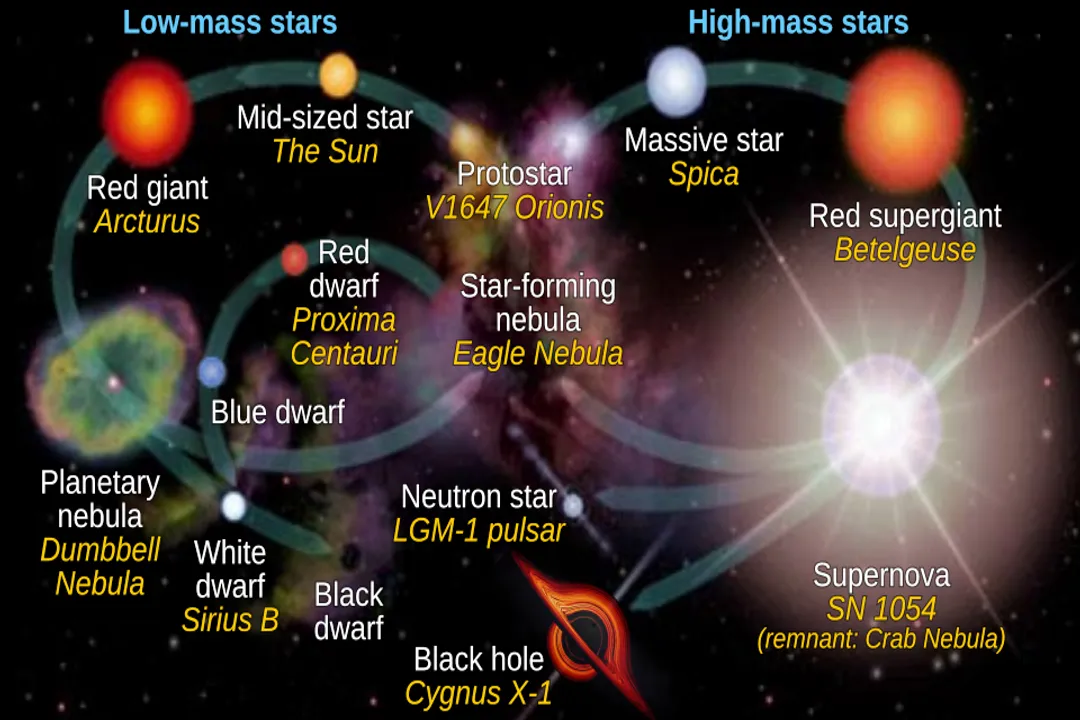
The destiny of a star born with significantly more mass follows a much more dramatic and violent path. [6] These high-mass stars burn through their hydrogen fuel much faster—sometimes in just a few million years—because their immense gravity requires much higher core temperatures to maintain equilibrium. [1]
When these giants exhaust their core hydrogen, they do not simply swell into a Red Giant; they become Red Supergiants. [1] Their internal structure becomes layered, like an onion, with shells fusing progressively heavier elements. [6] After helium fuses to carbon and oxygen, the core gets hot enough to fuse carbon into neon, neon into oxygen, oxygen into silicon, and finally, silicon into iron. [1][6]
The formation of iron represents an absolute, non-negotiable dead end for stellar fusion. [6] Up until this point, every fusion reaction released energy, sustaining the star against gravity. [1] However, fusing iron consumes energy rather than releasing it. [6] When the iron core forms, the energy source vanishes instantly.
# Catastrophic Collapse
With no outward pressure to counteract the massive gravity, the iron core collapses inward at incredible speeds, reaching nearly a quarter of the speed of light. [1][6] In less than a second, the core shrinks from a size comparable to Earth down to a sphere only about 12 miles across. [1] This implosion compresses matter to densities far exceeding anything else in the universe outside a black hole. [6]
The collapse is only halted when the core matter becomes so tightly packed that the neutrons themselves resist further compression—a state known as neutron degeneracy pressure. [6] When this hard stop occurs, the infalling outer layers of the star rebound violently off this ultra-dense core, resulting in one of the most energetic events in the cosmos: a Type II Supernova. [1][6] A supernova explosion briefly outshines entire galaxies and is responsible for synthesizing all the elements heavier than iron, scattering them throughout the interstellar medium. [1]
The final remnant left behind depends on the mass remaining in that collapsed core after the supernova blast. If the remnant core mass is below about three times the mass of the Sun, the neutron degeneracy pressure will win, and the result is a Neutron Star. [6] These are incredibly compact objects, where a teaspoon of their material would weigh billions of tons. [1] If, however, the original star was extremely massive—leading to a remnant core greater than roughly three solar masses—even the pressure of tightly packed neutrons cannot resist the crushing gravity, and the core collapses completely, forming a Black Hole. [6]
It is crucial to grasp that the difference between a gentle fade into a white dwarf and a cataclysmic supernova is determined by the initial conditions—the amount of hydrogen available to burn and the star’s starting heft. A slight difference in initial mass, perhaps one or two solar masses, separates the path to a peaceful retirement from the path to a spectacular, universe-altering explosion. [5][6] This mass dependency shapes everything we observe in the stellar graveyard.
| Initial Star Mass (Relative to Sun) | End State Pathway | Final Remnant |
|---|---|---|
| Less than ~8 Solar Masses | Red Giant Planetary Nebula | White Dwarf Black Dwarf |
| ~8 to ~25 Solar Masses | Red Supergiant Supernova | Neutron Star |
| Greater than ~25 Solar Masses | Red Supergiant Supernova | Black Hole |
Understanding these stages also offers a tangible connection to our own existence. Every atom in your body heavier than hydrogen and helium—the carbon in your DNA, the oxygen you breathe, the iron in your blood—was created either in the core of a star like our Sun during its later helium-burning phase or forged explosively in the shockwave of a supernova from a much larger star. [1] The running out of hydrogen isn't just the end of a star's life; it is the mechanism by which the universe seeds itself with the building blocks for planets and life. [1]
#Videos
What Happens When A Star Runs Out Of Hydrogen? - Physics Frontier
#Citations
Star Basics - NASA Science
When a star runs out of hydrogen, it begins using helium as fuel. Is ...
Star Life Cycle - ASPIRE
[PDF] Death of Stars
Stellar evolution - Wikipedia
What happens when a star runs out of hydrogen? How does it turn ...
What will happen to the sun when it runs out of hydrogen? - Facebook
Stellar Evolution - | The Schools' Observatory
What Happens When A Star Runs Out Of Hydrogen? - Physics Frontier