Do stars run out of energy?
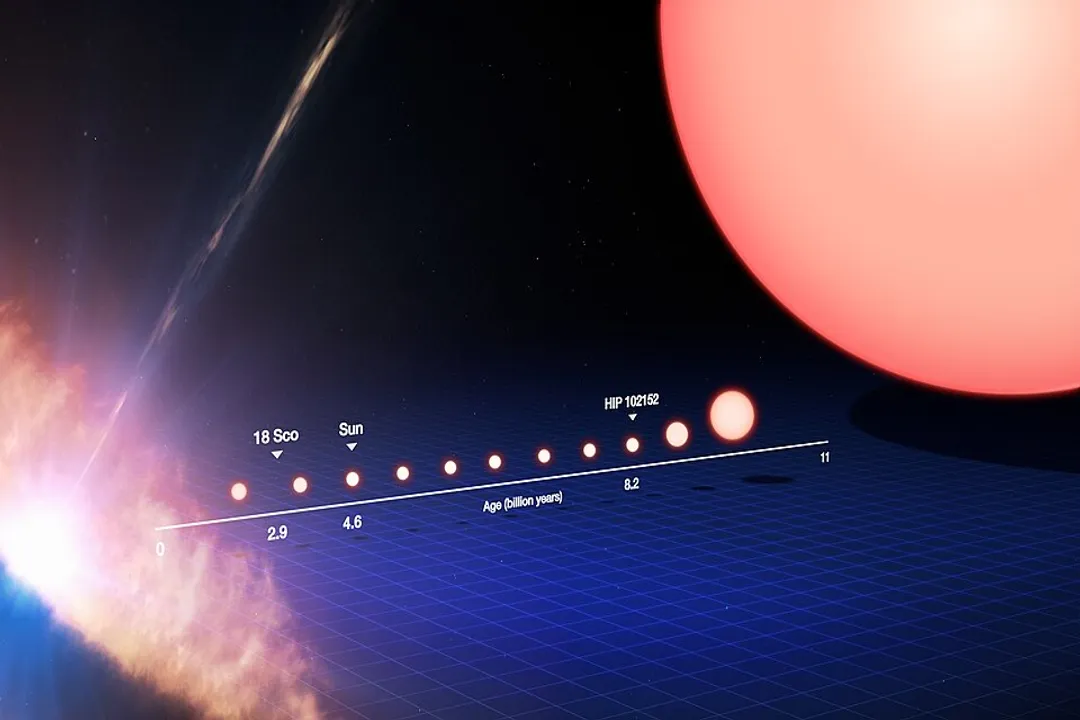
Stars are not eternal beacons that burn indefinitely; they absolutely do run out of the primary fuel that defines their existence. For billions of years, a star maintains a delicate, violent balance between the crushing force of its own gravity trying to pull it inward and the immense outward pressure generated by nuclear fusion deep within its core. When that fusion engine sputters—because the necessary fuel has been consumed—the balance is broken, and the star's life cycle enters its dramatic final phase.
# Fusion Power
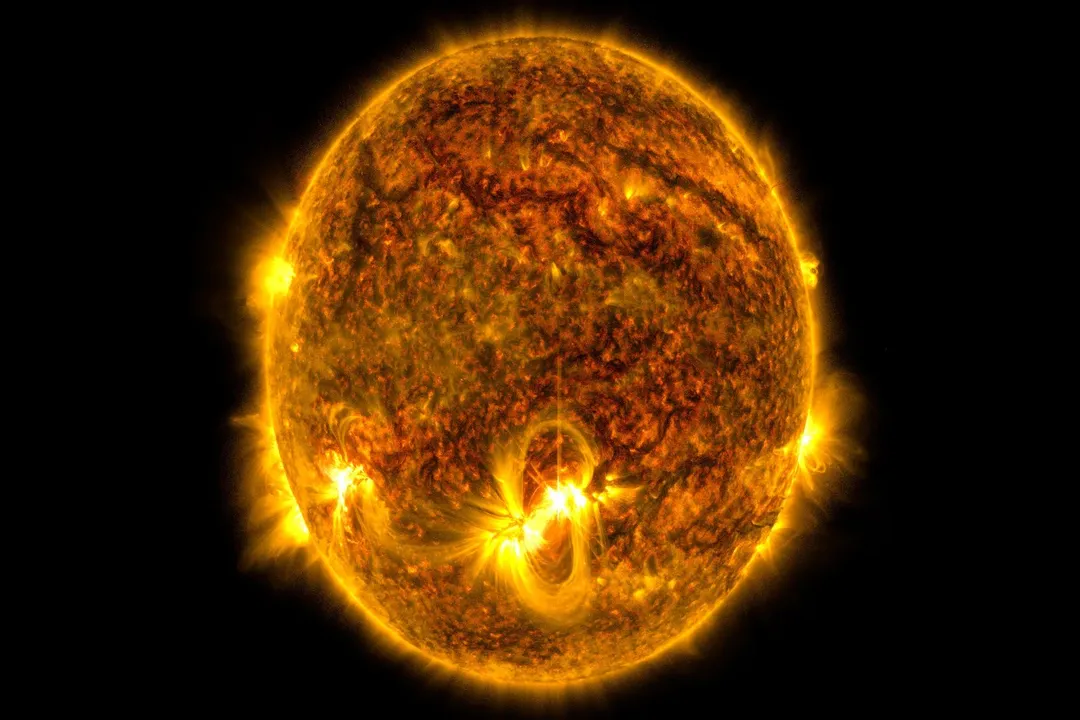
The mechanism powering a star is nuclear fusion, a process where lighter atomic nuclei combine to form heavier nuclei, releasing a tremendous amount of energy in the process. During the long, stable phase of its life, known as the main sequence, a star primarily fuses hydrogen atoms into helium atoms in its superheated core. This fusion reaction is what creates the energy we see as starlight and feel as heat.
The law of conservation of energy states that energy cannot be created or destroyed, only transformed. In the context of stellar physics, the star isn't creating energy from nothing; it is converting a small fraction of its mass directly into energy according to Einstein’s mass-energy equivalence principle, . The star runs out of energy because it runs out of the fuel mass that can be efficiently processed through this fusion mechanism. Once the core runs out of hydrogen to fuse, the main engine shuts down, and the star must find a new way to support itself against gravity or collapse.
# Fuel Conversion
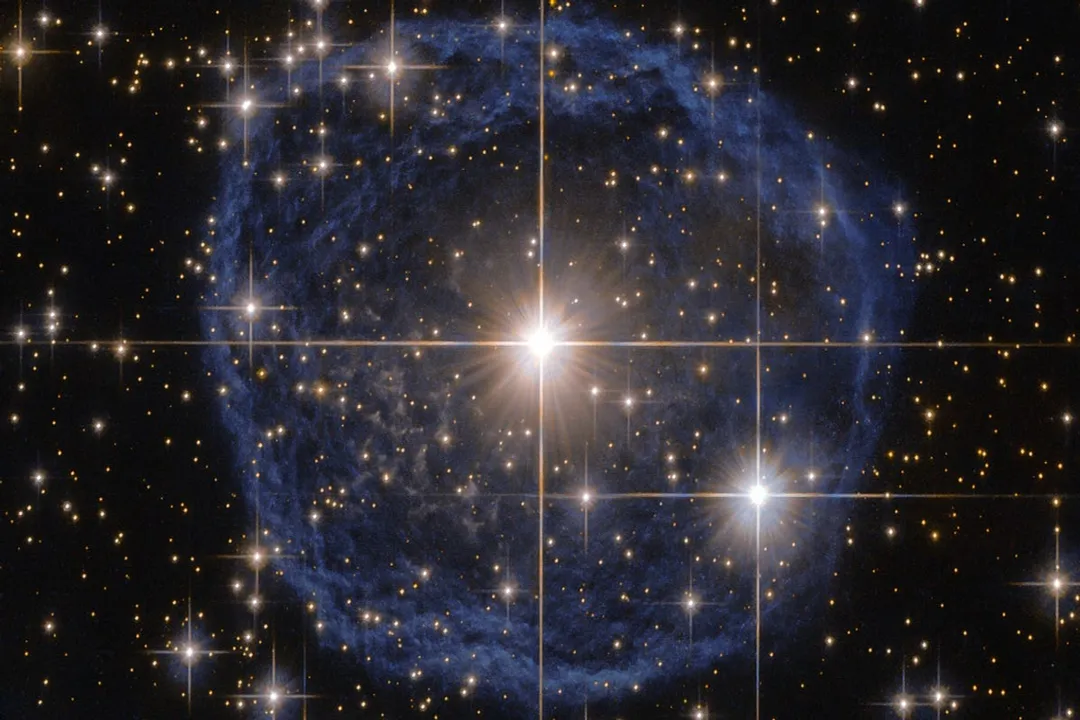
It is crucial to grasp the scale of this conversion. Even though stars shine brightly for eons, the actual percentage of mass converted into pure energy during the hydrogen-burning phase is incredibly small. For instance, the Sun, which is expected to live for about ten billion years on the main sequence, will convert only about $0.7%$ of the mass of the hydrogen it consumes into energy.
To put this into a relatable perspective, consider a hypothetical stellar furnace. If we imagine a star having a massive, finite bucket of hydrogen fuel, the small star—like our own Sun—sips from its bucket over ten billion years, maintaining a gentle, steady simmer. Conversely, a star significantly more massive than the Sun consumes its equivalent fuel supply at a far more ferocious pace, roaring hot until the bucket is functionally empty in mere millions of years. This stark difference in consumption rate, dictated entirely by the initial mass, explains why low-mass stars have lifespans thousands of times longer than their high-mass counterparts.
# Stellar Mass Dictates Fate
The mass a star is born with dictates every subsequent stage of its life, including how long it burns and what it leaves behind when it dies. Stars exist across a vast spectrum of masses, from small red dwarfs to giants many times the mass of the Sun.
For low-mass stars, the process of running out of fuel is relatively gentle:
- Main Sequence: Hydrogen fusion in the core continues until the hydrogen is depleted.
- Core Contraction: Without fusion pressure, gravity causes the core to contract and heat up.
- Shell Burning: The increased temperature ignites hydrogen fusion in a shell surrounding the inert helium core.
- Red Giant Phase: The outer layers of the star expand dramatically as the core heats further, leading to the red giant phase.
- Helium Ignition: Eventually, the core becomes hot enough to begin fusing helium into carbon and oxygen.
For a star like our Sun, once the helium in the core is exhausted, fusion stops entirely, and the star cannot generate enough pressure to fuse carbon due to insufficient mass. The outer layers drift away, forming a planetary nebula, leaving behind a dense, hot remnant known as a white dwarf. A white dwarf is essentially a dead ember, slowly cooling over trillions of years, no longer generating energy through fusion.
# Massive Star Collapse
Stars significantly more massive than the Sun face a much faster and more violent end. Their greater gravitational pressure allows them to achieve the necessary temperatures to fuse progressively heavier elements in their cores—carbon, neon, oxygen, silicon—in successive layers, like an onion. This continues until the core is composed of iron. Iron fusion, however, consumes energy rather than releasing it, meaning the star has reached the absolute end of its energy-producing potential.
When the iron core forms, the energy generation halts instantly. Gravity wins decisively, causing an extremely rapid collapse that can happen in mere milliseconds. This catastrophic implosion leads to a Type II supernova explosion, which momentarily outshines entire galaxies. What remains depends on the remnant core mass: it will either be a neutron star—an object so dense that protons and electrons have been forced together to form neutrons—or, if the remnant is heavy enough (over roughly three times the Sun's mass), the collapse continues indefinitely, forming a black hole. In all these final states—white dwarf, neutron star, or black hole—the object is no longer a main-sequence star generating energy through hydrogen fusion.
# The Universe's Energy Balance
While the individual stars run out of their local energy source, the overall energy of the universe remains conserved. The energy released by a star’s death doesn't vanish; it powers the nebula, creates heavier elements (like the carbon in our bodies and the oxygen we breathe), and streams out as kinetic energy and photons from the supernova. The fuel that powered the star (mass) is converted into energy, heat, and new building blocks distributed throughout the cosmos, ready for the next generation of stars and planets to form. Thus, while a star dies as a self-sustaining energy producer, its demise is a necessary step in the ongoing chemical and energetic evolution of the universe.
#Citations
Star Basics - NASA Science
ELI5: why do stars nuclear fuel run out? : r/explainlikeimfive - Reddit
Star Life Cycle - ASPIRE
Science says stars will eventually run out of energy and fade. But ...
Stellar evolution - Wikipedia
How do stars continue to produce energy without running out of fuel ...
When stars run out of fuel, they collapse. (And honestly? Same.) But ...
What is going on with star's energy? - Physics Stack Exchange
Ask Ethan: When do stars turn the most mass into energy? - Medium