What does the term 'telescope,' derived from Greek roots, literally suggest?
Answer
Far-seeing.
The etymology of the term telescope, derived from Greek roots, directly suggests 'far-seeing,' reinforcing its primary definition rooted in extending visual reach.
Related Questions
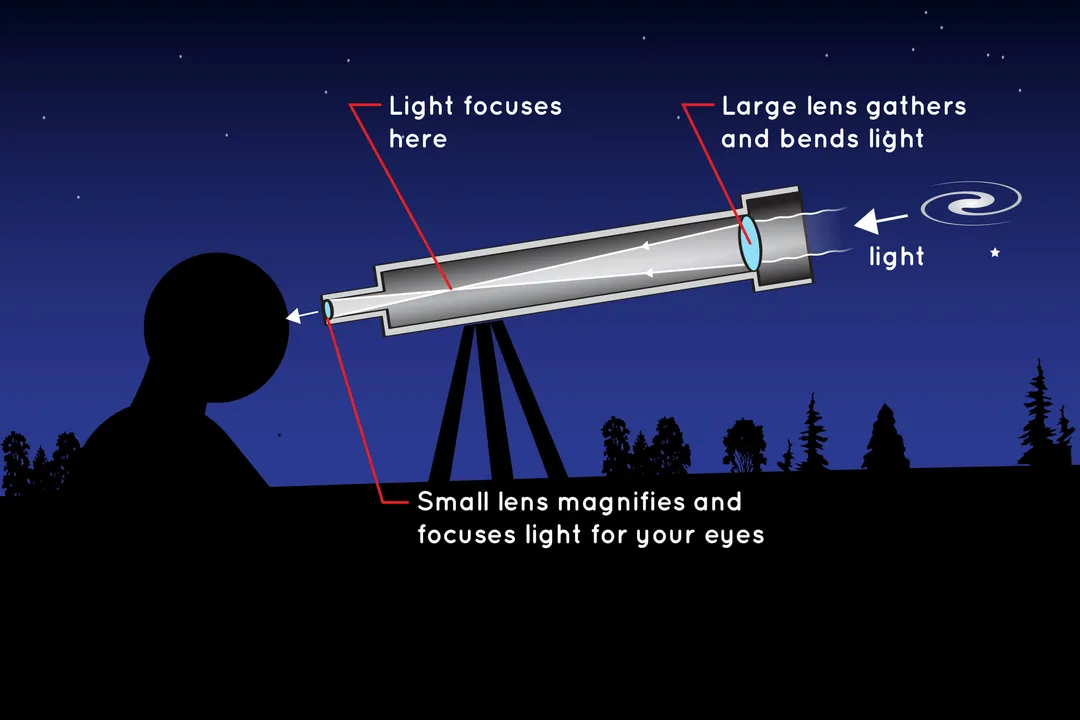
What is the core function defining a telescope?What hardware is highlighted in the classic description of how a telescope works?For faint, far-off objects, which function is arguably the most scientifically important?Which category of optical telescope primarily uses lenses?What physical attribute dictates the true power of an instrument related to light gathering?What does the term 'telescope,' derived from Greek roots, literally suggest?In the context of advanced professional astronomy, what action often replaces direct viewing through an eyepiece?What is the result of precisely shaping lenses or mirrors in an optical telescope?What is the purpose of a telescope gathering a much wider cone of light than the human eye?Which aspect is incorporated into the most complete single-sentence definition of a telescope?