Why does the angle of subduction influence seismic hazard assessment inland?
Answer
A very shallow angle keeps the plate interface close to the surface for a greater horizontal distance inland
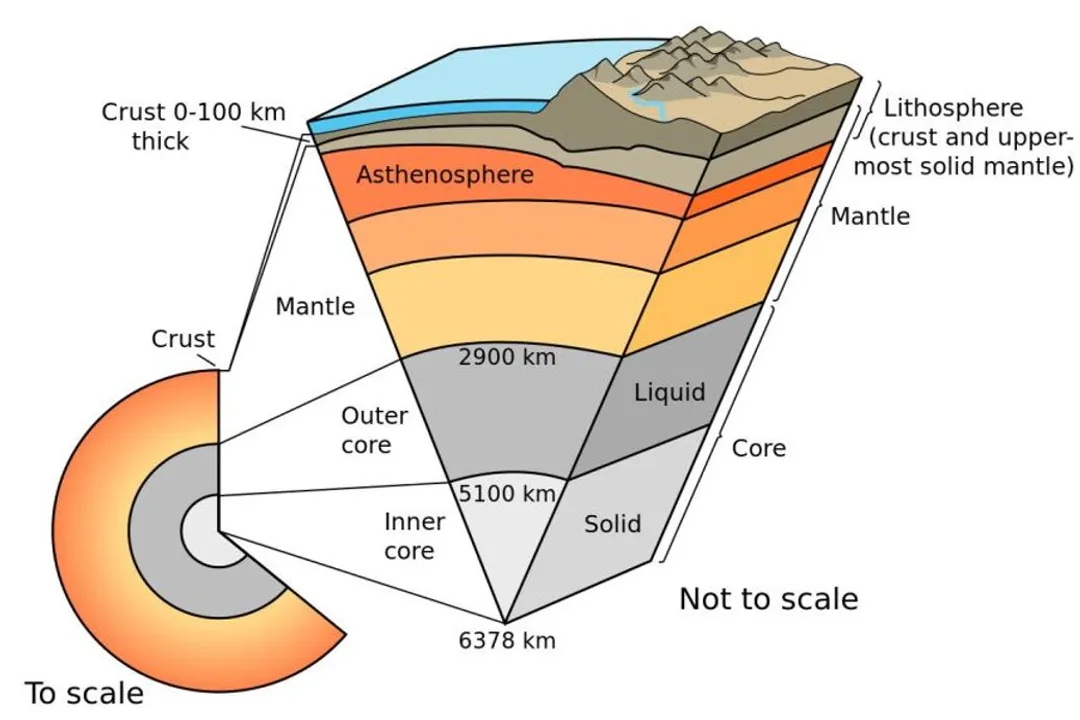
When a plate subducts at a shallow angle, the friction interface between the descending slab and the overriding crust remains near the surface over a larger horizontal distance, potentially exposing inland populated areas to powerful, deeper tremors.
Related Questions
What is the fundamental mechanism responsible for driving the movement of tectonic plates?Which two components comprise the Earth's rigid outer layer, the lithosphere?What process occurs at divergent boundaries where plates move away from each other?What geological feature is typically formed when an oceanic plate subducts beneath a less dense continental plate?What example is provided for a continental collision zone where two continental plates meet?What is the primary geologic consequence of plates sliding horizontally past one another at transform zones?At what approximate speed are tectonic plates currently moving?What layer beneath the lithosphere allows the rigid tectonic plates to glide across it?What does the balance between seafloor spreading and crust destruction imply about Earth’s size?What feature is formed at divergent boundaries, often described as vast underwater mountain chains?Why does the angle of subduction influence seismic hazard assessment inland?