When did Galileo discover the mountains on the Moon?
The moment Galileo Galilei first turned his newly adapted telescope toward the heavens marked an irreversible break with centuries of established thought, especially concerning our nearest celestial neighbor, the Moon. [7] While the exact minute he first saw the shadowed peaks is lost to history, the crucial period for this discovery falls squarely around 1609. [1][4][7] This groundbreaking observation was formally announced to the learned world in his brief but explosive treatise, Sidereus Nuncius (The Starry Messenger), which appeared in 1610. [1][7]
# Ancient Beliefs
For millennia, educated Western thought, largely structured around the works of Aristotle and Ptolemy, maintained that the celestial bodies were fundamentally different from Earth. [7] The Moon, in this schema, was conceived as a perfect, polished, ethereal sphere—a flawless orb of unchanging aether, free from the blemishes and corruption seen on our terrestrial surface. [1][9] To suggest otherwise was not merely a scientific disagreement; it was a challenge to the accepted physical and philosophical order of the universe. [7] Galileo Galilei, an Italian natural philosopher born in 1564, was poised to dismantle this long-held dogma using a device that was, by modern standards, primitive: his telescope. [3][6]
# Telescope Improvement
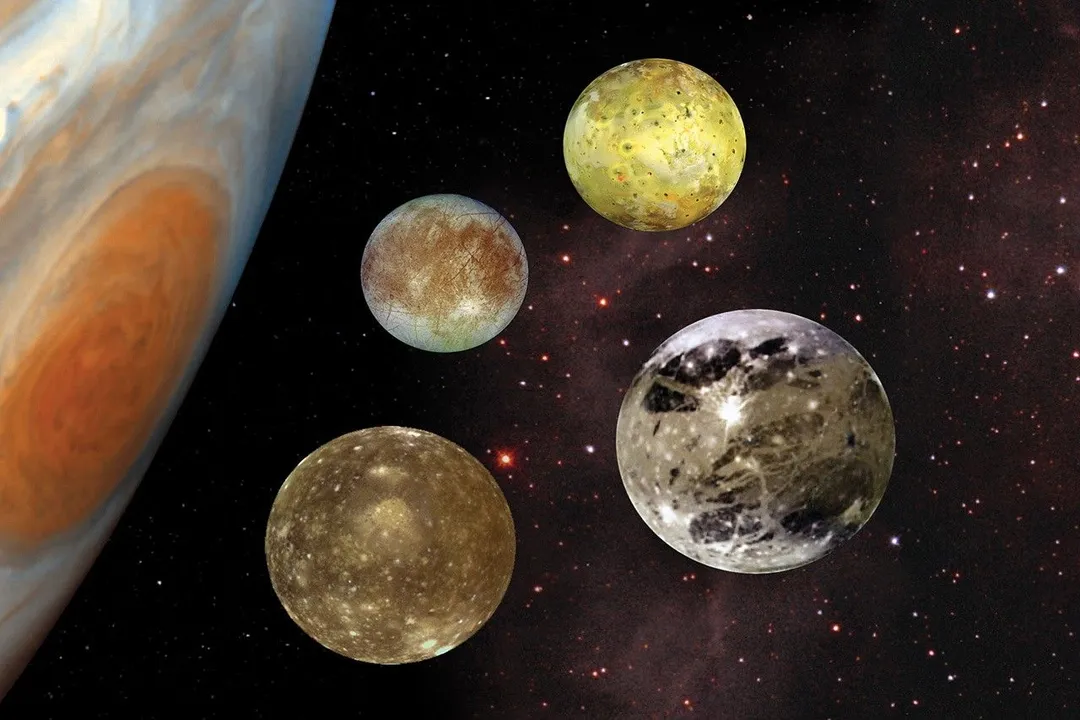
Galileo did not invent the telescope; that credit usually goes to Dutch spectacle makers. [1] However, the 1564–1642 astronomer possessed the skill and insight to significantly improve existing designs, grinding his own lenses to achieve magnifications that reached about twenty times. [1][6][8] It was through these enhanced optics that the Moon, previously an unblemished silver disk in the night sky, transformed into a world of rugged topography. [1][4] His observations were part of a larger program of celestial investigation that also involved studying the phases of Venus, the four largest moons orbiting Jupiter, and spots on the Sun. [2]
# Shadow Analysis
The visual proof of the Moon’s uneven surface came from studying the way sunlight fell across it, specifically near the dividing line between light and darkness—the terminator. [1] When the Sun shines directly onto a perfectly smooth sphere, the transition from light to dark is instantaneous and sharp. [1] However, Galileo observed that along the terminator, the rugged terrain cast long, dark shadows stretching out from elevated features. [1][4]
These shadows were the unmistakable sign of height. A mountain range casts a shadow proportional to its height and the angle of the incoming sunlight. [1] By meticulously charting the length of these shadows as the Moon rotated, Galileo was able to approximate the elevation of these lunar features. [1][4] He concluded that the Moon possessed features akin to Earth’s own topography, complete with valleys and mountains. [7] Some sources suggest that he even attempted to calculate the height of the tallest peaks, estimating them to be several kilometers high, which further cemented the idea that the Moon was a world like our own, rather than an ethereal object. [4]
# Publication Timing
The decision to publish these findings so rapidly—making the observations in 1609 and releasing them in 1610—was significant. [1][7] Galileo’s report didn't just describe what he saw; it presented the first concrete evidence that the heavens were not perfect and immutable, but material and subject to change, mirroring earthly processes. [9]
Considering the prevailing academic structure of the time, where adherence to classical texts was often prioritized over new empirical data, Galileo's immediate publication served as a direct challenge to the established authorities. [7] A fascinating comparative point to consider is the speed of scientific dissemination: in an era before instant global communication, moving from private observation to printed, publicly available evidence in under a year required immense logistical effort and perhaps an even greater degree of personal confidence in the radical nature of his findings. [4] This swift dissemination meant that the concept of a mountainous Moon could not be easily dismissed or suppressed before it had taken root in the intellectual community.

# Cosmological Shift
The revelation of lunar mountains had profound implications that went far beyond simple topography. If the Moon was not a perfect sphere, the fundamental premise supporting the ancient structure of the cosmos—that the heavens were made of a different, perfect substance than the Earth—began to crumble. [7][9] This opened the door for accepting that other celestial bodies, including potentially Earth, were simply one type of object among many, governed by the same physical laws. [2] Galileo's work, alongside his later observations of Jupiter's moons orbiting Jupiter rather than Earth, became a crucial piece of observational support for the heliocentric (Sun-centered) model proposed by Copernicus. [7]
# Empirical Confidence
Galileo’s methodology in calculating those mountain heights offers a glimpse into the early application of quantitative science to astronomy. He essentially treated the Moon as a giant sphere and used basic geometry—specifically triangulation based on the angle of illumination—to derive physical measurements from visual data. [1][4] This move from mere description to active, measurable characterization is what grants Galileo his status as a father of modern science. [8] It demonstrated that observable reality, when subjected to mathematical scrutiny, could overturn centuries of accepted philosophical consensus. [9]
If we were to isolate the moment of discovery—the first seeing of the shadow—it happened in 1609. [1][4] But the impact—the moment the discovery became an undeniable scientific fact that forced the world to reconsider its place in the cosmos—was 1610 with the publication of Sidereus Nuncius. [1][7] While contemporaries like Thomas Harriot may have observed similar features slightly earlier, it was Galileo’s rigorous documentation, calculation, and widespread publication that cemented his claim to this revolutionary insight. [4]
# Analyzing the Observations
It is worth noting the sheer novelty of interpreting what was seen. Many early observers of the Moon through telescopes reported seeing dark and light patches, often called maria (seas) and terrae (lands). [4] The critical difference Galileo brought was the interpretation of the light edge. He understood that the roughness perceived was not just a visual illusion or an artifact of the imperfect atmosphere; it was genuine physical topography, confirmed by the behavior of shadows moving across the terminator. [1] This rigorous application of perspective and optics to a celestial object marks a significant methodological step for the 16th and 17th-century understanding of observation. [3] The fact that he was simultaneously proving the imperfection of the Moon while also charting the moving satellites of Jupiter—visible proof that not everything orbited the Earth—shows a scientist working on multiple fronts to dismantle the old worldview. [2]
# Legacy of Imperfection
Galileo’s legacy on the Moon is one of revealing physical reality over philosophical purity. [7] His work helped transition astronomy from a discipline primarily concerned with mapping perfect circles to one concerned with measuring worlds. [2][7] The mountains he found were not just geological features; they were the first solid evidence that other heavenly bodies shared characteristics with Earth, paving the way for the later realization that physics applies universally across the solar system. [9] He established a precedent: if you can see it clearly, and you can measure it, then the centuries-old texts must yield to the evidence of the eye and the mathematics of the calculation. [1][4]
#Citations
How Galileo Discovered Mountains On The Moon - Forbes
Galileo's Observations of the Moon, Jupiter, Venus and the Sun
Galileo Galilei - Wikipedia
The Moon - Galileo's World - The University of Oklahoma
Moon phase drawings by Galileo Galilei in 1609 - Facebook
Galileo Galilei - New Mexico Museum of Space History
History | The Galileo Project
Galileo Galilei (1564–1642) | High Altitude Observatory
Galileo Galilei (1564‐1642) - PMC - NIH