What did Galileo use to see the Moon so clearly?
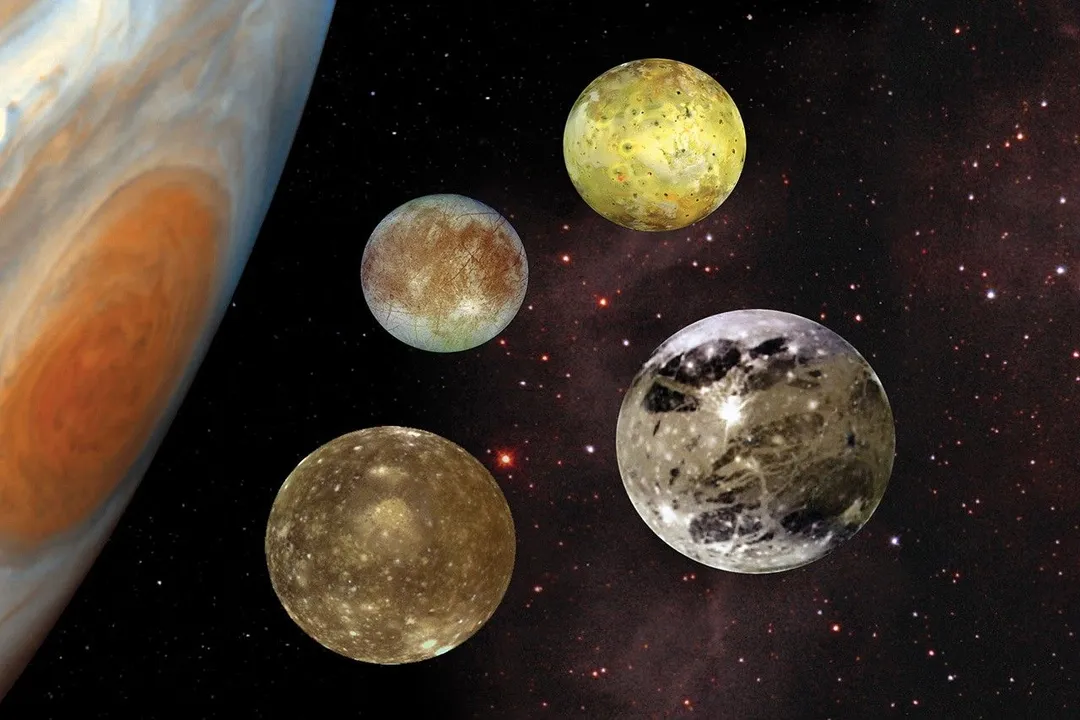
The clarity with which Galileo Galilei presented the Moon’s surface to the world was revolutionary, forever altering humanity’s perception of the heavens. When we look back at his astonishing drawings—showing mountains, valleys, and dark plains—the immediate assumption is that he possessed a vastly powerful instrument. However, the reality is that what he used was an improvement on an existing technology, not an invention of a new class of optical device. [2] The key to his success lay not in raw power, but in the precision he could wring out of the simple spyglass technology available in the early 1600s. [9]
# Simple Optics
The instrument Galileo employed was what we now call a telescope, or what was sometimes referred to then as a perspective glass or spyglass. [2][9] It is crucial to understand that Galileo did not invent the telescope; that credit generally goes to spectacle makers in the Netherlands around 1608. [2] What he did was take this novelty, quickly recognize its potential for astronomical observation, and then dedicate himself to making it far better than any existing model. [2][9]
The fundamental design of the instruments he refined was surprisingly straightforward. It involved two simple lenses arranged in a tube: a convex (outwardly curved) objective lens at the front to gather light, and a concave (inwardly curved) eyepiece lens through which the observer looked. [2] The combination of these two elements magnified the image.
# Power Attained
The magnification power Galileo achieved is a subject often discussed, especially when comparing his views of the Moon to his later observations of Jupiter’s moons. When he first turned his improved instrument skyward, his initial models reportedly offered about three times the magnification of the naked eye. [2] He didn't stop there. Through iterative improvement, by either grinding his own lenses or commissioning them with unprecedented care, he pushed this power further. [2]
For observing Jupiter’s moons, a magnification of about 20x is often cited as the level he likely reached, which was sufficient to clearly distinguish the four major satellites and track their movements. [3][7] This level of magnification, while modest by modern standards, was a monumental achievement for the glass-working capabilities of the time. [2]
To put this into perspective, consider the technological hurdle overcome. A modern, low-cost pair of binoculars, perhaps offering 10x magnification, provides an image that is far clearer and brighter due to advanced coatings and precision manufacturing. Galileo, working with crude tools and glass subject to imperfections, achieving the clarity needed to map the Moon’s surface with such detail suggests that the quality of his lenses—their shape and polish—was more important than raw magnification numbers for his lunar work. [2]
A modern, mid-range consumer telescope might offer 150x magnification, but if Galileo had achieved 150x with the glass available in 1610, the image would have been an unusable, wildly distorted mess. His success lay in finding the sweet spot where magnification did not destroy image fidelity. [9]
# Lunar Surface Detail
Galileo’s focus on the Moon in late 1609 and early 1610 was tactical. It was the closest celestial object, meaning any small optical flaw in his instrument would be severely magnified when pointed there, providing an immediate test of his improvements. [5] If he could see detail on the Moon, he could trust the instrument for fainter, more distant targets like Jupiter. [4]
The Moon, under the prevailing Aristotelian cosmology, was expected to be a perfect, smooth, ethereal sphere. What Galileo reported observing, starting around January 1610, directly contradicted this ancient doctrine. [4][5] His observations showed that the Moon possessed mountains and valleys. [4][6] He recognized that the uneven illumination—the way shadows stretched across the surface near the terminator (the line dividing light and dark)—was exactly what one would expect if the surface were rough and mountainous, like the Earth. [6]
His clear vision allowed him to measure the heights of some of these lunar features by observing the length of their shadows at specific times of the lunar cycle. [6] This was an act of true scientific inquiry, turning a simple visual discovery into quantitative data about another world. [4] The clarity he achieved was such that he could definitively see the distinct dark areas (the maria, which he famously called "seas") and the brighter highlands. [4]
# Crafting Clarity
The secret to seeing these features clearly wasn't just assembling two lenses; it was in how those lenses were made. Lenses in that era were typically ground by hand using abrasive materials, a process requiring immense patience and skill. [2] For the objective lens, particularly, the goal was to achieve a precise curvature that minimized two primary defects: spherical aberration and chromatic aberration.
Spherical aberration occurs when light rays passing through the edge of a simple spherical lens focus at a different point than rays passing through the center, resulting in a blurry image. Chromatic aberration, caused by the lens splitting white light into its constituent colors (like a prism), was even more problematic, often resulting in fuzzy, colored halos around bright objects. [2]
Galileo’s mastery involved understanding how to select or grind lenses—sometimes using very long focal lengths to mitigate the worst effects—that minimized these issues enough to produce a usable, sharp image for his specific purpose. [9]
We can infer the sheer dedication involved. Imagine trying to shape a piece of glass to a specific curve using only abrasives and water, knowing that a deviation of even a fraction of a millimeter across the lens surface could render a faint celestial object invisible or distorted. [2] The optical quality required to resolve the terminator shadow of a lunar mountain at perhaps 300,000 miles distance using a ground piece of glass underscores an expertise that transcended mere assembly; it was material science bordering on art. [9] This level of meticulous lens-making, often involving trial and error across dozens of attempts, separated Galileo’s functional astronomical tool from the novelty spyglasses possessed by others. [2]
# The Telescope Versus the Eye
The way the instrument presented the Moon fundamentally differed from naked-eye observation, even factoring in the relatively low magnification. The telescope collected far more light than the pupil of the human eye. [9] For instance, a small objective lens with a diameter of one inch collects substantially more light than a fully dilated human pupil (which is about a quarter-inch across in dim conditions). [2]
This light-gathering capability meant that features that were simply too dim to register on the eye—like the subtle variations in brightness across the lunar surface—became clearly visible when concentrated onto the retina by the telescope. [9] The perceived "clarity" was therefore a combination of:
- Magnification: Making the Moon appear larger.
- Light Gathering: Making the Moon appear brighter.
- Resolution: The physical quality of the lenses allowing fine detail to be distinguished rather than smeared together. [2]
Galileo’s use of this improved light-gathering power confirmed that the Moon was not shining with its own pure light, but rather reflecting sunlight, casting sharp shadows due to its physical topography, much like Earth. [4] The tool he used—a hand-crafted, manually-focused, low-power refracting telescope—was thus the direct agent that bridged the gap between ancient philosophical assumption and modern astronomical observation of our nearest neighbor. [5][6]
#Citations
We figured out exactly what Galileo saw when he discovered the ...
The Discoveries of Galileo – Part 3: The Moon - Cloudy Nights
What was the magnification of Galileo's telescope when he saw ...
Galileo's Observations of the Moon, Jupiter, Venus and the Sun
Also on this day: 7 January 1610, Galileo Galilei wrote his first letter ...
The View from Galileo's Telescope
What is minimal aperture/magnification to recognize phases of ...
Galileo and the moons of Jupiter: exploring the night sky of 1610
Battle with the Church - History and Philosophy of Western Astronomy