What is the most reflective surface on Earth?
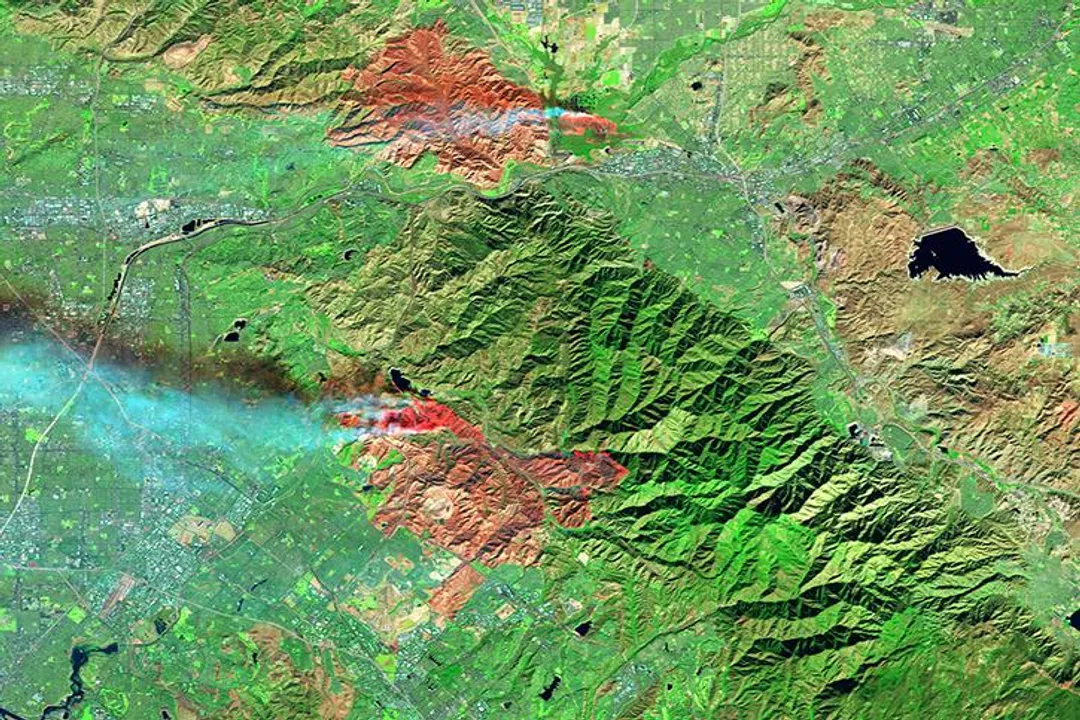
The concept of reflection, at its most fundamental level, is a question of surrender—how much incoming light energy a surface is willing to give back immediately, rather than keeping it as heat or letting it pass through. When we ask what the most reflective surface on Earth is, the answer immediately fractures depending on the context: are we talking about the pure, focused beam of a precision instrument, or the scattered, hemispherical return that matters to climate scientists? The scientific term that governs this entire discussion is albedo, which NASA defines as the measure of the percentage of sunlight that a surface reflects away.
Albedo is quantified on a scale from 0 to 1, where 0 means the surface absorbs everything—a theoretical black body—and 1 signifies total reflection. Earth itself maintains a planetary albedo of roughly 0.5, meaning about half of the solar energy reaching the top of the atmosphere is sent straight back out, keeping our climate relatively stable. However, the surfaces on Earth show staggering variation. The deep, dark ocean, for instance, is a poor reflector, absorbing vast amounts of energy with an albedo sometimes lower than 0.1. Conversely, fresh snow can boast an albedo as high as 0.85. Clouds are also significant planetary reflectors, sending back high percentages of solar energy.
# Perfect Limit
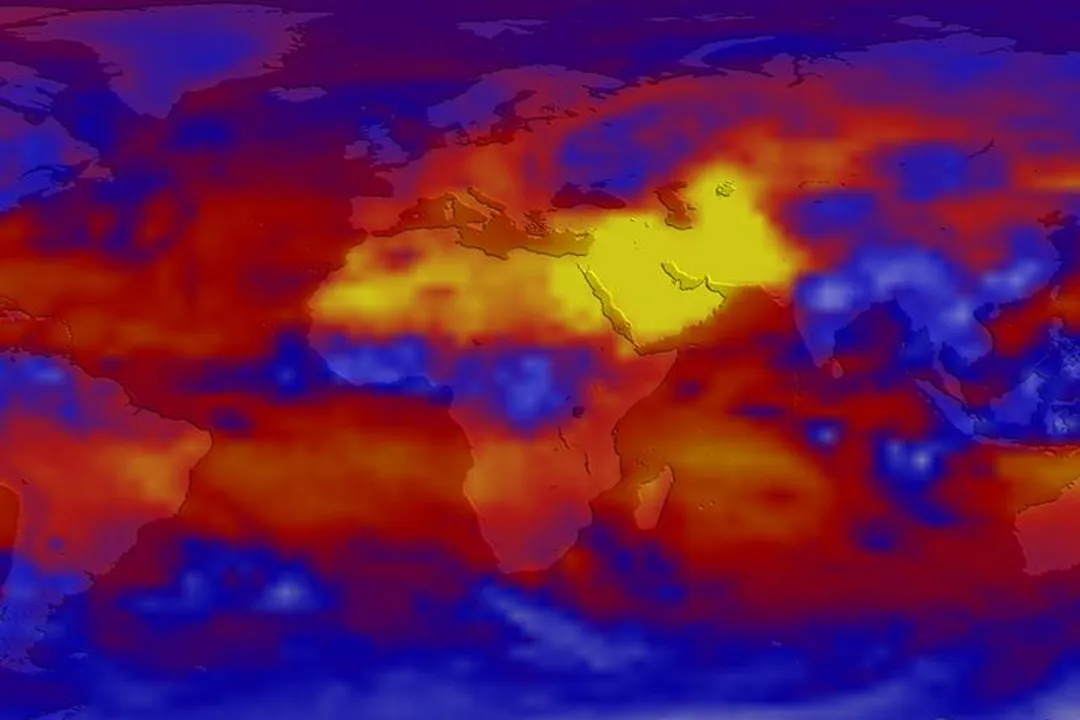
The immediate answer to "the most reflective" often suggests a perfect $1.0$ or $100%$ reflector. In the realm of materials science, achieving this across the entire spectrum of visible light, or even a wide band of wavelengths, proves exceptionally difficult, bordering on physically impossible for solid, conventional materials. Any material must contend with the reality that electrons, when forced to oscillate by an incoming electromagnetic wave, take a finite amount of time to respond, causing a slight phase shift that results in some energy being absorbed rather than perfectly reflected.
However, physics provides specific loopholes where total reflection is achieved. One such phenomenon is Total Internal Reflection (TIR). This occurs when light, traveling inside a medium (like glass or water), strikes an interface with a medium that has a lower refractive index (like air) at an angle greater than a certain critical angle. When this condition is met, $100%$ of the light is reflected back into the original medium. This is the principle that keeps light trapped inside optical fibers. While it achieves $100%$ reflection, it is highly angle-dependent and requires light to already be contained within a medium, meaning it cannot be the source of a standalone, illuminated, perfectly reflective surface.
# Engineered Brilliance

When engineers design surfaces to maximize reflection for optics or thermal management, they move beyond simple polished metals and turn to layered structures. The pinnacle of specular (mirror-like) reflection is generally found in Dielectric Mirrors, often called Bragg reflectors. These are meticulously constructed from alternating thin layers of materials with different refractive indices, such as silicon dioxide and titanium dioxide. By engineering the thickness of these layers relative to the target wavelength, designers ensure that the reflections from each successive interface interfere constructively, boosting the overall reflected signal. In a very narrow, specific wavelength range, these mirrors can surpass $99.9%$ reflectivity, with some advanced designs potentially exceeding $99.99%$. This is why they are the mirrors of choice in the resonant cavities of lasers, where even minuscule energy loss is detrimental.
Metals, though generally less capable than engineered dielectrics in peak performance, offer superior broadband reflection across visible and infrared ranges, and they are more accessible. Silver, when freshly polished and protected from tarnish, can reach reflectivities between $95%$ and $99%$ in the visible spectrum, making it the practical leader for high-quality optical mirrors. Aluminum is a close second, typically offering $88%$ to $95%$ reflectance across the visible band, but it has the advantage of resisting tarnish better than silver and is often used for telescope mirrors. For infrared applications, Gold is often preferred because of its stable, high reflectance (around $97%$) in the IR range, coupled with excellent corrosion resistance.
When comparing these engineered surfaces to natural phenomena, it is interesting to note that while a silver mirror captures nearly $99%$ of the light hitting it, it does so by forcing that light to exit at the exact opposite angle from which it arrived. In contrast, some natural surfaces achieve incredibly high diffuse reflectivity—scattering light in all directions—that rivals these engineered mirrors in their specific application. For instance, pressed Polytetrafluoroethylene (PTFE), often known by trade names like Spectralon, and Barium Sulfate coatings are used as calibration standards because they can achieve hemispherical reflectance values of $95%$ to $99%$ across the entire visible spectrum. It is a subtle but important distinction: a mirror returns a focused image of the light source, while a perfect white standard returns the brightness of the light source evenly distributed across a surface.
One interesting area where nature approaches these engineered feats is in biology. While not a bulk material, the wing covers of the Cyphochilus beetle, a pest from Southeast Asia, exhibit an almost impossible whiteness. Their scales are composed of overlapping structures that are only about half the width of a human red blood cell. These bio-nanostructures optimize multiple scattering of light, making them appear brighter than milk or pearly teeth. While the precise albedo percentage for the beetle's scales isn't universally quoted against metal standards, the structure's efficiency in scattering visible light—essentially acting as an ideal natural diffuse reflector—is a marvel of material optimization, something simple paint cannot match due to the structure, not just the composition.
# The Earth’s Reflective Surface
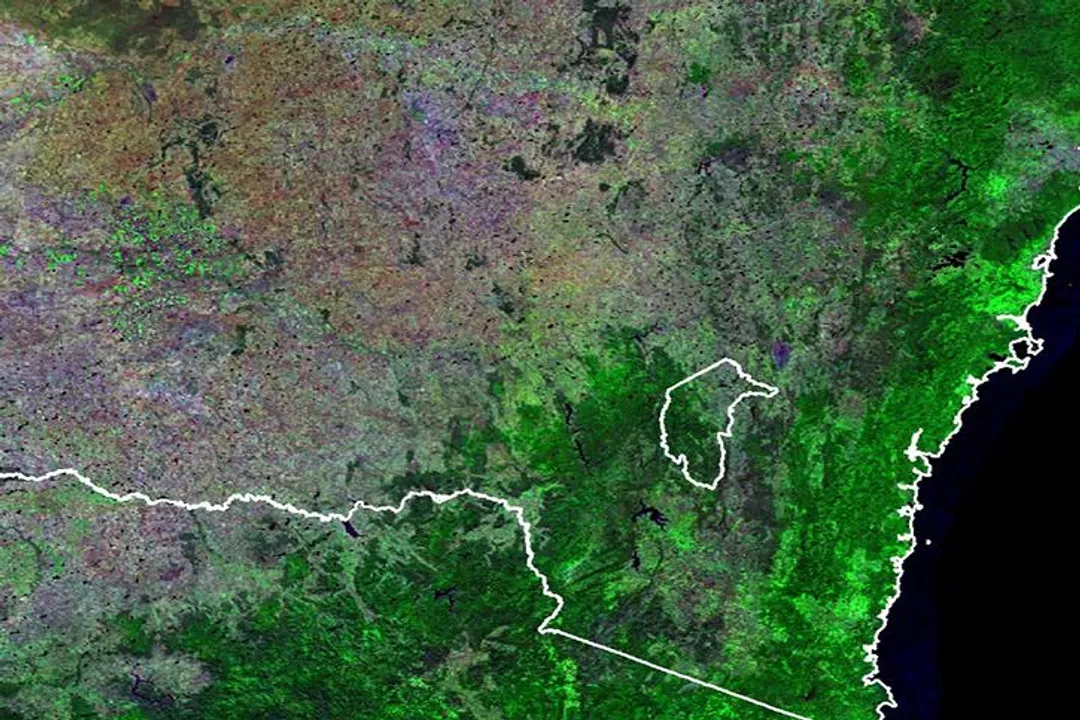
Shifting our focus from laboratory precision to the scale of the planet, the title of "most reflective surface on Earth" belongs unequivocally to clouds and snow/ice fields.
# Glacial Albedo
For a persistent, landscape-level reflector, the cryosphere reigns supreme. Large, bright surfaces like glaciers and sea ice have the highest natural albedo, with values climbing up to 0.7 or 0.8. Fresh snow is the most reflective natural surface we regularly observe, sometimes reaching 0.85 (or $85%$ reflection). This is why a sunny day after a fresh snowstorm feels significantly brighter than a clear day on bare ground—the landscape itself is acting like a giant, slightly imperfect white sheet. The massive ice sheets in Antarctica and Greenland, along with extensive mountain glaciers, are the planet’s natural coolant system, actively reflecting solar energy away from the Earth and into space.
This natural reflectivity has a practical implication for anyone living near a snowy region: eye protection is non-negotiable. The concept of a "goggle tan" is real, stemming directly from this high surface albedo. When an individual looks at a highly reflective surface like snow, they are receiving twice the amount of reflected visible light—once directly from the sun, and a second, very intense dose reflected off the ground—which overwhelms the eye's ability to handle the luminance, leading to damage. This intensity underscores just how much energy is being returned when albedo approaches $0.85$.
# Contrast with Absorption
To truly appreciate the reflective champions, one must look at their counterparts. The open ocean, covering over $70%$ of the planet, is the primary low-albedo surface, reflecting less than $10%$ of sunlight, absorbing the rest to warm the upper water column. Similarly, dense forests have a low albedo, typically around $0.10$ to $0.20$, as they are optimized to capture solar energy for photosynthesis rather than reflect it. Even in urban environments, the dominance of dark asphalt and concrete means many cities contribute to the urban heat island effect by exhibiting albedos as low as $5%$.
# Albedo Dynamics
The reason we track Earth’s reflectivity so closely, using instruments like MODIS and VIIRS aboard NASA satellites, is because the balance between reflection and absorption governs global temperature. This interplay creates powerful feedback loops.
The most discussed is the ice-albedo feedback loop, which is currently accelerating warming. As human-caused warming increases, the high-albedo ice melts, exposing the darker, low-albedo surfaces beneath—rock, soil, or ocean water. These darker surfaces absorb more solar radiation, which causes further warming, which melts more ice, and so on. The Arctic, for example, has seen its average albedo decrease by roughly $1.5%$ per decade since the 1980s, directly contributing to localized warming trends.
The reverse is also true and explains historical climate shifts. During past ice ages, a cooler baseline temperature allowed more snow and ice to accumulate, increasing the overall planetary albedo, which reflected more heat, causing further cooling that sustained the ice age. The stability of the global albedo, historically around $0.3$, is key to maintaining a climate conducive to life.
Thinking about this feedback loop practically reveals a crucial consideration often missed when discussing human-made reflectivity: the difference between front-surface and back-surface mirrors. A standard household mirror has a thin metallic layer (like silver or aluminum) applied to the back of a sheet of glass. While this protects the metal, the light must first pass through the glass, where some energy is inevitably refracted, scattered, or absorbed by the glass material itself, degrading the effective reflectivity. In contrast, the near-perfect laboratory mirrors—like those in a laser cavity—use front-surface coatings, where the reflective layer is exposed directly to the light beam, often with an ultra-thin protective dielectric layer applied on top. For Earth-based reflection projects, like painting roofs white, we are dealing with the latter, diffuse case, but the same principle applies: any layer of material between the incident light and the reflecting agent will introduce loss. Therefore, when considering enhancing urban albedo with lighter materials, one must select surfaces whose top layer is the highly reflective pigment, not simply a coating over a dark base material.

# Applying the Knowledge
Understanding the most reflective surfaces allows us to consider direct interventions, often discussed under the umbrella of geoengineering or climate mitigation. The most direct application involves urban environments. Replacing traditional dark roofing materials and asphalt with high-albedo alternatives—such as white or highly reflective coatings—can modestly increase reflectivity and counteract the localized urban heat island effect. While a white roof may only have an albedo of $0.6$ to $0.8$, compared to black asphalt's $0.05$, the difference in local heat absorption is massive.
For the general reader, this translates into simple, actionable steps: minimizing the amount of dark, heat-absorbing surfaces around the home during warmer months is a direct way to participate in climate mitigation. For example, choosing a light-colored patio stone over dark mulch in an area that receives direct sun, or opting for a light-colored exterior paint when renovating, provides a modest, localized benefit by increasing the immediate surface albedo and reducing the local absorption of solar energy. These small-scale acts mimic the cooling power of the planet's largest reflectors—the ice sheets—by returning incident energy instead of retaining it as heat.
In summary, the title of "most reflective surface on Earth" shifts based on precision and intent. For absolute, wavelength-specific peak performance in a controlled setting, multilayer dielectric mirrors are the champions, approaching $100%$ reflectance. For persistent, large-scale natural reflection, fresh snow and ice are the Earth's best insulators, reflecting up to $90%$ of incoming energy. But for the everyday reality of Earth’s energy budget, the highest reflectivity is found in the sky, among the white clouds and the vast, bright polar caps, whose continued presence is essential for moderating global temperatures.
#Citations
Albedo - NASA Earthdata
Is There a 100% Reflective Surface? : r/askscience - Reddit
What are the most reflective materials on earth? - Quora
What is The Albedo Effect And How Does it Impact Global Warming?
Reflections on albedo: Why it matters - Global Heat Reduction Initiative