What is the difference between K-type and G-type stars?
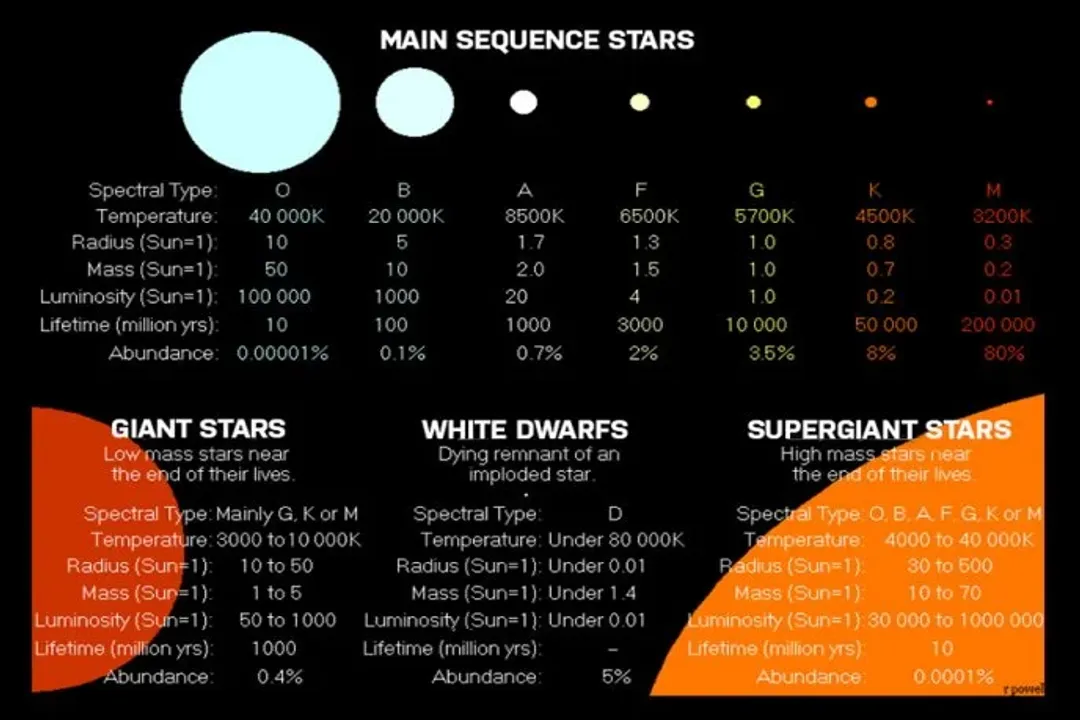
The path to understanding stars involves placing them into neat categories based on observable properties like temperature, mass, and color, a system that helps astronomers make sense of the cosmos. At the middle ground of this classification system, we find the G-type and K-type stars, neighbors on the spectral sequence that appear quite similar to the casual observer but possess fundamental differences in their physics and potential for hosting life-bearing worlds. These two classes represent a significant portion of the stars in our galaxy, setting a baseline for what we consider 'typical' stellar behavior. [1][5]
# Spectral Sequence
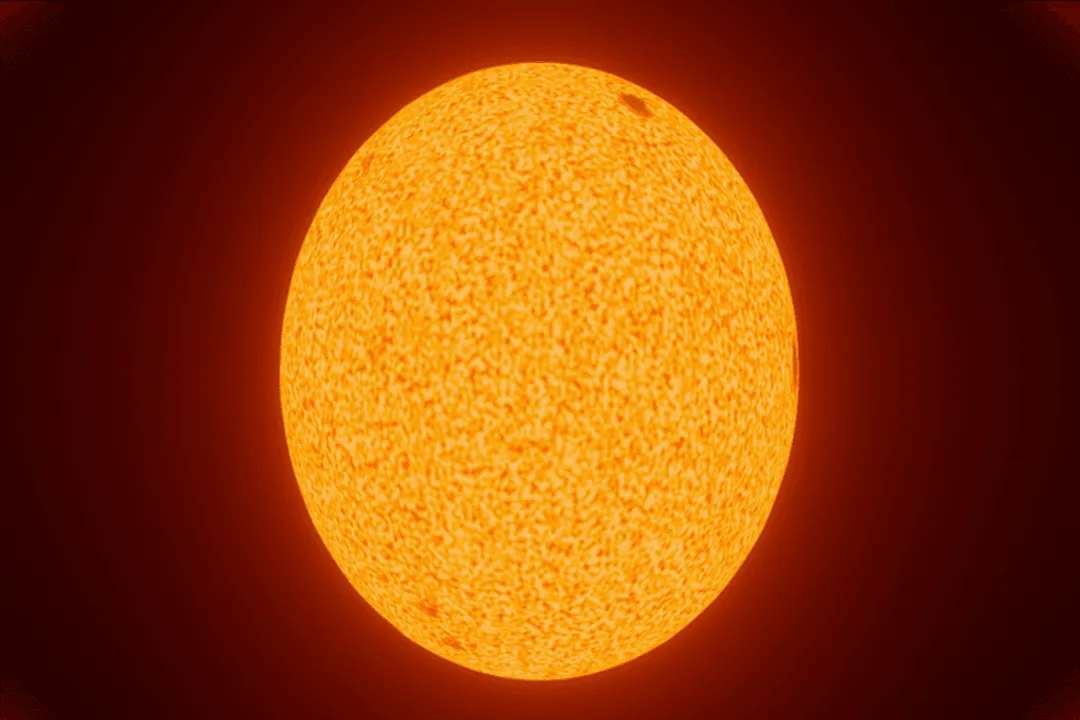
Stellar classification follows a defined sequence, typically ordered from the hottest stars to the coolest: O, B, A, F, G, K, and M. [1][5] This sequence is primarily based on surface temperature. [1] The G-type stars, often called "yellow dwarfs," occupy a specific thermal niche, while the K-type stars, known as "orange dwarfs," sit just on the cooler side of the Gs. [1][3][4] Both types are main-sequence stars, meaning they are actively fusing hydrogen into helium in their cores, which is the longest phase of a star's life. [5][9] Our own Sun is perhaps the most famous example, classified as a G2V star, where the 'G' denotes the spectral type and the 'V' indicates it is a main-sequence star. [1][4]
# Temperature Color
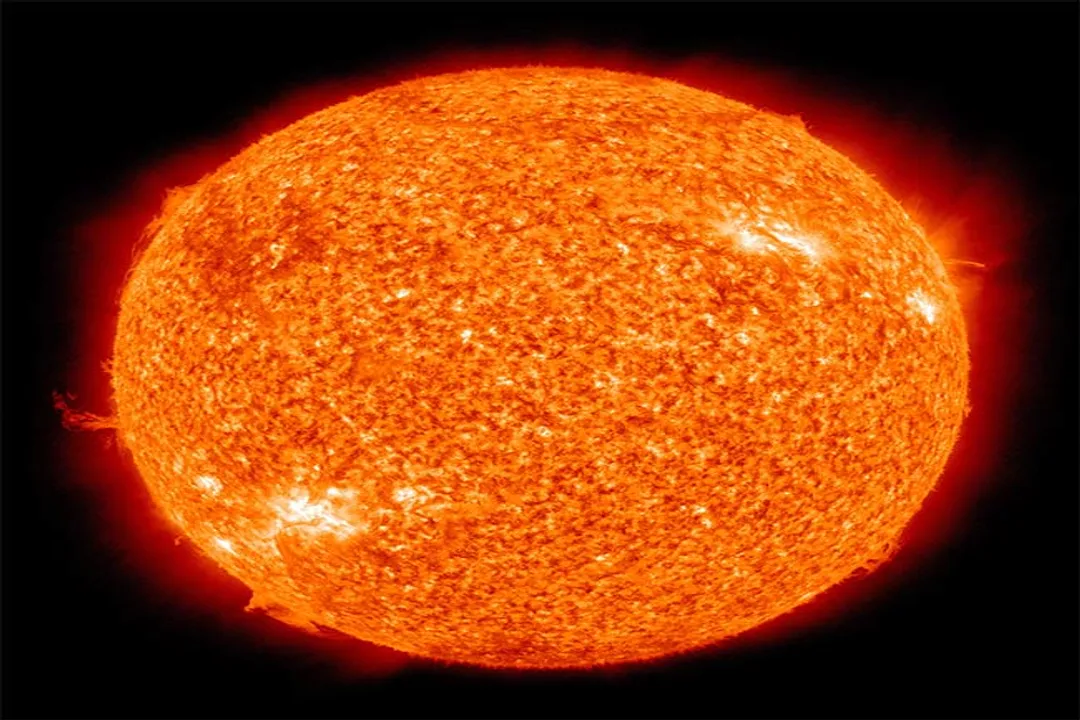
The most immediate difference between a G-type and a K-type star relates directly to their surface temperature, which dictates their visible color. [4] G-type stars typically have surface temperatures ranging between approximately $5,200$ and $6,000$ Kelvin (). [1][8] This temperature range causes them to emit light that appears yellowish-white. [4]
Moving down the sequence, K-type stars are demonstrably cooler, with surface temperatures generally falling between about $3,700$ and . [1][8] This reduction in heat shifts their peak emission to longer, redder wavelengths, resulting in the characteristic orange hue associated with K-type stars. [4] While the difference in temperature might seem small in absolute terms, it translates into noticeable differences in energy output and the spectral characteristics observed through spectroscopy. [1][3]

# Spectral Signatures
Astronomers use the light spectrum—the specific pattern of absorption and emission lines—to definitively place a star in a given class. [1] The distribution and strength of these lines reveal the dominant elements and their ionization states, which are tied to the star's temperature. [1]
For G-type stars like the Sun, their spectra are marked by strong absorption lines from the Balmer series of hydrogen, though not as strong as in hotter A-type stars. [1] Furthermore, they exhibit distinct lines from ionized calcium () and various neutral metals. [1]
As we transition to the cooler K-type stars, the lower temperatures mean that fewer elements are ionized. Consequently, the hydrogen lines are weaker than in G-types, and the spectral lines of neutral metals become more prominent. [1] A key distinguishing feature arises in the cooler end of the K-class: the spectral bands of molecules, particularly titanium oxide (), begin to appear. [1] This molecular signature is a telltale sign that the temperature has dropped low enough for simple compounds to remain stable in the stellar atmosphere, a phenomenon that is much more pronounced in the even cooler M-type stars. [1]
# Stellar Lifespan
The mass of a star dictates its main-sequence lifespan, and since G and K types are usually less massive than the O, B, or A stars, they burn their fuel at a more sedate pace. [9] However, even within these two adjacent classes, there is a meaningful difference in longevity.
G-type stars, being the hotter class, consume their core hydrogen faster than K-types. [7] Our Sun, a G2 star, is expected to remain on the main sequence for about 10 billion years total. [2]
K-type stars, being cooler and less massive than G-stars (on average), have significantly extended lifespans. [2][7] While the exact lifespan depends on the specific mass within the K-class, these orange dwarfs can persist for many tens of billions of years, sometimes exceeding 20 to 50 billion years on the main sequence. [2][7] This vastly extended timeline has profound implications for the potential development of stable planetary systems orbiting them.
# Habitability Niche
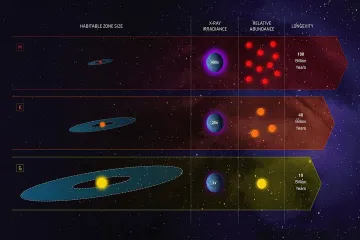
When considering the potential for stable environments where life might evolve, the longevity difference between G and K stars becomes a fascinating point of comparison. [2] G-type stars offer a familiar environment, mirroring our own solar system, providing a long, stable period of billions of years for complex biology to emerge. [2]
However, the K-type stars present a compelling alternative, often dubbed the "Goldilocks" stars for habitability studies because they offer a much longer tenure of stability. [2][7] A civilization developing around a star that lasts 50 billion years has access to significantly more evolutionary time than one orbiting a star lasting 10 billion years. [2] This extended phase is crucial for the development of complex, long-lived, intelligent life forms.
A practical consideration when thinking about these differences is the location of the habitable zone—the region where liquid water can exist on a planet's surface. Because K-stars are cooler, their habitable zones are located closer to the star than the Sun's habitable zone. [2] While this means planets must orbit more closely, the trade-off is often favorable: a planet orbiting a K-star might experience less violent stellar activity (like massive flares) than a planet orbiting a faster-burning, more active G-type star early in its life, offering a gentler incubator over cosmic timescales. [2] This tight orbital arrangement, necessary to maintain warmth around a dimmer star, does introduce the risk of tidal locking, where one side of the planet perpetually faces the star, but the extended lifetime often weighs heavily in favor of the K-type star as the superior long-term prospect. [2]
# Observational Context
For observers looking up at the night sky, the difference in apparent brightness between G and K stars is often stark, depending on their relative distances. [5] Since G-stars like the Sun are the galactic standard, we can use them as a ruler. While there is a range of luminosity within the G class itself, a typical main-sequence K-star generally outputs a fraction of the Sun’s total energy output, often around 20% to 60% of solar luminosity, depending on its exact mass and evolutionary stage within the class. [2]
This relative dimness is why the nearest star to our Sun, Proxima Centauri, is an M-dwarf, and the next nearest, Barnard's Star, is also a cooler dwarf star—the very bright, massive stars are rare, and the Sun-like G-stars are common, but the slightly dimmer K-stars are perhaps the most numerous of the sun-like stars in terms of sheer population count. [4][7] When we look at stellar populations, understanding the K-stars is essential because they represent a vast, quiet majority of the stars that are still stable enough to support established planetary systems, unlike the blazing O and B stars which burn out in mere millions of years. [9]

# Key Characteristics Comparison
To synthesize the distinct attributes of these stellar neighbors, a direct comparison highlights where their differences lie across the physical parameters that define them:
| Feature | G-Type Star (e.g., Sun) | K-Type Star (Orange Dwarf) |
|---|---|---|
| Spectral Class | G | K |
| Temperature Range (K) | ||
| Color | Yellowish-White | Orange |
| Hydrogen Lines | Strong | Weaker than G-types |
| Molecular Bands () | Absent or negligible | Present, strengthens in later K-types |
| Main Sequence Lifespan | Billions of years ( billion for the Sun) | Tens of billions of years ( to $50+$ billion) |
| Habitable Zone | Further out (like Earth's orbit) | Closer in |
The transition from G to K isn't just a slight shift in color; it represents a fundamental change in the star's energy output and, critically, its time on the cosmic clock. [1][7] For those studying the prevalence of life, the K-type stars offer a longer runway, even if their planetary systems require tighter, more carefully balanced orbits to remain warm enough. [2]
# Stellar Atmosphere Details
The subtle atmospheric physics revealed by spectroscopy provides the most granular distinction. The differences in the absorption lines reflect how much energy is available to strip electrons from atoms. In the hotter G-stars, there is sufficient thermal energy to significantly ionize elements like calcium, leading to those strong absorption features. [1]
In the K-stars, the lower temperature means that most metals remain neutral. This shift results in a relative increase in the strength of neutral metal lines compared to the ionized lines seen in G-stars. [1] This simple shift in ionization balance is the direct physical consequence of that temperature gap between the two classes. [8] Observing a spectrum dominated by neutral atom lines rather than highly ionized species immediately signals a star on the cooler side, placing it firmly in the K or M classes rather than the F or G classes. [1]
# Stellar Neighborhood Context
When we look at the density of stars in our local stellar neighborhood, G-type stars are well-represented, but K-type stars are often the majority among the smaller, longer-lived stellar bodies that might host planets for cosmological durations. [7] The Sun’s G2 classification means it burns hot and fast compared to the average star it sits among. If one were to conduct a census of stars within, say, 50 light-years, it is highly probable that the number of cataloged K-dwarfs would exceed the number of G-dwarfs, simply because the K-class is wider, cooler, and thus the population has had more time to accumulate in the galaxy's disk. [7] This prevalence makes the K-type star a crucial subject when modeling the statistical likelihood of finding inhabited worlds, even if the G-type star provides the intuitive template for Earth-like conditions. [2]
#Citations
Stellar classification - Wikipedia
G-type star vs. K-type star. Which stars are best suited to develop ...
How does G,K,M stars differs from each other, and if Kepler 438b ...
Types of Stars | Stellar Classification, Lifecycle, and Charts
Types of Stars - Las Cumbres Observatory
What Is A K-Type Star? And Why Do They Matter? - IFLScience
[PDF] G- AND K-TYPE STARS
Glossary term: K-type Star - IAU Office of Astronomy for Education
Stellar Classification | Beyond Universe Wiki - Fandom