What is hidden inside the earth?

The planet beneath our feet is not a simple ball of rock and molten metal; it is a dynamic realm layered with secrets, where conditions challenge our understanding of physics and biology. While we readily observe the crust, the deep interior remains largely shielded from direct view, forcing scientists to rely on indirect methods like seismology to piece together what lies hidden in the shadows of the mantle and core. [2][4] What has emerged from these distant observations is a subterranean landscape far more varied and surprising than early models suggested.
# Outer Shells
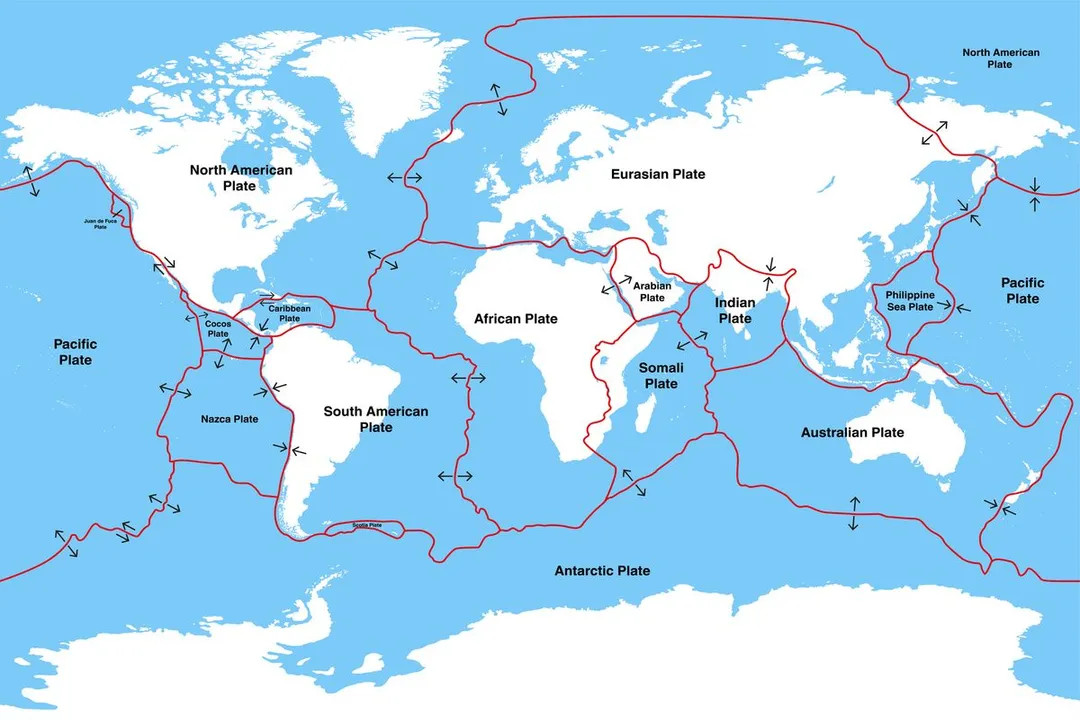
The Earth’s familiar structure begins with the crust, the thin, brittle layer upon which we live, followed by the mantle, a vast region making up the majority of the planet’s volume. [4] This mantle, although predominantly solid rock, behaves plastically over geological timescales, allowing tectonic plates to move across its surface. [4] However, looking deeper into the mantle reveals regions that defy simple categorization based solely on temperature and pressure gradients.
# Deep Anomalies
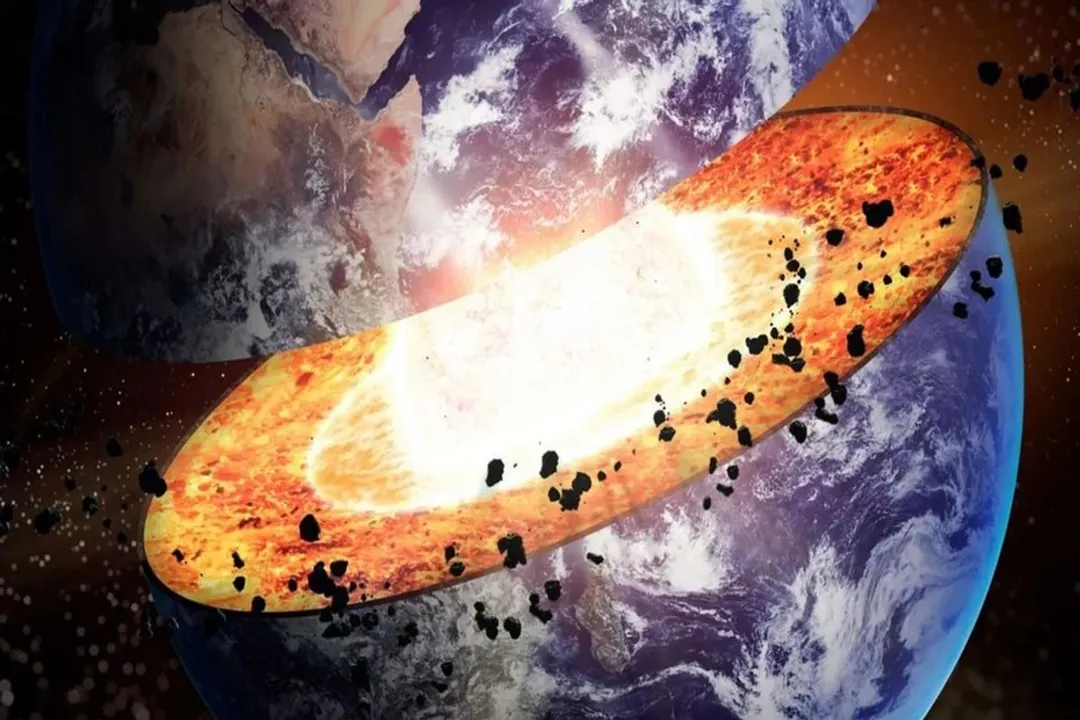
Beneath the familiar plates and convection currents, seismic data reveals massive, puzzling structures that suggest parts of Earth’s history remain physically preserved within the rock. [8] These features, sometimes described as "sunken worlds," are regions within the lower mantle whose density and seismic wave velocity differ significantly from the surrounding material. [8] One interpretation suggests these formations are colossal slabs of ancient oceanic crust and lithosphere that subducted millions of years ago and have sunk deep into the interior rather than fully mixing back into the system. [8]
Even more profound than large, anomalous blocks of rock are the hypothetical remnants tied to cosmic history. There is compelling evidence suggesting that the remains of an ancient planet—a world that collided with the proto-Earth early in its formation—might lie preserved deep within the mantle. [10] This impactor, often named Theia in scientific models, was responsible for creating the Moon, but its debris might not have been entirely homogenized into the Earth system. Instead, dense, chemically distinct remnants of this impactor could be lurking miles below, chemically separated from the bulk of the mantle rock that formed the rest of the planet. [10] When considering the sheer scale of these deep reservoirs—whether they are subducted slabs or the actual debris of a planetary collision—it becomes clear that the mantle is not a uniform mixing bowl, but a layered archive. The chemistry locked within these zones could radically alter our understanding of how terrestrial planets evolve over billions of years compared to simply modeling surface tectonics. [8][10]
# Core Structure
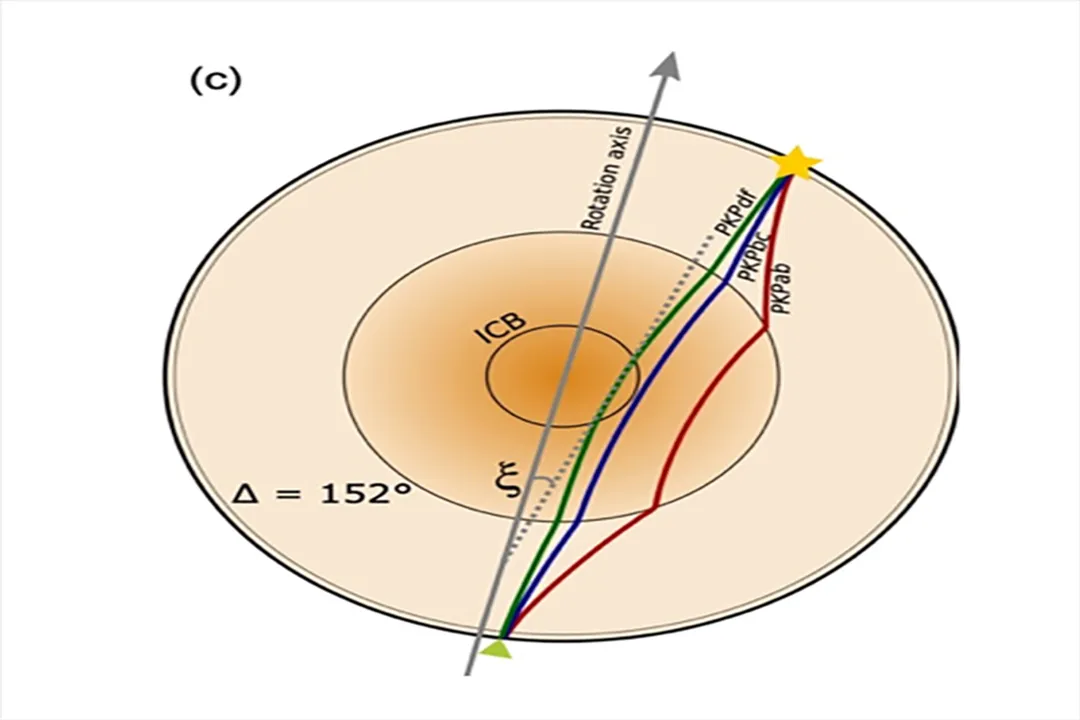
Passing the mantle boundary brings us to the core, the planet’s intensely hot, metallic heart. This region is divided into two parts: the liquid outer core, composed mainly of iron and nickel, whose churning motion generates Earth’s protective magnetic field, and the solid inner core, also iron and nickel, compressed into a ball under unimaginable pressure. [4] Scientists have long studied the transition zone between these two layers, but recent seismic analysis points to surprises within the inner core itself. [6]
Research has detected signs suggesting a distinct, previously unknown structure hiding inside the core. [6] This doesn't necessarily mean a completely different material, but rather a significant organizational change in the iron crystals that make up the solid inner core. [4] One hypothesis suggests that the inner core is not entirely uniform; seismic waves travel through it at different speeds depending on the direction they pass through, implying that the iron crystals are aligned in different ways in the very center compared to the outer shell of the inner core. [4] Analyzing how seismic waves reflect and refract at various angles provides the best clues to these deep structures. [2][6] For example, experiments conducted under extreme pressures, sometimes using facilities like the one at Brookhaven National Laboratory, attempt to recreate the conditions found deep inside the Earth to understand how materials behave, offering context for the seismic data collected across the globe. [3] This layered core structure implies that even at the Earth’s dead center, there are distinct physical regimes that formed at different times or under different thermal conditions. [4][6]
# Deep Lifeforms
While the geological structures fascinate geophysicists, another hidden realm exists where the planet's chemistry interacts with biology: the deep biosphere. [5] Far removed from the sunlit surface, an immense amount of life thrives within the crust and upper mantle, existing in conditions previously thought too hostile for biological processes. [5]
This ecosystem is not supported by photosynthesis. Instead, these organisms—primarily microbes—derive their energy through chemosynthesis, utilizing chemical reactions involving minerals and water deep within the rock strata. [5] Estimates suggest that the biomass of this deep life could be staggering, potentially rivaling the total mass of life found on the surface. [5] Consider this: if the weight of all subsurface microbes equates to the weight of all surface marine life combined, it drastically reframes the total habitable zone of our planet. [5] These lifeforms have evolved to withstand tremendous pressures and temperatures that would instantly destroy surface-dwelling organisms, offering an analog for potential life on other planets where conditions are extreme. [5]

# Mapping the Unknowns
Understanding these hidden components—the ancient planetary fragments, the oddly structured core, and the deep, thriving biosphere—requires sophisticated Earth science tools. Seismology remains the primary method for sounding the deep interior. [2] When an earthquake occurs, the resulting seismic waves travel through the planet, bending and bouncing off interfaces where density, temperature, or composition changes abruptly. [2] By meticulously timing and mapping these echoes across the globe, scientists can create 3D images of these hidden worlds. [2]
The knowledge gained from probing these depths has a practical application in understanding planetary accretion. If Earth’s final form includes chemically distinct materials from an ancient impactor, [10] it suggests that the process of planet building is less like melting ingredients together evenly and more like stacking different, pre-formed blocks whose boundaries persist for eons. [10] Similarly, the organization of the inner core's iron crystals reveals information about the cooling history of the planet's center, a history that occurred in a pressure cooker where time moves differently. [4]
The collective picture emerging is one of immense internal complexity. We have vast, chemically distinct volumes trapped in the mantle, [8] a dynamically layered metallic center, [6] and an independent, vibrant biological community miles below our feet. [5] It is a world within a world, one whose sheer volume and influence on planetary processes—from magnetic field generation to overall heat budget—are only beginning to be accurately accounted for by surface observation. The Earth hides worlds, both geological and biological, that remind us how much remains to be discovered right here at home.
#Videos
There Is Life Hiding Inside Earth - YouTube
Earth Is Trapped Inside a Giant Space Bubble, Scientists Say
Related Questions
#Citations
There Is Life Hiding Inside Earth - YouTube
Massive hidden structures deep inside Earth may explain how life ...
New Evidence for Oceans of Water Deep in the Earth | BNL Newsroom
Secret Realm Hidden at Earth's Core, Scientists Puzzled
Researchers discover a staggering amount of life is hidden deep ...
Scientists Detected Signs of a Structure Hiding Inside Earth's Core
Sunken Worlds in Earth's Mantle Discovery
Scientists discover massive ocean inside earth - Facebook
The Remains of an Ancient Planet Lie Deep Within Earth - Caltech