What happens in a core collapse supernova?
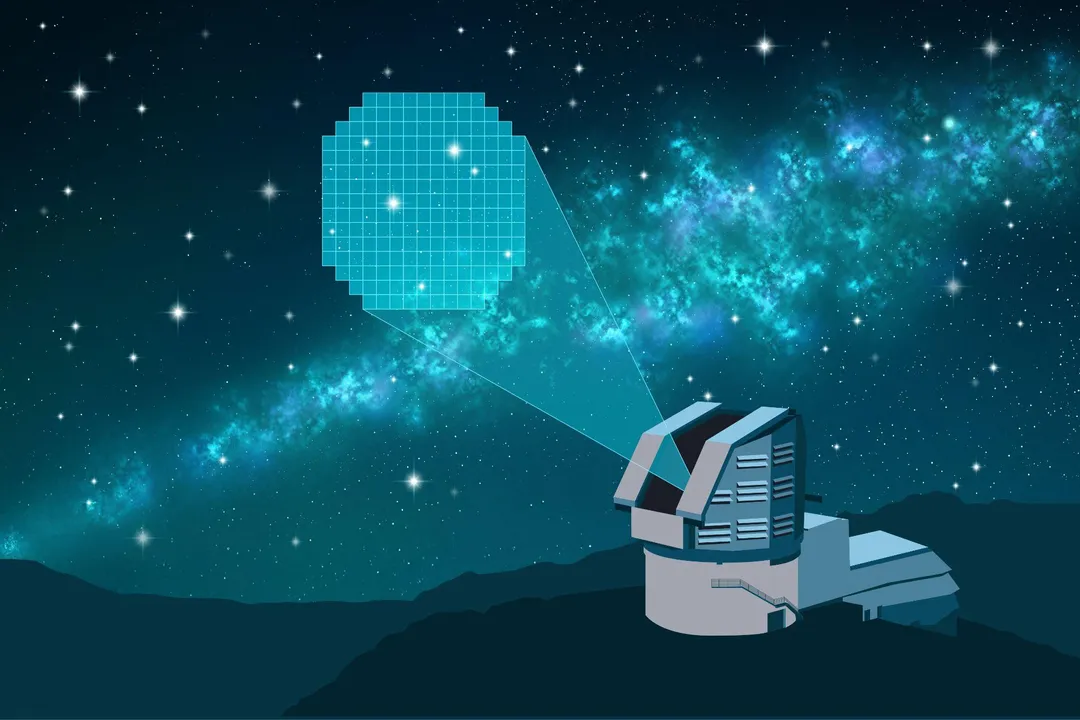
The end of a massive star's life is perhaps the most violent event in the universe, a process culminating in a core collapse supernova. This cataclysmic explosion marks the dramatic death of a star many times more massive than our Sun, fundamentally reshaping the stellar neighborhood and seeding the cosmos with the heavy elements necessary for planets and life. [1][2] It’s not just a big boom; it's a rapid, physics-defying implosion followed by a rebound that shakes spacetime itself. [4]
# Fuel Depletion
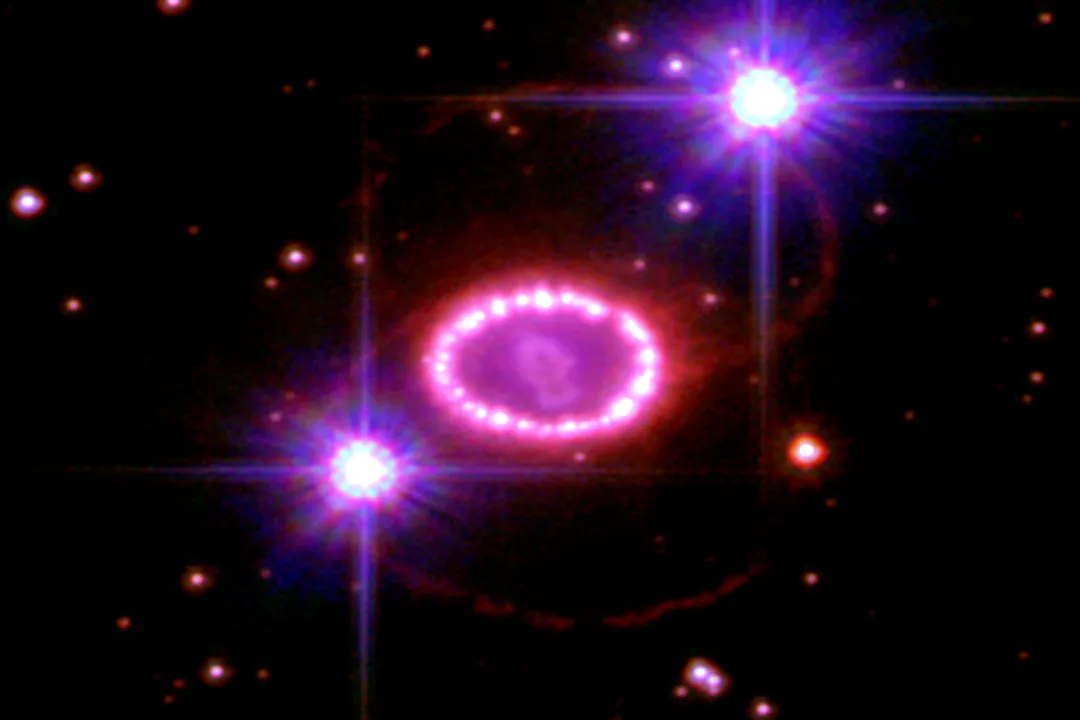
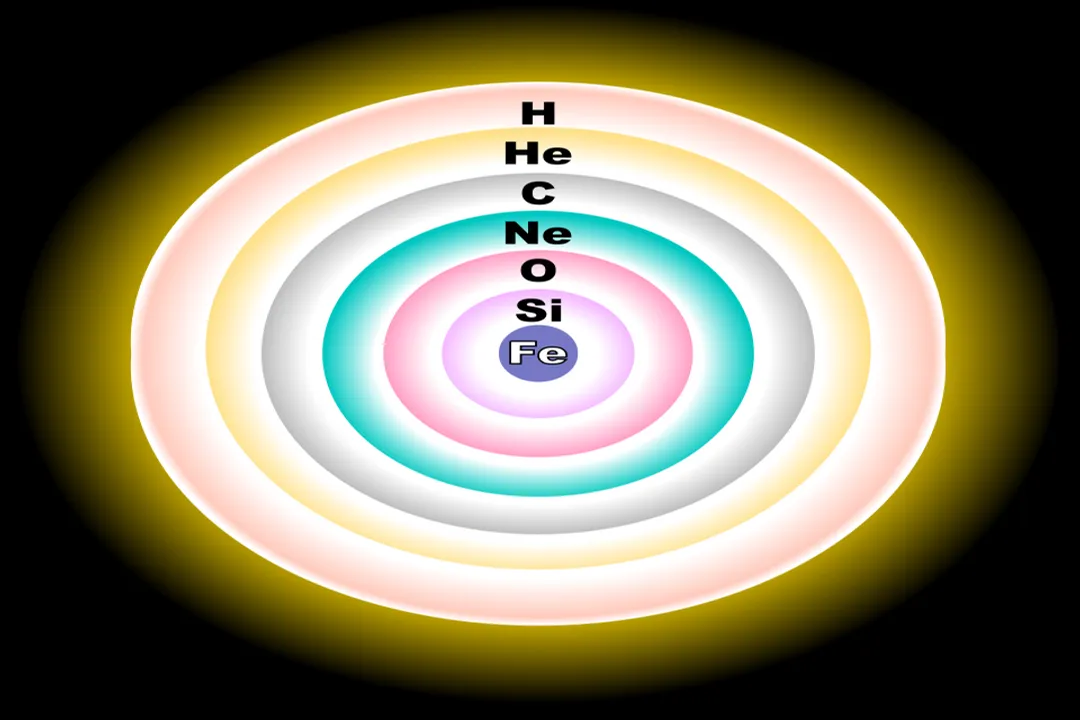
The stability of any star is a delicate balancing act between the inward crush of gravity and the outward pressure generated by nuclear fusion in its core. [1] For stars significantly larger than the Sun—generally those starting with more than eight times the Sun's mass—this life story continues through several distinct fusion stages. Hydrogen fuses to helium, then helium to carbon, and the process continues up the periodic table, creating progressively heavier elements in concentric shells surrounding the center. [1]
The process stops dead when the core begins producing iron. Iron is the cosmic dead end for fusion-powered stars. Unlike the lighter elements, fusing iron does not release energy; it consumes energy. [6] Once the core is composed almost entirely of iron, the star has lost its primary energy source. Without the outward thermal pressure to resist the crushing force of gravity, the star's fate is sealed, initiating the collapse that gives the event its name. [1][6]
This transition is critical. Imagine a car running out of gas on a steep hill; the brakes (fusion pressure) fail, and gravity takes over completely. The massive weight of the outer stellar layers, sometimes exceeding ten times the Sun's mass, suddenly has nothing to counteract its force. [1]
# Iron Core Formation
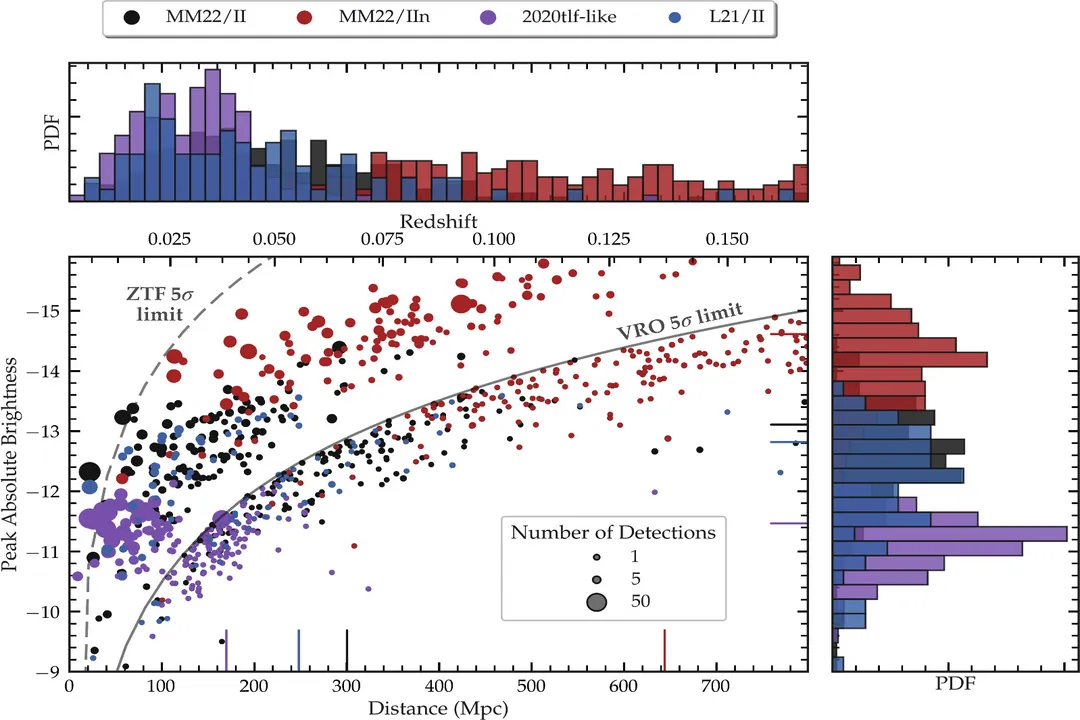
The reason iron terminates stellar life is tied to nuclear binding energy. Energy is released during fusion only if the resulting nucleus is more tightly bound than the input nuclei. [6] Iron-56 happens to be the most tightly bound atomic nucleus. For any element lighter than iron, fusion wins energetically, pushing outward. For anything heavier, energy must be input to force the fusion, meaning the star cannot sustain itself by burning iron. [6] Therefore, the iron core grows until it hits a critical mass, known as the Chandrasekhar limit, though for these massive stars, other factors quickly become dominant as gravity overwhelms electron degeneracy pressure. [6]
Once the iron core reaches a certain size, which might be around $1.4$ to $2$ solar masses, it can no longer support its own weight, even with the quantum mechanical resistance known as electron degeneracy pressure. [6][9] The collapse begins on a timescale that is shockingly fast, often taking less than a second. [3]
# Catastrophic Collapse
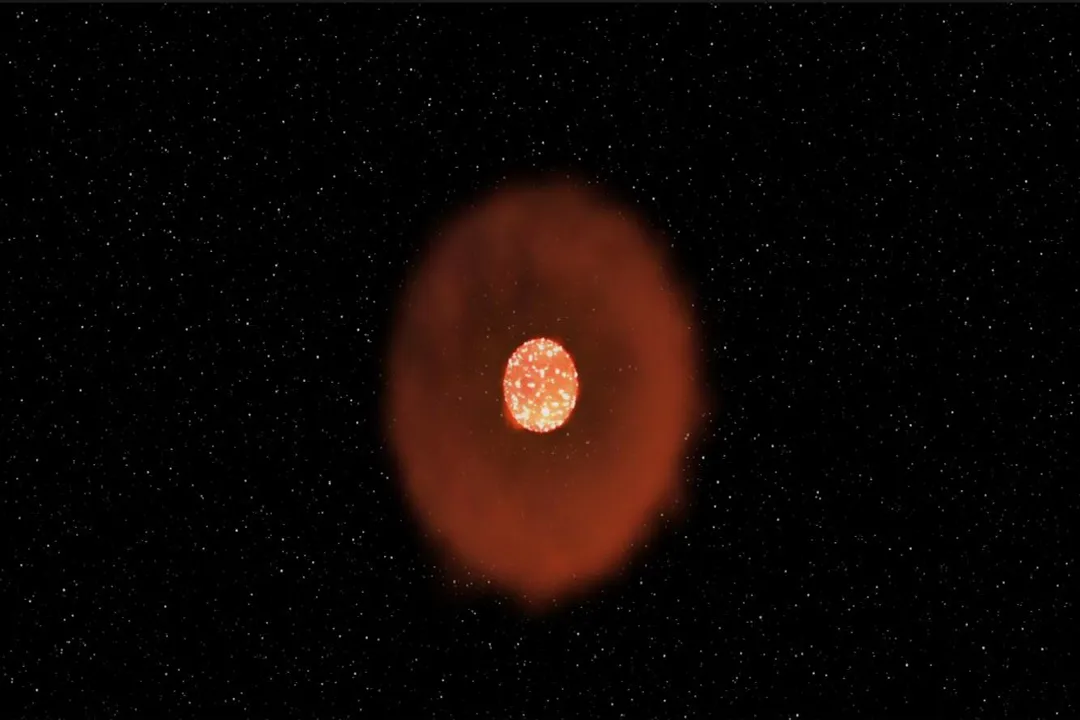
The gravitational implosion is swift and brutal. As the iron core shrinks, its density skyrockets. [6] The speed of the collapse is astonishing; infalling matter can be moving at up to a quarter of the speed of light. [3]
As the density increases, something fundamental changes within the core material. The pressure becomes so immense that electrons are forced into atomic nuclei, combining with protons to form neutrons and releasing a flood of neutrinos in the process—a mechanism called inverse beta decay. [3][6]
This transformation has two immediate, catastrophic consequences:
- The core is instantly stripped of the electrons that provided the primary outward pressure, removing the last line of defense against gravity. [6][9]
- The core transforms from an iron plasma into a dense ball of neutrons. [6]
The collapse halts only when the core has compressed to an almost unimaginable density, where the neutron degeneracy pressure takes over. This pressure, arising from the fundamental inability of neutrons to occupy the same quantum state, is what finally resists gravity’s overwhelming force, but only once the core has been squeezed down to the size of a city, perhaps only $10$ to $20$ kilometers across. [3][6]
To put that density into perspective, if you could somehow take all the matter of our Sun and crush it down to the size of a large metropolitan area, you would begin to approach the state of this nascent neutron star core. If the star is large enough, this stopping point is a proto-neutron star. If the mass stuffed into this tiny remnant is too great, even neutron degeneracy pressure fails, and the core collapses entirely into a black hole. [9]
# Neutrino Burst
The process of turning protons and electrons into neutrons releases an overwhelming number of neutrinos—tiny, nearly massless particles that interact very weakly with normal matter. [3] This burst is the single most energetic event in the entire supernova process, though it only lasts for a brief moment.
Estimates suggest that over $99%$ of the total energy released by the supernova explosion escapes immediately via these neutrinos. [4] In that brief fraction of a second, the neutrino luminosity vastly exceeds the light output of every star in the visible universe combined. [4]
The outgoing wave of neutrinos carries away the gravitational binding energy that was temporarily stored in the collapsing core. [4] While this energy is enormous, the sheer difficulty in coupling these particles to the surrounding matter means that this neutrino flux alone is usually not enough to immediately reverse the collapse and blow the star apart. The neutrinos heat the surrounding layers, but they often fail to push the main shock wave outward effectively at first. [3]
# Shock Revival
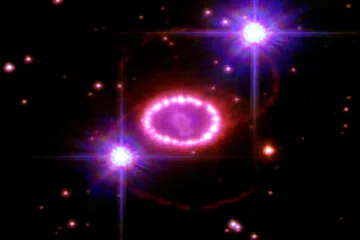
When the collapsing stellar material slams into the incredibly stiff, newly formed proto-neutron star core, it rebounds. This rebound creates a powerful shock wave that initially races outward through the collapsing envelope. [3] However, this initial shock wave often stalls. As it propagates through the dense, infalling material just outside the newly formed neutron star, it loses energy rapidly. The shock stalls, forming a standing accretion shock. [3]
This is where the physics gets incredibly intricate, relying heavily on the massive neutrino outflow. The stalled shock must be re-energized to break out of the star and create the visible supernova explosion. [3]
The consensus suggests that the vast flood of neutrinos leaking out from behind the stalled shock wave deposits just enough energy into the shocked material to reignite the outward momentum. [3][4] This neutrino-driven revival is what ultimately powers the visible explosion. The outward rush of this re-energized shock wave blasts the outer layers of the star into space at tremendous velocities, creating the supernova we observe. [3]
It's fascinating to consider that we can actually detect the precursors to this event. Gravitational wave observatories are tuned to listen for the slight ripples in spacetime generated by the violent, asymmetric implosion and rebound of the core, long before the light from the surface even breaks free. [4] An example of this pre-explosion detection scenario involves teams searching for these gravitational wave signals so that electromagnetic telescopes can be pointed precisely toward the star before the visible explosion is detected by traditional means, effectively catching the cosmic fireworks before the first spark is even seen on Earth. [8] This provides a rare, multi-messenger window into the engine room of the explosion. [8]
# Remnant Formation
What remains after the explosion depends entirely on the mass of the core that collapsed. The resulting stellar remnant is one of the universe’s densest objects. [9]
If the initial progenitor star was not too massive, the remnant will be a neutron star. This object is supported by neutron degeneracy pressure and is incredibly compact, typically just $1.4$ to $2.1$ times the mass of the Sun squeezed into a sphere about $10$ kilometers wide. [9] The physics governing how matter behaves at such extreme compression—far beyond what can be replicated on Earth—is still an area of active research. [9] The material in the core, after the explosion, remains incredibly dense, defying further collapse because of these fundamental quantum forces. [9]
If the initial star was massive enough, or if the proto-neutron star remnant is born with more than roughly $2$ to $3$ solar masses (the precise upper limit, known as the Tolman-Oppenheimer-Volkoff limit, is still being refined), even the resistance of the neutrons is insufficient to halt gravity. In this case, the collapse continues unimpeded, forming a black hole. [9]
# Beyond Standard
Core collapse supernovae are the standard mechanism for creating neutron stars and black holes, but they are also linked to some of the most energetic phenomena in the cosmos: Gamma-Ray Bursts (GRBs). [7]
For very massive, rapidly spinning stars, the core collapse can lead to a specific type of supernova known as a "collapsar" model. [7] In these cases, the intense rotation of the star channels the outflowing energy and material along the rotational axis, often generating ultra-relativistic jets of plasma. When these jets drill their way out of the star, they produce a focused, powerful burst of gamma rays—a long-duration GRB—that can be detected across billions of light-years. [7] This shows that the initial conditions of the star, particularly its spin, dictate whether its death results in a standard Type II supernova or a much more focused, focused jet-driven explosion with a GRB signature. [7]
The sheer power involved in these events means they are responsible for creating and distributing many elements heavier than iron across the galaxy. While fusion stops at iron, the massive neutron flux and energy during the explosion provide the conditions necessary for rapid neutron capture (the r-process), forging elements like gold, platinum, and uranium, which are then ejected into the interstellar medium to become part of the next generation of stars and planets. [1] The remnants left behind—the neutron stars or black holes—along with the ejected material, represent the final chemical and gravitational legacy of a star's long life. [1][2]
#Videos
A Detailed Breakdown of Core Collapse Supernovae - YouTube
#Citations
Core-collapse | COSMOS
Type II supernova - Wikipedia
What is the mechanism that creates the shock wave after ... - Reddit
Core Collapse Supernovae - gravitationalwaves – Syracuse University
A Detailed Breakdown of Core Collapse Supernovae - YouTube
What exactly happens during a core collapse supernova ... - Quora
The Gamma Ray Burst – Supernova Connection
Catching Core-Collapse Supernovae Before They Happen
Why does matter stay collapsed in the core, following a supernova ...