What triggers the initial implosion of a core-collapse supernova and what triggers its explosion?
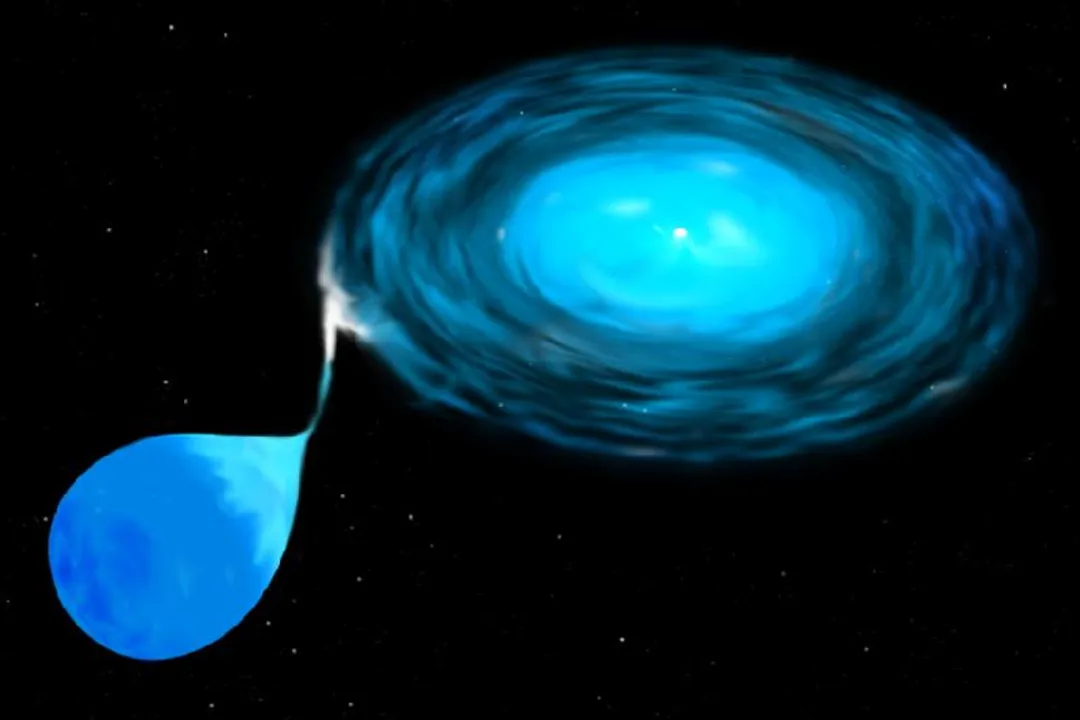
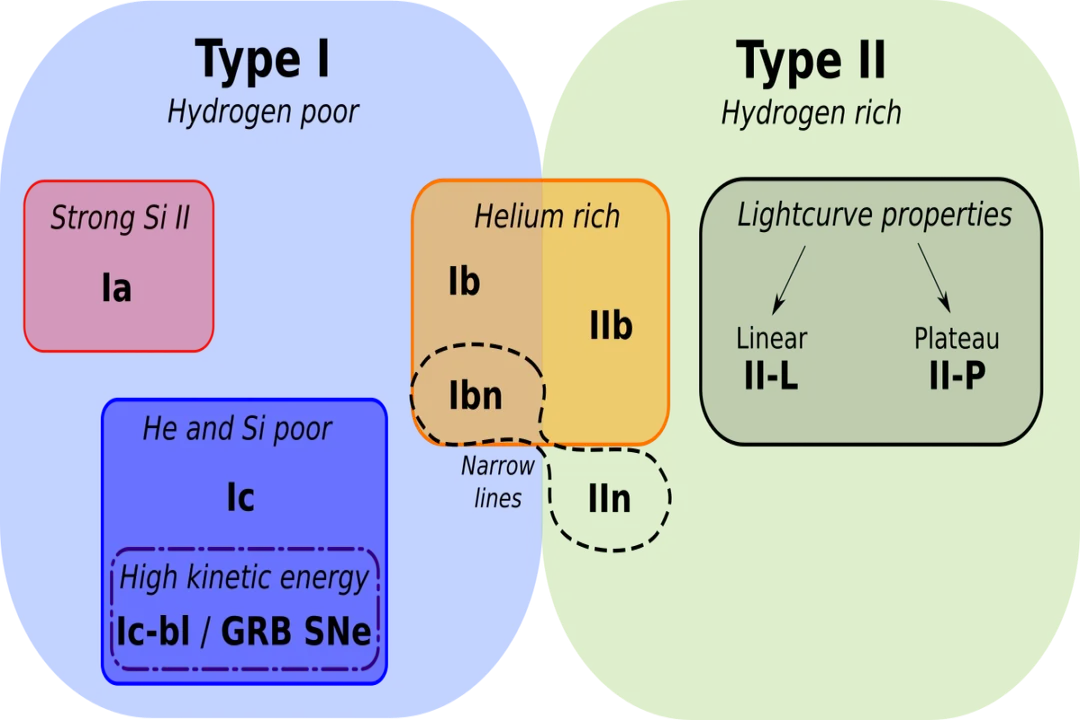
The death of a massive star culminates in one of the universe’s most spectacular and energetic events: a core-collapse supernova. These explosions, typically designated as Type II, Type Ib, or Type Ic, mark the final, violent end for stars significantly heftier than our Sun, generally those exceeding about eight times its mass. [2][5] Understanding this cataclysm requires separating the process into two distinct, yet intimately linked, phases: the fatal implosion that initiates the event, and the mechanism that ultimately reverses this inward crush into an outward explosion. [2][7]
# Iron Core
The story of the implosion begins deep inside the star, where gravity has been locked in a billion-year battle against the outward pressure generated by nuclear fusion. [3] Throughout its main sequence life, the star fuses lighter elements into heavier ones in its core, releasing energy that supports the star against its own immense weight. [2] Hydrogen fuses into helium, which then fuses into carbon, and so on, building up layers like an onion. [2]
This stellar life cycle reaches its terminal point when the core begins producing iron. [4] Iron is the crucial turning point because, unlike all lighter elements, fusing iron does not release energy; it consumes it. [2][4] Once the core is predominantly iron, the star loses its primary energy source—the outward thermal pressure that was counteracting gravity. [4] With the furnace suddenly turned off, the immense mass of the overlying stellar layers has nothing to push against. This loss of internal support acts as the definitive trigger for the catastrophic collapse. [2][4]
# Pressure Failure
For a star of sufficient mass, even the quantum mechanical forces designed to resist complete compression are insufficient once the iron core forms. [4] Normally, the structure is held up by electron degeneracy pressure—a principle stating that electrons cannot occupy the same quantum state, which creates a stiff resistance against further compression. [4] However, as the iron core builds up past a critical mass (the Chandrasekhar limit, though the exact configuration is more complex here), gravity overwhelms this electron pressure. [4]
The collapse is triggered by the inability of the electrons to push back. As the pressure mounts, electrons are forced into the atomic nuclei, combining with protons to form neutrons and releasing a massive burst of neutrinos in the process. [7][8] This process, called inverse beta decay, effectively removes the primary component (electrons) that was providing the degeneracy pressure support against gravity. [7] The core transitions rapidly from being supported by electromagnetism (via degeneracy pressure) to being supported, momentarily, only by nuclear forces. [4]
# Rapid Collapse
Once the pressure support vanishes, the core's descent toward oblivion accelerates dramatically. [7] Gravity takes over completely, causing the core—which might still be roughly the size of Earth—to plummet inward at a significant fraction of the speed of light. [1][7] The implosion is incredibly fast; the core shrinks from an Earth-sized object down to the size of a small city, perhaps only 10 to 20 kilometers in diameter, in a matter of milliseconds. [7]
This is an astonishing transformation in timescale. Consider that the entire life of a massive star, from its birth to the point of collapse, spans millions of years, yet the actual crushing of the core happens faster than a blink of an eye. This rapid compression forces the material to nuclear densities, where the repulsive forces between neutrons suddenly become dominant. [7] When the infalling material slams into this ultra-dense, nascent neutron core, it cannot be compressed further, and the inward plunge halts abruptly. [7] This sudden stop initiates the rebound that sets the stage for the explosion.
# Shock Revival
The direct consequence of the core hitting its own hard, newly formed center is the creation of a powerful outward-moving pressure wave, known as a shock wave. [3][7] However, for a long time, stellar models showed a problem: this initial shock wave rapidly loses energy as it barrels outward through the layers of overlying material that are still falling inward. [7][9] The infalling stellar envelope effectively stalls the shock wave, causing it to freeze or even regress back toward the core. [7][9] If the shock stalls permanently, the result is not a supernova explosion but simply a complete gravitational collapse into a black hole, perhaps leaving behind a strange, hot remnant. [7]
The mechanism that revives this stalled shock wave and drives the spectacular explosion is the emission of neutrinos. [1][8] The initial core collapse generates a staggering number of these nearly massless particles—up to of them. [7][9] While the vast majority stream away unimpeded, carrying off about 99% of the explosion’s total energy, a small fraction of these neutrinos are captured by the dense, hot matter just behind the stalled shock front. [7][9]
This is where the second part of the trigger mechanism comes into play. The absorption of these high-energy neutrinos deposits just enough thermal energy into the stalled shock to re-energize it, launching it outward again with tremendous force. [7][9] This neutrino-driven mechanism is now widely accepted as the key to converting the implosion into a powerful explosion, blasting the rest of the star's outer layers into space at high velocity. [1][8] The energy released by the neutrinos in those initial seconds dwarfs the total energy output of the Sun over its entire ten-billion-year lifespan. [7]
# Final State
The outcome of this process is dictated by the initial mass of the progenitor star. [2] If the star was massive enough, but not too massive, the newly formed remnant will be a neutron star—an incredibly dense object composed almost entirely of neutrons, with a mass perhaps one to three times that of the Sun packed into a sphere only a few miles across. [2] If the remaining core mass after the explosion exceeds roughly three solar masses, however, even the neutron degeneracy pressure cannot halt gravity, and the core continues collapsing indefinitely, forming a black hole. [2]
The core-collapse supernova is thus a precisely timed, two-act play driven by fundamental physics. The first act is the implosion, triggered by the inexorable physics of iron fusion halting energy production and overwhelming electron degeneracy pressure. [4] The second act, the explosion, requires the subsequent, almost impossibly efficient energy transfer via neutrinos to revitalize the rebound shock wave. [7][9] Observing these explosions allows astronomers to probe physics under conditions of density and pressure impossible to replicate in any terrestrial laboratory, offering a window into fundamental strong-force interactions and neutrino physics that shape the heavy element distribution throughout the cosmos. [1][7]
Related Questions
#Citations
Supernova - Wikipedia
Core-collapse | COSMOS
What Is a Supernova? | NASA Space Place – NASA Science for Kids
How does a supernova completely destroy a star?
Supernova - ESA/Hubble
What Causes Supernovae Explosions? - Institute for Advanced Study
Why does a supernova explode? - Physics Stack Exchange
A Brief Introduction to Core Collapse Supernovae
Why do type-2 supernovas involve an explosion? - Reddit