What causes ecosystem collapse?
The breaking point for any natural system, large or small, isn't always a slow, visible fade; sometimes, it’s a sudden, dramatic shift into a fundamentally different state, rendering the ecosystem incapable of performing its usual functions. This is the essence of ecosystem collapse, a process where a system loses its structure, function, and the ability to recover its former state. [1] It represents a profound reorganization, often irreversible on human timescales. [1] Understanding what triggers this failure requires looking at the pressures applied to the system and the inherent resilience it possesses to resist those pressures. [6]
# Defining Collapse
An ecosystem collapse occurs when a significant portion of the community structure changes, leading to a loss of function, such as nutrient cycling or primary production. [1] This shift can manifest in different ways. Some systems may experience gradual degradation, where productivity slowly declines, but others demonstrate startling rapidity. Research indicates that while gradual declines are observable, the actual collapse event can be far quicker than anticipated due to inherent system dynamics. [10] For instance, systems that look stable might hold a surprising number of hidden weaknesses, waiting for a final disturbance to trigger a dramatic unraveling. [6]
The timing of the collapse is a key area of study. Some mathematical models suggest that systems exhibiting high diversity and complex interactions may actually have faster collapse times once a critical threshold is passed, compared to simpler, less connected systems. [3] This challenges a common assumption that more complex systems are always inherently more stable against sudden failure.
# Human Drivers
The current crisis accelerating ecosystem collapse is overwhelmingly human-driven, stemming from how societies interact with, extract from, and alter natural resources. [7] The primary pressures identified as the five main drivers of the nature crisis include habitat conversion, overexploitation of resources, climate change, pollution, and the introduction of invasive alien species. [7]
Habitat loss and conversion, often for agriculture or infrastructure, directly removes the physical space necessary for species to survive and interact. [5][7] Overexploitation, which includes unsustainable fishing, logging, or hunting, reduces the population sizes of key species, sometimes to the point where they can no longer perform necessary ecological roles. [5][7]
Pollution—whether chemical runoff, plastics, or excess nitrogen and phosphorus—fundamentally alters the chemistry of environments like water bodies and soils, creating conditions that are hostile to native life. [5][7] Meanwhile, climate change acts as a systemic amplifier, shifting temperature and precipitation patterns faster than many organisms can adapt, adding stress upon stress. [5][7]
It is important to see these factors not in isolation but as interlocking threats. For instance, climate change can exacerbate the impact of habitat fragmentation, or pollution can make a population more susceptible to disease outbreaks, thereby hastening decline. [2]
# Biodiversity Loss
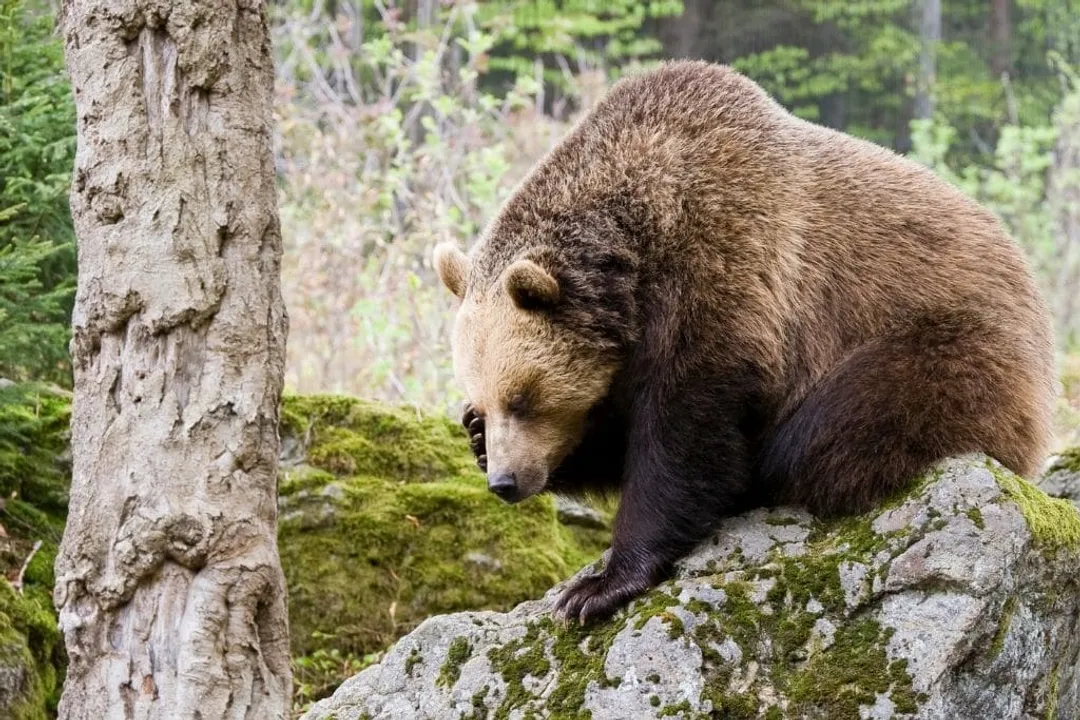
At the heart of many ecosystem collapses lies a critical reduction in biodiversity—the variety of life on Earth. [8] Biodiversity is not just a matter of counting species; it relates to the variety of genes, species, and ecosystems, all contributing to the functional capacity of the planet. [8] When key species are lost, the functions they provide cease, creating vacancies that may not be filled.
A stark historical example illustrating this connection is the Permian-Triassic extinction event, often called "The Great Dying." This mass extinction event, which wiped out the majority of marine and terrestrial species, appears to have been fundamentally driven by biodiversity loss, which then severely hampered the recovery of ecosystems afterward. [4][9] The study of this ancient event shows that even after the initial catastrophic die-off, the ensuing lack of species richness prevented ecosystems from regaining essential functions like nutrient cycling for millions of years. [9] This suggests that the loss of functional diversity following an initial shock is what locks an ecosystem into a collapsed state.
While a forest might lose a few less common insect species without immediately failing, the removal of a keystone species—one whose influence on the environment is disproportionately large relative to its abundance—can trigger a more immediate and visible collapse in structure. [6] The resilience of a system is heavily dependent on the functional redundancy present; if three different species perform a key role, the system can likely withstand the loss of one, but if only one species performs that role, its extinction is an extinction-level event for that function. [6]
# Collapse Speed
The speed at which an ecosystem transitions from a functional state to a collapsed state is often governed by internal feedback loops, sometimes termed "ecological doom loops". [10] These are processes where the initial environmental damage sets off a chain reaction that accelerates the degradation process itself. [10]
For example, in a warming peatland, initial drying may lead to increased microbial respiration, releasing more carbon dioxide, which further enhances warming and drying, leading to a faster release of more carbon dioxide. This self-reinforcing cycle means that the system passes critical thresholds much sooner than if the drivers were only acting linearly. [10] This dynamic is crucial because it means that predictions based on slow, linear rates of environmental change may severely underestimate the time remaining before a system flips into a new, undesirable equilibrium. [10]
When considering the practical management of these risks, we often underestimate the true cost of slow decline. If a coastal wetland slowly loses 2% of its filtering capacity each year over fifty years, it seems manageable; however, that cumulative 100% loss of function arrives suddenly when the threshold is crossed, and the immediate economic and ecological cost of replacing that lost service—like flood defense or water purification—is immediate and massive. [1] This gap between the slow perceived risk and the sudden, high cost of failure is a major hurdle in conservation efforts.
# Risk Interplay
Ecosystem collapse is rarely due to a single pressure acting in isolation. Instead, it emerges from the compounding and interaction of multiple global risks. [2] This interconnectedness means that systems rarely collapse due to a single factor, but rather because several lines of stress intersect, eroding the system’s ability to cope with any single disturbance. [2]
Consider a coral reef system. It might be stressed by local nutrient pollution (Driver 1), which reduces its natural resistance to bleaching events caused by rising ocean temperatures (Driver 2). [2] If an intense storm, exacerbated by climate change, then physically smashes the weakened coral structure (Driver 3), the reef’s capacity to support fish populations (its function) collapses entirely. [2]
The dependency of human societies on functional ecosystems underscores the severity of this issue. [8] Biodiversity provides essential services, including clean water, food, and climate regulation. [8] When these natural systems fail, the services they provide—which are often irreplaceable or require massive technological investment to mimic—are lost, directly impacting human health and security. [8] A common way to conceptualize the stability of these interacting risks is to imagine a Jenga tower, where each block represents a critical ecological service or species interaction. Local pollution might remove a small, seemingly insignificant block near the bottom, which is manageable. However, if climate change weakens the structural integrity of the entire base, removing that same small block can suddenly destabilize the entire structure, leading to catastrophic failure because the underlying support system has already been compromised by other, simultaneous stresses. [2]
# Stability Mechanisms
While the forces pushing toward collapse are numerous, understanding why some ecosystems don't collapse under similar pressures is equally important. [6] Stability in ecosystems is not a static property but a dynamic balance influenced by traits like functional diversity and connectivity. [6] Ecosystems with high functional redundancy—meaning multiple species can perform the same necessary job—tend to be more resilient to the loss of individual species. [6]
Furthermore, the physical architecture of the ecosystem matters. For instance, systems with complex, three-dimensional structures, like old-growth forests or established coral reefs, often provide more niches and support more complex interactions, which can buffer against sudden change. [6] Conversely, simplified systems, such as monoculture agricultural fields or heavily degraded habitats, lack this buffering capacity and are far more prone to sudden state shifts when faced with stress. [6] The degree to which local systems are isolated or connected to larger, healthier populations also plays a role; a connected system has a greater chance of recolonization after a local disturbance, whereas an isolated system, once broken, may remain broken indefinitely. [1]
Related Questions
#Citations
Ecosystem collapse - Wikipedia
Ecological collapse - Global Challenges Foundation
When ecosystems collapse - ScienceDirect.com
Ecosystem collapse 'inevitable' unless wildlife losses reversed
5 Biggest Causes of Biodiversity Loss | Earth.Org
Why Some Ecosystems Collapse Suddenly—And Others Don't
Five drivers of the nature crisis - UNEP
Biodiversity - World Health Organization (WHO)
New Study Reveals Biodiversity Loss Drove Ecological Collapse ...
Ecological doom-loops: why ecosystem collapses may occur much ...