How does smell trigger memory?

The ability of a scent—perhaps the faint aroma of sun-warmed pine needles or the sharp tang of a specific cleaning product—to instantly transport you back to a moment years in the past is one of the most peculiar and powerful human experiences. This isn't mere fancy; the phenomenon of smell triggering memory is rooted deeply in our neuroanatomy, giving the olfactory sense a unique, direct line to the brain structures governing emotion and recollection. [1][5][7]
# Direct Wiring

The key difference between how the brain handles smells compared to other sensory input lies in the routing system. [7] When you see something, hear a sound, or feel a texture, that electrical signal typically travels first to the thalamus, which acts as a sensory relay station, sorting and directing the data to the appropriate cortical areas for processing. [1][5] Smell bypasses this central switchboard entirely. [1][5][7]
Odor molecules inhaled through the nose are first detected by receptors in the olfactory epithelium. [7] These signals travel directly to the olfactory bulb, a structure located at the base of the brain. [7] From there, the signals are immediately routed to two critical areas of the brain: the primary olfactory cortex and, crucially, the limbic system. [7]
The limbic system is an ancient part of the brain associated with emotion, behavior, and long-term memory formation. [1][7] Two components within this system are particularly relevant here: the amygdala and the hippocampus. [1][5][9] The amygdala processes emotions, while the hippocampus is essential for forming new explicit memories. [1][9] Because the olfactory pathway connects directly to these emotion and memory hubs, the resulting memories often carry a heavy emotional charge and feel immediately accessible. [5] This direct neurological connection is why memories triggered by scent are frequently described as more visceral and immediate than those brought forth by sight or sound. [1][5]
# Memory Quality
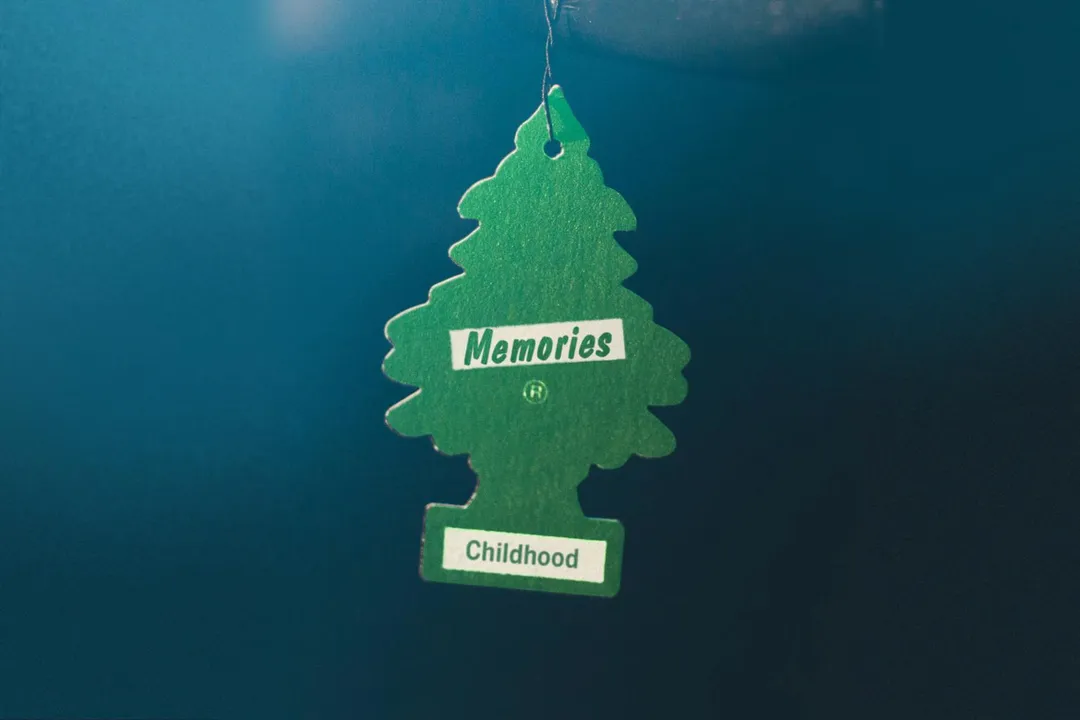
Odor-evoked memories (OEMs) possess distinct characteristics that set them apart from memories triggered by other senses. [7] Research suggests that these scent-linked memories are often recalled with greater vividness and feel significantly older than memories elicited by other means. [1][7] This phenomenon is so consistent that scientists often use scent cues in studies to evoke recollections that participants genuinely feel date back further in time. [7]
Furthermore, these memories are profoundly personal and idiosyncratic. [1] The exact same smell—say, chlorine—might evoke a happy memory of summer camp for one person, but for another, it might trigger an anxious recollection of a childhood swim lesson gone wrong. The specific context surrounding the initial exposure dictates the memory’s flavor. [1][5]

# Emotional Tagging

The intimate connection between the olfactory bulb and the amygdala explains the intense emotional component of OEMS. [1][5] The amygdala acts like an emotional highlighter, tagging experiences with the feeling present at the time of initial encoding. [5] When the scent is encountered again, the brain doesn't just recall what happened; it instantly reactivates the feeling associated with the original event. [9]
Consider the complexity of scent encoding. Unlike a photograph or a song, which are discrete objects, a smell is often diffuse and environmental. A single scent is rarely encountered in isolation; it exists within a complex sensory environment. [5] When that scent returns, it doesn't just recall the scent itself, but the entire scene surrounding it—the temperature, the lighting, the emotional state, and the other subtle sensory inputs present at that moment. [5] Because the scent is linked directly to the limbic system, it brings that entire, emotionally charged snapshot back online. It is less about recalling a fact and more about briefly reliving a feeling attached to a past environment. The strength of this emotional linkage is what often makes these memories feel so potent, sometimes even overriding current emotional states. [1]
This immediate emotional overlay can lead to a fascinating effect: the scent often carries the emotional weight of the past, even if the conscious memory of the event itself is vague or inaccessible. [9] You might feel a sudden wave of nostalgia or unease without being able to pinpoint the exact forgotten moment that caused it. [7]
# Sensory Comparison
While all senses feed into the brain's memory and emotion centers, the olfactory system's unique architecture makes its memory traces more enduring and less susceptible to conscious manipulation compared to, say, visual memory. [7]
For instance, if someone tells you a story about your childhood, you can consciously alter details or doubt the narrative over time. However, the automatic, involuntary nature of olfactory recall seems to bypass these higher-level cognitive filters. [7] A study comparing different sensory cues demonstrated that smell memories frequently elicit a stronger feeling of reminiscence—the feeling that the past event is being experienced again—rather than simple recognition of a past event. [7]
Here is a basic comparison of how sensory input typically routes to memory and emotion centers:
| Sense | Primary Initial Destination | Direct Limbic Access? | Typical Memory Association |
|---|---|---|---|
| Smell | Olfactory Bulb | Yes (Direct connection) | Highly emotional, often feeling "older" |
| Sight | Thalamus -> Visual Cortex | No (Indirect via association areas) | Contextual, detail-oriented |
| Hearing | Thalamus -> Auditory Cortex | No (Indirect via association areas) | Temporal, narrative-based |
| Taste | Thalamus -> Gustatory Cortex | No (Indirect) | Linked closely with smell |
It is worth noting that smell and taste pathways are often closely intertwined, which is why food memories—combining taste and smell—are often among the most memorable experiences we catalog. [7]
# Imprinting and Time
The time elapsed since the original scent exposure strongly dictates the power of the memory trigger. Smells associated with early life, particularly childhood and adolescence, tend to be the most reliable and powerful triggers. [1][7] Since a significant portion of our fundamental emotional learning and association-building occurs during these developmental years, the smells encountered then become deeply embedded anchors in our long-term emotional memory structure. [1]
Imagine trying to actively force a memory through a visual cue versus smelling the faint, specific scent of aged book glue. The latter requires no conscious effort; the memory is simply there, fully formed and emotionally colored. [5] This suggests that the encoding process during a smell event is less about deliberate learning and more about automatic, deep-seated association building within the limbic areas. [7]
If we consider the biological efficiency of the brain, it makes sense that survival-critical sensory information would have the fastest access to the fear/emotion center (amygdala). While the smell of a flower might be pleasant, the brain prioritizes identifying the smell of smoke or spoiled food, demanding an immediate, non-cognitive emotional response. The mechanism that allows us to instantly react to danger is the same one that gives us that sudden, involuntary pang of sadness when smelling mothballs. [9]
This inherent bias toward emotional encoding means that scent memories are often remarkably resistant to decay over decades, much more so than memories associated with specific recent events that we have actively tried to commit to memory through rehearsal.
# Shaping Recollection
Understanding this intimate neurological link offers a perspective on how we can perceive our own memory processes. The immediate, almost involuntary nature of the recall suggests that the memory is not being "found" in a mental file cabinet; rather, the scent acts as a chemical key that re-activates the specific neural circuit that was formed when the odor was first encountered. [5]
This constant background chemical data stream means that our environment is continuously, subtly shaping our long-term emotional landscape without our conscious awareness. For example, if you start working in a new office that uses a specific, unusually potent air freshener, and you experience a period of high stress while there, that air freshener scent is now being chemically coded into your brain as potentially anxiety-inducing—regardless of whether the stressor was related to the smell itself. [1]
A practical application of this knowledge involves conscious encoding. If you are learning complex material, such as studying for a high-stakes exam, consistently pairing that study session with a single, novel, and unique scent—perhaps a specific essential oil like rosemary, which has been anecdotally linked to improved cognition—can serve as an environmental anchor. [1] Later, when you encounter that same scent during the examination setting, the brain may have a faster retrieval pathway back to the associated knowledge. This works because you are deliberately forcing the hippocampus and amygdala to form a strong, multimodal association—the data itself and the unique olfactory tag—making the memory harder to lose than if it relied only on visual or auditory cues. [7] It’s a form of active, intentional, chemical context-setting.
#Videos
How Smells Trigger Memories - YouTube
Related Questions
#Citations
Why (and How) Smells Trigger Memories - Health Cleveland Clinic
Eli5: why is smell so triggering for memories ? : r/explainlikeimfive
How Smells Trigger Memories - YouTube
The Connections Between Smell, Memory, and Health
Here's Why Smells Trigger Such Vivid Memories | Discovery
Olfactory memory - Wikipedia
Why Do Smells Trigger Memories? - Scientific American
Memory and Plasticity in the Olfactory System: From Infancy ... - NCBI
Why Are We so Scent-Imental? Studying Odor-Linked Memories
Has a memory ever caused you to think of a scent (instead ... - Quora