What do they use ferrofluid for?
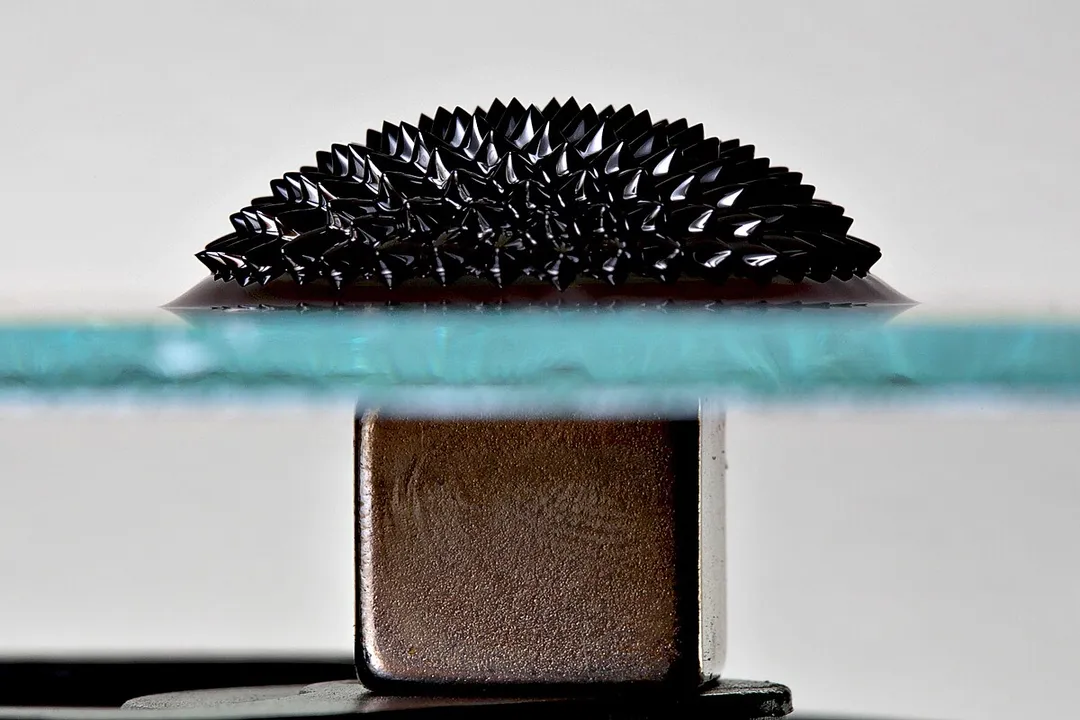
Ferrofluid is a truly fascinating material, appearing almost magical when you watch it react to a magnet, yet it serves critical, practical functions in high-tech engineering and even consumer electronics. At its essence, ferrofluid is a stable colloidal suspension—a liquid that contains extremely tiny magnetic particles suspended within a carrier fluid. [1][9] While it looks like a dark, viscous liquid, its behavior is entirely dictated by external magnetic fields. [7]
# Chemical Makeup
Understanding what ferrofluid is requires breaking down its three primary components. First, you need the magnetic material, typically iron oxide nanoparticles, which are usually on the order of nanometers in size. [1][2] The second part is the carrier liquid, which can be water, an organic solvent, or an oil, depending on the intended application. [1][6] If you were making a simple version at home, you might use kerosene or oil as the carrier. [6]
The third, and arguably most critical component for its function as a fluid, is the surfactant. [2] Without a surfactant, the tiny magnetic particles would clump together due to magnetic attraction and gravity, separating out of the liquid—a process called agglomeration. [1][2] The surfactant coats each nanoparticle, preventing them from sticking to one another and allowing them to remain suspended stably in the carrier liquid, even in the absence of a magnetic field. [2] This stability is key; a successful ferrofluid must resist settling over long periods. [2] The need for such tiny particles and the accompanying surfactant means that the specific engineering of the fluid is highly tailored; for instance, a water-based formulation will require different chemical agents than an oil-based one. [1]
# Magnetic Behavior
When a ferrofluid is exposed to a magnetic field, the magnetic moments of the nanoparticles align with the external field, causing the liquid itself to move and change shape in response to the force. [1][9] Visually, this often results in the formation of distinctive spikes or cones projecting outward from the surface facing the magnet. [7] This characteristic reaction is how ferrofluids were first developed, initially by NASA to manage liquids in zero-gravity environments. [9] While the particles are ferromagnetic, the liquid as a whole is superparamagnetic, meaning it only exhibits strong magnetic properties when a field is present; it does not remain permanently magnetized once the external field is removed. [1]
This immediate and precise response to magnetic input is what makes the material valuable for applications where movement or damping needs to be controlled without direct mechanical contact. Think of it as a magnetically actuated liquid, capable of transmitting forces or absorbing energy without physical linkages.
# Speaker Damping
One of the most common and accessible applications of ferrofluid is found within high-fidelity loudspeakers, particularly concerning the voice coil. [4][2] In a traditional speaker setup, the voice coil moves back and forth rapidly to move the cone and produce sound. This movement generates heat, and if the coil overheats, the speaker's performance degrades, or it can even be permanently damaged. [4]
Ferrofluid is strategically placed in the small gap between the voice coil and the magnet structure. [4] Here, it serves two main engineering purposes. First, it acts as an extremely efficient heat sink. [4] Because the ferrofluid is highly conductive of heat relative to air, it draws thermal energy away from the voice coil and transfers it quickly to the speaker's metal frame, allowing the speaker to handle more power for longer periods without failure. [4][5] Second, the magnetic nature of the fluid provides damping. [4] It introduces a slight, controlled resistance to the voice coil's movement. This resistance helps to quickly stop the coil's vibration after a signal stops, leading to cleaner sound reproduction and improved response at higher frequencies. [4] Speakers utilizing this technology often boast better transient response and durability under demanding playback conditions. [4]
# Vacuum Seals
Another significant engineering application lies in creating seals for systems that must maintain an extreme vacuum, such as in semiconductor manufacturing or specialized scientific instruments. [5] Traditional mechanical seals often wear out or allow minor leakage, which is unacceptable when striving for high or ultra-high vacuum environments. [5]
Ferrofluid seals offer a solution because they rely on magnetic containment rather than physical compression or friction. [5][1] The fluid is held in a specialized groove or channel surrounding a rotating or moving shaft by a permanent magnetic assembly. [1][5] As the shaft spins or moves, the ferrofluid stays firmly seated in the gap, creating a near-perfect barrier that prevents atmospheric gases from leaking into the vacuum chamber and prevents gases trapped inside the chamber from escaping. [5] Unlike a rubber gasket, the ferrofluid itself does not wear down from friction, though the magnetic field must remain strong and properly configured. [1] This magnetic barrier can effectively replace complex mechanical packing systems. [5]

# Heat Transfer
While its cooling function is highlighted in speakers, the general principle of heat transfer via ferrofluid is applicable elsewhere. [5] The core idea remains the same: utilizing the liquid's ability to draw heat away from a source and move it toward a heat sink, often driven by magnetic manipulation. [5] In specialized cooling systems, magnetic fields can be used to actively circulate the fluid, perhaps even creating convection currents where they might not naturally occur, thereby enhancing the rate at which heat moves away from sensitive electronics or machinery. [5] This contrasts with passive cooling methods, suggesting a potential for active thermal management simply by modulating the magnetic field strength and location. [5]
# Specialized Roles
Beyond speakers and vacuum technology, the material fills several other specialized roles that rely on its unique magnetic responsiveness. [2]
- Damping and Vibration Control: While used in speakers for voice coil damping, the principle extends to mechanical systems requiring non-contact damping elements to absorb vibrational energy. [1]
- Lubrication: Ferrofluids can be used as specialized lubricants in systems where traditional oils might break down under extreme conditions or where contamination from solid lubricants must be avoided. [2]
- Bearings: In conjunction with seals, ferrofluids can be used in magnetic bearings to support rotating shafts without physical contact, minimizing friction and wear, which is essential for extremely high-speed machinery. [1][2]
- Microfluidics: The ability to precisely manipulate the fluid with external fields makes it interesting for creating miniature fluidic circuits or controlling droplet movement in research settings. [1]
When we consider the engineering choices involved in these varied roles, the trade-offs become clear. For high-temperature applications like speaker voice coils, an oil-based carrier is preferred due to its higher flash point compared to water. [1][6] Conversely, for applications where the carrier fluid might evaporate or react with sensitive materials, a chemically inert, non-volatile carrier fluid would be chosen, even if it means a slightly lower operating temperature ceiling. [1] This shows that the "ferrofluid" label is less a single substance and more a class of magnetically responsive liquids defined by the intended environment. [2]

# Visual Art
While the functional applications center on physics and engineering, ferrofluid has also gained recognition purely for its aesthetic appeal. [7] Because its surface structure instantly reorganizes when exposed to a magnetic field, it has become a medium for visual artists and science communicators alike. [7] Whether demonstrated in simple educational experiments or incorporated into kinetic art installations, the characteristic spikes and fluid motion provide a dynamic visual experience that is difficult to achieve with standard fluids. [3][7] This visual quality, stemming directly from the interaction between the superparamagnetic particles and the external field, is what initially captures the public imagination. [7]
#Citations
Ferrofluid - Wikipedia
Everything You Need To Know About Ferrofluid - FIRST4MAGNETS
How Ferrofluid Works - YouTube
What is Ferrofluid & Why Use it in Speakers? - Official Fluance® Blog
Ferrofluids Can Defy Gravity For Environmental Engineering
Making Ferrofluids - Magnet Academy - National MagLab
The Attraction of Liquid Magnets - Science Friday
What do we know about ferro fluid? Is it construction tech ... - Reddit
What are Ferrofluids? - MAO LAB