What kind of plants are most easily detected using the Doppler method?
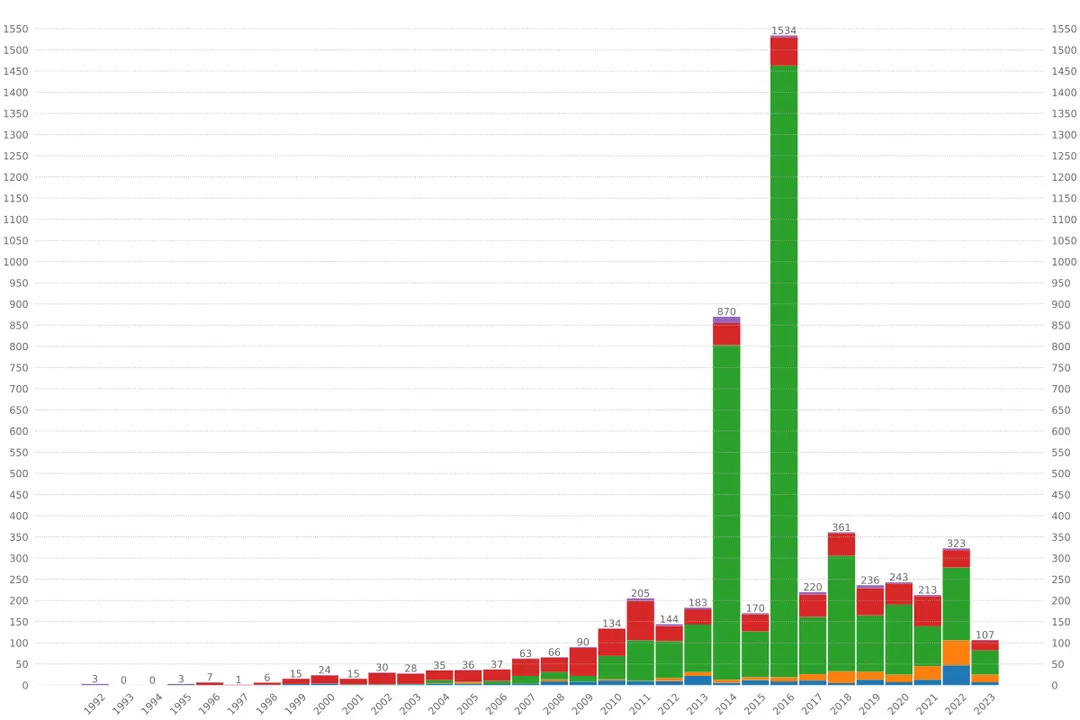
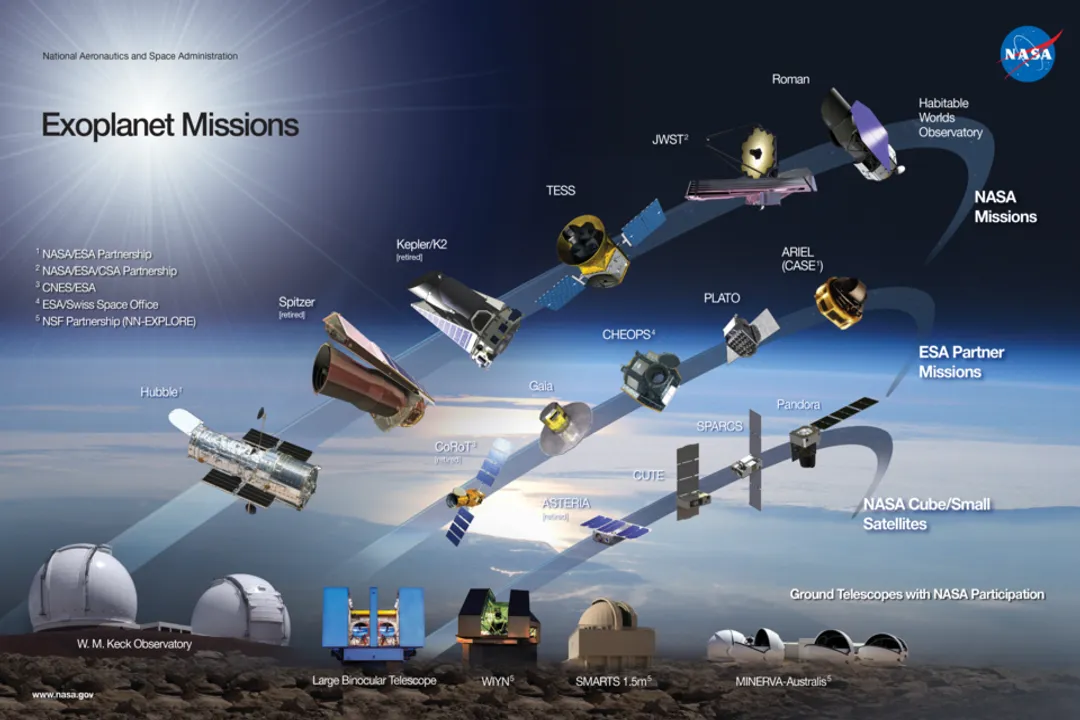
The detection of worlds beyond our solar system, known as exoplanets, relies on clever interpretations of light and motion. Among the various techniques astronomers employ, the Doppler method, more formally called the radial velocity method, stands out as one of the earliest and most reliable ways to spot these distant companions. This technique capitalizes on a subtle, rhythmic dance between a star and the planet orbiting it, a gravitational tug-of-war that manifests as a slight shift in the star’s light signature.
# Star Wobble Physics
The core principle behind the Doppler method is the understanding that a star does not remain perfectly stationary while a planet orbits it. Instead, the planet's gravity causes the star to "wobble" slightly around a common center of mass. Imagine two skaters holding hands and spinning; both move in a circle, even though one object might be much more massive than the other. The more massive object (the star) moves less, but it still moves.
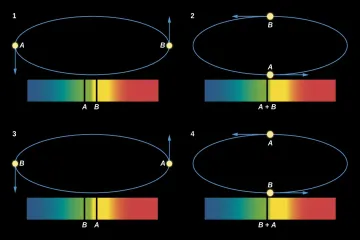
This movement, which is directed toward and away from us, is what the Doppler method measures. As the star moves toward an observer on Earth, the light waves it emits are compressed, causing the light spectrum to shift toward the blue end of the spectrum—a phenomenon called a blueshift. Conversely, when the star moves away from us, the light waves are stretched, causing the spectrum to shift toward the red end—a redshift. The detection of these periodic shifts in the star's spectral lines provides the evidence for an orbiting planet. The measurement of this velocity change is essentially the measurement of the star's radial velocity.
# Optimal Planet Characteristics
When we ask what kind of planets are most easily detected using this precise method, the answer focuses on two key factors: the planet's mass and its orbital distance from the host star. The goal is to find the largest possible wobble signal, as smaller shifts are harder to distinguish from background stellar noise or instrument limitations.
# Massive Worlds
The magnitude of the star's wobble—the radial velocity—is directly proportional to the mass of the orbiting body. Therefore, massive planets generate a larger, more easily detectable gravitational tug on their host stars. A gas giant several times the mass of Jupiter, for instance, will induce a much greater velocity change in its star than a small, Earth-sized world. The larger the planet's mass, the greater the change in the star's velocity, making the periodic redshift and blueshift signals stronger and more obvious against the stellar backdrop.
# Close Orbits
The second critical factor is the orbital period, which is dictated by how close the planet orbits its star. Planets with short orbital periods—those orbiting very close to their suns—are significantly easier to find using the radial velocity technique. A short period means the star completes a full "wobble" cycle (moving away, then moving back toward us) quickly. Astronomers do not have to wait years or decades to confirm a full orbital signature; they might observe the pattern over a matter of days or months. This speed allows for quicker confirmation and characterization of the orbital parameters.
When these two characteristics combine—a massive planet orbiting close to its star—the resulting radial velocity signal is maximized. This configuration produces the strongest and most frequent spectral shifts, making these Hot Jupiters (massive planets with very short periods) the earliest and most frequently discovered exoplanets using the Doppler method.
To put this in perspective, the radial velocity method is typically sensitive enough to detect stars moving at speeds around 10 meters per second or sometimes even less, depending on the instrument. For comparison, the Earth makes the Sun move at about $0.1$ meters per second. The ability to measure shifts this small, which translates to a planet’s influence, is a triumph of modern spectroscopy.
# Measuring the Shift
The actual process involves collecting light from the star and separating it into its constituent wavelengths, creating a spectrum. Within this spectrum are dark lines, known as absorption lines, which correspond to specific chemical elements absorbing light at precise wavelengths. These lines act like cosmic bar codes.
The Doppler method works by measuring how the position of these absorption lines shifts over time. If the star is moving toward us, all the lines in its spectrum will shift slightly toward the blue end; if moving away, they shift toward the red end. The degree of this shift allows researchers to calculate the star’s speed along our line of sight, the radial velocity. The frequency of the observed shift reveals the orbital period.
A key limitation inherent to the radial velocity method, which directly impacts which planets are "easiest" to characterize, is that it primarily measures the velocity along the line of sight. If a planet orbits perfectly in the plane of our vision (an edge-on orbit), the maximum velocity signal is detected. However, if the orbit is face-on, the star’s motion has no component directed toward or away from us, and the method detects nothing, regardless of the planet's size or proximity. This is why the method often provides a minimum mass for the planet, unless other techniques, like the transit method, can constrain the orbital inclination.
# Inferring Planetary Properties
The data collected—the velocity curve—allows astronomers to deduce several fundamental properties about the orbiting body, even without knowing the exact inclination.
The period of the radial velocity variation directly yields the orbital period of the planet. The amplitude (the maximum speed reached) of the curve is related to the planet's mass. When we discuss the "easiest" planets to detect, we are referring to those that produce the largest, most unambiguous amplitude signals over the shortest confirmed timeframes.
Consider a hypothetical scenario in a less-studied star system. If an astronomer observes a star whose spectrum shifts rhythmically every 45 days, they know the orbital period is 45 days. If the maximum observed velocity is a dramatic 50 m/s (which is quite high but detectable by modern instruments), this suggests the orbiting body is quite substantial, likely a Jupiter-sized world, because the gravitational influence is strong. A planet causing a change of only $0.5$ m/s would require much more precise instruments and a much longer observation span to rule out stellar noise, making it significantly harder to confirm.
The ease of detection is therefore a function of signal-to-noise ratio, where the signal is maximized by the planet being large and close.
# Comparison with Other Techniques
The Doppler method has a distinct advantage over another major detection technique, the transit method, which looks for the slight dimming of a star as a planet passes in front of it. The transit method requires an edge-on orbit to work. The radial velocity method, while heavily biased toward large, close planets, can detect planets in orbits that are not perfectly aligned with our view, as long as there is some component of the orbital motion along the line of sight. This difference highlights why having multiple detection methods is essential for a complete census of exoplanets.
The sensitivity of the method to smaller planets is improving, though it still struggles with Earth-analogues, especially those in longer orbits. For instance, detecting an Earth-mass planet orbiting at the distance of Mars would require measuring a velocity change of only about $9$ centimeters per second, a feat that pushes the limits of current technology.
If we were mapping out a theoretical survey, we might expect the initial catalog derived from Doppler surveys to be heavily skewed towards Super-Jupiters and Hot Jupiters—planets that satisfy the 'massive' and 'close' criteria. Planets in wider orbits, similar to Jupiter or Saturn in our own system, require observing periods comparable to or longer than the orbit itself to confirm the periodicity, making them initially harder to tag.
# Data Clarity in Detection
To better visualize the required signal strength, one can think of the detection process as needing to surpass a certain threshold of radial velocity amplitude (). The relationship is mathematically defined, but conceptually, if is high, confirmation is fast.
| Planet Type (Relative to Star) | Expected Radial Velocity Amplitude () | Ease of Detection (Doppler Method) |
|---|---|---|
| Hot Jupiter (Massive, Close) | Very High (e.g., $50$ m/s or more) | Easiest, short confirmation time |
| Neptune-sized (Close) | Medium | Detectable, but requires good signal quality |
| Earth-sized (Close) | Low (e.g., $0.1$ m/s) | Extremely difficult, requires precision |
| Hot Jupiter (Wide Orbit) | High, but very long period | Hard to confirm quickly due to long period |
This table illustrates a key observation derived from the mechanics: the combination of mass and orbital distance is what determines "easiest." A very massive planet far away still has a high value, but the time to detection is increased. The easiest are those with high and short periods. This is why the initial success stories of the Doppler method were these close-in giants.
If we consider the typical stellar noise, which relates to the star's own magnetic activity and pulsations, the requirement becomes clear: the planetary signal must be significantly cleaner and stronger than the star's intrinsic variations. A planet causing a $30$ m/s wobble is much easier to isolate from stellar noise than one causing a $2$ m/s wobble.
# Observational Strategy Insight
For an aspiring amateur astronomer or citizen scientist looking to understand the experience side of detection, the practical reality is that the Doppler method is incredibly time-intensive. It requires repeated, high-precision measurements over long stretches. While the Hot Jupiters are the "easiest" targets theoretically because their signals are strong and frequent, even confirming one requires diligent, consistent observation across multiple nights to track the periodic change in the absorption lines accurately. A single data point is meaningless; the pattern across weeks or months is the proof.
Another factor influencing ease is the star itself. Brighter, quieter stars—stars with low intrinsic stellar activity—provide a much cleaner background against which to measure the minute shifts caused by the planet. A young, magnetically active star creates large, erratic shifts in its own spectrum that can easily mask the subtle, regular shift of an orbiting planet, effectively rendering smaller planets undetectable even if they are massive. Therefore, the easiest stars to use for Doppler planet searches are often old, stable, low-mass stars, as their signals are less contaminated, even if the overall wobble they produce is slightly smaller than that of a Sun-like star.
# Conclusion
The Doppler method, fundamentally rooted in observing a star’s periodic motion toward and away from Earth via redshift and blueshift, has a clear preference for specific exoplanet types. The planets most easily detected are those that create the largest, most frequent gravitational disturbances: massive planets orbiting close to their host stars. While the technology continues to advance, allowing us to probe fainter signals and longer orbits, the initial successes that built this field came from finding those large worlds locked in tight, fast orbits, producing undeniable, periodic wobbles in the stellar spectrum.
#Citations
Chapter 7 - Astronomy Flashcards - Quizlet
What kind of planets are most easily detected using the Doppler ...
Understanding Extrasolar Planets: Visual Detection & Doppler
What kind of planets are most easily detected using the Doppler ...
Methods of detecting exoplanets - Wikipedia
To find a new world, watch how a planet dances with its star