What frequency do aliens use?
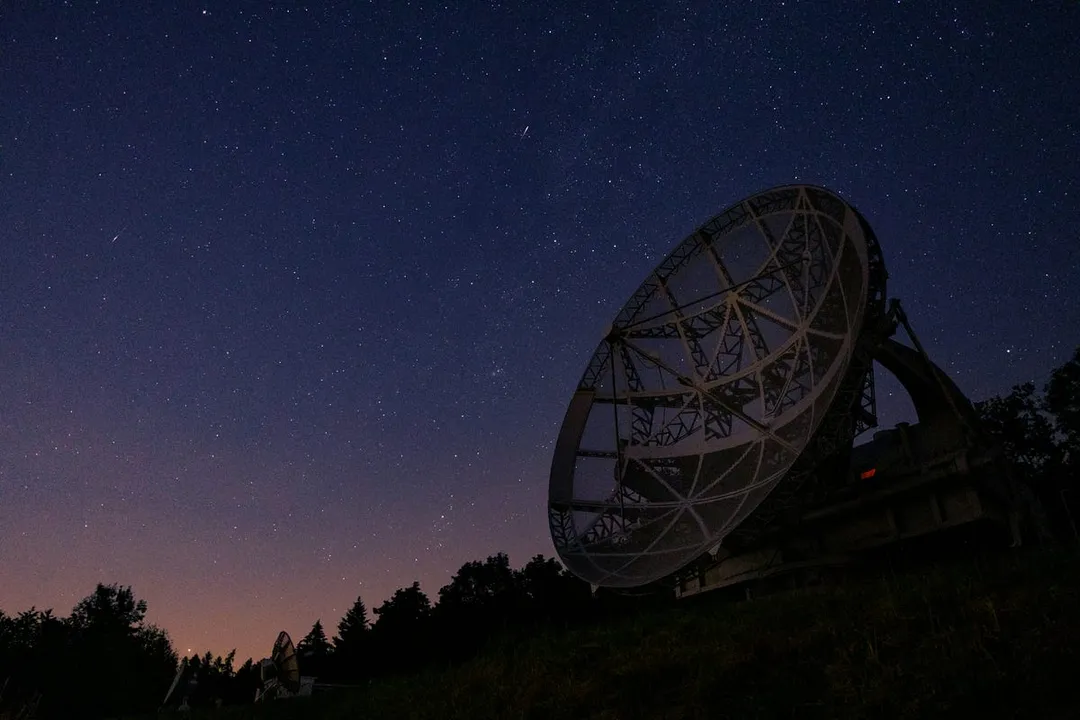
The contemplation of communication from another world invariably leads to the technical question: what frequency might they use? It is a query that moves from pure speculation into the realm of physics and established scientific practice within the Search for Extraterrestrial Intelligence (SETI). Rather than simply guessing at alien technology, researchers focus on universal constants—the physics and chemistry that should be understood by any civilization advanced enough for interstellar broadcasting.
# Hydrogen Line
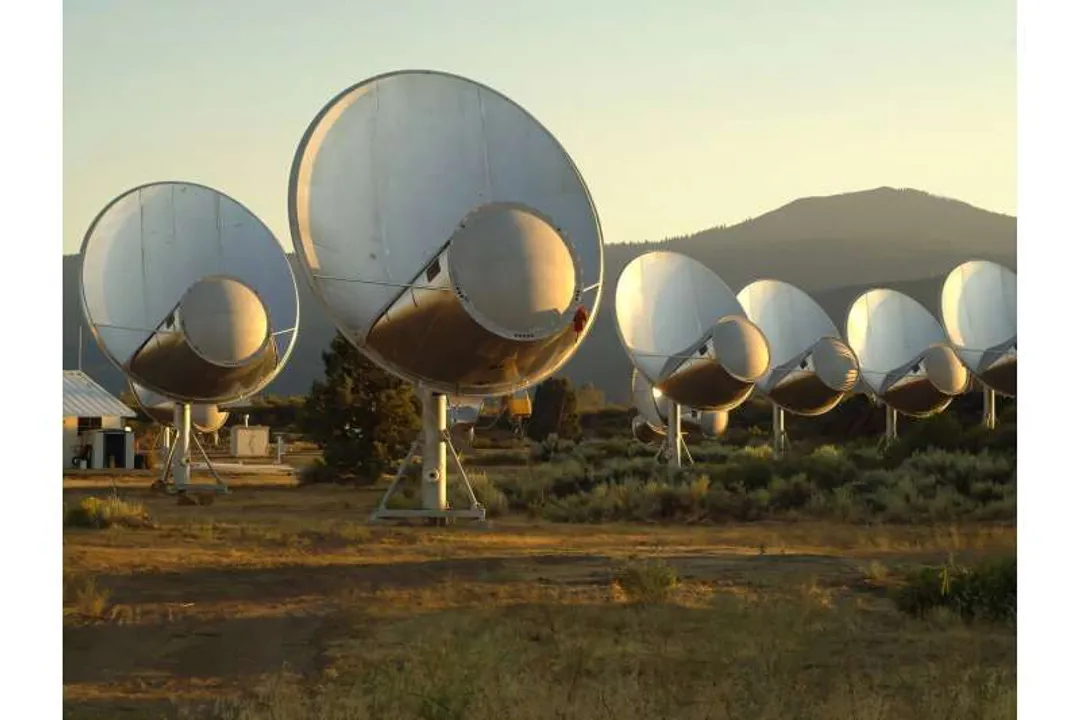
The most discussed and scientifically justified target frequency centers on the emission from neutral atomic hydrogen, often called the hydrogen line. Hydrogen is the most abundant element in the universe, making its physical properties a common language accessible to any technological species. This specific signal occurs at a frequency of approximately 1420.4556 MHz (or a wavelength of 21 centimeters).
This frequency corresponds to the spin-flip transition of the hydrogen atom—a quantum phenomenon where the electron flips its magnetic spin state. Because this emission is predictable and based on fundamental physics, it serves as a natural beacon, suggesting that if one civilization wanted to announce its presence universally, this would be the prime channel.
One of the most famous events in SETI history, the Wow! signal detected in 1977 by the Big Ear radio telescope, was observed very close to this frequency, registering at 1420.4556 MHz. While never repeated, this event cemented the hydrogen line's significance in the public and scientific imagination as a potential candidate for extraterrestrial messaging.
# Water Hole Range
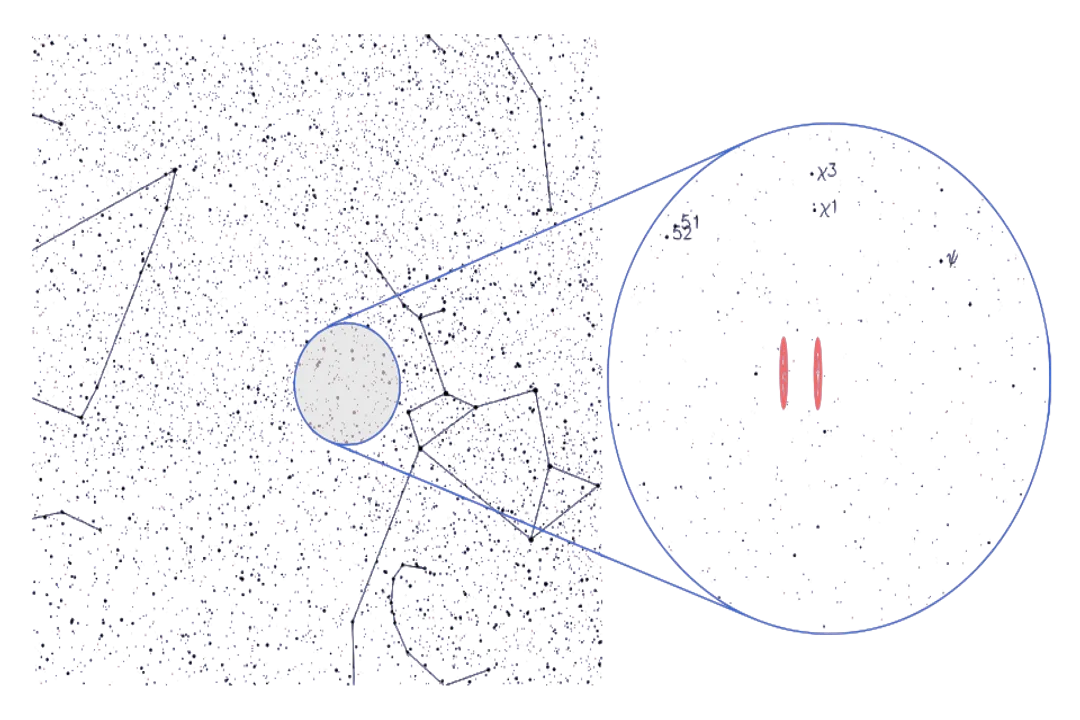
Building upon the hydrogen line, researchers have theorized about a slightly broader channel known as the "water hole". This theoretical band lies between the hydrogen line at 1420 MHz and the spectral line of the hydroxyl radical (), which appears around 1666 MHz.
The logic behind the water hole is compelling: hydrogen () and hydroxyl () combine to form water (). Any civilization capable of interstellar communication likely understands the significance of water, making the quiet spectral region between these two fundamental molecular components an ideal "meeting place" for cosmic conversations. Furthermore, this region is relatively quiet, meaning there is less background noise from the galaxy itself, allowing for weaker, distant signals to be detected. Imagine terrestrial television broadcasting: while you could broadcast on a frequency riddled with military radar or commercial interference, the most effective channel would be one reserved for general public access, clear of static. The water hole serves as the theoretical universal, interference-free channel.
# Current Search Frequencies
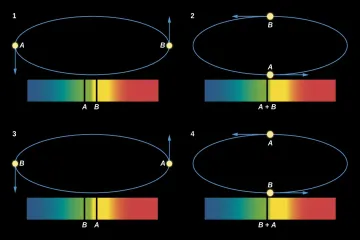
While the hydrogen line and the water hole provide the theoretical foundation, practical searches involve scanning significant portions of the radio spectrum. Early SETI efforts often focused on the S-band and X-band frequencies, roughly from 1 to 10 GHz. This range offers a balance: lower frequencies can require massive antenna arrays to pinpoint a signal's origin due to wider beam widths, while extremely high frequencies suffer more from atmospheric attenuation.
Modern projects, such as those utilizing arrays like the Low Frequency Array (LOFAR), look across wider swaths of the sky and spectrum, though they often return to the key targets. Even government agencies have long considered the mathematics of communication, recognizing that any deliberate interstellar broadcast would likely employ frequencies that minimize both interstellar plasma dispersion and terrestrial interference. When assessing potential frequencies, the primary concern shifts from what they use to how powerfully they transmit.
# Alternative Strategies
The assumption that aliens must use radio waves, despite the theoretical appeal of the 1420 MHz band, is a limitation of our current search methodology. There are numerous reasons why an advanced species might avoid traditional radio frequencies.
# Optical and Laser Use
One alternative suggested is the use of optical frequencies, such as powerful, narrow-band lasers. Lasers offer extremely high data rates and can be focused into very narrow beams, making a directed message highly efficient for point-to-point communication across vast distances. The advantage of this method is the ability to overcome the inverse-square law challenges of radio waves with extreme directionality, though it requires the sending civilization to know exactly where to point the beam—a challenge in itself.
# High Power and Bandwidth
Another factor to consider is the sheer volume of data they might wish to transmit. If an alien civilization is sending a compressed encyclopedia of their knowledge, they might require immense bandwidth, perhaps pushing them toward higher frequencies where more bandwidth is available, provided they can generate the necessary power to punch that signal through interstellar medium noise. Even if they use the hydrogen line, the data rate embedded within that carrier frequency—the modulation scheme—could be staggeringly complex, requiring signal processing capabilities far exceeding our current expectations. Consider that even transmitting the entire contents of the Library of Congress via a narrow radio beam requires considerable time; a truly advanced society might prioritize efficiency over mere accessibility.

# The Receiver's Perspective
It is a vital insight to remember that we are defining the search based on our understanding of physics, much like assuming aliens understand the line. While the hydrogen line is a strong candidate for a passive beacon, a direct communication aimed at Earth might be entirely different.
If an alien species is actively attempting contact with humanity, they would likely conduct reconnaissance first. They would observe our own radio leakage—our television, radar, and early communication signals—and select a frequency that is both powerful and easy for us to distinguish from natural noise. This means they might intentionally choose a frequency outside the standard SETI band simply because our terrestrial activity makes that band temporarily "quiet" enough to transmit on, or they might choose a frequency slightly offset from a known, strong astronomical source to ensure their signal stands out against the background cosmic static. For instance, if they observed our early radio astronomy concentrated around 1420 MHz, they might transmit at 1421 MHz just to be undeniably artificial to our instruments.
The consensus among many who participate in the search is that the initial signal, if one exists, will be narrow-band and powerful, making it clearly artificial when observed against the continuous, broad-spectrum noise generated by stars and galaxies. Whether that power is delivered at 1420 MHz, in the X-band, or via a pulsed laser remains the central, unanswered question driving millions of hours of dedicated observation time across the globe.
#Citations
What radio frequency do you think Aliens use on Earth? - Reddit
Wow! signal - Wikipedia
[PDF] Communication with Extraterrestrial Intelligence
Have You Heard the Frequency We Use to Listen for Alien Signals?
If there were aliens out there, what would be the most likely radio ...
Searching for SETI's Magic Frequency - Supercluster
Can you see aliens in the 10000hz part, in this frequency app?
Search for intelligent aliens explores new radio-frequency realms
Alien radio signals - The Astro Lounge
If you're going to call aliens, use this number - Phys.org