Is partly cloudy better than full sun?
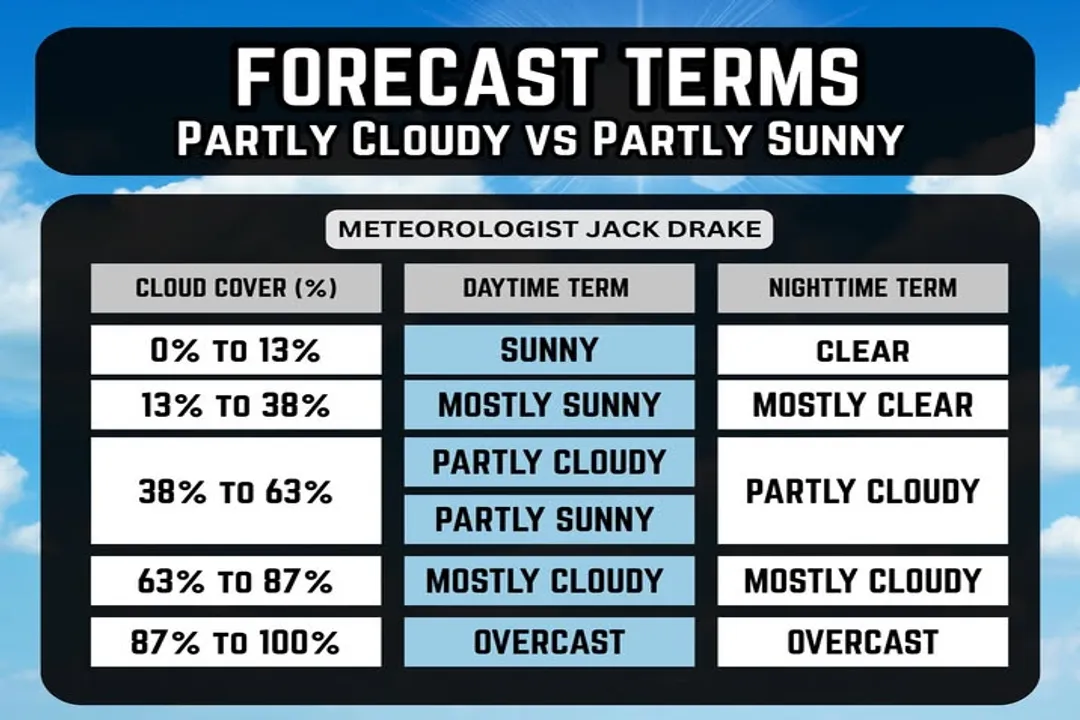
The evaluation of whether a partly cloudy sky is objectively superior to full, uninterrupted sun involves much more than just looking up; it requires considering human comfort, health risks, and even the quality of light for everyday activities. Meteorologically, the distinction between these states often hinges on the percentage of the sky obscured by clouds, leading to confusion when the terms are used interchangeably in daily conversation. [1] Generally speaking, a "partly sunny" designation implies that the sun dominates the sky, while "partly cloudy" suggests clouds are the slightly prevailing feature, often hovering around a 50/50 visual split. [1]
# Defining Coverage
Meteorological agencies apply specific metrics to describe the sky, though these definitions can sometimes vary slightly between reporting bodies. [3] When the sky is described as partly sunny, the implication for the observer is that direct sunlight will be the primary experience, with intermittent breaks in the clouds. [1] Conversely, partly cloudy suggests that while the sun is still present, the cloud cover is substantial enough to frequently interrupt the direct solar beam hitting the ground. Understanding this threshold is key: if the sky is, say, 60% covered by clouds, it leans toward partly cloudy, even if the sun is technically "out". [1] For many people, the preference often lies in the middle ground, seeking the visual interest and moderation that the broken cloud cover provides over the unrelenting intensity of a cloudless day. [6]
# Thermal Sensation
One of the most immediate ways people judge a day's weather is by how warm or cool it feels, which is not always a perfect match for the official air temperature reading on a thermometer. A phenomenon familiar to anyone who has stood outside on a crisp day illustrates this perfectly: a day under full sun will feel distinctly warmer than the exact same air temperature on a heavily overcast day. [5] This difference stems from direct solar radiation. When the sun is out, its rays pass through the atmosphere and directly warm your skin and the surfaces around you, like pavement or dark clothing. [5]
When clouds roll in, even if the air temperature remains , that direct radiant heating is blocked or significantly reduced. [5] The heat you feel is primarily convective—heat transferred from the air itself—rather than radiant. This leads to the perception of coolness, even when the thermometer reports identical readings. [5] For those sensitive to intense heat or who burn easily, this reduction in direct radiant energy makes the partly cloudy condition much more comfortable for extended outdoor periods, offering a natural reprieve that full sun denies. [6]
Consider an afternoon in late spring where the air temperature stabilizes at . On a clear day, exposed skin can quickly become uncomfortably warm, forcing you into the shade. If that same day shifts to partly cloudy, the air temperature might drop only a degree or two due to the clouds, but the felt temperature can drop significantly more because the radiant load on your body has decreased. [5] This trade-off—slightly cooler feeling for the benefit of visual breaks—is a major factor for those leaning toward the partly cloudy preference. [2]

# UV Exposure Paradox
A common, yet dangerous, assumption is that clouds equate to safety from the sun’s damaging ultraviolet (UV) radiation. While clouds certainly mitigate the intensity, they do not eliminate the threat, making the partly cloudy day a tricky scenario for skin protection. [4]
In many conditions, a significant amount of UV radiation can penetrate the cloud layer. Thin or scattered clouds might only reduce UV exposure by 10 to 20 percent, meaning that if the UV Index would have been an 8 on a sunny day, it might only drop to a 6 or 7 when partly cloudy. [4] This slight reduction can lull people into a false sense of security, leading them to skip sunscreen or protective clothing when they might otherwise be diligent. [4] The real danger surfaces when conditions are bright but intermittently obscured. A person might spend an hour outside, thinking they are safe during the cloudy intervals, only to receive a substantial cumulative dose of radiation when the sun breaks through. [4]
If the goal is maximal UV protection, full cloud cover (overcast) is statistically superior to partly cloudy conditions, as the dense moisture and particles in thicker clouds scatter and absorb more radiation. [4] However, when comparing full sun (where everyone recognizes the need for protection) against partly cloudy (where the danger is underestimated), the partly cloudy condition often results in greater accidental overexposure. [4]
For instance, when planning an activity, one might mentally check: If it’s fully sunny, I need SPF 50 and a hat. If it’s overcast, I can get away with SPF 15 and a baseball cap. A partly cloudy day falls into a dangerous middle ground. A practical way to approach this is to treat any day where the UV Index is forecast to be 3 or higher—regardless of cloud cover—as requiring full sun protection measures. You can always reapply sunscreen later, but you cannot undo accumulated UV damage from an hour spent outdoors when you thought the light clouds were offering complete shelter. [4]
# Light Aesthetics
Beyond physical sensation and health, the quality of light dramatically changes the visual environment, which is a major factor for artists, photographers, and those who simply appreciate scenery. Full sun creates what photographers call hard light. This light comes from a single, intense point source, resulting in deep, sharp shadows and high contrast ratios. [9] While dramatic, hard light can be unflattering for portraits because it emphasizes every skin texture and wrinkle. [9]
Partly cloudy skies, conversely, produce diffused light. The clouds act as a massive, natural softbox, scattering the sunlight evenly across the landscape. [7] This light wraps around subjects gently, minimizes harsh shadows, and brings out subtle colors and details in landscapes that might be washed out or obscured by deep shadows under direct sun. [9] This evenness is why overcast days are often cited as excellent for outdoor photography, particularly portraits. [9]
The American Scientist notes that even when direct sunlight is blocked, the light that reaches us on a cloudy day is still sunlight—it has just been scattered in all directions by the atmosphere and the clouds. [7] This difference in quality of illumination often makes the partly cloudy sky more visually pleasing for casual viewing, offering softer tones and more interesting sky gradients than the uniform blue of a completely clear day. [7] It provides visual texture without the visual aggression of unfiltered sunlight.

# Activity Matching
The ideal sky condition often depends entirely on the activity planned for the day. This means that "better" is entirely context-dependent, which explains why no single sky state appeals to everyone all the time. [6]
Here is a quick comparison of suitability based on typical outdoor pursuits:
| Activity | Optimal Condition | Why? |
|---|---|---|
| Sunbathing/Tanning | Full Sun | Maximizes radiant heat and direct UV exposure (requires protection). [5] |
| Portrait Photography | Partly Cloudy/Overcast | Diffused light minimizes harsh shadows and flattering on skin. [9] |
| Hiking/Long Walks | Partly Cloudy | Comfort level is higher due to reduced radiant heat; less risk of quick overheating. [6] |
| Bird Watching | Full Sun (Morning/Evening) | Animals are often more active when temperatures are moderate; less visual clutter than heavy clouds. [3] |
| Solar Panel Output | Full Sun | Direct, unfiltered light maximizes energy capture. [1] |
It's worth noting that for energy generation, the difference is stark. Solar panels depend on direct insolation. Even a 50% cloud cover can drastically cut panel efficiency, making full sun unequivocally better for power generation than a 50/50 mix. [1]
# Human Preference and Mood
When analyzing forums and discussions about weather, the deep-seated human connection to cloud cover becomes apparent. [2] Some individuals find the constant, high-intensity light of a full-sun day to be draining or even oppressive, leading to feelings of restlessness or irritability—a condition sometimes colloquially linked to overly bright environments. [2] For these people, the visual and physical break offered by scattered clouds brings a sense of calm and balance. [6]
Furthermore, partly cloudy days often feel more dynamic. The constant shift between light and shadow keeps the environment visually interesting, a stark contrast to the static brightness of a totally clear sky. [7] This dynamism can be mentally engaging, preventing the visual monotony that can set in during prolonged, unchanging conditions. The choice of "partly cloudy" is often a choice for variety over intensity. [6]
However, the opposite perspective holds just as much weight. For many others, clear, full sun is synonymous with good mood, warmth, and opportunity. In regions where sunshine is scarce, any break in the clouds is celebrated, and the anticipation of cloudiness can be a genuine downer. [2] The sensation of the sun’s direct warmth on the skin is intrinsically linked to feelings of wellbeing and vitamin D synthesis, which are diminished under heavy cover. [5]
A subtle point often missed is the reliability of the weather pattern. A forecast for a truly clear, full-sun day sets a specific expectation. A partly cloudy forecast, however, implies fluctuation. If you are planning an activity that requires several hours of consistent conditions—like painting an exterior fence or hosting a long outdoor event—the uncertainty inherent in a "partly cloudy" forecast, where a shower or heavy cloud bank could move in unexpectedly, makes full sun the safer bet from a planning perspective, despite the heat. [3] The risk of sudden, unwelcome change is higher when the sky is in a mixed state.

# Synthesis and Balance
Deciding if partly cloudy is better than full sun boils down to prioritizing immediate comfort and visual aesthetics over reliable energy output or maximal perceived heat. Full sun provides maximum solar energy, both in terms of potential heat absorption and solar panel efficiency, but it comes with the costs of higher radiant heat load and increased UV exposure risk due to complacency. [5][4]
Partly cloudy conditions offer a moderation of these extremes. They provide visual relief, soften the light for photography, and maintain a lower perceived temperature even if the actual air temperature is identical to a sunny day. [9][5] If your primary concern is being outdoors comfortably for an extended period without getting excessively hot or needing to constantly seek shade, the broken cover is superior. [6] If your primary concern is maximizing a tanning session, optimizing solar power, or ensuring no sudden rain squalls interrupt your day, full sun wins out. [1] The sky itself is a spectrum, and the ideal point on that spectrum shifts based on what you need from the environment at that specific moment.
#Videos
Weather 101: Partly Sunny vs. Partly Cloudy - YouTube
Related Questions
#Citations
Partly sunny vs Partly Cloudy Debate Answers! This is always a fun ...
Cloudy days are better than sunny days : r/rant - Reddit
Did You Know? - National Weather Service
Are the Sun's UV Rays Really Stronger on Cloudy Days? Fact or ...
Does a 60F sunny day really feel warmer than a 60F cloudy day?
Why partly cloudy or mostly sunny is better than full sun (snow ...
Sunshine on a Cloudy Day | American Scientist
Weather 101: Partly Sunny vs. Partly Cloudy - YouTube
Sunshine vs. Cloudy Days | codyfarrallphotography.com