How does the Sun affect the seasons for kids?

Imagine looking out your window right now. Maybe the trees are bare, or perhaps they are covered in bright green leaves. Maybe it feels warm enough for shorts, or maybe you need a heavy coat. These big changes we call seasons—winter, spring, summer, and fall—happen because of our home, planet Earth, and its relationship with the giant star we see every day: the Sun. [4][7]
It’s a common idea that seasons change because the Earth gets closer to the Sun in the summer and farther away in the winter. That sounds logical, right? More heat when we are closer! However, this is actually one of the biggest mix-ups about seasons. The real secret lies in something much simpler and steadier: the way the Earth is angled as it travels around the Sun. [2][3][6]
# Earth Orbit
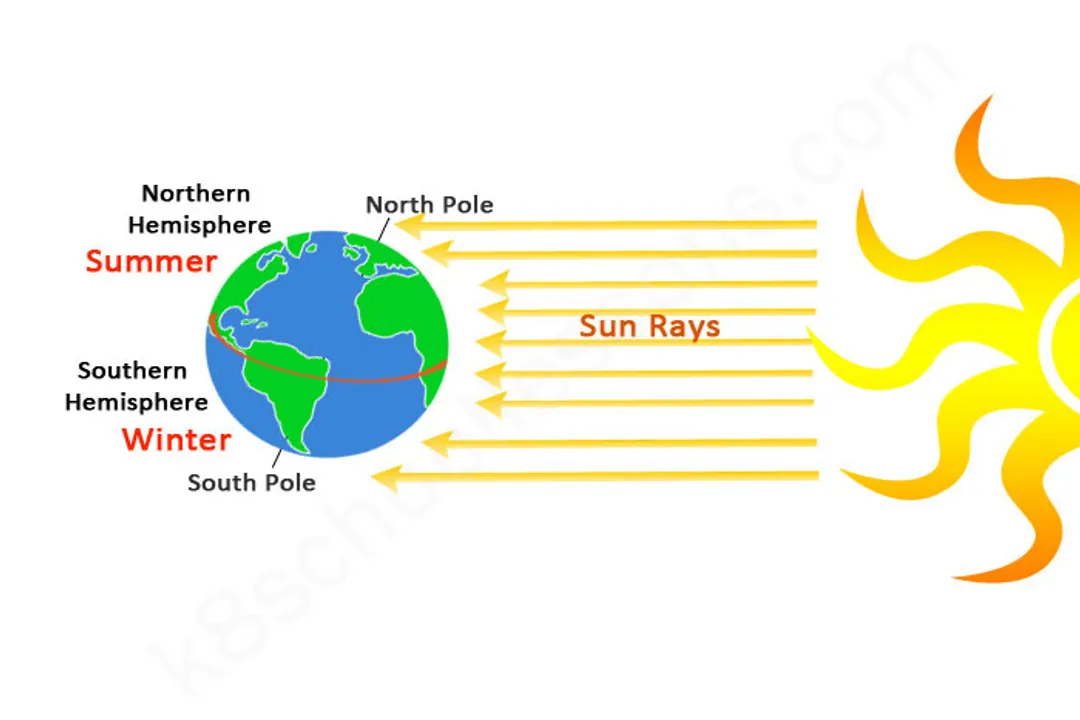
Our planet does two major things constantly. First, it spins around, which is what gives us day and night. [3] Second, it circles the Sun in a path we call an orbit, which takes about one whole year to complete. [3][6] Think of the Earth like a toy car slowly driving in a giant circle around a lamp. That entire trip around the Sun is what defines our year. [6]
The Earth does not orbit in a perfectly straight-up and down position relative to its path. Instead, it has a permanent lean, or tilt. This tilt is super important. Scientists have measured it, and the Earth is always tilted at an angle of about 23.5 degrees. [3][6] Imagine you were riding a bicycle and leaning slightly to the left; no matter where you rode on the track, you would keep that exact lean. The Earth does the same thing in space. [3]
# Constant Tilt
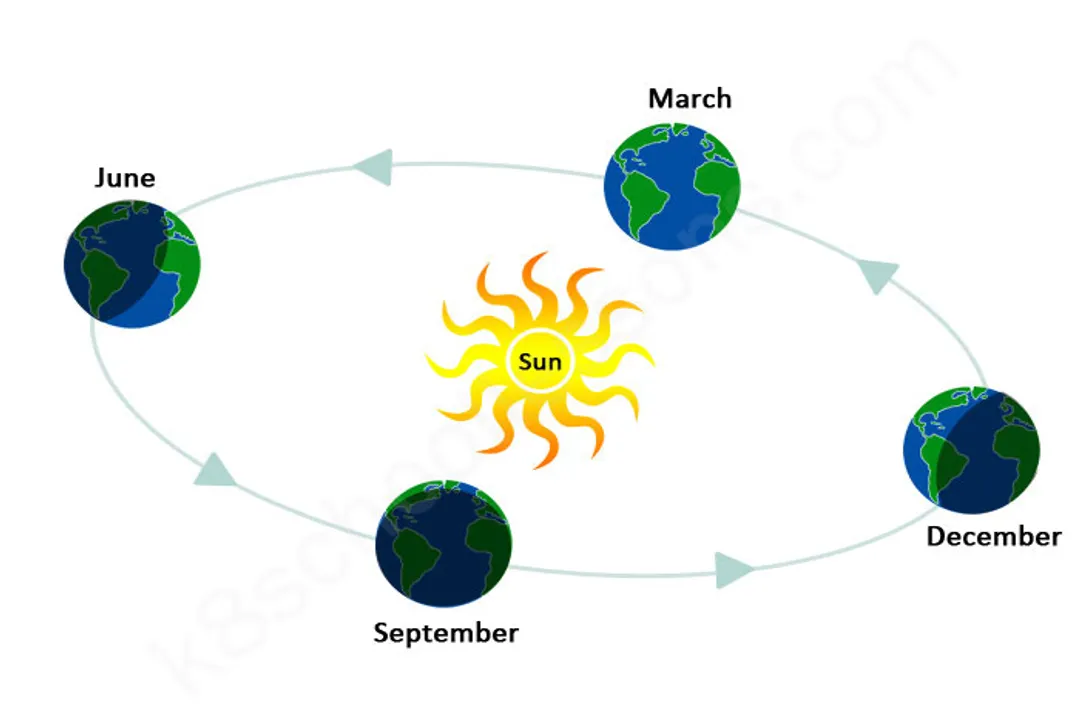
This constant tilt is the main reason we experience distinct periods of warm and cold weather. [2][7] As Earth travels along its year-long path around the Sun, that constant 23.5-degree lean means that sometimes one half of the planet is leaning toward the Sun, and sometimes it is leaning away from the Sun. [3][6]
Let’s look at this from the perspective of the Northern Hemisphere (where many kids live, like in North America or Europe). When the Northern Hemisphere is tilted toward the Sun, that area gets more direct rays of sunshine. This is when we experience summer. [2][7]
Six months later, when the Earth has moved halfway around its orbit, the same Northern Hemisphere is now tilted away from the Sun. During this time, that part of the Earth receives less direct sunlight, and we get winter. [2][7] The Southern Hemisphere experiences the opposite seasons at the exact same time because of this same tilt! When it's summer up north, it's winter down south, and vice-versa. [3]
# Sunlight Angle
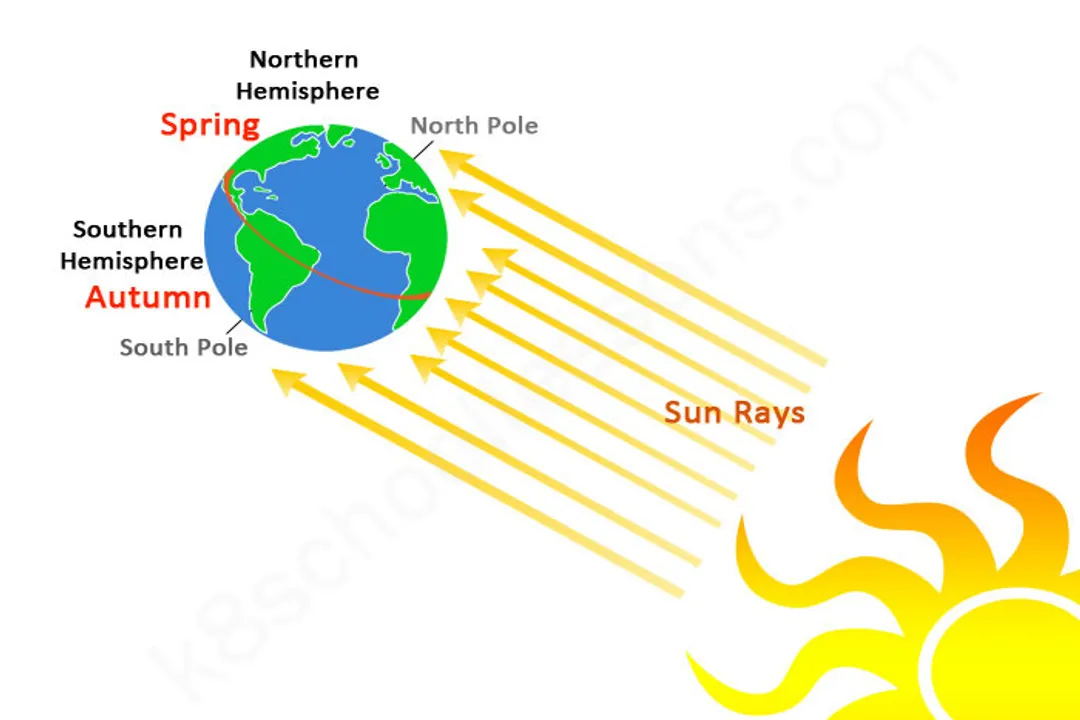
So, what does "more direct" sunlight really mean? It has everything to do with how concentrated the Sun's energy hits the ground. [7] Think about using a flashlight. If you shine the flashlight straight down onto a flat piece of paper, the circle of light you make is small, bright, and intense. All the light energy is packed into that small area. [7] That’s like the sunlight hitting the Earth during the summer when our part of the planet is tilted toward the Sun. The energy is concentrated, leading to hotter days. [2]
Now, imagine tilting that same flashlight so the light hits the paper at a slant, or an angle. The light spreads out into a big, wide oval. That same amount of light energy is now spread over a much larger area, so it is less intense, or weaker, in any single spot. [7] This is what happens during winter. The Sun's rays hit our tilted part of the Earth at a slant, spreading the heat out, making it feel much cooler. [2] The Sun hasn't changed its brightness; it’s just how we receive its light. [7]
# Day Length
Another huge factor related to this tilt is the amount of daylight we get each day. When your part of the Earth is tilted toward the Sun, the Sun stays up in the sky for a longer time each day. This means we have longer days and shorter nights. [2] More hours of daylight give the ground more time to warm up from the concentrated sunlight, leading to warmer summer temperatures. [7]
Conversely, when your hemisphere is tilted away from the Sun, the Sun doesn't climb as high in the sky, and it sets sooner. This results in shorter days and much longer nights. The limited daylight hours don't allow the ground to warm up much before the long, cool night sets in, which is why winters feel so cold. [2][7]
# Seasonal Markers
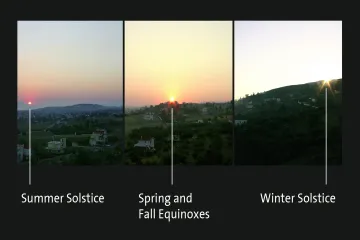
The Earth’s yearly trip and constant tilt create specific moments that mark the start of the seasons. These key points are called solstices and equinoxes. [3][9]
# Solstices
A solstice happens twice a year. The summer solstice is the day when the Sun shines most directly on one hemisphere. In the Northern Hemisphere, this usually happens around June 21st. It is the longest day of the year and the official start of astronomical summer. [9]
Six months later, around December 21st, we hit the winter solstice. This is when the same hemisphere is tilted the farthest away from the Sun. It brings the shortest day of the year and marks the beginning of winter. [9]
# Equinoxes
The other two important markers are the equinoxes. The word equinox literally means "equal night." On these two days, the Earth’s tilt is positioned so that the Sun shines equally on both the Northern and Southern Hemispheres. [3][9] This means that day and night are nearly the same length all over the world—about 12 hours of light and 12 hours of darkness. [9] The spring equinox (around March 20th) signals the start of spring, and the autumn equinox (around September 22nd) signals the start of fall. [9] After the spring equinox, days get longer until the summer solstice; after the autumn equinox, days start getting shorter again until the winter solstice. [3]
# Tracking Shadows
Since the angle of the Sun changes throughout the year, the length and direction of shadows change too. This is something you can easily test yourself, no fancy equipment needed! When the Sun is high in the sky—like during the summer months—your shadow will be short. When the Sun is low in the sky—like in the winter months—your shadow will be very long. [3]
If you wanted to really track this phenomenon, you could try a simple annual project. Pick a fixed spot outside, maybe a patio stone or a sidewalk crack, and at the exact same time every week (say, noon standard time), place a stick vertically into the ground or use a fixed object like a fence post. [5] Mark the very tip of its shadow on the ground with chalk or a small stone. If you do this starting in the spring and continue through the summer and fall, you will see the shadow get shorter and shorter until the winter solstice, and then it will slowly start getting longer again as we head toward spring. [5] This visible line of shadow movement is a direct, physical map of the Sun’s changing angle in your sky, caused entirely by the Earth's steady tilt. [3]
# Nearness Myth
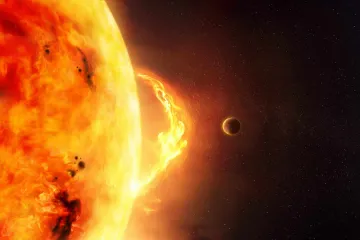
Let’s circle back to that original idea about distance. It is true that the Earth's orbit is not a perfect circle; it is slightly oval, or elliptical. [6] This means there are times when Earth is technically a tiny bit closer to the Sun and times when it is a tiny bit farther away during its orbit. [6] In the Northern Hemisphere, we are actually closest to the Sun around early January, which is the middle of winter![6] And we are farthest away around early July, the middle of summer. [6]
If distance were the cause of seasons, the entire world would have summer in January and winter in July. Since the opposite happens in the Southern Hemisphere, it proves that the distance change is not the reason for the seasons we experience. [6] The distance difference is so small compared to the effect of the tilt that it barely affects our temperature at all. [2]
# Seasonal Differences
While the tilt is the main driver, it is worth noting that the intensity of the seasons—how hot the summer gets and how cold the winter gets—can vary based on where you live on Earth. [9]
For example, consider two fictional cities: City A near the Equator and City B near the North Pole.
| Feature | City A (Near Equator) | City B (Near North Pole) |
|---|---|---|
| Sun Angle | Always high in the sky | Varies drastically throughout the year |
| Day Length | Remains close to 12 hours all year | Changes from 24 hours of sun (summer) to 24 hours of dark (winter) |
| Season Change | Slight variation in warmth | Extreme changes between light and dark |
In City A, the Sun is almost always high up, so the rays are always quite direct. The seasons there might not feel as dramatically different as they do in City B. City A will likely be warm year-round, perhaps only experiencing a "rainy season" and a "dry season" instead of the four distinct temperature-based seasons. [9] City B, however, experiences the most extreme seasonal shift, from continuous daylight in summer to continuous darkness in winter, leading to much hotter highs and much colder lows. [9] This shows that while the cause (tilt) is the same everywhere, the effect is amplified the farther you move from the Equator toward the poles. [9]
# Understanding Energy Spread
To really grasp the angle concept, let's use another everyday comparison that can help clarify why direct light matters more than total light. Imagine you have a bag of exactly 100 pieces of candy—this represents the Sun's energy hitting the Earth. If you are standing directly under the Sun (summer), you drop all 100 pieces into a small box that covers only one square foot. That box gets a massive, concentrated delivery of 100 pieces of candy.
If you move to a location where the Sun is hitting at a sharp angle (winter), you have to drop those same 100 pieces of candy over a much larger surface, maybe a rug that covers ten square feet. Now, that rug only gets an average of 10 pieces of candy per square foot. The total amount of candy is the same (100), but the concentration on any small spot is much lower in the angled scenario. This difference in concentration—how many "pieces of candy" land on one square meter of ground—is what makes one spot feel hot and another feel cold, even though both are getting energy from the same Sun. [7]
# Keeping Track
For kids learning about this, remembering the patterns is key. Think of it as a steady, predictable dance. Every March 20th (or so), things start warming up; the Sun climbs higher each day, and your shadow shrinks at noon. Around June 21st, the climb stops, and the Sun is at its peak height for the year—that’s the longest day and the start of summer. Then, the Sun starts to slowly sink lower again, days get shorter, and things cool down until the lowest point around December 21st (the shortest day, winter). Then the upward climb toward the longer days begins again. [3] The entire process is a reliable, year-long cycle driven entirely by that constant, 23.5-degree lean of our planet as it circles its star. [3][6]
#Videos
Seasons and the Sun: Crash Course Kids 11.1 - YouTube
Why Do We Have Different Seasons? | California Academy of ...
Related Questions
#Citations
Seasons and the Sun: Crash Course Kids 11.1 - YouTube
The Sun and Seasons - TIME for Kids
The Reason for the Seasons - National Geographic Education
season - Kids | Britannica Kids | Homework Help
What Causes the Seasons? - Tree House Weather Kids
What Causes Seasons? Explained for Kids | Twinkl Blog
Reasons for the Seasons | The Kid Should See This
How seasons occur | The Four Seasons for Kids